

If you're asking how long does it take to move house, you're probably trying to pin down one date and one set of hours. Many people seek this clarity. They want to know when the truck arrives, when the keys change hands, and when they can finally sit down at the new place.
The practical answer is that a move has two timelines. There's the moving day timeline, which is typically measured in hours for local jobs and days for interstate jobs. Then there's the total relocation timeline, which includes packing, access approvals, settlement timing, cleaning, storage, and the handover between addresses. Around the Central Coast, Sydney, Newcastle and Lake Macquarie, that second timeline is frequently what catches people out.
A simple house-to-house relocation in Terrigal can move differently from a two-bedroom apartment in Newcastle with a booked lift, loading dock rules and a narrow street outside. If property settlement shifts, the whole plan shifts with it. If packing isn't done properly, the truck can be on time and the job runs late. If you want your move to run smoothly, treat it like a project, not a single event. A good place to start is this practical moving in checklist so you're not relying on memory in the final week.
The Complete Moving Timeline From Start to Finish
A well-run relocation starts long before moving day. The truck booking matters, but the biggest time saver is knowing what needs to happen and when.
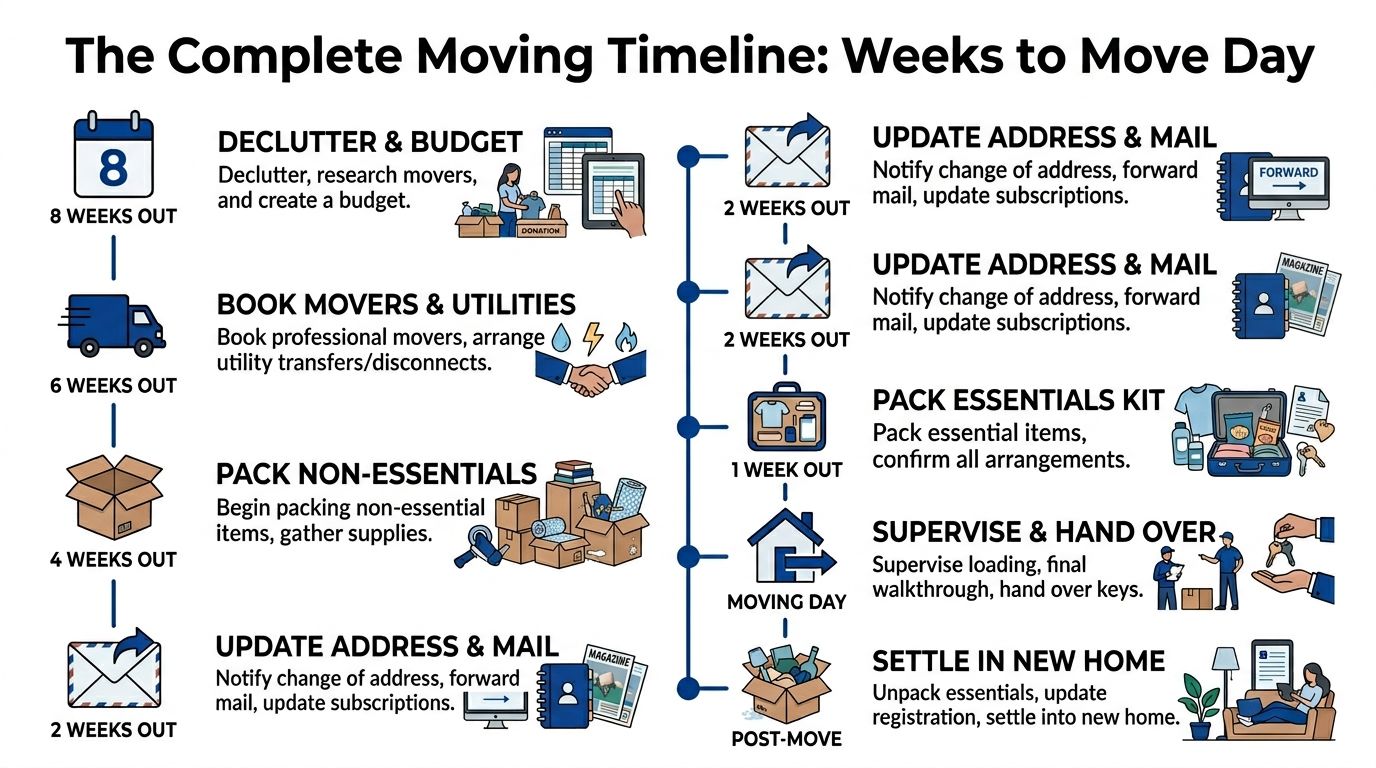
Eight weeks to six weeks out
This is when you want to make decisions that reduce pressure later. Start with decluttering. Every item you remove from the job is one less item to wrap, carry, load, unload and unpack.
At this stage, we also recommend getting clear on access at both properties. A freestanding home in Wamberal is typically straightforward. An apartment in Sydney CBD or a unit near Newcastle's older built-up streets frequently isn't.
Use this early window to organise:
- Removalist research: Check who handles local, intrastate and interstate work, and whether they carry full insurance coverage.
- Access questions: Ask about stairs, lifts, long walks, shared driveways, body corporate rules and parking limitations.
- Packing plan: Decide whether you'll do your own packing, use a pre-pack service, or combine both.
Practical rule: The earlier you identify access and building restrictions, the fewer surprises you get charged in time on moving day.
Four weeks to two weeks out
By now, the move should feel real on paper. This is the period when the schedule starts locking in.
Begin packing non-essential items first. Seasonal clothing, spare linen, books, decorative pieces and rarely used kitchenware can all be packed before the final week. Leave daily-use items until the end so you're not unpacking your own life before you've even left.
This is also the time to sort practical admin. Utilities, address updates, school or childcare notifications, building management approvals, and any parking permit arrangements all belong here. If you're moving into or out of strata, get the move booking confirmed in writing.
Final week and moving day
The last week should be about confirmation, not chaos. If you are deciding what to keep, chasing keys or trying to find tape, the move will feel harder than it needs to.
Keep the final days focused on:
- Essentials packing: Medications, chargers, documents, kettle, basic kitchen items, toiletries and clothes for a few days.
- Furniture prep: Empty drawers where needed, disconnect appliances if required, and confirm what needs disassembly.
- Final checks: Confirm arrival times, contact numbers, access instructions, and who will meet the crew at each property.
After the move, the timeline doesn't stop. You need to unpack the basics, check condition, position larger furniture properly, and update anything that couldn't be changed in advance. That's why the best moving plans typically include a post-move day or two for settling in rather than assuming life goes back to normal the same night.
Local Move Durations in Central Coast Sydney and Newcastle
When people ask about the actual move day, home size is the first place to look. The general benchmark for local house relocations in Sydney metro and surrounding NSW areas is 2 to 8 hours, with a more detailed guide of 3 to 4 hours for a studio or 1-bedroom apartment, 4 to 6 hours for a 2-bedroom home, 6 to 8 hours for a 3-bedroom house, and 8 to 10 hours or longer for homes with 4 or more bedrooms, based on Sydney removal industry benchmarks published by A1 Removalists Sydney.
That gives you a starting point. It doesn't tell the whole story.
What cubic metres means in plain English
Removalists frequently talk about cubic metres. That is the amount of space your belongings take up in the truck. More cubic metres typically means more handling time, more loading time and sometimes a larger vehicle or extra crew planning.
A lightly furnished three-bedroom home in Bateau Bay can move faster than a packed two-bedroom apartment in Parramatta. Volume matters, but so does how easy the property is to work with.
Here’s a simple planning table.
| Property Size | Estimated Time (Hours) |
|---|---|
| Studio or 1-bedroom apartment | 3 to 4 |
| 2-bedroom home | 4 to 6 |
| 3-bedroom house | 6 to 8 |
| 4+ bedroom home | 8 to 10 or more |
If you're comparing regions, Central Coast to Sydney removals frequently come down to access and traffic management as much as distance.
Why one local move runs longer than another
A straightforward move is one where the truck can park close, the access path is clear, furniture fits the route, and both properties are ready. Those jobs tend to stay close to the expected timing.
The delays typically come from physical constraints. We see this frequently with apartments in Gosford, high-rises in Sydney, and older Newcastle buildings where stairwells, slow lifts or narrow hallways add handling time to every item.
Common local factors include:
- Apartment access: Lift bookings, shared corridors, loading bays and move-in time windows.
- Street conditions: Busy roads, no stopping zones, tight culbs and limited truck placement.
- Property layout: Split levels, steep driveways, back steps, side access and long carries from truck to door.
- Furniture complexity: Large lounges, fridges, bed frames, gym gear and anything that needs partial disassembly.
A two-bedroom unit with one lift, a long corridor and restricted parking can take as long as a larger house with clean, direct access.
Local examples across the region
A one-bedroom apartment in Gosford with secure parking and a booked lift can be fairly predictable. A similar unit in inner Sydney can take longer because loading access is tighter and building rules are stricter.
A three-bedroom family home from Terrigal to Newcastle frequently runs well if both driveways are usable and the home is packed. Move that same volume from a townhouse with stairs in Erina to a heritage apartment near Newcastle, and the day can stretch because every bulky item needs more hands-on handling.
This is why realistic planning matters. If you're arranging cleaners, internet installation or key handover for the same day, leave room around the move rather than stacking everything back-to-back.
How Interstate Relocations Change the Timeline
Interstate jobs run on a different clock. You're no longer measuring the day by loading hours alone. You're measuring the full relocation by pickup timing, transit days, delivery scheduling and how the truck is allocated.

Benchmarks from NSW routes show that a dedicated truck can reach Canberra in 1 day, Melbourne or Brisbane in 2 to 3 days, and Adelaide in 3 to 4 days, while backloading can add 1 to 3 days because loads are consolidated and scheduled around multiple deliveries, according to JAC Removals' interstate timing guide.
Dedicated truck or backloading
A dedicated truck means your load is booked for your route. It typically gives you tighter control over pickup and delivery windows.
Backloading is frequently a practical option when dates are more flexible. The trade-off is time. Shared loads need route coordination, and that can extend delivery because the truck is servicing more than one client on the run.
If you're planning a route such as Sydney to Brisbane removalists, ask early whether you need speed or flexibility more than anything else. That choice shapes the timeline.
What adds time on the road
Some parts of interstate timing aren't negotiable. Driver rest requirements affect how far a truck can travel in a day. Border and quarantine checks can also slow the run depending on the route and what you're carrying.
Regional pickups can add handling time too. If the truck is collecting from the Central Coast before heading onto a major corridor, the total schedule is different from a direct metro departure.
If your delivery date is fixed, build the service type around that date first. Trying to save time and money at the same time often forces a compromise somewhere.
What to plan at the destination
Interstate moves need more breathing room at the other end. Don't line up trades, cleaners, broadband installation and family arrivals for the same delivery hour unless you've left room for variation.
The safest approach is to prepare the new property so the essentials can be unloaded and lived in first. Beds, basic kitchen items, documents, chargers and medications should be easy to identify. If settlement dates or lease start dates don't line up neatly, storage coordination can bridge the gap without forcing a rushed delivery.
Hidden Factors That Can Add Hours to Your Move
The biggest myth in moving is that the truck time tells you everything. It doesn't. A quoted timeline typically assumes normal access, clear paperwork and a property that's ready to go. This aspect is often overlooked.

A move can run late even with a good crew if the building won't release the lift, the truck can't get close, or settlement doesn't happen when expected.
Access problems that slow the day down
Most delays are physical before they're logistical. Removalists lose time when they can't work in a direct line from home to truck.
Typical culprits are familiar:
- Stairs and walk-ups: Every item takes longer when it has to be carried manually through turns and landings.
- Lift delays: Shared lifts in apartment blocks create stop-start loading, especially when bookings are short or residents are using the lift.
- Long carry distance: If the truck is parked away from the door, loading becomes a relay rather than a direct transfer.
- Awkward furniture: Pianos, large fridges, bed frames, gym gear and anything that needs partial disassembly. If that's part of your move, specialised help from a piano mover should be organised early.
Rules, permits and building management
Sydney and Newcastle jobs frequently hinge on approvals. A body corporate may limit moving hours. A strata manager may require a booked lift, floor protection, notice to residents, or use of a loading dock only during set windows.
Parking matters as much. If the truck has nowhere legal and safe to stand, the whole job slows down. In tight urban areas, it can also be worth sorting practical handover tasks before the move, such as changing locks at the new place. If the property needs immediate access secured after settlement, these residential locksmith services are the kind of support worth lining up ahead of time.
Buildings don't care that you're organised. If the lift isn't booked and the loading zone isn't approved, the schedule stops.
The delay many people don't include
Property chain issues don't show up in the truck schedule, but they can blow out the total timeline of your move. NSW settlement averages 8 to 12 weeks, and property chains can add another 4 to 8 weeks. Recent figures cited by Eden Conveyancing say 28% of Sydney settlements were affected by chain-related delays, adding an average of 35 days to the overall timeline, based on the data discussed in their guide to how long it takes to move house.
That matters because many people book cleaning, packing, leave from work and even school transitions around an expected date that isn't locked in. If your move depends on a sale settling upstream, don't assume the first target date will hold.
A practical buffer solves a lot of pain here. If dates are moving, keep some flexibility around truck booking, temporary storage and handover arrangements rather than building your whole plan around a single settlement day.
How Professional Services Can Shorten Your Timeline
Doing everything yourself feels cheaper in theory. In practice, it frequently stretches the move across too many evenings, too many weekends and too many half-finished tasks.

The jobs that shorten timelines are not always the heavy lifting. It's the combination of planning, materials, access coordination, correct wrapping, furniture protection, and knowing the order of operations that saves the most time.
Packing services versus DIY packing
DIY packing works effectively when you've started early, you're disciplined, and the property isn't heavily furnished. It works poorly when people leave the hardest rooms until the end. Kitchens, garages and storage areas typically take longer than expected.
Professional packing compresses that schedule because the team arrives with a system. Packing materials are ready, fragile items are handled properly, and cartons are labelled in a way that makes loading and unpacking easier. The move day then starts with a packed home, not a half-packed one.
For households trying to balance time and budget, it frequently makes sense to outsource the difficult categories first. Kitchens, glassware, artwork, books, linen cupboards and storage rooms are typically where DIY packing slows down.
Complex moves need specialised handling
Senior and special needs relocations are a good example. Standard home-moving estimates frequently don't fit these jobs. Fragile medical equipment or a piano can extend a move's duration. Professional removalists with specialised training and equipment can reduce the total process time, transforming a multi-week process into a more managed and shorter relocation.
That is not about speed. It's about reducing rehandling, avoiding damage, and making sure key items are placed safely the first time. For this type of move, packing, transport, unloading and setup all need to work together.
Joined-up services save real time
A relocation gets shorter when fewer people are handing it off. If packing is done by one party, storage by another, and final delivery by someone else, delays creep in between every stage.
That is where an option like Gentle Giant Removals & Relocations can be useful, because the business handles packing, truck allocation, storage coordination, quilted pad protection, porta robes and related move support in one workflow. If you're weighing service levels, compare that against the broader budget and timing considerations covered in this guide to the cost of removalists in Sydney.
The fastest move isn't necessarily the one with numerous individuals involved. It's the one with the fewest broken handovers.
Professional help also improves protection. Full insurance coverage, correct tie-down methods, furniture padding and safe manual handling do not protect belongings. They prevent the kind of avoidable delays that happen when something is packed poorly, loaded improperly or damaged halfway through the job.
Creating Your Sample Moving Schedule
Individuals plan better when they can see the move in a real-world pattern. These two sample schedules show how the timeline changes depending on the type of property and the route.
A three-bedroom home from Gosford to Newcastle
This is a common local relocation. The moving day itself for a three-bedroom house typically sits in the 6 to 8 hour range when access is straightforward, based on the earlier local benchmarks.
A workable schedule might look like this:
- Four weeks out: Request quotes, confirm settlement or lease dates, and start clearing out garage, spare room and storage cupboards.
- Three weeks out: Lock in your removalist, order packing materials, and decide what furniture will need disassembly.
- Two weeks out: Pack non-essentials, confirm access at both homes, and arrange child or pet care for moving day.
- Final week: Finish most packing, label cartons by room, prepare an essentials kit, and keep pathways clear for loading.
- Moving day: Early arrival, protect floors where needed, load larger furniture first, complete a final walkthrough, then unload and place key furniture at the Newcastle property.
If both homes have easy driveway access, this kind of move can run smoothly. If the Gosford house has steep external stairs or the Newcastle delivery has restricted parking, allow more breathing room around cleaners and key collection.
A two-bedroom apartment from Sydney to the Central Coast
This one typically looks simpler on paper, but apartment rules frequently shape the day more than distance.
The schedule changes because the building has a say in how the move happens:
- Around four weeks out: Contact strata or building management. Ask about lift bookings, loading dock access, move-in hours, floor protection rules and whether a certificate of insurance is required.
- Around two weeks out: Confirm the booking window in writing and check whether street parking or a council permit is needed for the truck.
- Final days: Pack the apartment, dismantle furniture that won't fit in the lift easily, and set aside keys, fobs and building contact numbers.
- Move day: One person should stay available to deal with concierge, lift control or loading dock access while the crew handles the relocation.
A two-bedroom home frequently falls into the 4 to 6 hour moving-day range under standard local conditions. In a busy Sydney apartment, though, the practical timing can depend on whether the lift runs on schedule and whether the truck can stand close enough to work efficiently.
These examples are why generic advice frequently falls short. The best moving schedule is the one built around your access, your dates and your property type, not solely your bedroom count.
Frequently Asked Questions About Moving Timelines
How early should you book a removalist
For local work, earlier is typically better, especially if you're aiming for a popular day. The practical advantage is not solely availability. It gives you time to sort access, packing materials, and any strata or parking approvals without rushing.
Is it faster to pack everything yourself
Sometimes, but only if you're organised and start early enough. DIY packing frequently drags because people leave the hardest rooms until the end. Kitchens, garages and storage areas typically take longer than expected.
Do apartment moves always take longer
Not necessarily. A well-managed apartment move with a booked lift, clear loading access and good parking can run efficiently. The problems start when building requirements are handled late or not handled at all.
What should be ready before the truck arrives
Walkways should be clear, cartons should be sealed and labelled, and anything you're keeping with you should be set aside. If furniture needs to be emptied or appliances need to be disconnected, that should be done before loading begins unless you've arranged help for it.
Can weather affect the timeline
Yes, especially in coastal areas on the Central Coast where wind and rain can slow handling and increase the need for extra protection at doors, paths and truck access points. Weather does not always stop a move, but it can change the pace.
What's the biggest mistake people make when estimating time
They only count the truck hours. The total relocation typically includes preparation, approvals, handover timing, packing, cleaning and unpacking. That's why two moves with the same amount of furniture can feel different.
How do you choose a removalist if timing matters most
Ask direct questions. Do they understand local access conditions in Sydney, Newcastle and the Central Coast? Do they offer full insurance coverage? Can they explain what might slow the job down before the day arrives? The right removalist will not promise an unrealistically short move to win the booking.
If you'd like practical timing advice for your own move, Gentle Giant Removals & Relocations can help you map out the full schedule, not just the truck hours. We handle local and interstate relocations across the Central Coast, Sydney, Newcastle and beyond, with support for packing, access planning, storage coordination and more. Request a free in-home assessment or get a free moving quote online. If your move is urgent, give us a call and we'll talk through the quickest workable option.