
You're already juggling lift bookings, parking, stairwells, and a truck that has to fit neatly into a tight street or driveway. In that kind of move, quilted furniture pads aren't an extra, they're the layer that keeps a polished table, leather lounge, or fridge from taking the hit while the crew does the hard work. If you're moving on the Central Coast, into Newcastle, or across Sydney, the difference between a careful job and a rushed one often comes down to the wrapping, loading, and securing that happens before the truck even leaves the kerb. For practical guidance on protecting individual pieces, see our furniture protection guide.
Your Guide to Professional Furniture Protection
A waterfront apartment move in Terrigal feels simple until you look at the narrow hall, the lift booking, and the dining table that has to pass a doorframe without a mark. In a Newcastle terrace or a Gosford unit, the furniture itself is only part of the problem. Walls, floors, railings, and shared areas all need protection too.
That's why professional removalists treat quilted pads as standard gear, not an optional extra. They protect the item, but they also reduce the chance of scuffs to painted corners, timber floors, and building common areas. If you want a team that arrives with the right equipment and handles the details, our Central Coast removalists work with those risks in mind.
Practical rule: if an item can touch a wall, floor, stair edge, or lift door, it should be padded before it moves.
A good removalist doesn't just throw a blanket over furniture and hope for the best. The wrapping has to stay put during loading, road vibration, and unloading, especially on routes between the Central Coast, Newcastle, Lake Macquarie, and Sydney. That's where proper quilted pads earn their place.
What Exactly Are Quilted Furniture Pads
A quilted furniture pad is built like a protective sandwich. It has a tough outer shell, an inner batting layer for cushioning, and stitched quilting that holds the fill in place so it doesn't bunch up after folding, dragging, or repeated use. That stitching matters because the padding stays spread evenly instead of drifting into thin patches.
The idea isn't new. Evidence of quilting goes back to 3400 BCE in Egypt, and by the 14th century quilted bedding was a necessity in colder climates, which shows the basic construction has long been trusted for insulation and impact resistance (history of quilting). The same layered logic is what helps protect furniture today.
A household blanket can cover a surface, but it doesn't hold its shape the same way. When a chair leg, table edge, or appliance corner shifts in a truck on Sydney roads, the difference between loose cloth and engineered padding becomes obvious fast. We use the pad to absorb rubbing and minor knocks, while the wrap holds the protection tight against the item.
For heavier or more delicate pieces, the finish and the fill matter just as much as the size. If you're comparing gear for a larger job, our heavy-duty moving blankets article shows why durability and coverage are so important.
Key Benefits for Your Central Coast Move
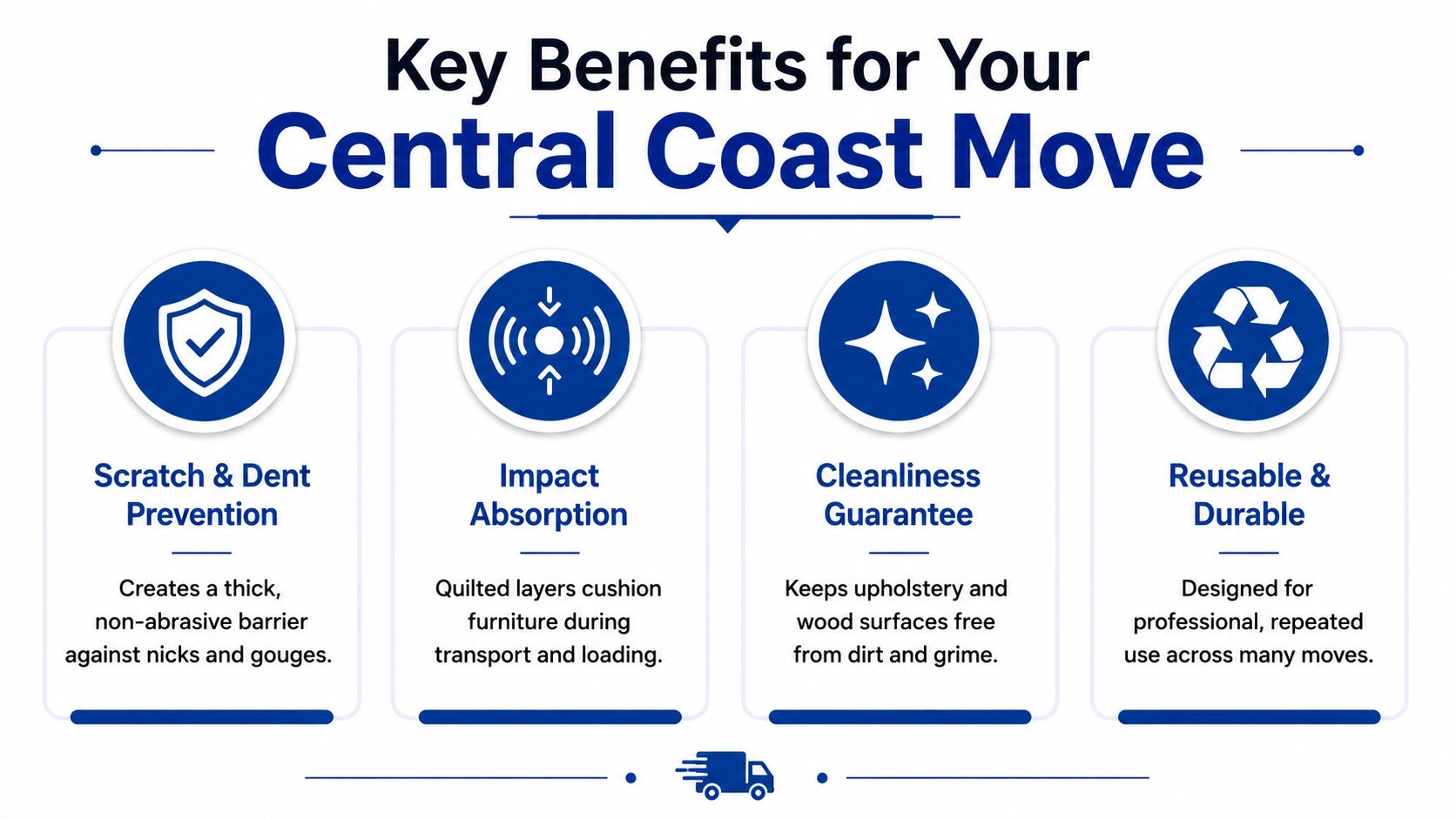
On the Central Coast, a good pad does more than cushion furniture. It helps keep a move organised, clean, and less likely to leave damage behind. That matters whether you're in a freestanding home in Tuggerah, a townhouse in Erina, or an apartment with tight access near the waterfront.
Protection that works in real spaces
The first benefit is simple, scratch and dent prevention. Quoted in plain language, a quilted pad gives you a thick, non-abrasive layer between the item and everything it touches. That's valuable in older Newcastle apartments where stair rails, corners, and narrow doorways make contact more likely.
The second benefit is impact control. The stitched layers spread pressure across a wider surface, which helps when a fridge is being manoeuvred down steps or a dining table is being slid into the truck. For jobs where the schedule is tight and the access is awkward, that extra cushion can save both the furniture and the building finishes.
Moisture and material choice
For coastal NSW, material choice matters. Professional pads come in moisture-absorbent recycled-cotton for maximum cushioning on dry days, and all-weather polyester versions for better performance during damp conditions, with faster drying and easier reuse between jobs (U-Haul quilted pads). That's especially useful around the Central Coast's coastal areas, where humidity and sudden weather changes can complicate a move.
Good practice: reserve absorbent pads for dry interior jobs, and use all-weather pads when storage, rain, or repeated truck runs are part of the day.
The third point is cleanliness. A proper pad keeps dust, road grime, and handling marks off upholstery and timber. The fourth is reusability, which matters on professional jobs because the same pad has to perform again and again without falling apart.
If your move includes apartments, body corporate rules, or lift bookings, the protection extends to shared areas too. Our removalist Central Coast service page covers how local access issues shape the way we plan each job, and our insurance sits behind that process.
A Removalists Guide to Wrapping Furniture Correctly
Wrapping a chair, lounge, or table properly starts with the pad size. A common professional benchmark is 72 x 80 inches, about 1.83 x 2.03 m, which is large enough to cover common bulky items in one pass and keep wrapping consistent across the job (Vestil pad size). That standardisation saves time and reduces exposed edges.
The wrap has to stay tight
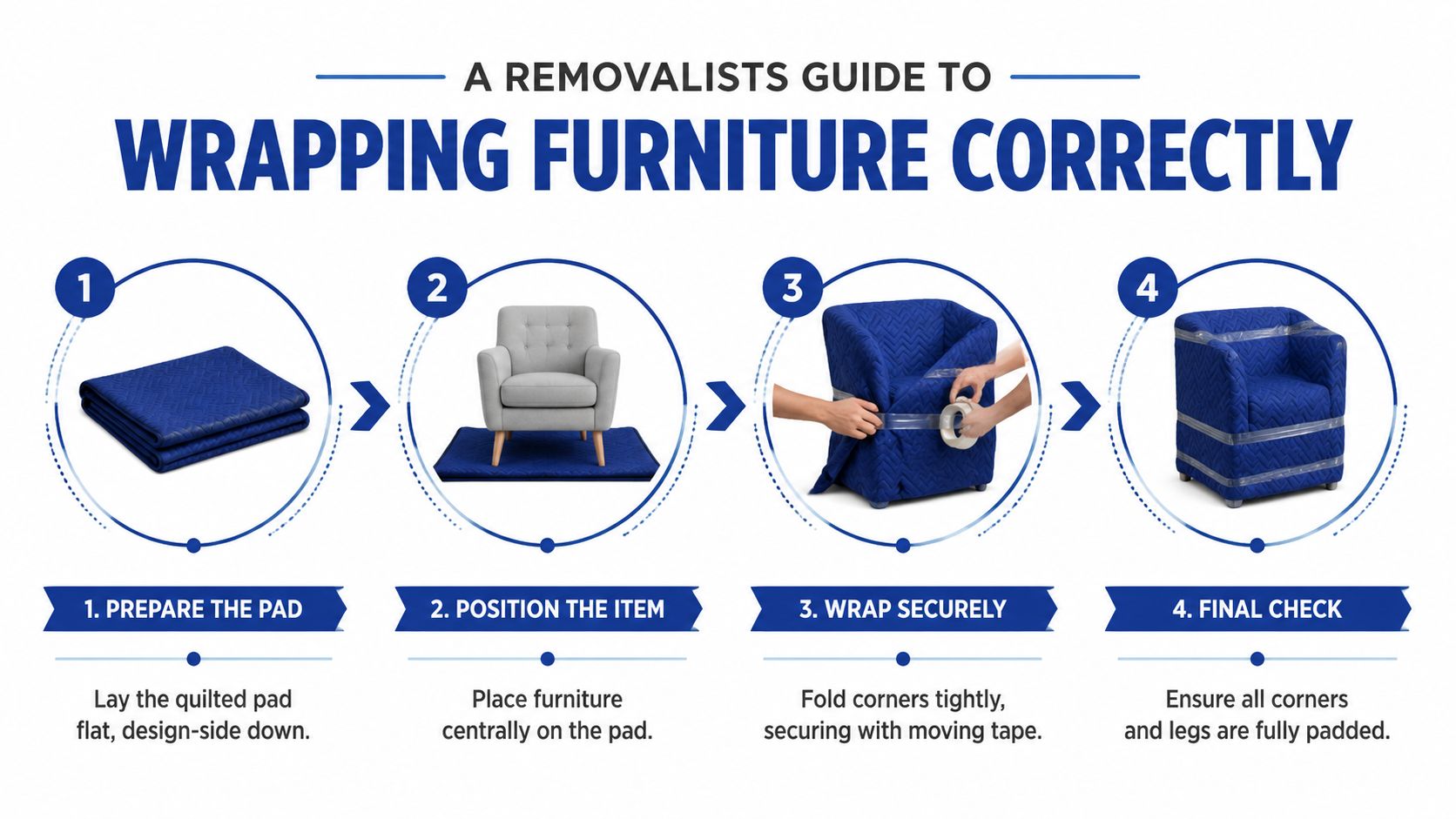
Lay the pad flat first, then centre the item on it. Pull the pad up and over the largest surface, then fold the corners in neatly so the legs and edges are tucked in rather than left hanging loose. The goal is full coverage with no slippage when the piece is carried, tilted, or stacked.
Secure the pad with moving tape or stretch wrap, but keep the adhesive on the pad, never on the furniture itself. That's one of the main differences between a professional wrap and a casual DIY cover, because tape on timber or lacquer can leave a mess that's harder to fix than a scuff.
What we do with awkward pieces
Delicate arms, carved legs, and corner details need extra attention. On an upholstered chair, we'll pad the seat, back, and arms first, then add a second layer if the item needs to travel beside harder furniture in the truck. On a dining table, the corners get special treatment because that's where chips and dents usually start.
If you're packing yourself and need a better grip on the tools, our wrap and move tape dispenser guide is a useful companion. For interstate or international deliveries where furniture needs more planning, the deliver furniture abroad resource is also worth a look.
DIY with Pads vs Hiring a Professional Service
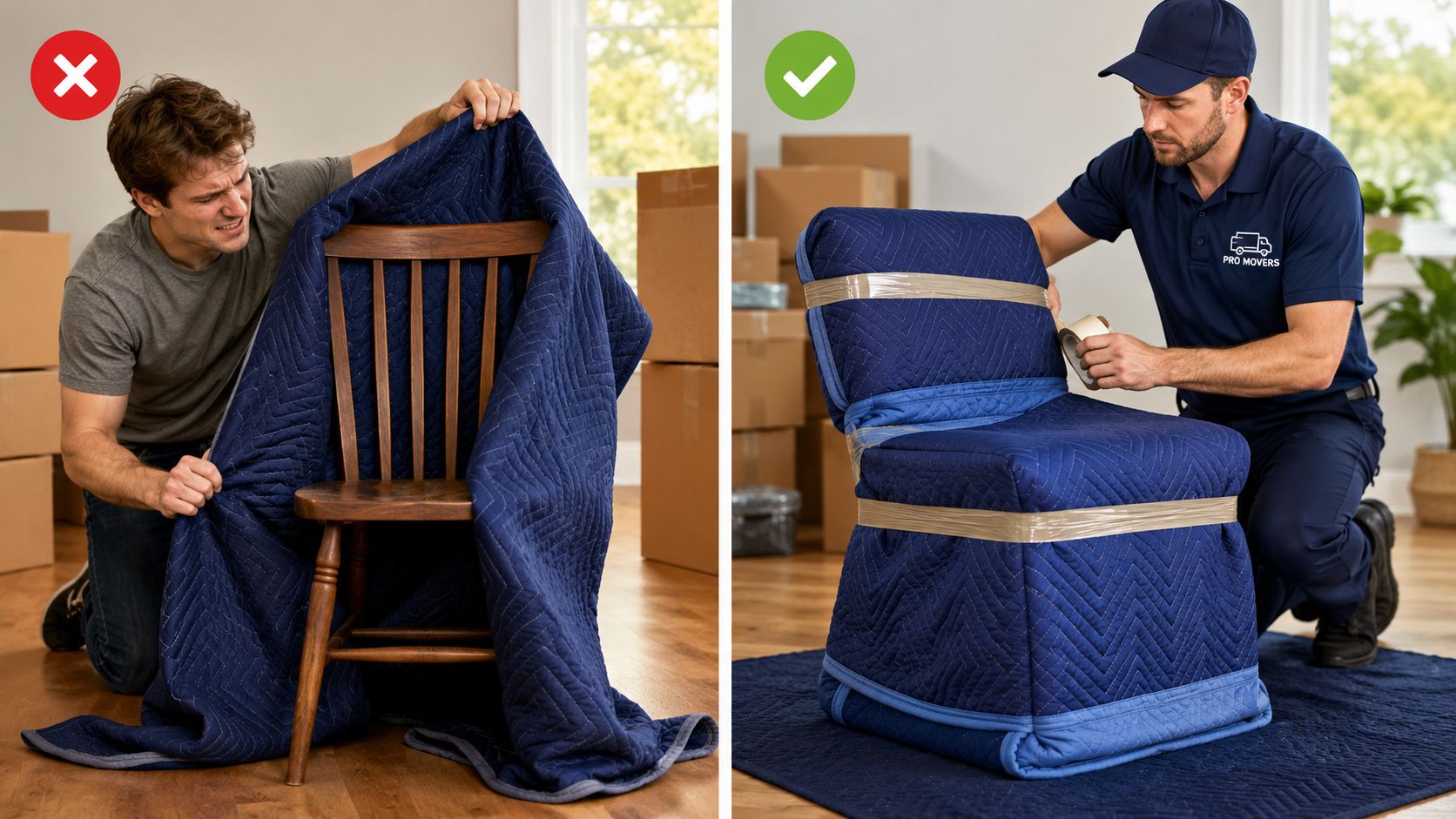
Buying pads for a one-off move sounds sensible until you add up the rest of the job. You still need to learn the wrapping technique, move the furniture safely, load the truck without rubbing, and make sure nothing shifts on the road. That's where DIY often gets expensive in time and risk, especially for Sydney to Central Coast jobs where parking, traffic, and access can change the day quickly.
A professional service bundles the pads, the truck, the crew, and the experience together. That matters if you're dealing with stairs in Newcastle heritage apartments, narrow access in Lake Macquarie, or body corporate rules in a Sydney block. It also matters if you're protecting items that matter to you and relying on full insurance coverage as part of the plan.
The trade-off is simple. DIY can work for light, uncomplicated moves with generous access, but it becomes less practical once you add heavy furniture, time pressure, or shared building restrictions. A removalist arrives with the right gear already matched to the job, which cuts the chances of shortcuts.
Our removalists vs self-move guide goes into that choice in more detail. In day-to-day work, the value is not just the pad itself, it's the crew using it correctly while keeping the whole move on track.
How We Use Quilted Pads to Protect Your Belongings

On a typical move, we wrap items before they leave the room, not after they're already at the truck. That keeps doorways, skirtings, and shared areas safer, and it helps the crew load in a cleaner, more controlled way. On a small apartment move in Lake Macquarie or a larger office relocation in Sydney, the process stays the same.
We then load the truck so padded items sit securely and don't rub against each other on the way across town or down the coast. When we arrive, we unwrap carefully in the new room so the furniture goes where it belongs without new marks being introduced at the last minute. That's how On Time, Every Time works in practice, with care built into the routine.
Quilted textiles have stayed relevant for a long time because the format works. With over 21 million American quilters spending $2.27 billion annually in 2003, quilting clearly sits in the mainstream as a trusted protective method (Albert County Museum). For removalists, that long-running acceptance backs up what we see every day on the job, quilted pads aren't a luxury, they're part of protecting client assets properly.
If you're planning a move on the Central Coast, in Newcastle, Lake Macquarie, or Sydney, talk to Gentle Giant Removals & Relocations about the right packing materials, access planning, and full-service protection for your furniture. Visit Gentle Giant Removals & Relocations to request a free quote or arrange an in-home assessment, and call us if you've got an urgent move that needs fast, careful coordination.