

You're probably weighing up the same question that often comes up once the moving date starts to feel real. Do you hire removalists, or do you grab a truck, call in a few favours, and do it yourself?
For a local move around the Central Coast, Newcastle, Lake Macquarie or Sydney, that choice can look simple on paper and messy in practice. A truck hire quote looks tidy. A professional relocation quote can seem broader. The trouble is that neither option is just about transport. It's about access, timing, lifting, parking, property protection, insurance, and how much hidden labour you're taking on yourself.
A lot of moves in Australia are local, which is one reason DIY keeps looking achievable. But local doesn't always mean easy, especially when you add Sydney tolls, Gosford apartment lift bookings, Newcastle heritage access, or tight suburban streets around Lake Macquarie.
The Big Moving Question DIY or Professional Removalist
A common scenario goes like this. You're moving from a two-bedroom unit in Gosford to a townhouse in Newcastle. The distance isn't huge, so a self-move feels sensible. You think, “It's only one truck, a few mates, and a Saturday.”
Then the details start to stack up. Your building wants a lift booking. The strata manager asks for notice and protection for common areas. The loading zone outside is limited, and your sofa won't pivot cleanly through the stairwell unless someone knows how to angle it without scraping walls.
That's where the core removalists vs self move decision sits. Not in the idea of moving, but in the work around it.
If you want a clearer definition of what a professional service includes, this guide on what a removalist is is a useful starting point. For most households, the choice comes down to this: do you want to spend less cash upfront and do the heavy lifting yourself, or pay for planning, labour, transport, and protection so the day runs to schedule?
Practical rule: If your move involves stairs, lifts, fragile furniture, tight parking, or fixed building rules, the cheapest-looking option often stops being the easiest option very quickly.
Calculating the True Cost of a Self Move
The reason many people lean toward DIY first is obvious. Truck rental looks like a single, visible cost. A professional quote includes labour and service, so it can look larger at first glance.
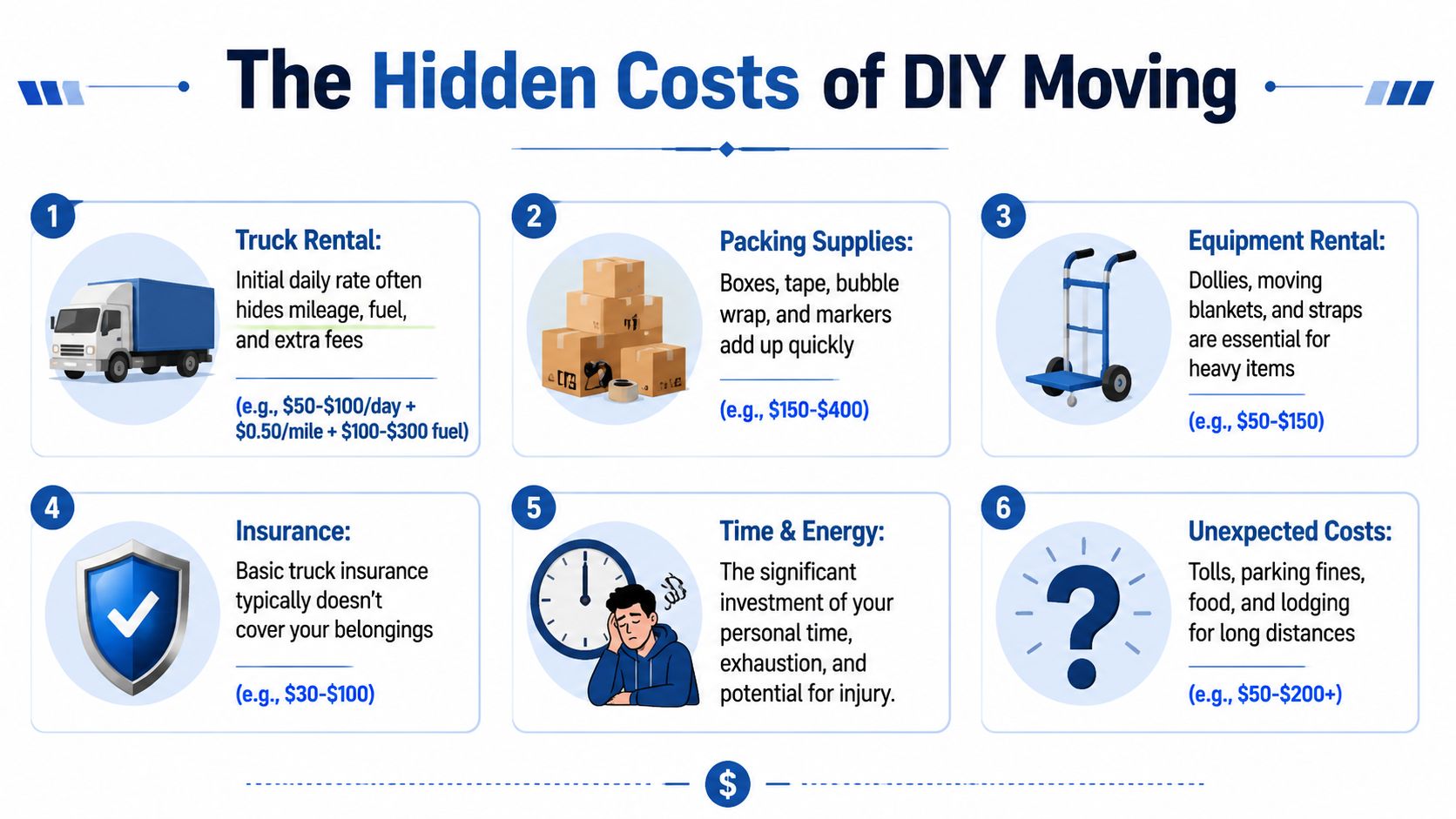
That first impression often leaves out the rest of the bill. Australian household-moving guidance notes that a DIY move can involve packing materials, insurance, fuel, tolls, equipment hire, parking permits and possible time off work, and that in Sydney, tolls and CBD parking constraints can materially change the economics of doing it yourself (United Van Lines moving tips).
What people usually count
Most DIY budgets start with the truck. That makes sense because it's the headline figure. For short moves, truck rental is often presented as affordable, which is why self-moving stays attractive for local relocations.
But the truck is only the base. You still need to load it properly, secure the load, drive it safely, unload it, return it on time, and cover everything around the trip.
The hidden costs that creep in
A self-move often gets more expensive through a series of smaller decisions rather than one big surprise.
- Packing materials matter: You'll usually need cartons, tape, protective wrap, mattress covers, butcher's paper, labels, and wardrobe solutions for hanging clothes.
- Fuel and tolls add pressure: This is especially relevant if your route touches Sydney motorways or a busy metro corridor.
- Equipment is easy to forget: Trolleys, dollies, straps, and furniture blankets aren't optional if you want to move a fridge, washing machine, dining setting, or timber furniture safely.
- Parking can become an actual cost: In apartment-heavy areas, you may need permits or special arrangements to keep access legal and workable.
- Time off work is still a cost: Even if no invoice lands in your inbox, using leave or losing productive hours still affects the overall total.
A lot of people only notice these costs once they're already committed. By then, it's too late to compare properly.
Hidden labour is part of the cost too
There's another side to the budget that often gets ignored because it doesn't come with a receipt. Your time has value. So does your energy. So does the help you ask from family and friends.
If you spend days sourcing materials, packing the house room by room, collecting the truck, collecting helpers, loading, driving, unloading, returning the truck, and then cleaning up the mess, that's work. It's also work done while tired, often under time pressure, and usually without the same systems a trained crew would use.
A DIY move can be economical for a small, simple relocation. It stops being economical when poor packing, extra trips, access delays, or damage turn one moving day into several.
Where self-moves tend to go off budget
A short local move can still run long. That usually happens when access is harder than expected, the load doesn't fit as efficiently as planned, or the packing wasn't done to transport standard.
Think about a move from a unit in Sydney to a house on the Central Coast. If there's no legal place to stop close to the building, every extra carry adds time. If the lift is shared and your booking window is narrow, delays can push the whole day out. If the truck has to be returned by a set time, the pressure rises again.
A good way to sanity-check the numbers is to compare truck size, load volume, and likely trip count before you commit. This moving van cost calculator helps frame that part of the decision more realistically.
DIY can still make sense
There are cases where a self-move is perfectly reasonable. A small load, flexible timing, easy driveway access, no stairs, no fragile furniture, and capable help on hand can make it workable.
The problem isn't that DIY never works. The problem is that many people compare a truck rental with a removalist fee and miss the broader cost picture.
The Physical and Logistical Hurdles of DIY Moving
The money side gets most of the attention, but the strain of a self-move is usually physical and logistical. On moving day, you're not just the person relocating. You're the coordinator, packer, lifter, driver, spotter, scheduler, and problem-solver.

A simple house move in Lake Macquarie is one thing. An apartment move into Newcastle's older buildings or a unit complex on the Central Coast's coastal areas is another. Access changes everything.
You become the whole crew
A lounge suite doesn't care that your mates are late. A fridge doesn't get lighter because you're nearly finished. By mid-afternoon, a DIY move often slows down because people are tired, hands are sore, and the easy items are already done.
That's usually when the awkward pieces remain. Bed frames that need disassembly. Washing machines that weren't fully drained. Dining tables with removable legs. Mattresses that catch wind and corners.
Safety warning: The item most likely to cause trouble isn't always the heaviest one. It's often the bulky piece that blocks vision, shifts unexpectedly, or has to turn through a narrow hallway or stair landing.
Access problems are local problems
Around Sydney, parking and building rules can dictate the whole day. In strata buildings, you may need lift bookings, loading dock access, notice to management, and protection for walls or floors in shared areas.
On the Central Coast, coastal streets and sloped driveways can complicate truck positioning. In Newcastle, older terraces and heritage apartments often mean tighter access, narrower staircases, and less forgiving street parking.
A DIY move works best when access is straightforward. It becomes much harder when any of these are in play:
- Stairs and lifts: More handling means more fatigue and more chance of knocks to furniture or walls.
- Narrow streets: Larger rental trucks are harder to reverse, position, and unload efficiently.
- Body corporate rules: Miss a booking window and your whole schedule can unravel.
- Shared areas: If common property is damaged, you may be the one answering for it.
Packing and loading aren't separate jobs
People often treat packing as the easy part and transport as the hard part. In reality, poor packing creates transport problems. Loose cartons crush. Unwrapped furniture rubs. Poorly balanced loads shift in transit.
If you're doing it yourself, it helps to understand how a load should be built from the floor up. Heavy items need a stable base, fragile items need the right cushioning, and the truck space has to be used efficiently so things don't move around. This guide on how to pack a moving truck is worth reading before moving day, not halfway through it.
Pets add another layer people often overlook. If you're managing a long day with doors open, strangers helping, and furniture moving in and out, animals can become stressed or unsafe. For families planning around that issue, this guide to pet transport services is a practical resource.
What to Expect from a Professional Removalist Service
A professional removalist service is not just a truck with labour attached. Done properly, it's a plan for access, protection, handling, timing, and accountability.
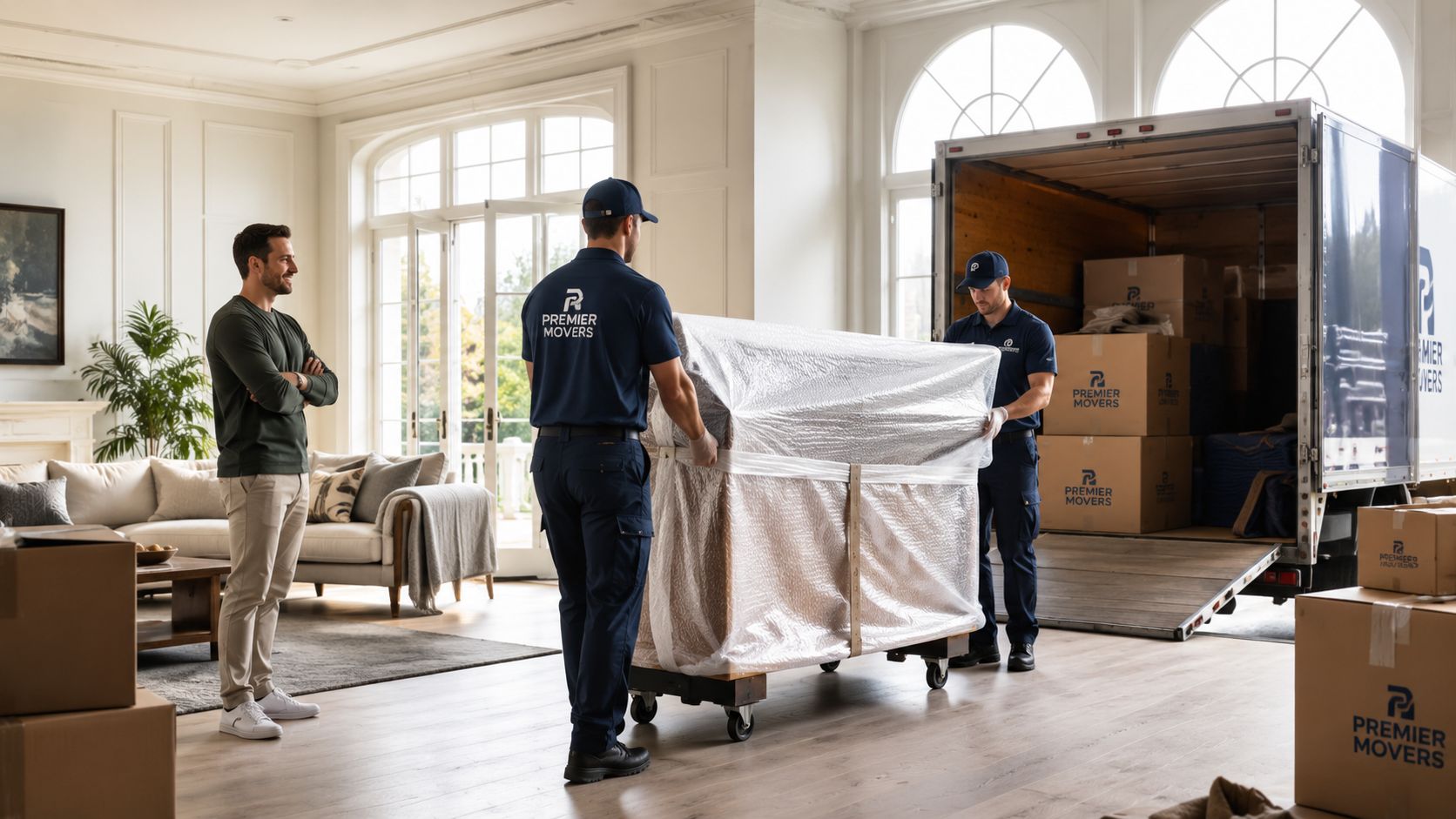
The first thing a good team should do is assess the move properly. That includes the volume of your belongings, usually discussed in cubic metres, which means the amount of truck space your furniture and cartons will take up. It should also include access conditions such as stairs, lifts, driveway position, street parking, and any building restrictions.
Planning before the truck arrives
The biggest difference between a smooth professional move and a chaotic DIY move is often what happens before moving day. A proper plan answers practical questions early.
Will the building require a lift booking? Is there a loading dock? Are there restricted move-in hours? Do fragile items need special packing? Are there narrow access points that affect what truck size is suitable?
That prep work matters because delays are rarely random. They usually come from access details no one pinned down in advance.
Packing and protection
A professional service can accommodate specific needs. Some households want transport only because they prefer to do their own packing. Others want help with the full job, including fragile packing, carton supply, wardrobe boxes or porta robes, and unpacking at the other end.
Good crews use proven loading methods and protective materials to reduce rubbing, crushing, and movement in transit. That includes wrapping vulnerable furniture, using quilted pads, securing loads correctly, and protecting property during entry and exit.
If you're comparing options, pay close attention to what's included around preparation and protection. This overview of packing and removal services shows how much difference the packing side can make, especially for kitchens, artwork, glass, and electronics.
Book early if your dates are fixed. In a recent move-experience survey, 64% of respondents reported a shortage in professional moving services during their move (move-experience survey data).
Reliability and risk transfer
When you hire a professional team, you're also shifting responsibility for the handling process. That matters more than many people realise.
With DIY, you're responsible for disassembly, load restraint, driving, unloading, and all the judgment calls in between. With a removalist, trained crews use established handling techniques that reduce breakage and improve space efficiency during transport. Allied's guidance on self-move versus movers highlights that the break-point is often not the truck rental itself, but the combined cost of fuel, time, and risk transfer, with full-service options bundling packing, loading, transport, and unloading (Allied moving resources).
That's why insurance matters. When belongings are valuable, access is awkward, or the timeline is tight, a fully insured service isn't just a comfort. It's part of responsible planning.
What a good removalist should ask you
If you're speaking with a removalist and they don't ask detailed questions, that's a warning sign. A solid operator should want to know things like:
- Property type: House, unit, office, townhouse, or retirement village accommodation.
- Access details: Stairs, lifts, narrow hallways, steep driveways, or loading restrictions.
- Inventory issues: Pianos, oversized lounges, antiques, marble tops, gym gear, or delicate electronics.
- Timing constraints: Settlement windows, key handover times, school pickups, or building booking slots.
The best service feels organised, not vague. You should know what's happening, who's responsible, and what protection is in place before the day begins.
Making the Right Choice for Your NSW Move
The right answer often depends less on distance and more on complexity. A short move can be awkward. A longer move can be straightforward if access is easy and the job is well organised.
One broad pattern is useful here. Over half of all moves happen within the same local area, and about 80% remain within the same state (moving industry trends and statistics). That's highly relevant across the Central Coast, Newcastle, Lake Macquarie and Sydney because local moves often look simple while still involving difficult parking, traffic, stairs, and building rules.
Removalists vs self move at a glance
| Factor | Self Move (DIY) | Professional Removalist |
|---|---|---|
| Upfront cash outlay | Usually looks lower at first | Usually broader because labour and service are included |
| Time required | You handle packing, loading, driving, unloading, and coordination | The crew handles the physical work and transport planning |
| Physical strain | High, especially with stairs, bulky items, and repeated carries | Lower for you because trained crews do the lifting |
| Access issues | You manage lift bookings, parking permits, and common-area protection | A good team plans around access and building requirements |
| Risk of damage | Higher if packing or load restraint is poor | Lower when items are wrapped, secured, and handled professionally |
| Best fit | Small, simple, flexible local moves | Family homes, apartments, offices, valuable items, fixed timelines |
When DIY is usually reasonable
A self-move can work well if you're relocating a small household over a short distance, have clear access at both ends, and can be flexible if the day runs over. It also helps if you're confident with packing, comfortable driving a larger vehicle, and not moving anything especially fragile or awkward.
A one-bedroom unit with easy parking and no lift booking is a very different prospect from a three-bedroom family home. The smaller and simpler the move, the more realistic DIY becomes.
When a removalist is usually the smarter choice
Professional help becomes more attractive as soon as the move includes friction. That might be children, pets, work commitments, settlement deadlines, elderly family members, heavy furniture, apartment rules, or tricky access.
A high-rise move in Sydney can involve lift windows, loading bay rules, and parking limitations that leave no room for trial and error. A move into one of Newcastle's older buildings may involve stairs and delicate wall clearances. On the Central Coast, homes in hilly or coastal areas can make truck setup and carrying distances more complicated than they first appear.
Insurance should also be part of the decision, not an afterthought. If you're comparing options, this guide to insurance for removals is worth reading before you lock anything in.
If your move has a fixed deadline and limited access, reliability matters more than the cheapest starting figure.
Plan Your Move with Confidence
By the time people compare removalists vs self move properly, the decision usually gets clearer. It's rarely just “truck hire versus service fee”. It's whether you want to carry the hidden labour, scheduling pressure, safety risks, and access problems yourself.

If you're moving into your first place, the logistics can feel bigger because everything is new at once. Alongside your relocation planning, this Quote My Wall first home guide can help you think through the extra setup jobs that tend to appear around move-in week.
The practical test is simple. If your move is small, straightforward, and flexible, DIY may suit you. If your move involves strata rules, valuable items, difficult access, family schedules, or a hard deadline, professional help often protects more than your furniture. It protects your time, your energy, and the chances of the day running properly.
Get your questions answered early. Ask about access, insurance, packing options, and timing. A clear plan before moving day saves more trouble than any last-minute scramble.
If you'd like a second opinion on your move, Gentle Giant Removals & Relocations can help with a free, no-obligation quote or in-home assessment across the Central Coast, Newcastle, Lake Macquarie and Sydney. For urgent moves, give the team a call on 1300 882 112. You can also enquire online to discuss packing, access issues, interstate planning, or a customized relocation schedule.