

You're probably looking at a sofa, armchair or dining setting right now and thinking, “Will a couple of old sheets do the job?” On a quiet local relocation from Gosford to Wyong, you might get away with light covering on low-risk items. But once furniture starts moving through door frames, down stairs, into lifts, across shared foyers and onto a truck, soft household linen stops being protection and starts being decoration.
Around the Central Coast, Newcastle and Sydney, we see the same pressure points again and again. Tight apartment access. Heritage terraces with narrow stairwells. Wet coastal mornings. Busy loading zones where you need to move efficiently without scraping furniture or common property. That's where heavy duty moving blankets earn their place. If you're planning your move and want a broader look at furniture protection, our guide to protecting furniture when moving is a useful place to start.
Why Your Favourite Armchair Deserves Proper Protection
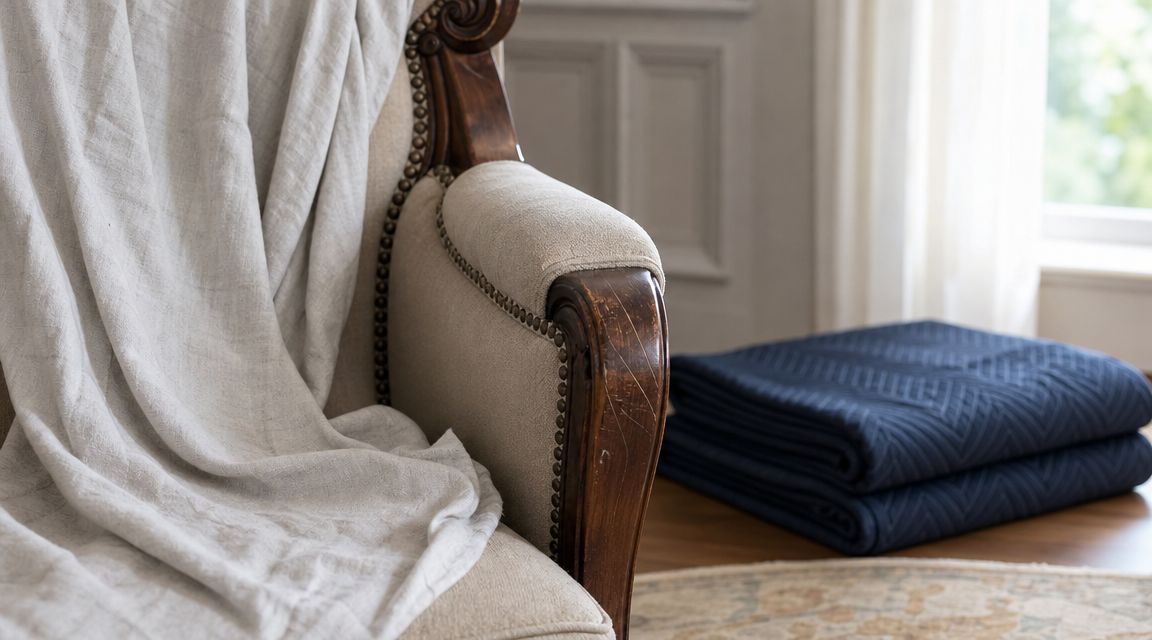
A favourite armchair usually gets marked before it ever reaches the truck. In a Sydney unit block, it clips a lift return or brushes a painted corridor wall. In a Newcastle terrace, it has to pivot through a narrow stairwell with timber newel posts and tight landings. One bad turn is enough to scuff a leg, flatten piping, or graze fabric on the front corner.
Heavy duty moving blankets reduce that risk because they add grip, padding and coverage where household linen fails. Sheets slide off rounded arms. Doonas bunch up at the base. Loose throws leave the top corners exposed, which is exactly where chairs get hit going through doorways and around lift doors.
What proper protection looks like on NSW moves
On the Central Coast and in Sydney, protection has to do more than stop scratches. It also has to handle coastal humidity, light rain during loading, and the stop-start handling that comes with strata rules, booked lift times and short loading windows. A chair might be wrapped in a dry lounge room, parked in a basement while access is cleared, then carried across a damp driveway at the other end. If the covering shifts or soaks through too easily, the chair wears the result.
I see this most often with upholstered occasional chairs and timber-framed armchairs. The damage is rarely dramatic. It is grubby contact on the lower back corner, friction on the arms, a dent in one polished leg, or dirt worked into light fabric after being set down for thirty seconds on rough concrete.
That is why removalists treat armchairs as finish-sensitive items, not just bulky ones.
Why the stakes are higher than many people expect
Furniture protection matters more in higher-value homes because the furniture itself is usually better made and more expensive to repair. Sydney property values also give some context for the standard of fit-out many households are moving. The NSW Valuer General and property reporting cited by ABC News on Sydney's median house value passing $1.3 million in 2024 reflect the level of investment many owners and renters are trying to protect, including custom upholstery, solid timber occasional furniture and designer accent chairs.
A marked armchair is annoying if it is a cheap spare-room piece. It is a real problem if it is a custom fabric chair, a family heirloom, or the one seat everyone uses every night.
If you want a broader view of what should be wrapped, padded or boxed before relocation day, this guide to protecting furniture when moving gives a useful overview.
Where DIY coverings usually let people down
DIY coverings often fail at the points that matter most. They do not stay tight through repeated handling. They pick up moisture in coastal conditions. They drag on shared lobby floors, then transfer that grit onto the chair. In Sydney strata buildings, that also creates another problem. A loose blanket trailing in a corridor or lift can slow the job down when you are working inside a booked time slot.
Premium upholstery needs a bit of prep before wrapping as well. Dust, body oils and surface grime can be rubbed deeper into the fabric if the chair is covered carelessly and cinched down. If you are moving linen, velvet or another delicate finish, this luxury upholstery care guide is a sensible reference before packing day.
The goal is simple. Keep the fabric clean, keep the frame off hard surfaces, and keep every corner covered from the front door to the new lounge room.
How to Choose the Right Heavy-Duty Moving Blankets
A blanket that works on a short ground-floor move in Gosford can be the wrong choice for a humid storage job near the coast or a tight apartment move in inner Sydney. The difference shows up once furniture starts passing through lift lobbies, narrow terraces, and truck stacks. Good blankets stay put, absorb knocks, and avoid trapping damp against the item.
Start with size and weight
Size matters first because coverage problems start at the edges. A blanket in the standard removalist range will usually cover the broad faces of an armchair, buffet, or washing machine, but coverage alone is not enough. If the blanket is too light, it shifts as the item is turned, stood up, or packed beside other furniture.
Heavier blankets usually give better padding through corners, arm ends, and lower rails. That is the area that gets clipped on stair nosings in Newcastle semis and heritage entries, not the flat middle panel. A lighter blanket can still be useful for dust control or as a second outer layer, but it is not the one to trust on polished timber or a fabric lounge riding in a full truck.
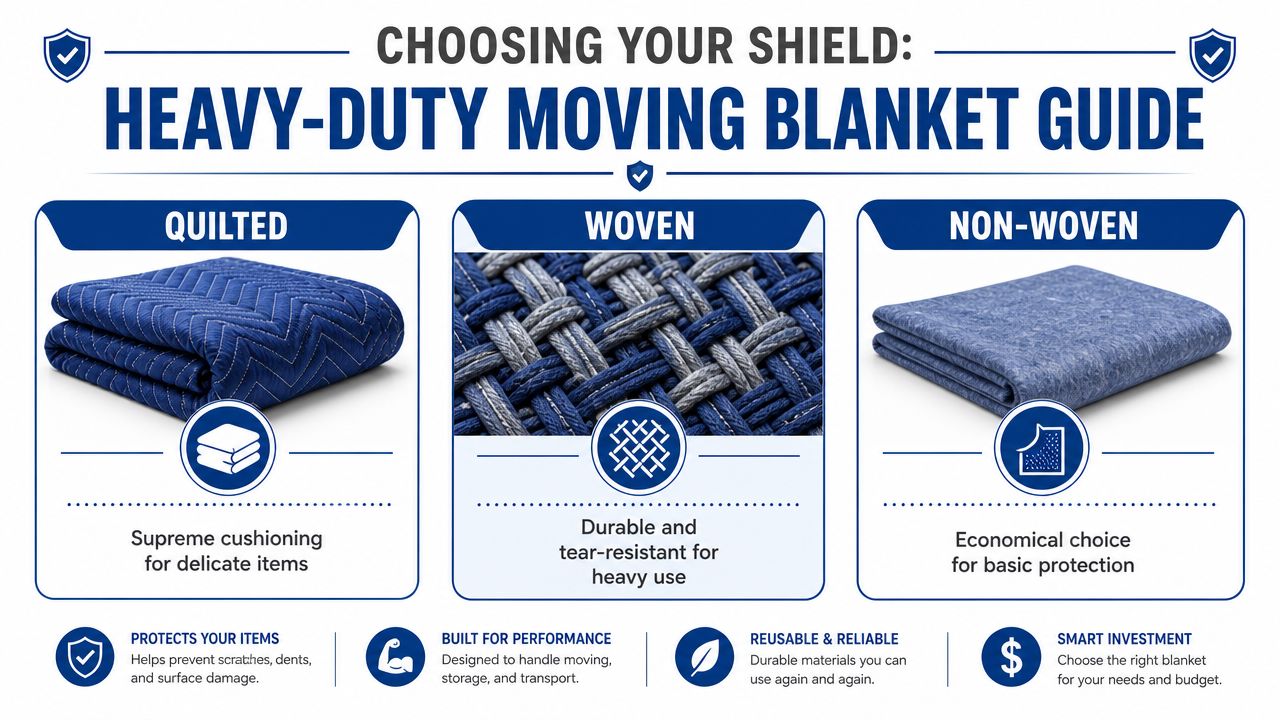
Material choice changes the result
Removalists tend to sort blankets by how they behave on the job, not by how neat they look folded.
| Blanket type | Where it works | Where it falls short |
|---|---|---|
| Quilted | Upholstered furniture, timber pieces, longer trips, stacked truck loads | Bulkier to carry and takes more room in storage |
| Woven | Repeated commercial handling, trolleys, dense loads where durability matters | Can feel harsher against delicate finishes unless you add a softer layer |
| Non-woven | Dust covers, short-term surface protection, low-risk items | Too thin for corners, legs, and heavy contact points |
For NSW moves, moisture resistance matters more than many people expect. Around the Central Coast, salt air and damp mornings can leave cotton-heavy covers holding moisture longer than you want, especially if furniture sits wrapped overnight. Synthetic quilted blankets are often the safer option for that reason. In Sydney strata buildings, they also tend to slide and reposition more cleanly during lift loading, which helps when you are working inside a booked move window and cannot waste time rewrapping in the foyer.
If you're buying materials yourself, this guide to packing supplies near you helps sort out what is worth purchasing and what is better hired or supplied on the day.
Match the blanket to the item and the job. A fridge, a velvet armchair, and a marble-topped hall table should not all be wrapped the same way.
How many blankets do you really need
Underestimating quantity is one of the common DIY mistakes. A compact armchair might only need one heavy blanket. The same chair can need two if it has timber arms, a high back, or has to be squeezed beside other pieces for a run from Sydney to Newcastle.
Whole-house moves need a broader count. Start with the pieces that are exposed during handling or likely to rub in transit. Bedheads, dining tables, buffets, whitegoods, coffee tables, and office desks all draw from the same blanket pile. On older Newcastle properties with tight stairs and sharp turns, extra blankets are often used as temporary wall and balustrade protection as well, so the number climbs quickly.
Gentle Giant Removals & Relocations also supplies quilted protection as part of removal work, which suits households that do not want to buy, dry, and store blankets after a one-off move.
A Step-by-Step Guide to Wrapping Your Lounge Chair
A lounge chair is a good example because it has nearly every problem point in one item. Fabric or leather on broad faces. Timber or metal on the arms. Corners at the back. Legs that catch on thresholds. If you can wrap a lounge chair properly, you'll understand the logic behind protecting most household furniture.
The method below follows the same field sequence professionals use. The chair sits still. The blanket does the work.
Set up before the chair moves
Start by clearing a clean patch of floor. Remove loose cushions, throws and anything that can shift inside the wrap. If the chair has detachable legs and the design allows safe removal, take them off and pack them separately so they don't punch through the blanket during transit.
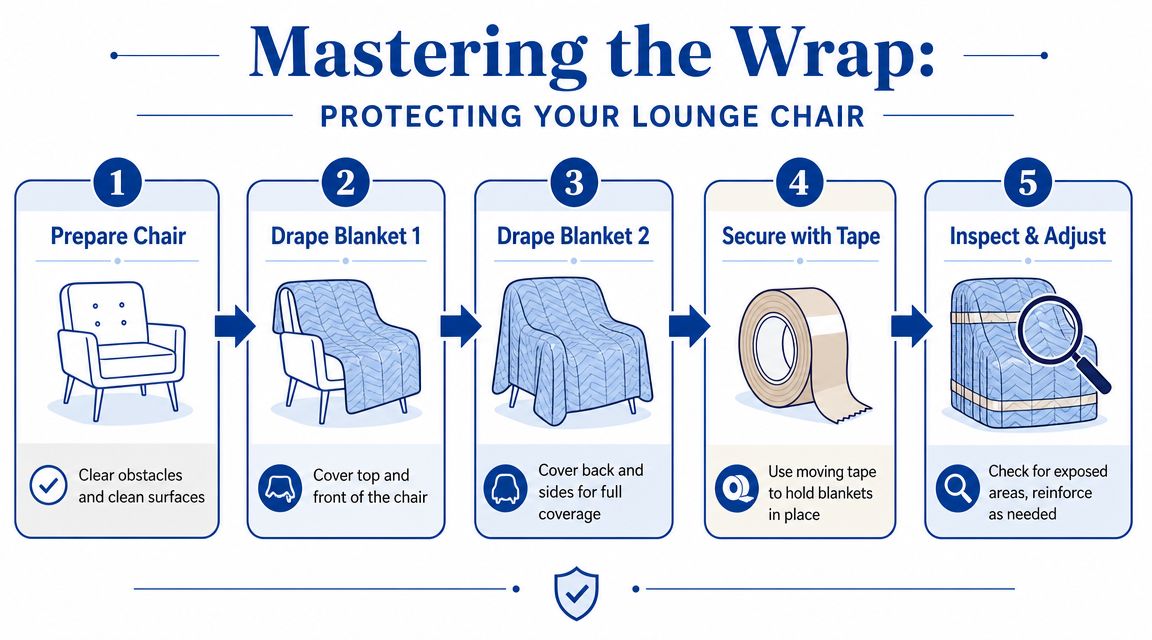
Lay the blanket flat first. Don't hold it up and try to “dress” the chair while it's already being carried. The professional approach is to pre-stage the blanket, centre the item, cover all contact faces, overlap seams by at least one-third, and secure it with tape or straps. Under-wrapping corners and hard edges is the common DIY failure point, according to this field-use guide to wrapping with moving blankets.
Wrap corners first, then the broad faces
The trade secret isn't complicated. Protect the weak points before the easy parts. Corners and hard edges take the first hit on door frames, truck walls and other furniture.
Use the first blanket to cover the top, front and arms. Tuck it firmly so the chair shape is still obvious underneath. Then use a second blanket if needed to close the back and base. You want overlap, not gaps.
A good wrap should do these jobs:
- Cover every contact point so no timber edge, chair leg or fabric corner is exposed.
- Create overlap at seams because a butt-join opens up the moment the item shifts.
- Stay snug without crushing so cushions and upholstery keep their shape.
- Allow safe grip points for carrying, rather than leaving handlers clutching loose fabric.
If you've got nearby fragile pieces to prepare at the same time, our guide to packing fragile items safely for moving helps you avoid mixing delicate packing methods with furniture wrapping.
Secure the wrap properly
Tape or straps hold the blanket in place. Friction doesn't. On a local move from Erina to Newcastle, a loose blanket might survive the first room or two. It usually fails once the chair is tipped on a trolley, loaded against another item, or shifted to make space inside the truck.
Use tape carefully. Attach it to the blanket itself where possible, not directly to polished timber, leather or finished surfaces. Straps are even better when you need firm hold without adhesive contact.
This short demo gives you a visual reference for the wrapping sequence before transport:
A wrapped chair should look boring. If the blanket is flapping, sliding or exposing a leg, it isn't ready to leave the room.
Final check before loading
Walk around the chair once. Look low. That's where misses usually happen. The rear lower corners, the chair feet and the underside edge are easy to forget and often the first places to scrape.
If the chair is heading into storage after the move, use the same wrapping standard you'd use for a longer road trip. Storage adds handling stages, and every extra lift is another chance for exposed sections to mark.
Securing Wrapped Furniture for Safe Transit and Storage
Wrapping protects the surface. Securing protects the wrapped item. Those are two different jobs, and plenty of DIY moves go wrong because people stop at the first one.
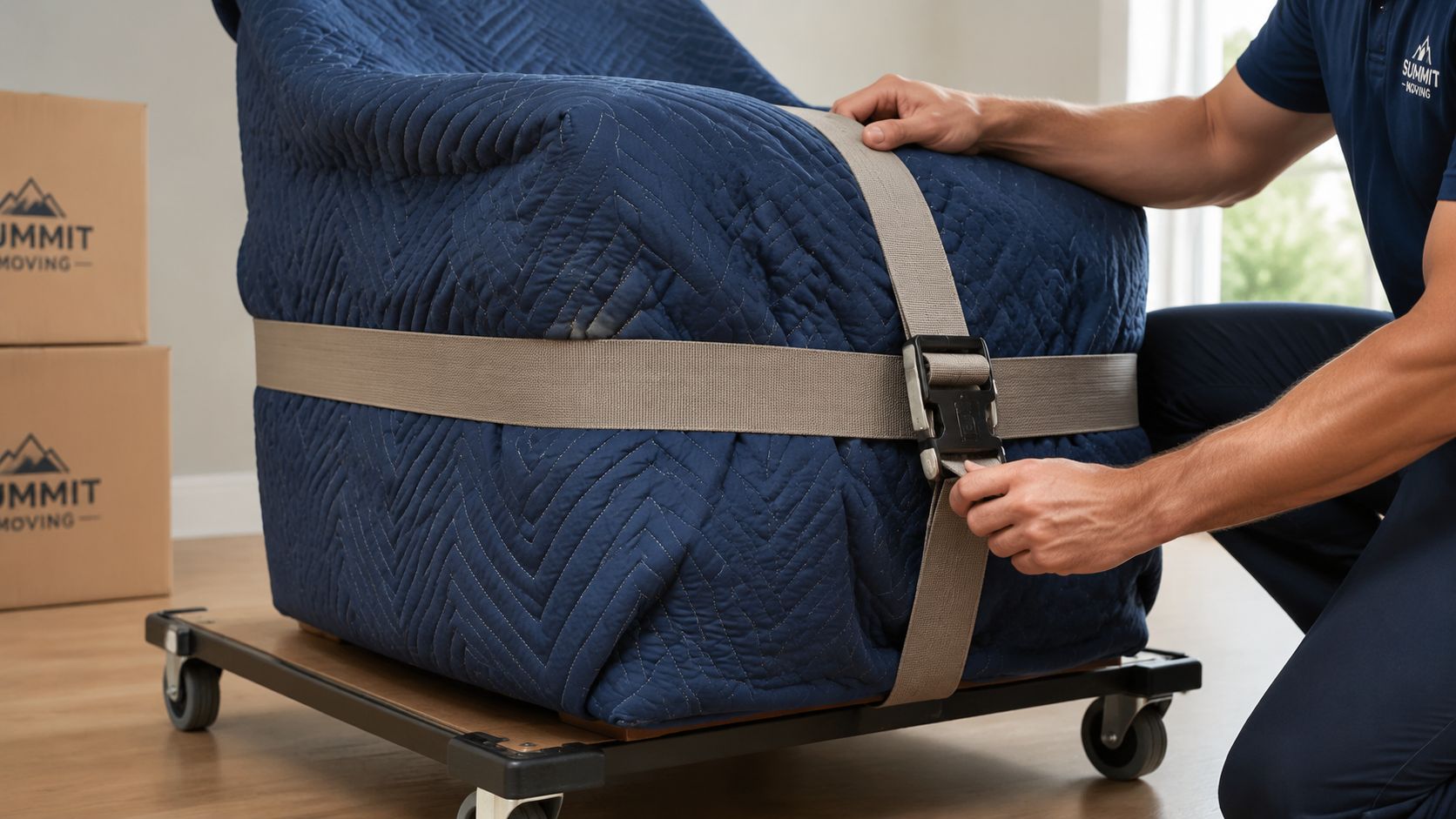
Take a Sydney apartment relocation as an example. The chair is wrapped properly, but then it has to travel through a booked lift, across a shared lobby and into a truck parked in a timed loading zone. If the item isn't strapped to a dolly correctly, one sudden tilt on a lift threshold can undo all the careful wrapping.
Moving through buildings without damage
In strata buildings, you've got more to think about than your own furniture. Lifts may need protection blankets. Move windows can be restricted. Body corporate rules often require lift bookings, and some buildings want advance notice for loading dock access or common-area protection.
A wrapped lounge chair still needs controlled handling. On a dolly, the item should sit balanced and be secured so it can't rock forward when entering a lift or going over a threshold. In Newcastle's older buildings, narrow stairs and tighter corners often mean furniture has to be rotated mid-carry. That's where loose wraps and exposed edges become obvious.
Inside the truck, placement matters
Professional removalists also plan blanket use at scale. The common allowance is 1 to 2 blankets per large item, and a standard one-bedroom apartment move can require 12 to 24 blankets, based on industry guidance for blanket allocation. That's a useful reminder that blankets aren't just for the “nice pieces”. They're part of how a whole load is stabilised.
Here's how secured loading usually works in practice:
- Heavier items create the base so lighter furniture isn't carrying weight it was never designed to support.
- Wrapped faces sit against safe surfaces rather than bare timber against metal truck walls.
- Tie-downs stop migration because even a short drive through Sydney traffic creates movement inside the body of the truck.
- Access order matters so the first item needed at delivery isn't buried behind half the house.
If you want to understand that loading logic in more detail, our article on how to pack a moving truck breaks down how placement and restraint work together.
On-road reality: a truck doesn't damage furniture because the distance is long. Damage happens when items rub, lean, compress or shift during braking, cornering and rehandling.
For storage, the same rule applies. Don't leave wrapped furniture standing loose where it can be nudged by the next item going in. Stable placement matters just as much in a container or storage bay as it does on the road.
After the Move Storing Blankets and Planning Ahead
Once the chair is in place and the truck's gone, the blankets still need attention. Around Sydney, the Central Coast and Lake Macquarie, moisture is the issue that catches people out. A blanket can feel dry on the outside and still hold dampness in the padding.
In humid NSW coastal conditions, synthetic quilted pads often outperform cotton blends because they're less likely to retain dampness, which can lead to mould and odours if stored badly in garages or sheds, as discussed in this video on moving blanket use and moisture considerations. If your blankets were exposed to rain, condensation or a damp truck floor, dry them fully before folding them away.
Store them so they're usable next time
Good storage is simple, but it has to be deliberate.
- Dry first, fold second so trapped moisture doesn't create smell or mildew.
- Keep them off the floor in garages or sheds where damp rises and dust builds up.
- Separate clean from dirty if you've used some blankets outdoors or on appliances.
- Use proper storage bags if you want them ready for the next move or a renovation project.
If you're short on cupboard space, these decluttering home storage solutions offer practical ways to keep bulky blankets contained without turning the spare room into a dumping ground.
For households between homes or waiting on settlement dates, short-term storage changes the protection plan again. Our guide to short-term furniture storage covers what to do when furniture needs to stay wrapped and secure for longer than a single delivery day.
Heavy duty moving blankets are one of those tools that look simple until you've seen what happens without them. Used properly, they protect finishes, reduce friction, help with safer handling and make loading more controlled. Used badly, they become loose fabric that hides problems instead of preventing them.
If you're planning a relocation anywhere across the Central Coast, Newcastle, Lake Macquarie or Sydney, Gentle Giant Removals & Relocations can help you work out what level of protection your furniture needs. We handle local, intrastate and interstate moves, along with packing materials, careful loading, access planning for stairs and lifts, and full insurance coverage for added peace of mind. For urgent moves, tight settlement timelines or apartment relocations with body corporate requirements, get a free moving quote or request a free in-home assessment through the website.