
Whether you're planning a move in Terrigal, Newcastle, or anywhere across Sydney, one thing's for sure: you're going to need good packing materials. But a quick search for 'packing supplies near me' can throw up a dizzying number of options, making it hard to know where to start.
This guide is here to cut through the noise. We’ll walk you through how to figure out exactly what you need, where to find reliable supplies locally, and how to weigh up buying new versus our eco-friendly hire options. Think of us as your experienced removalist team, here to give you practical advice for a smooth relocation.
Finding The Right Packing Materials On The Central Coast And Beyond
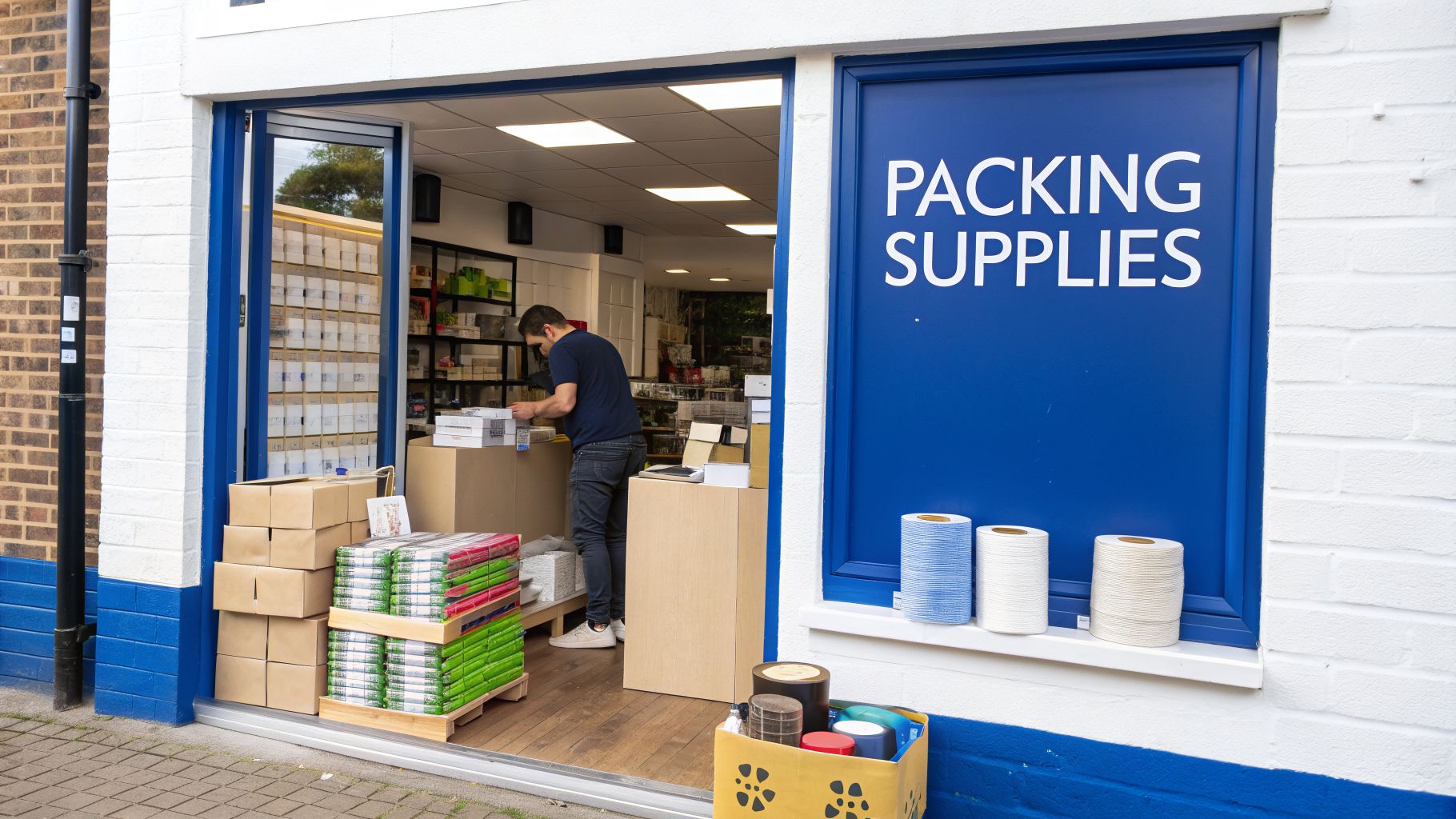
Think of this as getting a bit of insider advice from an experienced removalist mate. Whether you're packing up a one-bedroom apartment in Gosford or a large family home in Lake Macquarie, getting your materials sorted is the first real step to a smooth move. We'll cover everything from estimating how many boxes you’ll need to tracking down specialty items for those fragile heirlooms.
Sourcing quality packing materials is more common than ever. Across the Australian removalist industry, we've seen a surge in demand as more people choose to pack themselves to keep relocation costs down. This is especially true for residents on the Central Coast, in Newcastle, and across Sydney, where options like refundable deposit boxes are becoming increasingly popular.
Why Quality Materials Matter
It’s always tempting to just grab any old boxes you can find, but using proper, removalist-grade packing materials is really about protecting your belongings and our team's safety. We’ve seen it all. Inferior boxes collapse under weight, fall apart if they get a bit damp, and ultimately put your valuables at risk. This is especially true when navigating the tight stairwells of a heritage apartment in Newcastle or dealing with the stop-start of Sydney's busy traffic.
Using sturdy, uniformly sized boxes lets our team load the truck securely, almost like playing Tetris. This stability is absolutely crucial for making sure everything arrives at your new home just as it left the old one, and it's all covered by our comprehensive insurance.
Our moving boxes are all double-walled for extra strength. That means they can handle the weight of heavy books or your entire set of kitchenware without buckling under pressure. Strong boxes are a non-negotiable part of a safe and successful relocation.
Covering All Your Bases
A successful move needs more than just standard boxes. You’ll want a range of specific packing materials to do the job right. Think about packing paper to wrap delicate items without leaving ink stains, bubble wrap for cushioning electronics, and, of course, strong packing tape to seal everything up securely.
For highly specific or commercial needs, some people look into professional contract packaging services, but for most household relocations, we’ve got you covered.
At Gentle Giant Removals, we provide a full range of packing materials to make sure you’re well-equipped. You can either purchase them outright or take advantage of our hire options for things like porta-robes—they’re brilliant for keeping your clothes crease-free during the move.
How to Figure Out Exactly What Packing Supplies You Need
Before you even think about searching for "packing supplies near me," the most important first step happens right inside your own home. Taking a little time to do a simple inventory will save you from the classic moving mistakes: buying way too much, or worse, making that panicked, last-minute dash to the shops for more boxes.
This isn’t about creating a massive, complicated spreadsheet. It’s just about being methodical. Imagine you're moving a three-bedroom home in Terrigal to Newcastle. Start by walking through your home, room by room, and jotting down what’s there. Tally up the obvious things like books, kitchenware, and linens, but pay close attention to the items that need special care. Do you have a cabinet full of delicate glassware that’ll need proper divider inserts? A massive collection of heavy books that absolutely must go in smaller, sturdy book boxes so they can actually be lifted? This process turns a vague idea into a practical shopping list.
Understanding Your Total Volume
Once you have a sense of what you’re moving, the next step is to get a handle on its total volume. In the removalist world, we measure everything in cubic metres—that's the space your belongings take up. Put simply, it’s the total amount of space all your belongings will take up in one of our trucks.
Knowing this figure is vital for a couple of key reasons. First, it helps us assign the right-sized truck for your relocation, making sure everything fits in a single, efficient trip. Second, it gives us a very accurate idea of the packing materials you'll need. You won’t end up with a garage full of unused boxes or run out of tape halfway through packing the kitchen. Getting this right is a cornerstone of an organised move.
A classic mistake is underestimating all the small things. It’s often the forgotten contents of cupboards, drawers, and the back of the shed that add a surprising amount of volume. A thorough walk-through is the only way to avoid these surprises and get a truly accurate quote.
If you’re keen to get a preliminary idea of how your volume might affect the overall cost, our team has put together a really helpful guide. You can get a much clearer financial picture by checking out our cost of moving calculator guide.
Ultimately, a detailed inventory is your best friend for a smooth packing process. It transforms the vague thought of "a lot of stuff" into a concrete plan of action. This lets you source the right packing materials for your specific needs, whether you're in a compact Sydney apartment or a spacious family home on the Central Coast.
To Buy, Hire, or Recycle? Making the Right Choice for Your Supplies
So, you’ve got your inventory sorted. Now for the big question: where do you actually get all these packing supplies? A quick search for "packing supplies near me" will show you a few options, and the best one really comes down to your budget, your timeline, and what you’re moving.
Comparing Your Packing Supply Options
Let's break down the main choices. Each has its own set of pros and cons, and what works for a small local move might not be ideal for a larger interstate one. The right decision balances cost, convenience, and the safety of your belongings.
When you buy new boxes, you get absolute peace of mind. You know they're clean, sturdy, and all the same size, which makes them a dream to stack in the truck. If you're planning a long-haul relocation, say from Sydney up to Queensland, or you're packing up precious, fragile items from a Newcastle heritage apartment, the solid structure of new materials is your safest bet.
For local moves, hiring packing materials from us is a brilliant alternative. We offer professional-grade moving boxes and porta-robes on a refundable-deposit basis. It’s not just a cost-effective choice for relocations within the Central Coast or out to Lake Macquarie—it's also a much more sustainable, eco-friendly approach. You get the quality of proper removalist gear without the long-term waste.
Of course, there's also the option of sourcing recycled boxes from supermarkets or online marketplaces. This can work, but it comes with a big warning: you have to inspect them carefully. Make sure they are completely dry, structurally sound with no tears or weak spots, and free from any signs of pests. One weak box can compromise an entire stack in the truck, putting your belongings at risk.
This flowchart breaks down how a good inventory can guide your decision on supplies.
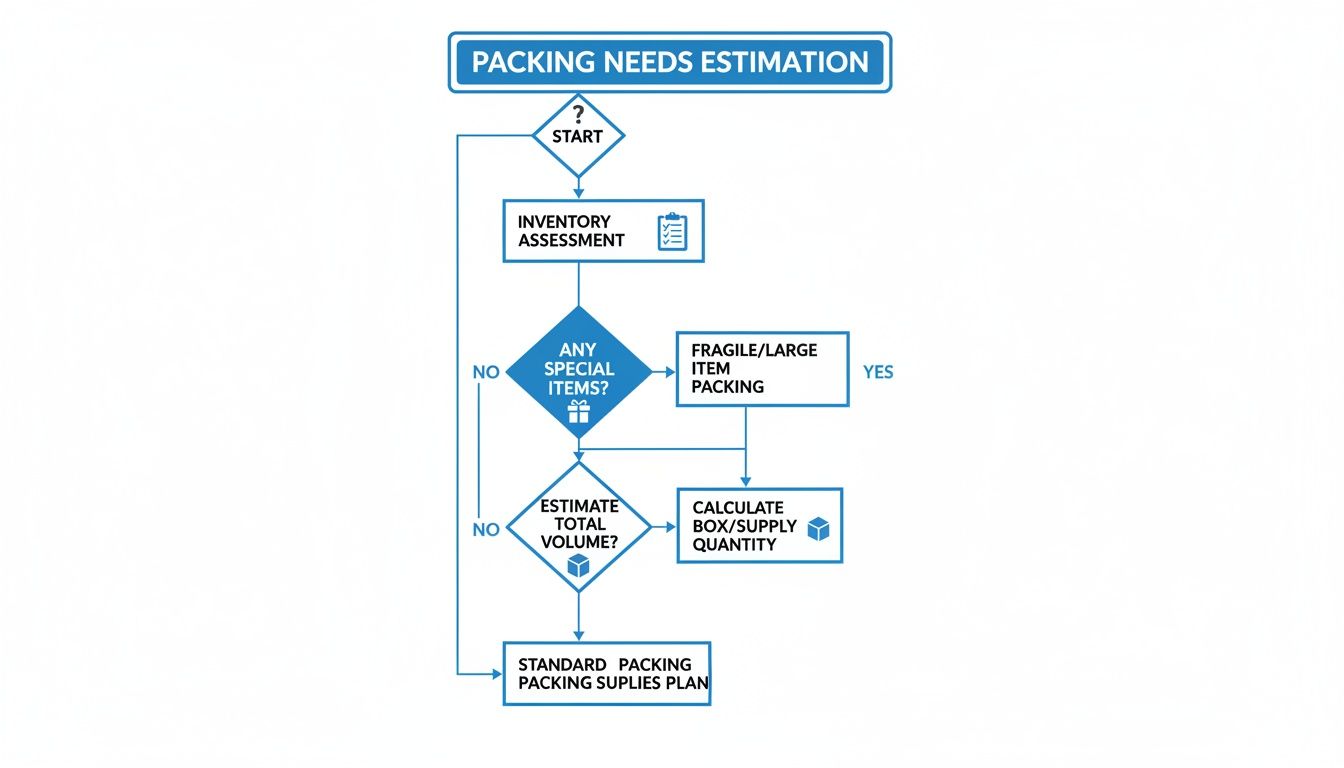
As you can see, knowing exactly what you have to pack is the key to deciding whether you should prioritise the durability of new boxes or the value of hired ones.
Our Pro Tip: For most local moves, we find a hybrid approach works best. Think about hiring the bulk of your standard boxes and porta-robes from us, and then purchase a few new, specialty boxes for your most fragile items like TVs, mirrors, and artwork.
Getting the right materials is one of the most important parts of preparing for your move. If you’re still not sure what’s right for your situation, our team is always here to offer advice. For a deeper dive into what you'll need, check out our guide on the 7 essential packing materials you need for a damage-free move.
Essential Packing Techniques for Fragile and Specialty Items
Having the right packing supplies is one thing, but knowing how to use them is what really protects your belongings. The art of good packing is all about making sure your most precious items arrive at your new home in the exact same condition they left. It’s a skill our removalist teams have perfected over many years of moving families across the Central Coast, Sydney, and Newcastle.
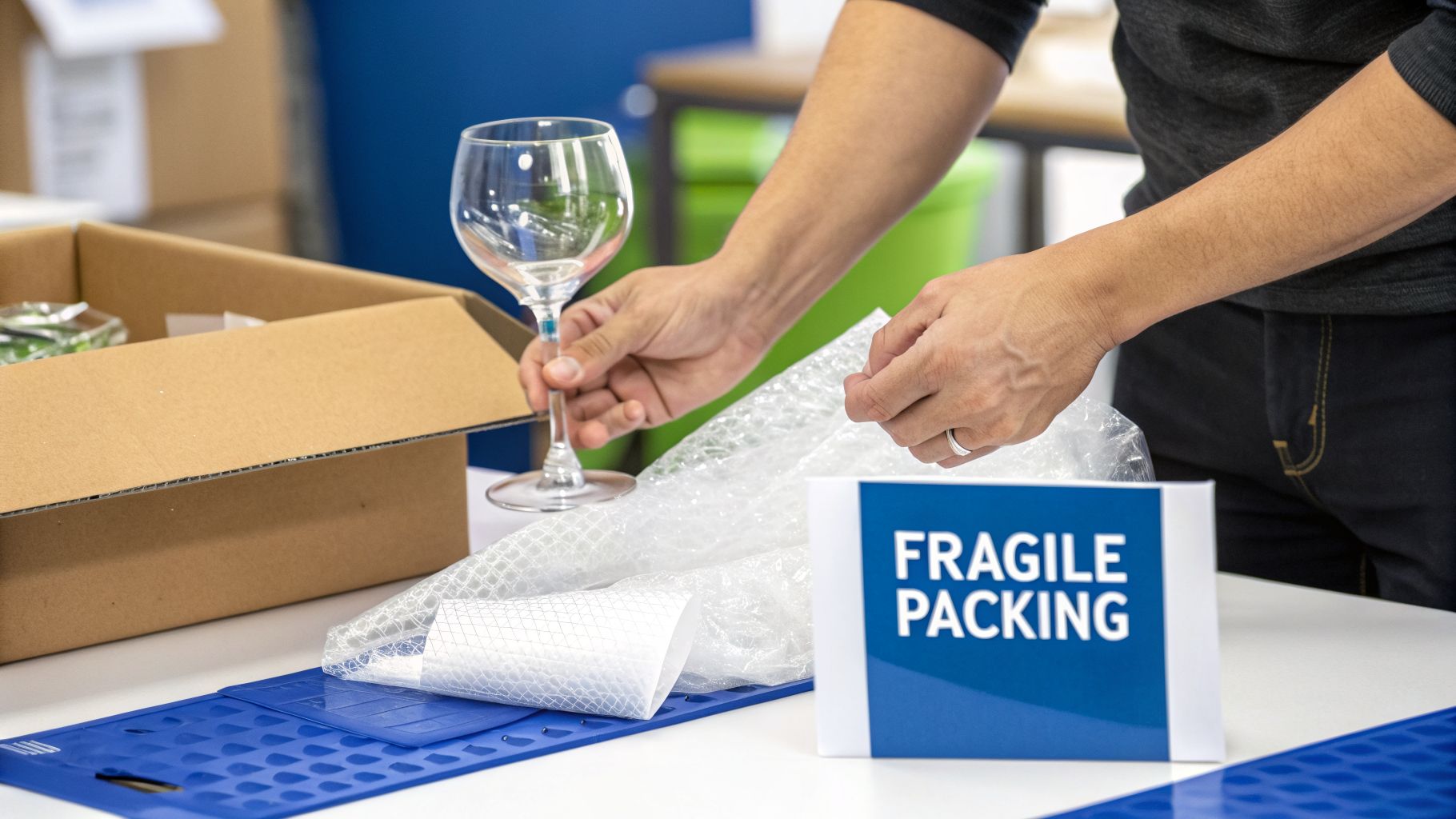
Let's walk through some of our essential techniques, starting with the basics for fragile items like dishes, glassware, and artwork. A common mistake we see is people using old newspapers for wrapping. While it seems resourceful, the ink can easily transfer onto your white plates and valuables, leaving stubborn stains. Instead, always opt for clean butcher’s paper.
Building a Safe Foundation in Every Box
Before a single item goes into a box, you need to create a protective base. Scrunch up several sheets of packing paper and lay them on the bottom to form a soft, cushioned layer about 5-10 centimetres thick. This base acts as a shock absorber, which is vital when the truck is navigating the varied road conditions between Terrigal and Lake Macquarie.
Once the base is ready, you can start packing. Here are a few key principles we always follow:
- Wrap Individually: Every single fragile item, from glasses to plates, should be wrapped in its own sheet of paper. No exceptions.
- Heaviest at the Bottom: Place heavier, sturdier items like dinner plates at the bottom of the box. Lighter, more delicate pieces like wine glasses should always go on top.
- Fill All Gaps: Use scrunched-up paper to fill any empty spaces in the box. This is crucial—it prevents items from shifting and knocking against each other during transit.
- Clear and Specific Labelling: Don't just write "FRAGILE". Be specific: "FRAGILE – KITCHEN GLASSES" and draw an arrow indicating which way is up.
The real test of a well-packed box is simple: if you gently shake it, nothing should move or rattle inside. A silent box is a secure box, and that's what we aim for with every single one.
Packing Specialty and Unique Items
Beyond the kitchen, many homes have specialty items that require a different approach. Electronics, for instance, need careful handling to prevent damage from static electricity and impact. If you've kept the original boxes, they are always your best bet. If not, use bubble wrap generously and ensure all cords are neatly coiled and taped.
For more detailed advice on this, we've put together a full guide on how to pack a computer for moving.
Clothing is another area where the right supplies make a huge difference. Instead of folding everything into boxes and dealing with a mountain of wrinkles later, our porta-robes are a fantastic solution. These are basically tall boxes with a built-in hanging rail, so you can transfer clothes directly from your wardrobe. It makes packing your clothes dead simple and unpacking at your new home even faster.
How to Get Your Packing Supplies Delivered or Collected
Once you've figured out exactly what packing materials you need, the final piece of the puzzle is getting them to your doorstep. You have a couple of straightforward options here, and the best choice usually boils down to your location, what kind of car you drive, and how much time you've got on your hands.
If you're based near the Central Coast, popping over to our Doyalson base (postcode 2262) to collect everything yourself is a great option. This works a treat if you have a ute or a large SUV and want to grab everything in one go, on your own schedule. For most people, though, delivery is by far the more practical solution.
Arranging a Convenient Delivery
Let's be realistic—not everyone has the time or the boot space to haul dozens of flat-packed boxes across town. This is especially true if you’re trying to coordinate a move from a busy Sydney suburb with non-existent parking, or you live in a Newcastle apartment where lugging bulky items up lifts and through hallways is a nightmare. This is also where things like body corporate rules on lift bookings or strata restrictions on move-in times can cause headaches.
Our Pro Tip: We almost always recommend scheduling a delivery. It's one less major task to worry about and ensures all your materials arrive safely and "On Time, Every Time". That way, you can get straight into packing without any delays.
We’ll work with you to lock in a delivery time that fits your schedule. Our team knows the local traffic patterns and access challenges across our service areas like the back of their hand. Whether it's a tight street in Newcastle's inner city, a tricky coastal road on the Central Coast, or a Sydney high-rise with strict lift booking rules, we plan the drop-off to be as smooth as possible.
What to Consider for Your Delivery
To make sure the delivery is seamless, giving us a few key details about your property is a massive help. It lets us plan ahead and dodge any last-minute hiccups. Let us know about any access challenges like a steep driveway or flights of stairs. If parking is tricky in your area, any tips are always appreciated. For apartments, it’s crucial to know about specific delivery times or if we need to coordinate with a building manager.
Nailing this final step is about more than just convenience; it’s about setting your entire packing process up for success. It ensures you have the right tools ready to go exactly when you need them, letting you focus on the big job of getting your home ready for moving day.
To check out our full range or to place an order, take a look at our complete list of available Central Coast moving boxes and materials.
Answering Your Top Packing Questions
Even the most organised person has a few questions when it comes to packing materials. Based on our years of helping people move across the Central Coast, Sydney, and Newcastle, we've pulled together the answers to the queries that pop up time and time again.
How Far Out Should I Get My Packing Gear?
Our best advice is to get your hands on packing materials at least two to three weeks before the big day. This gives you enough time to pack at a relaxed pace without that frantic last-minute scramble we all dread. You can start with the rooms you don’t use every day, like the spare bedroom or study. Packing away books, out-of-season clothes, and linen early on also doubles as a great chance to declutter. If you're moving a large family home, giving yourself a full month is even better.
Can I Use My Own Boxes and Tubs?
Absolutely! Using your own sturdy suitcases, plastic tubs, and storage containers is a great way to make use of what you already have. They’re ideal for soft, non-breakable things like clothing, towels, and kids' toys.
However, for most of your belongings, we can’t stress enough the importance of proper, removalist-grade boxes. Our moving boxes are double-walled, giving them far more strength and durability. Their uniform size allows our team to load the truck tightly and securely, which minimises shifting during transit and keeps your items safe. Using flimsy or odd-sized boxes is a real risk—they can easily get crushed, leading to damaged valuables.
What If I Run Out of Boxes on Moving Day?
It happens more often than you’d think, so don’t panic. Our removalist trucks always carry a stock of extra boxes, packing tape, and butcher's paper for exactly this reason. If you realise you’re a few boxes short while we're loading up, just give the team a heads-up. Our number one goal is to keep your relocation on track and running smoothly.
It's always better to have a few extra boxes than to run out. But if you do, our team comes prepared to solve the problem on the spot so the move doesn't get delayed.
Do You Offer Packing and Unpacking Services?
Yes, we definitely do. If you're short on time or the thought of packing up your entire life feels a bit much, our professional packing and unpacking services can be a lifesaver. Our experienced crew can take care of the whole process, using proven techniques to make sure everything is packed safely and efficiently. We can do a full pre-pack of your entire home or just focus on the tricky areas like a kitchen full of fragile glassware. Just mention it when you request a free quote, and we can tailor a plan that works for you.
Ready to get your packing organised? Gentle Giant Removals & Relocations can deliver all the high-quality packing materials you need right to your door. For advice or to place an order, get a free moving quote or call our friendly local team today.