

Think of long-term storage as a secure, off-site extension of your home, designed to hold onto your belongings for any period longer than three months. It’s the perfect solution for life's big transitions, giving you the breathing room you need when timelines just don't quite line up. A professional Central Coast removalist can help manage the entire process, from your old home to the storage unit, ensuring everything is handled with care.
What Is Long Term Storage and Why You Might Need It
Long-term storage is a specialised service where your belongings are kept in a secure facility for an extended period, typically from several months to several years. Unlike short-term options that you might use for a few weeks during a quick relocation, this solution is built for situations where you won't need immediate access to your items. It’s all about safeguarding your possessions until you're ready for them.
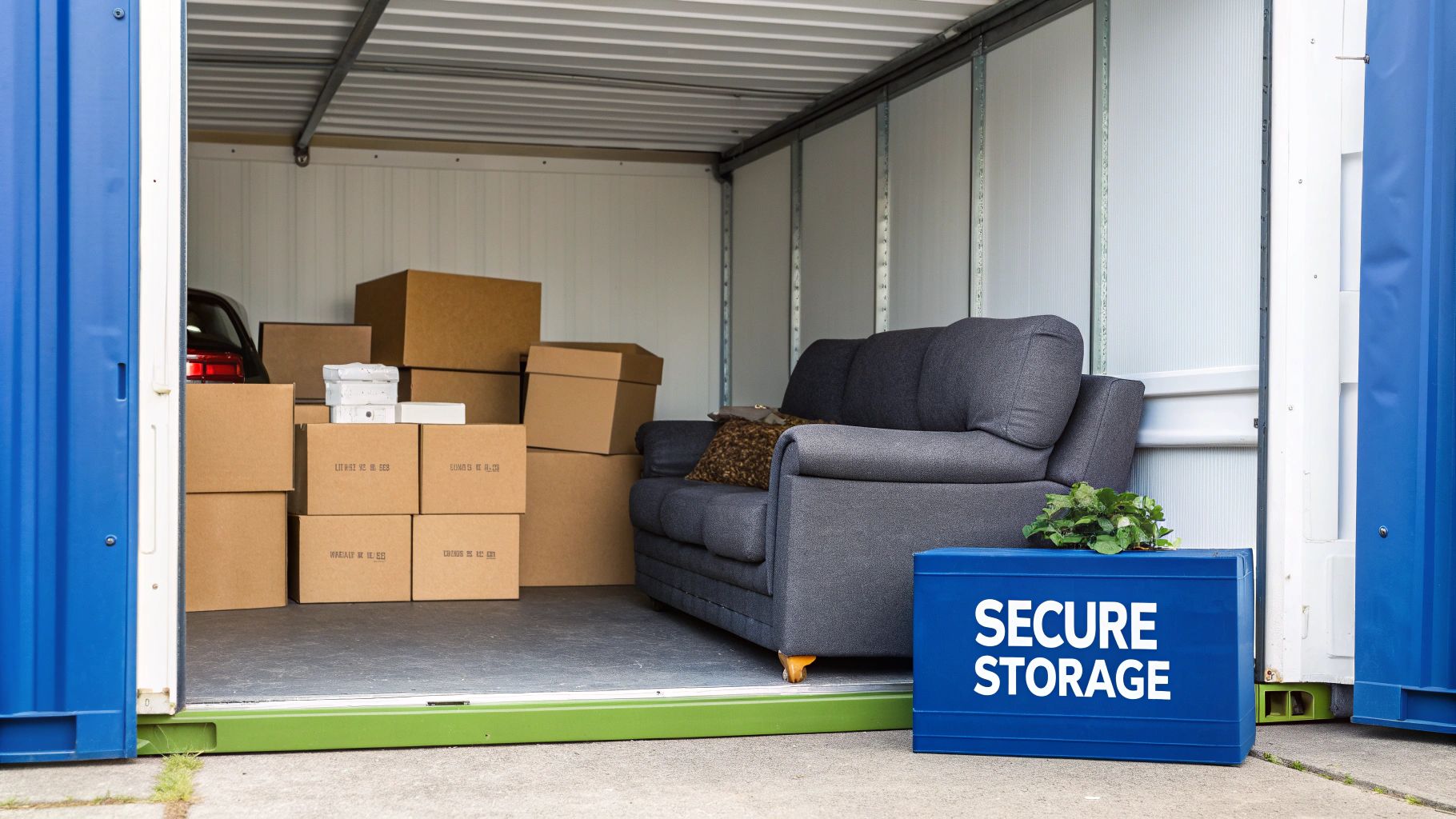
Common Scenarios for Long Term Storage
Many of our clients across the Central Coast and Sydney find themselves needing this service during significant life events. It’s not just about moving house; it’s about managing complex timelines and protecting your valuables in the process, all covered by our comprehensive insurance.
Imagine you're downsizing from a large family home in Terrigal to a modern two-bedroom apartment in Newcastle. You might have treasured furniture or heirlooms you want to keep for the future but simply don't have space for right now. Long-term storage provides a safe haven for these items until you need them again.
Another common reason is undertaking a major renovation. If you’re remodelling your Gosford home, moving everything into storage protects it from dust, paint, and potential damage. It also gives your builders clear, unobstructed access, which can actually speed up the whole project.
Managing Complex Relocations
Interstate relocations are a prime example where long-term storage becomes a lifesaver. Let's say you're relocating from Sydney, and the settlement date for your new home is months after you need to vacate your current one. Instead of rushing decisions or selling items you'd rather keep, storage acts as a bridge between your old and new life.
This is where a professional removalist makes all the difference. We don't just move your belongings; we coordinate the entire logistical puzzle for you. Our team can help you prepare, pack, and safely transport your items to a trusted local facility, ensuring everything is handled with care from start to finish. For a deeper dive into securing your belongings for extended periods, check out this complete guide to long term storage.
Ultimately, it’s about giving you flexibility and peace of mind. Knowing your possessions are secure allows you to focus on the more important parts of your move or life transition. If you’re wondering about the financial side of things, our guide can help you understand the factors that influence your moving cost estimator.
How to Choose the Right Storage Unit in NSW
Choosing the right storage unit is the first big decision you'll make to keep your belongings in perfect condition for the long haul. With so many options popping up across Sydney, Newcastle, and the Central Coast, knowing what you’re looking for is key. The decision usually boils down to two main types of units, and each one serves a very different purpose.
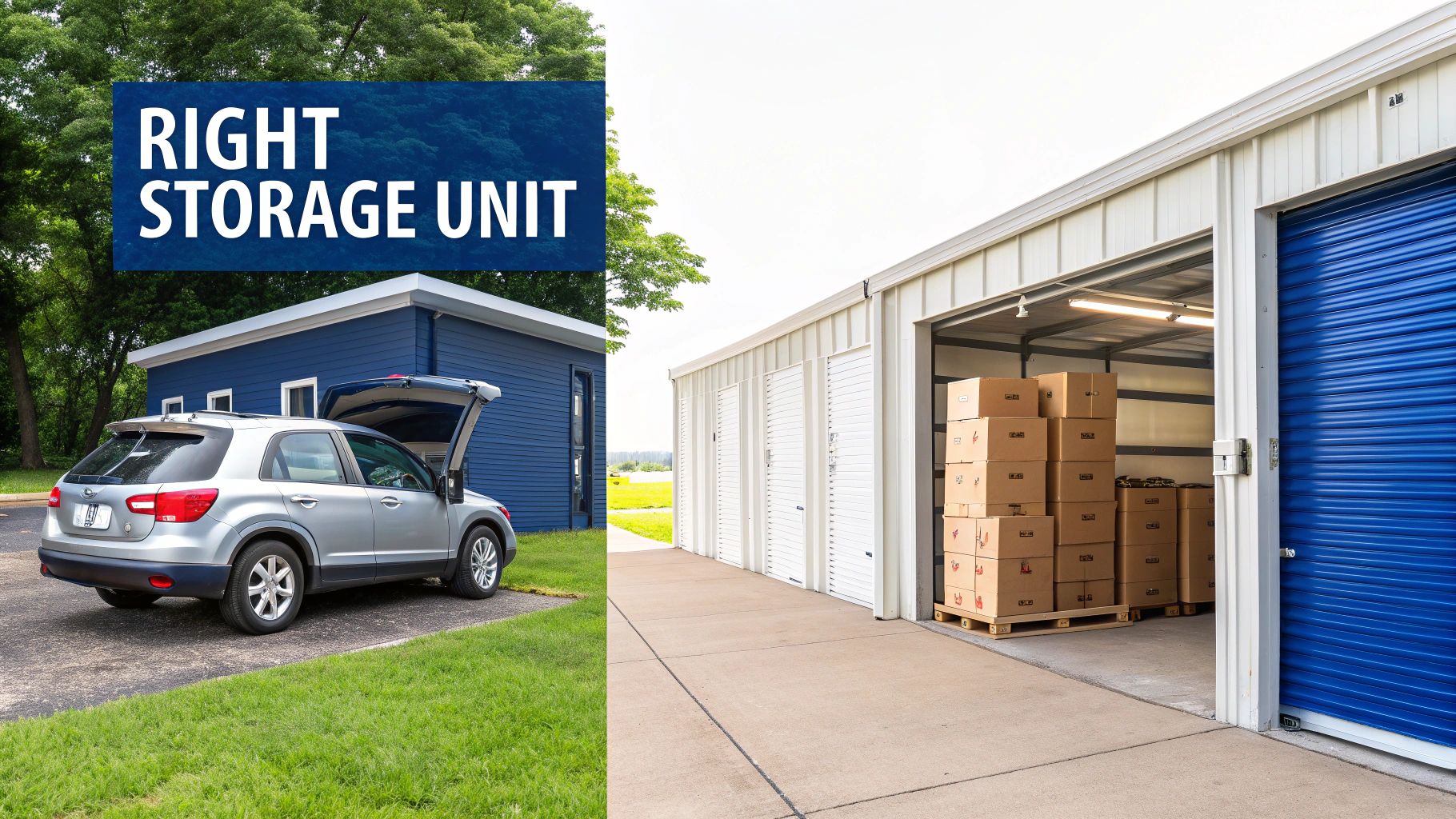
This isn't a small decision, especially when you consider how fast the self-storage industry is growing in Australia. Projections show the market is set to expand from USD 949.5 million to a whopping USD 1,402.0 million by 2030. NSW actually holds the biggest slice of this market, which is great for choice but also means you need to be smart to find a quality, secure facility. You can read more about the growth of the self-storage market in Australia to see just how big it's getting.
Climate Control Versus Standard Units
Your most important choice will be between a standard unit and one that's climate-controlled. A standard, drive-up unit is basically a garage away from home. It’s perfect for sturdy items that aren't fussy about temperature swings or a bit of humidity—think garden tools, sporting gear, or well-sealed plastic tubs filled with non-delicate goods.
A climate-controlled unit, on the other hand, is essential insurance against the salty coastal air of the Central Coast or Sydney's wild temperature fluctuations. It actively regulates both temperature and humidity. For things like wooden furniture, musical instruments, electronics, artwork, or important documents, climate control is a non-negotiable. It's the only real way to prevent the mould, mildew, rust, and warping that can creep in over months or years.
To help you decide, here’s a quick breakdown of which unit type suits common household items, especially considering our local climate.
Comparing Storage Unit Features for NSW Conditions
| Feature | Standard Unit | Climate-Controlled Unit | Best For… |
|---|---|---|---|
| Environment | Exposed to outdoor temperature and humidity fluctuations. | Maintains a consistent temperature and humidity level, typically between 12-24°C. | Items sensitive to moisture, heat, or cold. |
| Cost | More affordable. | Higher monthly cost due to energy and system maintenance. | High-value or irreplaceable items where the extra cost is a worthwhile investment. |
| Common Items | Garden tools, bicycles, patio furniture, well-sealed plastic tubs. | Wooden furniture, electronics, artwork, photos, musical instruments, important papers. | Anything that could warp, crack, rust, or grow mould when left in a typical NSW garage for an extended period. |
| Local Consideration | Can get very hot in summer and damp in winter. | Protects against Sydney's humidity and the Central Coast's salty air, preventing damage. | Preserving the condition of your valuables, no matter what the weather is doing outside. |
Ultimately, if an item is valuable enough to store, it's often valuable enough to protect properly.
Estimating the Right Size
One of the most common mistakes is paying for space you simply don’t need. It helps to think about unit sizes in terms you already know. A 3×3 metre unit (which is 9 square metres) is about the size of a small bedroom and can easily hold the contents of a studio or one-bedroom flat. A larger 3×6 metre unit is closer to the size of a single-car garage and is a much better fit for a two or three-bedroom home.
When we do our free in-home assessments, we don't just guess. We calculate the exact volume of your belongings in cubic metres—that's the space your belongings take up. This professional measurement guarantees you book the perfect size, saving you money and a lot of headaches.
Essential Security Features to Look For
When your belongings are going to be locked away for months or even years, security has to be a top priority. A simple padlock on the door is just the first step. Any reputable facility should offer a layered security system to give you genuine peace of mind.
Here’s a quick checklist of what we always recommend looking for:
- 24/7 CCTV Surveillance: Video cameras covering all the important spots, like entrances, exits, and hallways.
- Gated Access: An electronic gate that requires a unique personal code to get onto the property, ensuring only authorised people are onsite.
- Individually Alarmed Units: A great feature where an alarm sounds if your specific unit is opened without your code being entered first.
- Good Lighting: Well-lit corridors and outdoor areas are crucial for both safety and security, especially if you need to pop by after dark.
- On-Site Management: Having a manager present during business hours adds another layer of security and means there's someone to help if you need it.
Accessibility and Convenience
Finally, think about how you'll actually get to and from the unit. A ground-floor, drive-up unit offers the best convenience for loading and unloading heavy items. But in dense areas like Sydney and Newcastle, many modern facilities are multi-storey. If that's the case, make sure you check for lift access and see if they provide trolleys for you to use.
This is something we pay close attention to, especially for those moving from apartments or strata buildings where lift bookings and access times are restricted. We always factor in accessibility when we recommend a storage facility, making sure the entire process is as smooth and easy as possible.
Packing Your Belongings for Long Term Protection
When you put your things into long-term storage, you're not just moving them from A to B; you're essentially tucking them in for a long sleep. Packing for this kind of durability is a world away from packing for a weekend relocation. Our professional removalists treat it like a science, making sure everything from your timber furniture to your delicate glassware comes out in the exact same condition it went in, months or even years down the track.
The whole process starts long before a single box is taped shut. The number one enemy for items in storage is moisture, which is a fast track to mould and irreparable damage. That’s why every single item, from washing machines to dinner plates, must be thoroughly cleaned and completely dry before it even thinks about going into a box. Taking this extra time is the most important first step you can take.
Preparing Furniture and Large Items
Big furniture pieces need a bit of special attention to maximise your storage space and keep them safe. Think about it: if you're relocating the contents of a three-bedroom home in Lake Macquarie, dismantling things like bed frames, dining tables, and shelving units can massively reduce the cubic metres of storage you need. Less space means less cost.
Always keep the screws, bolts, and other small hardware together. Pop them in a labelled zip-lock bag and tape it securely to the biggest part of the furniture it belongs to. This simple habit will save you a massive headache when it's time to put everything back together. For that extra layer of defence against dust and moisture, you might also want to wrap larger pieces in tough heavy-duty plastic sheeting.
Using the Right Packing Materials
The quality of your packing materials has a direct impact on the safety of your belongings. It can be tempting to just grab any old boxes you can find, but investing in proper materials is a much smarter move in the long run. If you're planning a relocation, our guide on the 7 essential packing materials you need is a great place to start.
Here are a few key supplies our teams never go without:
- Sturdy, uniform boxes: Using boxes of a similar size makes stacking them inside your unit much safer and way more stable.
- Quilted pads: These are an absolute must for protecting timber furniture from scratches, dings, and pressure marks.
- Bubble wrap and packing paper: Be generous with this stuff for anything fragile like plates, glasses, and photo frames. Just don't use newspaper—the ink can transfer over time and leave permanent stains.
- Porta robes: These are tall, wardrobe-style boxes with a hanging rail. They’re brilliant for your clothes, keeping them crease-free and ready to wear, even after a year in storage.
A detailed inventory is your best friend when it comes to long term storage. Before you seal a single box, create a list or spreadsheet of its contents. This not only helps you find things later but is also essential for insurance purposes.
Labelling and Electronics Care
Once a box is packed and sealed, label it clearly on at least two sides. Note down its contents and which room it belongs to. This makes finding a specific item so much easier down the line and stops you from having to tear the whole unit apart just to find one thing.
Electronics are especially vulnerable in storage. The main goal is to protect them from moisture and static. If you’ve still got the original packaging, that's your best bet. If not, wrap them carefully in anti-static bubble wrap and place them in a sturdy, well-cushioned box. And always, always remove the batteries from every device to prevent leakage and corrosion. Taking these careful steps—whether you pack yourself or use our pro services—gives your belongings the long-term protection they deserve.
How to Load a Storage Unit Like a Professional
After four decades of helping families across the Central Coast, Sydney, and Newcastle move and store their belongings, we’ve learned a thing or two. One of the biggest lessons? How you load your storage unit is just as important as how you pack your boxes.
A well-loaded unit does more than just maximise space. It protects your belongings and, believe me, it makes life a whole lot easier when you eventually need to retrieve something. It’s all about working smarter, not harder.
The core principle is simple: build a solid, safe structure. Think of it like building a pyramid. Your largest, heaviest, and most durable items form the base. Things like fridges, washing machines, sofas, and solid timber dressers should always go in first, right at the back of the unit. Placing these against the far wall creates a stable foundation you can stack everything else against.
Create an Aisle for Easy Access
One of the most common mistakes we see is people packing their unit solid from back to front, wall to wall. It might seem efficient at first, but it quickly becomes a nightmare if you need that one specific thing stored at the very back. Imagine having to empty the entire unit just to get to a single box from your Newcastle apartment's contents.
To avoid this headache, we always recommend creating a central aisle. By stacking your belongings along the side walls, you leave a clear walkway down the middle. This simple trick gives you access to almost everything in your unit without having to perform a major excavation. It saves an incredible amount of time and frustration later on.
Before anything goes in, though, it needs to be prepped properly. This infographic shows our three essential steps for getting your belongings ready for long-term storage.
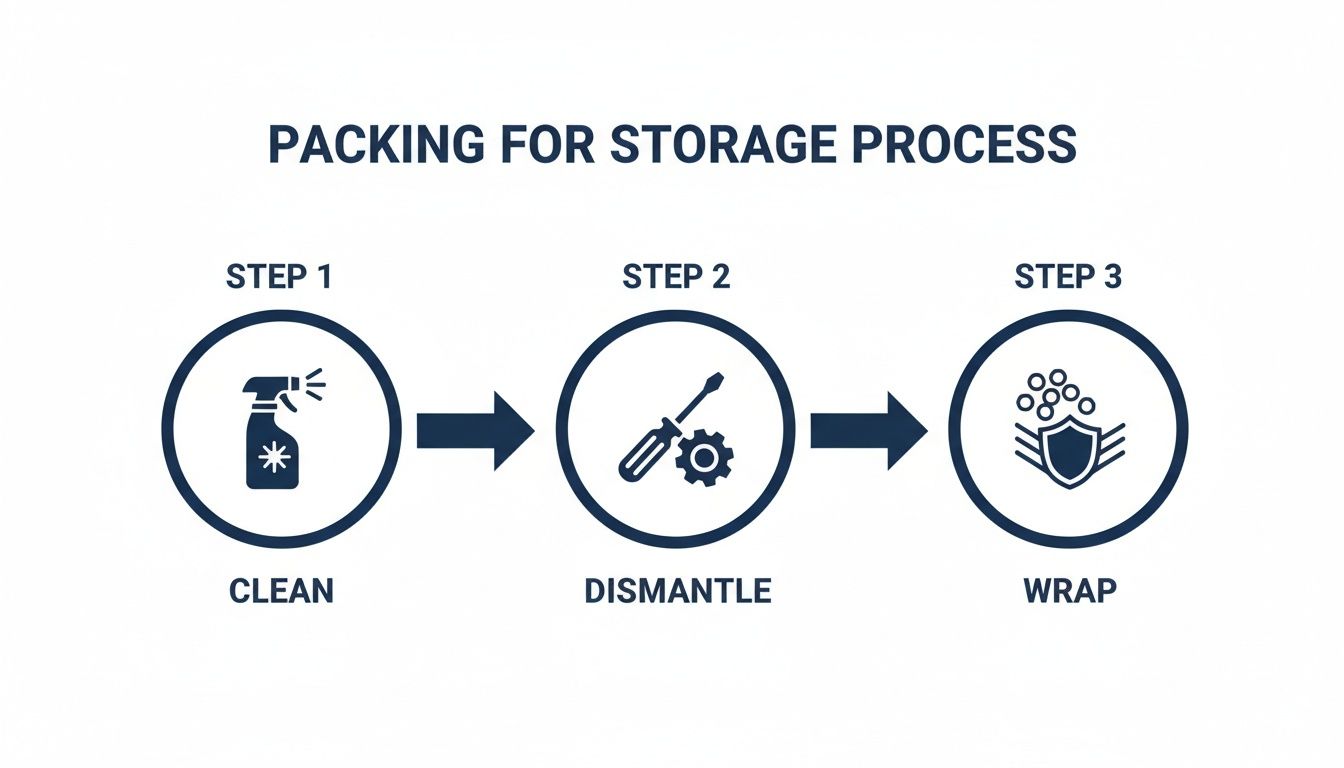
This process ensures items are clean to prevent mould, dismantled to save space, and properly wrapped for protection.
Stacking Boxes Safely and Smartly
Once your large furniture is in place, it’s time for the boxes. The rule here is straightforward: heaviest boxes on the bottom, lightest boxes on the top. Place your heavy, sturdy boxes directly on the floor or on top of solid furniture, then stack progressively lighter ones on top. This commonsense approach prevents delicate items from getting crushed and creates stable, uniform stacks.
Try to keep the stacks level—no leaning towers! Distribute the weight as evenly as possible and make sure the box labels are facing the aisle so you can easily see what’s what. If you need a hand, our team are experts in this. Understanding the principles of safe loading is a key part of our service, and you can learn more about how to choose the right loading services for your specific needs.
Safety Tip: Always leave a small air gap of about 5-10 centimetres between your belongings and the unit's walls. This is crucial for promoting air circulation, which helps prevent moisture build-up and keeps your items in better condition—especially in the humid coastal areas around Lake Macquarie.
By following these professional techniques, you'll fit more into your space, protect your possessions from damage, and be able to access your items with ease. It turns your storage unit from a cluttered box into an organised, accessible extension of your home.
Understanding Storage Contracts and Insurance
Once you’ve found the perfect facility and the right-sized unit, it’s time to tackle the paperwork. It might be tempting to just sign on the dotted line, but your storage contract and insurance policy are what really protect your belongings. Taking a few minutes to get across these documents will save you a world of headaches later on.
Think of the storage contract as the rulebook for your rental. It lays out everything from access hours and late payment policies to the notice period you need to give before moving out. Make sure you read it carefully, especially any clauses about future price increases – you don’t want any surprises a year down the track.
Your Insurance Is Your Responsibility
Here’s a critical point that catches a lot of people out: the storage facility's insurance almost never covers your personal belongings. Their policy is there to protect their building, not what’s inside your unit. It’s up to you to make sure your goods are properly covered.
It's a common myth that signing the storage agreement automatically insures your stuff. You should always assume your belongings are uninsured unless you've actively organised a policy yourself. Getting this sorted is the single most important step in protecting your investment.
Checking Your Existing Policies
Before rushing out to buy a new policy, it’s worth checking your current home and contents insurance. Some policies actually offer limited cover for items kept in a secure, professional storage facility.
A quick call to your insurer is all it takes. Ask them specifically if they cover items stored off-site, what the limits are, and for how long. If your policy doesn’t cover storage or the coverage isn't enough, you’ll need to arrange a dedicated storage insurance policy. Many good facilities can help you with this, or you can find specialised providers who focus just on insuring goods in storage.
The demand for this kind of service is only growing. With Australia's population on the rise, the self-storage market is booming—valued at AUD 3.14 billion, it's expected to hit AUD 4.78 billion by 2035. This trend shows just how important careful planning is when it comes to securing your valuables. You can discover more insights about Australia's self-storage market to get a feel for its rapid growth.
Factors That Influence Storage Costs
So, what determines the price of a long-term storage unit? A few key things come into play.
The biggest factor is obviously the size of the unit—the more space you need, the higher the monthly rent. Location also makes a big difference. A unit in a central Sydney suburb will naturally cost more than a similar one on the Central Coast because of higher land values.
Finally, special features like climate control and beefed-up security will add to the price. It can be tempting to go for the cheapest option, but remember that these features are an investment in keeping your belongings in top condition. Understanding what drives the cost helps you set a realistic budget and make a smart choice that balances price with proper protection.
How We Streamline Your Entire Move Into Storage
Trying to line up a removalist and a long-term storage facility can feel like you’re managing two separate, complicated projects at once. You find the perfect removalist, but their schedule doesn’t match the storage provider’s. Or you find a great storage unit, but getting your things there becomes a logistical nightmare.
At Gentle Giant Removals, we take that entire headache away. We manage the whole journey for you in one seamless process, from your front door right up to the moment your storage unit is securely locked.
This all-in-one approach is becoming more and more necessary. As our cities and towns grow, home sizes are shrinking, and the need for reliable self-storage in Australia is skyrocketing. In fact, the market is expected to jump from USD 1,260.9 million to USD 1,899.0 million by 2034. It just goes to show how vital good storage is for modern life in places like Sydney and the Central Coast.
You can learn more about Australia's self-storage market trends to see just how much the industry is changing. We make it our business to stay ahead of these shifts by partnering with the best local facilities.
Your Personalised Storage Plan
It all kicks off with our free, no-obligation in-home assessment. One of our experienced team members will come to your home—whether it’s a big house in Terrigal or a cosy apartment in Newcastle—to get a clear picture of what you need to store.
We don’t just eyeball it. We meticulously calculate the exact volume of your belongings in cubic metres. This means we can recommend a storage unit that’s just the right size—not so big that you’re paying for empty space, and not so small that it turns into a game of Tetris.
During the visit, we’ll talk through your specific requirements. Do you have precious antiques that need a climate-controlled unit? Are you in the middle of an interstate relocation and need a facility with easy, flexible access? We use all this information to connect you with one of our trusted local storage partners across the Central Coast, Sydney, or Lake Macquarie who ticks all your boxes.
A Single, Coordinated Service
Once we’ve helped you lock in the perfect storage solution, our work as your removalist begins. We can handle the entire professional packing for you, using top-quality packing materials to make sure every single item is safe and sound for the long haul.
On moving day, our crew will load everything securely onto our truck, transport it to the facility, and then expertly pack it all into the storage unit for you.
You won't have to waste time juggling phone calls between different companies or stressing about timing. We handle all the logistics, ensuring a smooth, organised relocation from your home into storage. It’s all part of our ‘On Time, Every Time’ promise, and it’s backed by comprehensive insurance that covers your belongings every step of the way. Our goal is simple: to make the process secure, straightforward, and completely managed for you.
Got Questions About Long Term Storage?
When you’re looking at storing your belongings for months or even years, it’s completely normal to have a few questions pop up. We get asked a lot of the same things by our clients across the Central Coast, Sydney, and Newcastle, so we’ve put together some straightforward answers from our experienced team.
What Can’t I Put in a Long Term Storage Unit?
Safety is always the number one priority—for your belongings, our team, and the facility itself. Because of this, you generally can’t store anything hazardous or perishable. Think of things that are flammable like petrol, paint thinners, or corrosive chemicals. Explosives are also a definite no-go.
Perishable food is another big one. It will spoil and can attract pests, which creates a huge problem for your items and everyone else’s. A good rule of thumb is: if it's dangerous, alive, or could rot, it doesn’t belong in storage. We’ll help you spot any prohibited items during our pre-move assessment so there are no surprises.
How Often Should I Visit My Storage Unit?
Even though modern, secure storage facilities are incredibly reliable, we still suggest popping in to visit your unit every few months if you can. A quick check-in lets you see that everything is in good order and gives you that extra peace of mind, especially for items that are valuable or hold sentimental value.
If you’re interstate, overseas, or just can’t get there, asking a trusted friend or family member to take a look for you is a great alternative. It’s a simple, proactive step that can help catch any potential issues early on.
Can Gentle Giant Move My Items Out of Storage Later?
Absolutely. Our whole service is designed to support you from start to finish. When you’ve found your new place in Sydney, the Central Coast, or even further afield, just give us a call. We’ll coordinate the entire relocation out of the storage facility with the same professional care as we did moving it in.
We handle everything—the careful loading, transport to your new home, and we can even help with unpacking and putting your furniture back together. We’re here to manage the whole process, making the move from storage to your new home completely seamless.
Is Climate Control Really Necessary in NSW?
For any kind of long term storage here in coastal NSW, we strongly recommend it. The humidity, especially on the Central Coast and in Sydney, can be relentless and cause serious damage over time. All that moisture in the air can lead to mould, mildew, rust, and cause wooden furniture to warp and split.
A climate-controlled unit keeps both the temperature and humidity stable, creating a safe environment for your belongings. This protection is vital for sensitive items like timber furniture, pianos, electronics, artwork, and important documents. It’s a smart investment to preserve the condition and value of your most treasured possessions.
Ready to plan your move into storage without the stress? The team at Gentle Giant Removals & Relocations is here to coordinate everything for you, from packing to transport. Request a free in-home assessment to get a clear, no-obligation plan today.