
Whether you're moving from a cosy apartment in Newcastle or a family home on the Central Coast, it all starts with one crucial task: packing. This is so much more than just putting things in boxes. It’s about protecting your belongings, saving yourself time, and making sure your relocation is as smooth as possible from start to finish. Good preparation is the key, and choosing the right packing materials is where it all begins.
Your Foundation for a Successful Relocation
Choosing the right moving boxes and packing materials is the absolute foundation of a successful relocation. Think of it like building a house—you wouldn't use weak materials for the frame, would you? The same logic applies here. Using professional-grade packing materials from the get-go ensures your possessions are properly protected from start to finish.

Why Professional Grade Packing Materials Matter
Let's paint a picture. Imagine you're moving from a unit in Terrigal to a bigger house up in Lake Macquarie. You might be tempted to grab some used boxes from the local supermarket to save a few dollars, but that can easily lead to problems. Those boxes just aren't designed to be stacked high in a removalist truck or to hold any real weight, which dramatically increases the risk of them crushing or tearing open in transit.
On the other hand, professional-grade moving boxes are built for the job. There’s a real difference:
- They're Stronger and More Durable: Made from double-walled cardboard, they can easily handle the weight of other boxes stacked on top without collapsing. This is vital for protecting your items.
- They're a Uniform Size: Having standardised sizes makes loading the removalist truck much safer and more efficient. It allows us to create stable, interlocking tiers that won't shift around, which is especially important for navigating Sydney's busy traffic.
- They're Purpose-Built for Your Items: You just can't beat specialty boxes. Think porta-robes for your clothes or heavy-duty dish-packs for kitchenware. They offer tailored protection that generic boxes simply can't match.
Essential Packing Materials to Get You Started
Before you even think about picking up a roll of tape, you need the right tools on hand. Having a well-stocked kit of packing materials stops those last-minute panicked trips to the shops and helps you stay organised from day one. To get off to a really smooth start, our comprehensive moving in checklist can guide you through the entire process.
Your basic kit should always include sturdy book boxes for heavy items, standard cartons for general goods, quality packing tape, butcher's paper for wrapping, and a few permanent markers for labelling. This simple setup is all it takes to feel in control from the very first box you pack, setting the stage for a calm, well-organised move.
Choosing the Right Packing Materials for Each Room
Not all boxes are created equal, and using the right ones for the right items is one of the biggest secrets to a damage-free relocation. A standard carton might be fine for your linen, but it won’t give your glassware the protection it really needs. Matching your moving boxes and packing materials to the specific room you're tackling makes the entire process safer and far more efficient.
Think about packing up your kitchen in a hurry. You might be tempted to just wrap plates in old newspapers, but the ink can easily transfer, leaving you with a massive cleaning job at your new home. This is exactly why we always recommend using clean butcher's paper—it provides all the cushioning you need without any of the mess.
Protecting Your Kitchen and Valuables
The kitchen is often the most challenging room to pack, purely because of the sheer number of fragile items. For plates, bowls, and glassware, we swear by heavy-duty dish-pack boxes. These are double-walled for extra strength and designed to fit cardboard dividers, which create individual cells that stop items from clinking together. It’s the single best way to protect your dinnerware, whether you're moving from a busy Sydney apartment to a family home on the Central Coast or just around the corner.
It’s a similar story for valuable artwork and mirrors. They require very specific care, and a purpose-built picture box, which is often adjustable, is absolutely essential. These boxes provide the rigid protection needed to prevent frames from bending and glass from shattering. When you combine them with bubble wrap and corner protectors, you get total peace of mind that your treasured items will arrive in perfect condition.
For a deeper dive, we have a detailed guide with more insights on the essential packing materials you need for a damage-free move.
To simplify things, here's a quick reference guide to the essentials you'll need for each part of your home.
Essential Packing Materials Guide by Room
| Room or Item Type | Recommended Box | Essential Packing Supplies | Pro Tip |
|---|---|---|---|
| Kitchen | Heavy-duty dish-pack cartons | Butcher's paper, bubble wrap, packing tape, cell dividers | Pack plates vertically—they're stronger on their edge. |
| Bedroom | Standard cartons, Porta-Robes | Packing paper, vacuum-sealed bags | Use Porta-Robes for hanging clothes to make unpacking a breeze. |
| Living Room | Picture boxes, standard cartons | Bubble wrap, furniture blankets, corner protectors | Label cables and keep them with their corresponding electronics. |
| Office | Small cartons, electronics boxes | Anti-static bubble wrap, zip-ties for cables | Use original packaging for electronics whenever possible. |
| Valuables/Art | Custom crates, picture boxes | Acid-free paper, glassine, heavy-duty bubble wrap | Never let tape touch the surface of artwork or frames directly. |
This table should give you a solid starting point for gathering your packing materials, ensuring you have the right gear on hand before you even start.
Packing Bedrooms and Offices Efficiently
When it comes to the bedroom, the name of the game is usually speed and convenience. This is where porta-robes really shine. These are tall, sturdy boxes that come with a metal rail, allowing you to transfer hanging clothes directly from your wardrobe to the box without even taking them off the hangers. It's like having a mini portable closet, and it makes unpacking at your new place unbelievably simple.
For folded clothes or out-of-season items, exploring options like good quality storage bags for clothing can also significantly maximise your space and add an extra layer of protection.
Our Pro Tip: When packing electronics from your home office, always try to use the original packaging if you've held onto it. Manufacturers design this packaging to protect those specific items perfectly during transit. If you no longer have it, wrap each component individually in bubble wrap and use a sturdy, well-padded box. Make sure there are no empty spaces inside where items can shift around.
Estimating Your Needs and Eco-Friendly Options
One of the most common questions we get from clients is, "How many boxes do I actually need?" While it always varies, a typical three-bedroom home in Newcastle might require anywhere from 60 to 80 boxes of various sizes. We can easily help you get a more accurate estimate during a free, no-obligation in-home assessment.
To help you save on costs and reduce waste, we also offer a handy refundable-deposit box service. You get clean, professional-grade moving boxes delivered for your relocation, and once you've unpacked, we'll swing by to collect them and refund your deposit. It’s a cost-effective and environmentally friendly way to handle all your packing materials.
Mastering How to Pack Fragile Items
Your most precious and fragile belongings deserve special attention. Over the decades, we've perfected the safest methods for moving delicate items, whether it's for a family on the Central Coast with priceless heirlooms or navigating the tricky stairwells of a heritage apartment in Newcastle. All that professional experience boils down to one simple, effective method.
The key is what we call the 'cushion, wrap, and box' technique. It all starts by creating a soft buffer at the bottom of a sturdy, double-walled box. Just crumple up some packing paper and create a generous layer—this acts as the first line of defence, absorbing shocks and bumps from the road.
The Cushion, Wrap, and Box Method
After you’ve made that base cushion, you need to wrap every single fragile item individually. This is non-negotiable. Never stack unwrapped plates or glasses directly on top of each other; it’s a recipe for disaster.
Use several sheets of clean butcher’s paper for each piece, tucking in the ends to form a snug parcel. This padding stops items from making direct contact and absorbs any vibrations during the move.
Once everything is wrapped, start loading the box. Heavier items go in first, with lighter pieces layered on top. It’s absolutely crucial to fill any empty spaces with more crumpled paper or soft packing material to stop things from shifting around. That movement is the number one cause of breakages.
For a deeper dive into protecting your dinner sets and glassware, you can find more of our professional advice in the guide to the best kitchenware packing tips.
This simple, organised approach to packing room by room makes all the difference.
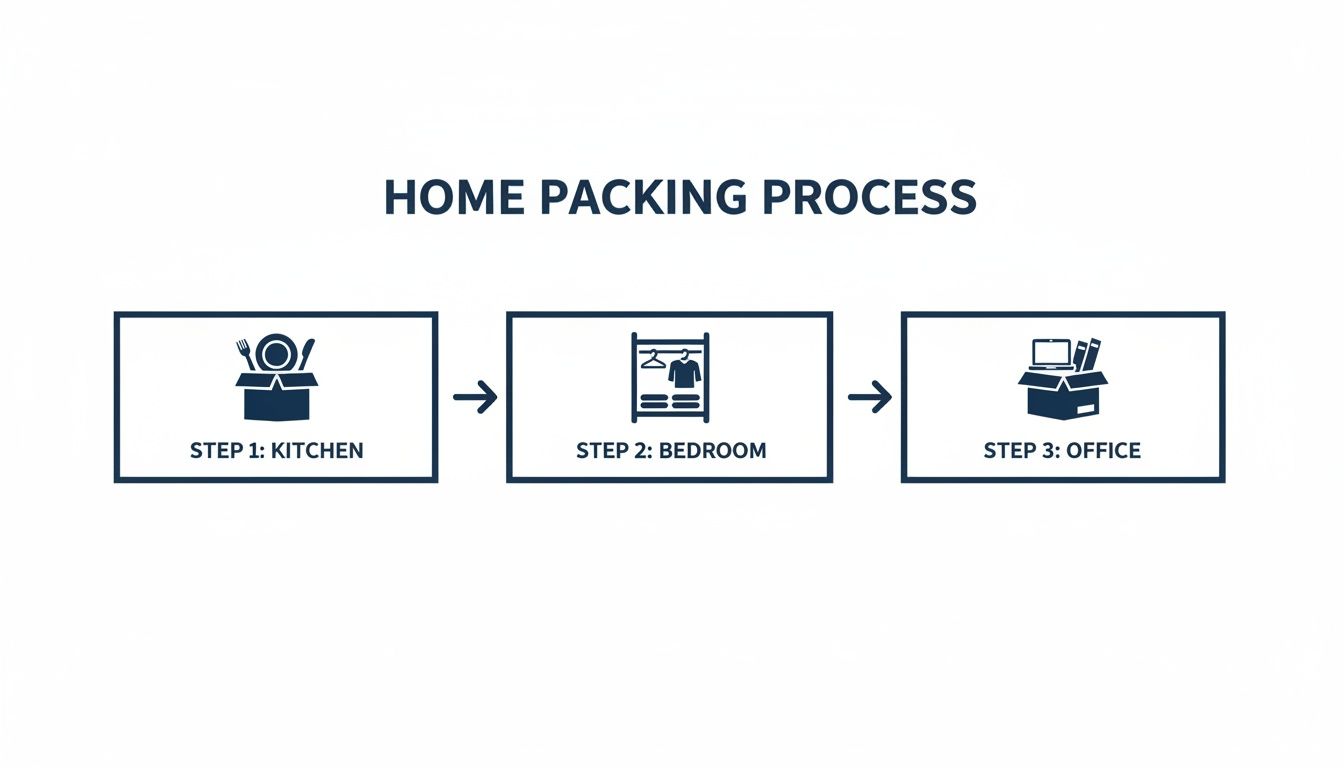
Using purpose-built boxes for different areas ensures everything from the kitchen to the office gets the right level of protection.
Packing Large and Awkward Items
The same principles apply to bigger, more awkward items like lamps, electronics, and artwork. For something like a floor lamp, always separate the lampshade and bulb from the base. Wrap the base in a thick moving blanket or bubble wrap. The shade needs its own box with plenty of soft cushioning, as they dent and tear so easily.
Picture this: you're moving a collection of antique vases from a Sydney apartment with several flights of stairs. A professional removalist wouldn’t just put them in a box. We'd use double-walled cartons, wrap each vase in multiple layers of paper, and maybe add a final layer of bubble wrap for good measure. Then, we’d pack them snugly so there’s zero movement inside the box before carefully navigating those stairs.
Safety and Labelling First: Always label boxes with delicate items clearly. Write 'FRAGILE' in big letters on at least two sides and draw arrows to show which way is up. This simple step is one of the most important, as it speaks directly to our removalist crew. It tells them to handle the box with extra care and load it correctly in the truck, which is all part of our commitment to getting your belongings there safely.
Smart Labelling for an Organised Unpack
An organised pack always leads to an organised unpack. It’s a simple truth, but one that makes all the difference on moving day. A smart labelling system does more than just get your boxes to the right rooms; it saves you hours of frustration when you're trying to find the kettle or phone chargers on your first night.
Think of it as a roadmap for both our removalist team and for you. It's the key to a smooth, efficient relocation.

We often recommend a simple but incredibly effective colour-coding system. Assign a different colour to each room—blue for the master bedroom, yellow for the kitchen, green for the living room. This visual cue helps our crew place everything correctly and quickly, which is particularly helpful in a home with multiple bedrooms or levels.
If you're a DIYer, you can even create your own durable custom labels with printable sticker paper to make your system look clear and professional.
Beyond Just the Room Name
Simply writing ‘Kitchen’ on a box isn’t going to cut it when you're exhausted and need a cup of tea. On the side of each box, jot down a brief, high-level list of what's inside. It doesn’t need to be an exhaustive inventory, just enough to give you a clear idea at a glance.
For instance, a box with a yellow sticker might be labelled like this:
- Room: Kitchen
- Contents: Toaster, kettle, coffee pods, mugs
- Priority: HIGH (Essentials!)
This small step transforms your unpacking process. Instead of tearing open ten "Kitchen" boxes just to find breakfast supplies, you can grab the right one instantly. This level of organisation is a huge advantage, whether you're moving a busy family home on the Central Coast or a fast-paced Newcastle office where minimising downtime is critical.
The Master Inventory List
For larger relocations—especially those involving storage or an interstate move from Sydney—a master inventory list is your best friend. It’s a simple document (a spreadsheet or even a notebook works perfectly) where you number each box and log its corresponding room and contents.
This master list provides incredible peace of mind. Not only does it help you track everything you own, but it's also an essential document for insurance purposes. It serves as a clear record of your belongings, tying directly into our commitment to providing fully insured removalist services for every client.
Creating this list might feel like one more task on a long to-do list, but it’s one of the best ways to protect your assets and stay in complete control of your relocation. It ensures that when you arrive, you know exactly what you have and where it's supposed to be, turning a potentially chaotic experience into a structured and manageable one.
Should You Pack Yourself or Hire the Professionals?
One of the biggest decisions you'll make when moving is whether to pack everything yourself or bring in a team of professionals. It really comes down to a trade-off between your time, your budget, and how much you’re willing to take on. Both options have their pros and cons, so let’s break them down to help you figure out what’s right for your move.
A lot of people choose to pack themselves to keep costs down, and that’s perfectly understandable. With the cost of living on the rise, it’s no surprise that DIY moves are a popular choice. At the same time, the removalist industry continues to grow, which tells you just how much value people place on getting professional help to make their move smoother. You can see more on the Australian removalists industry on ibisworld.com.
The Case for Professional Pre-Packing
Our full pre-packing service is exactly what it sounds like—we take the entire job off your plate. Our experienced crew shows up with all the professional-grade moving boxes and packing materials needed to get your whole home packed up safely and efficiently.
This service is an absolute lifesaver for busy families, professionals with demanding jobs, or anyone facing a huge move, like relocating interstate from the Central Coast. We use tried-and-tested techniques to protect everything, especially your fragile items, and you get the peace of mind knowing it’s all covered by our comprehensive insurance. It frees you up to handle all the other moving-day logistics, from real estate agents to utility companies.
Flexible Options and Partial Packing Services
It doesn't have to be all or nothing. We find that many of our clients love the flexibility of a partial packing service, which lets you get professional help exactly where you need it most.
For example, you might be happy to pack the bedrooms and lounge room, but the thought of carefully wrapping every single plate, glass, and appliance in the kitchen is just too much. We can send our team in to knock out the kitchen for you, saving you hours of tedious work.
This hybrid approach gives you control over your budget while still getting an expert hand for the most challenging parts of the job. You can get a better idea of how different services impact your overall budget in our guide to the cost of removalists in Sydney.
Tips for a Successful DIY Pack
If you decide to go the DIY route, a bit of forward planning will make all the difference. The golden rule is to start packing way earlier than you think you need to. Begin with rooms and items you use least, like the spare bedroom, garage, or out-of-season clothing.
Make sure you invest in high-quality, double-walled boxes, particularly for anything heavy or delicate. A common mistake is not filling boxes completely, which makes them weak and likely to get crushed when stacked. Stuff any gaps with packing paper, towels, or linen to stop your things from shifting around in transit. With the right gear and a smart plan, you can absolutely pull off a successful, damage-free move on your own.
Your Top Packing Questions, Answered
After 40 years of helping people move across the Central Coast, Sydney, and Newcastle, we've pretty much heard every question in the book when it comes to packing. To save you some time and frustration, here are the answers to the questions we get asked the most.
Where Can I Get Good Quality Moving Boxes?
It's always tempting to grab whatever free boxes you can find at the local supermarket, but we strongly advise against it. Those boxes are often single-walled and just aren't built for the job.
Proper removalist-grade boxes are double-walled, which gives them the strength to be stacked in the truck without crushing. You can get a full range of professional packing materials directly from us, so you know you're getting the right stuff.
Want a more cost-effective and eco-friendly option? Ask us about our refundable-deposit box service. We’ll drop off clean, sturdy boxes for you to use. Once you’re all unpacked, we swing by to collect them and give you your deposit back. Easy.
How Many Boxes Will I Actually Need?
Ah, the million-dollar question! It really depends on the size of your home and, let's be honest, how much you've collected over the years.
As a rough guide, a standard three-bedroom home in areas like Lake Macquarie or Gosford usually needs somewhere between 60 to 80 boxes of different sizes.
But the only way to know for sure is to have us come out for a free in-home assessment. One of our experienced team members can pop over, accurately estimate the cubic metres of your belongings—that's the space your belongings take up—and tell you exactly how many boxes and what materials you'll need.
Can You Move My Pot Plants?
Unfortunately, this is one thing we can't do. Due to safety and quarantine regulations, professional removalists aren't able to transport plants, soil, or any perishable items.
It’s always best to plan on moving your green friends in your own car. That way, you know they'll get to their new home safe and sound.
Should I Bother Emptying My Drawers?
Yes, definitely. Please empty all drawers before moving day. Even a few drawers full of clothes can add a surprising amount of weight to a piece of furniture.
This makes it much more difficult—and less safe—for our crew to move, especially when navigating tight stairwells or tricky hallways in Sydney and Newcastle apartments. Packing clothes into boxes or one of our handy porta-robes also keeps both your furniture and your clothes protected from any potential damage. For more helpful advice on sourcing supplies, check out our tips on where to find free moving boxes that are actually up to the task.
At Gentle Giant Removals & Relocations, our job is to make your move as smooth as possible, and that starts with great packing advice. If you have more questions or you’re ready to get your move organised, just get in touch. We’re always here to help with a free, no-obligation quote.
Get a Free Moving Quote Online or call us today