
If you're planning your first move around the Central Coast, there's a good chance you're juggling ten things at once. Lease dates, utility transfers, school runs, settlement times, lift bookings, keys, and the growing pile of half-packed cupboards. A proper pack and move service is meant to take the pressure out of that, not add more uncertainty.
That matters in New South Wales, where one move can involve a weather change in the morning, Pacific Motorway traffic by lunch, and a tight apartment loading zone by the afternoon. Around the Central Coast, Newcastle, Sydney and Lake Macquarie, the details make the difference. Coastal access, narrow driveways, strata rules, heritage staircases, and parking restrictions can turn a simple move into a difficult one if nobody plans ahead.
What a Full-Service Pack and Move Includes
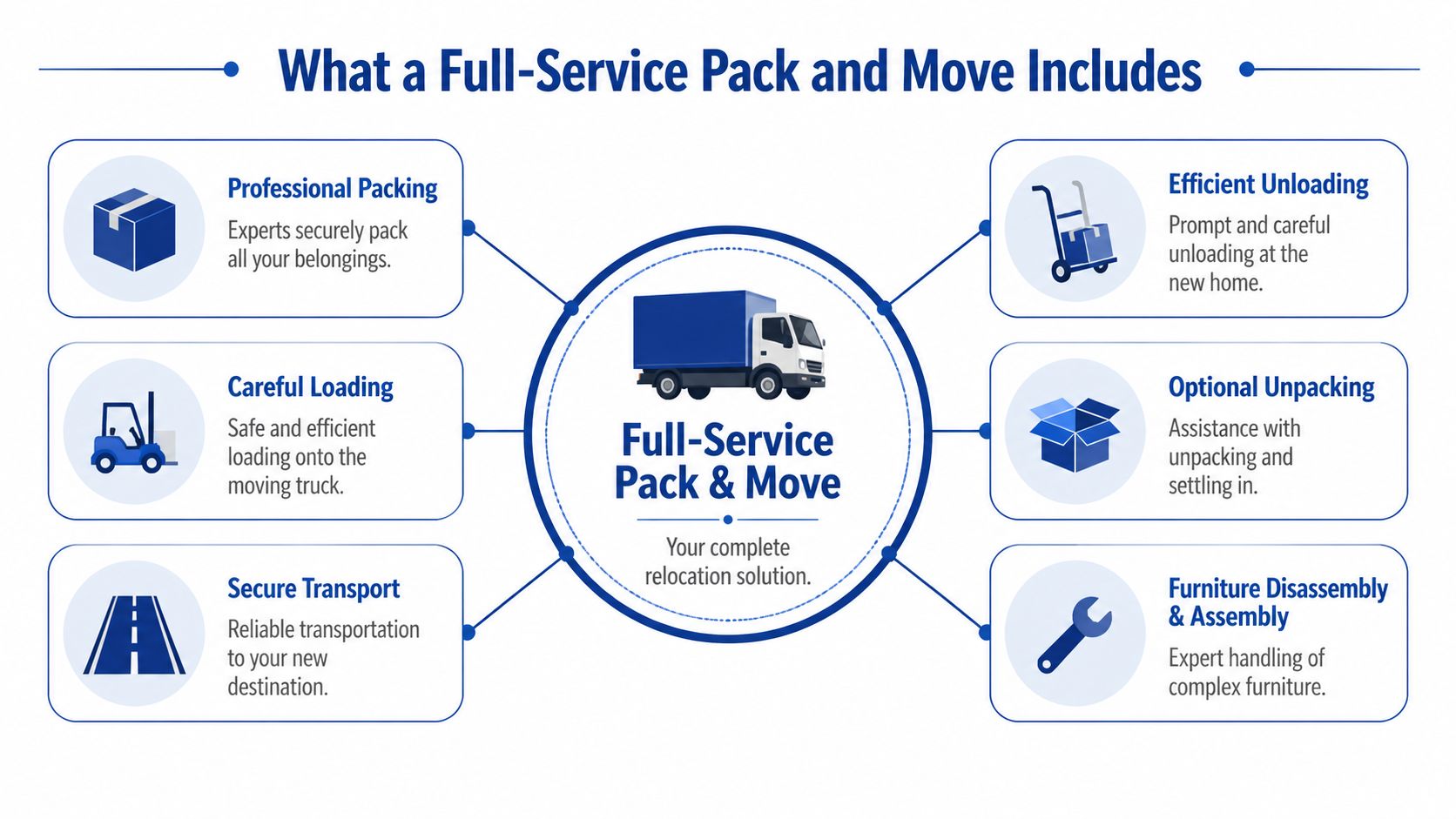
A full-service pack and move is more than turning up with a truck and loading furniture. It starts before moving day, with an assessment of what you're taking, how access works at both properties, and whether there are items that need extra protection such as artwork, TVs, glassware, antiques, or office equipment.
In practice, that first step is where many problems get prevented. If you're moving from a townhouse in Erina to an apartment in Newcastle, we need to know about stairs, visitor parking, lift access, body corporate rules, and whether the truck can stop close to the entrance. If you're heading from Woy Woy to Sydney, timing matters too, especially if building management only allows moves during set hours.
Packing materials that actually protect your things
Good packing starts with the right materials. That includes strong cartons, wrapping paper, tape, mattress protection, furniture covers, and hanging solutions such as porta robes so clothes travel on hangers instead of being crushed into bags. Some households want everything supplied and packed for them. Others prefer a partial service where fragile items, kitchens and artwork are handled professionally while they pack books, linen and everyday clothes themselves.
If you're sourcing materials yourself, it's worth reading about free moving boxes and how to use them properly. Free cartons can help, but only if they're clean, dry, sturdy, and the right size for what you're packing.
Practical rule: Heavy items go in small cartons, lighter items go in larger ones. Books in big boxes are one of the quickest ways to damage the carton, the item, or someone's back.
What the crew usually handles
A proper pack and move service often includes these parts:
- In-home or virtual assessment: A clear view of volume, access, timing, and special handling needs.
- Professional packing: Kitchens, glassware, ornaments, artwork, electronics, and awkward items packed room by room.
- Labelling: Cartons marked by room and priority so unloading is faster and unpacking isn't guesswork.
- Furniture preparation: Beds, tables and modular pieces disassembled when needed, then reassembled at the other end.
- Property protection: Quilted pads, floor runners, doorway care, and careful handling through tight hallways and stairwells.
- Loading and unloading: Systematic truck packing so heavy items are stable and fragile items stay protected.
The reason many people choose the full service is time. Australia’s removalist industry moves over one million Australians each year, and peak season runs between November and February, when two-thirds of all moves take place according to IBISWorld industry data. During busy periods, a well-organised packing plan matters even more because delays are harder to recover from.
Optional extras that are worth considering
Not every move needs the same level of help. Some clients only want packing for the kitchen and breakables. Others want unpacking at the other end, storage coordination, or help staging the property for vacate cleaning after the truck leaves.
The best option usually depends on your timeline, budget, and energy. If you're moving with small children, settling an elderly parent, or trying to relocate while still working full-time, professional packing often saves more than it costs in lost time, rushed decisions, and breakages.
Your Moving Day Journey from Start to Finish
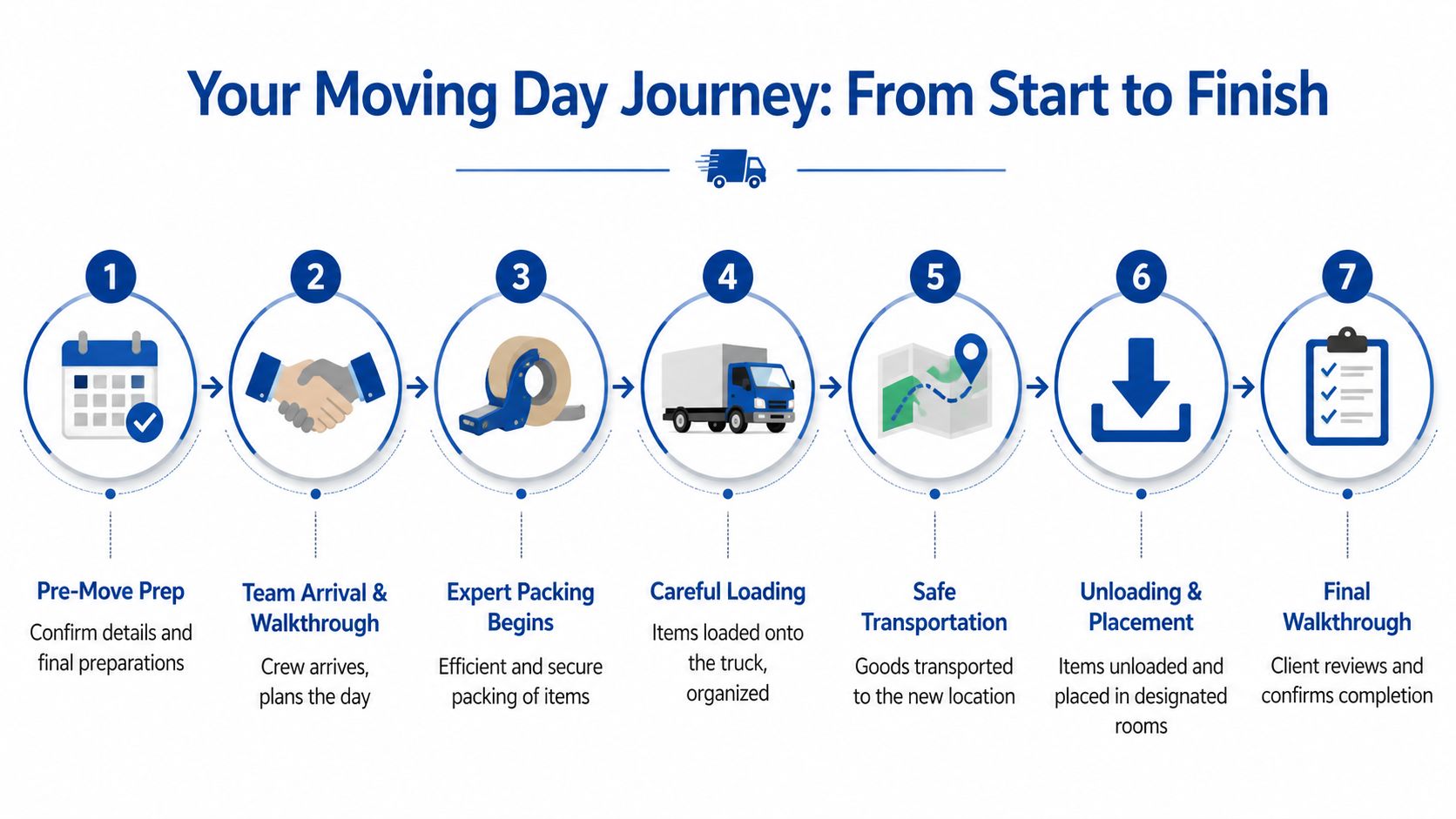
Moving day runs best when it feels predictable. You should know who is arriving, what happens first, how the truck will be loaded, and what the handover looks like at the new place.
Take a common local example. You're moving a three-bedroom home in Terrigal to Newcastle. The keys for the new place are ready, the old driveway is sloped, and the new address is in a street with tighter parking. That's a standard day for a removalist, but only if the sequence is organised from the start.
Before anything is lifted
The first job is a walkthrough. That confirms what is going, what is staying, which items are fragile, and whether there are any changes since the quote. It also gives you a chance to point out newly painted walls, delicate flooring, narrow doorways, or access points that need extra care.
Then property protection goes down. Floor runners where needed, padded protection on vulnerable furniture, and a clear loading path. If the move is part of a rental exit, many people also keep a detailed end of tenancy cleaning checklist handy so the property is left in the right condition once the last item is out.
How the truck gets loaded
There is an order to loading, and it isn't random. Heavier furniture and appliances usually go first so the load is stable. Then come stacked cartons, soft goods, and carefully secured fragile items. Loose packing is what causes shifting, and shifting is what causes damage.
On a route from Terrigal down towards Sydney or up to Newcastle, traffic timing also matters. A crew that knows local roads will often plan around school zones, commuter pressure points, and coastal bottlenecks rather than trusting the sat nav alone.
The smoothest moving days aren't the fastest-looking ones at the start. They're the ones where the crew takes a few extra minutes to load properly so nothing has to be fixed later.
Arrival at the new home
At the destination, another quick walkthrough saves time. If you've labelled rooms clearly, cartons can go straight where they belong instead of piling up in the garage or living room. Beds can be rebuilt first, essential kitchen items set aside, and anything urgent such as school bags, medications, chargers, or work gear placed where you can reach them that night.
A simple room plan helps here:
| Area | What should go in first | Why it helps |
|---|---|---|
| Main bedroom | Bed frame, mattress, bedside items | You can sleep properly on night one |
| Kitchen | Kettle, mugs, basic cookware, fridge items | You can function without opening every carton |
| Bathroom | Towels, toiletries, toilet paper | No hunting through mixed boxes |
| Children's rooms | Beds, key comfort items, clothes | Makes the first evening easier |
Before the crew leaves, a final walkthrough checks that everything is in the agreed room and obvious issues are picked up immediately. If you're preparing for the first night, a practical moving in checklist for NSW households helps make sure the utilities, locks, and essentials are covered.
How Relocation Costs Are Calculated
The question often asked first is still the right one. What affects the quote?
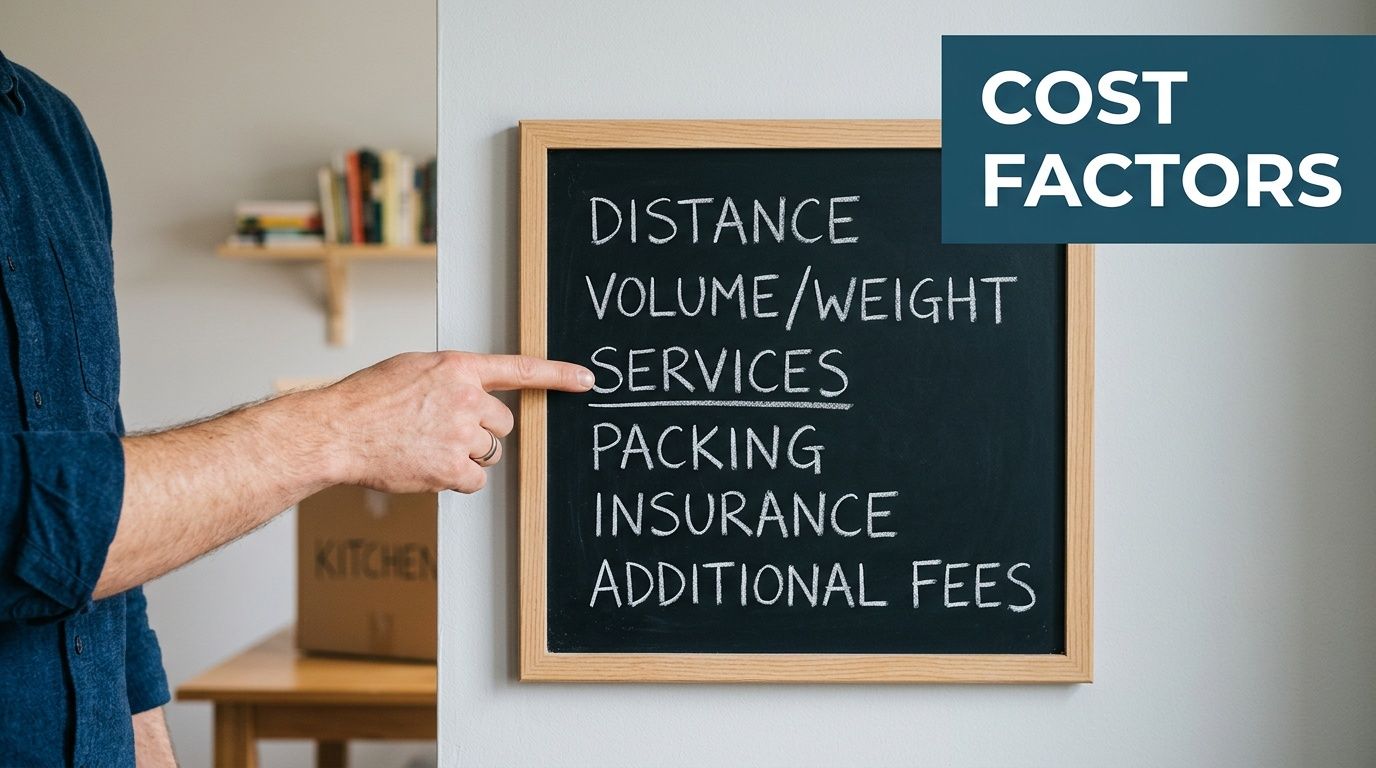
The honest answer is that moving costs depend on labour, truck space, travel, access, timing, and service level. The part that frustrates customers is when those factors aren't explained clearly. That's a known gap in the industry. As noted by Deliver A Move's service messaging and the wider content gap around no-surprise pricing, customers across the Central Coast, Newcastle, and Sydney often face uncertainty around final costs because charges for fuel, access, or equipment aren't explained well enough.
Volume comes first
Most quotes start with the volume of goods. You'll often hear the term cubic metres, which means the amount of space your belongings take up in the truck. A small apartment, a full family home, and an office fit-out all use very different amounts of truck space and labour time.
Accurate quoting is essential. If the inventory is underestimated, the move can run longer than expected or require a different vehicle setup. If it's overestimated, you may pay for capacity you don't need. The best quotes come from detailed questions, clear photos, or an in-home assessment.
Access changes everything
Two homes can have the same amount of furniture and still cost very differently to relocate. A ground-floor house in Lake Macquarie with driveway access is one thing. A third-floor unit in Sydney with no lift access, limited parking, and a long carry from the loading zone is another.
These are the common access factors that affect a quote:
- Stairs and walk-ups: More carrying time and more physical handling.
- Lifts and strata rules: Booking windows can compress the move into a tighter period.
- Parking distance: The farther the truck is from the door, the longer loading and unloading take.
- Narrow streets or steep driveways: These may affect truck choice or loading method.
- Regional building styles: Newcastle's heritage apartments and Sydney's busy inner suburbs often need more planning than newer estates.
Worth checking early: If you're in an apartment, ask building management about lift protection, move-in hours, loading bays, and whether a certificate of insurance is required before moving day.
Packing level and service scope
A full pack and move service costs more than transport-only because the crew is doing more work and supplying more materials. That doesn't mean you have to choose all or nothing. Plenty of households get better value from a hybrid approach. They pack the easy rooms themselves and leave fragile items, kitchens, artwork, mirrors and tricky furniture to professionals.
Some moves also need add-ons such as storage coordination, vacate cleaning timing, or special handling for pianos and antiques. Those aren't hidden fees if they're disclosed properly. They become a problem only when nobody explains them at the start.
Hourly or fixed quote
Both models can work. Hourly pricing can suit local moves where the inventory and access are straightforward. Fixed pricing can suit larger relocations, interstate jobs, or situations where you want certainty before the day begins.
What matters is clarity. Ask what is included, what may change the price, and what assumptions the quote is based on. If you want to get your bearings before requesting a quote, a moving cost calculator guide for NSW relocations is a useful starting point.
How to Choose a Reliable Central Coast Removalist
A cheap quote can be expensive if the crew arrives late, lacks the right equipment, or doesn't understand the access issues at either property. Reliability is what keeps a moving day calm. You're trusting strangers with your furniture, your keys, your timetable, and often your bond or settlement deadline.

What to check before you book
Start with insurance. When a removalist says they're fully insured, ask what that means in practical terms. You want confidence that your belongings, your property, and the crew are properly covered, and that any building requirements for certificates can be handled without delay.
Then look at how they communicate. Reliable operators ask detailed questions because they are trying to avoid surprises. If someone gives a vague quote without asking about stairs, access, parking, furniture size, or building rules, they're guessing.
A good shortlist usually includes these signs:
- Clear quoting: Inclusions and exclusions are explained in plain language.
- Local knowledge: They know Central Coast roads, Sydney access issues, Newcastle building types, and Lake Macquarie suburban layouts.
- Suitable fleet: Different jobs need different truck sizes.
- Packing capability: They can handle full packing, partial packing, or fragile-only work.
- Real-world process: They talk about timing, protection, loading order, and problem prevention, not just truck hire.
Reviews matter, but context matters more
Online reviews are useful, but read them for patterns rather than star ratings alone. Do people mention punctuality, care, communication, and how problems were handled? That tells you more than a generic “great service” comment.
A removalist who regularly works the Central Coast to Sydney and Newcastle triangle should be able to answer practical questions straight away. They should know whether a Gosford apartment likely needs lift coordination, what a rainy day means for coastal loading, and why parking in some Sydney streets must be arranged in advance.
For a local benchmark, it's worth comparing what experienced Central Coast removalists typically do before moving day. The better operators tend to look similar in the way they prepare, not just in what they charge.
Watch how they talk about the job
This short clip gives a feel for what professional handling and preparation should look like in practice.
If the conversation is all sales language and no detail, keep looking. Good removalists talk about access, timing, protection, insurance, and what can go wrong if a move is rushed. They don't pretend every home is the same.
Handling Specialised and Fragile Item Moves
Some relocations need more than strong lifting and a well-packed truck. Offices, pianos, artworks, aged care transitions, and accessibility-focused moves all need a different standard of preparation.
That's where experience shows. Not because the job looks dramatic, but because the crew knows what not to rush.

Office and IT relocations
A normal household packing method isn't enough for office technology. Professional IT relocation services in NSW use anti-static packing protocols and verified data backups to keep downtime under 4 to 8 hours for server and network migrations, according to Office Movers' IT and general relocation guidance. That process matters because servers, switches, monitors, and cabling are sensitive to impact, static discharge, and poor reconnection planning.
Cable tagging is another area where specialist handling pays off. NSW IT relocation protocols using colour-coded tagging and rewiring can deliver a 99% operational readiness rate upon arrival, with reconnection work often completed in 2 to 4 hours per 10 workstations according to ICTechnology's IT office relocation guidance. For businesses moving between the Central Coast, Sydney and Newcastle, the practical takeaway is simple. Back up first, label everything, and don't treat office technology like household goods.
Seniors and accessibility-focused relocations
These moves need patience as much as planning. Aged care transitions, downsizing, and moves involving mobility aids or medical equipment often include family coordination, facility requirements, and emotional decisions about what stays and what goes.
This is also an area where the industry leaves too many people to work it out themselves. As outlined in Moving Solutions Australia's discussion of packing and unpacking support, there is a real gap in guidance around aged care coordination, medical equipment handling, and the emotional side of downsizing for seniors and clients with accessibility needs.
Some of the hardest moves aren't physically hard. They're the ones where a family is making decisions room by room, often under time pressure. The crew needs to slow the process down, not speed it up.
A careful removalist will ask whether there are walkers, recliner chairs, adjustable beds, hearing devices, medication storage needs, or access considerations at the new property. They should also clarify whether the destination has loading time windows, staff sign-in rules, or restrictions on when a room can be set up.
Pianos, antiques and one-off valuables
Pianos need proper equipment, controlled handling, and a planned path through both properties. The same goes for large mirrors, marble tops, sculptures, grandfather clocks, and delicate timber pieces. These items are often damaged at corners, stair turns, front entries, and truck ramps rather than during the long drive itself.
A sound process usually includes pre-move inspection, protective wrapping, route clearance, and loading placement that prevents movement in transit. If you're dealing with a high-risk instrument, it helps to read a dedicated guide on what a professional piano mover should plan before lifting.
Fragile packing that works
For household breakables, the simple rule is separation and support. Plates stand vertically with paper between them, glassware is individually wrapped, and voids inside cartons are filled so contents can't rattle. Labelled cartons help, but labels alone don't protect anything. The wrapping method is what protects it.
What doesn't work is overfilling cartons, mixing heavy and delicate items, or using worn supermarket cartons for fragile loads. That shortcut often costs more in damage than it ever saved in time.
Your Local Moving Questions Answered
Do I need a parking permit for a Sydney apartment move
Sometimes, yes. It depends on the street, the building, and whether there is a loading zone or reserved basement access. In many Sydney areas, the bigger issue isn't just council parking. It's building management approval, loading dock rules, and booked lift times. Ask early, because these bookings can affect your moving date and truck timing.
What if it rains on moving day on the Central Coast
Moves still go ahead in wet weather, but the crew should adjust how they protect floors, soft furnishings, and exposed items during loading. Coastal conditions can change quickly in suburbs such as The Entrance, Terrigal, Avoca and Wamberal, so cartons need to be sealed properly and the loading path kept tidy and safe.
How are strata and apartment rules handled
The key is preparation. Confirm lift bookings, moving windows, parking instructions, and whether the building wants common areas protected. If you're moving into Newcastle apartments or a Sydney complex with strict rules, send those details to your removalist before the day, not while the truck is outside.
How far ahead should I book
Earlier is better if you're moving in summer, around school holidays, or near a lease-end weekend. If your move is between the Central Coast, Newcastle and Sydney, booking ahead gives you more choice on dates and enough time to sort access, packing, and any storage or cleaning that needs to line up with the handover.
If you'd like practical advice for your specific move, Gentle Giant Removals & Relocations can help with local, Sydney, Newcastle, and interstate relocations, along with packing, unpacking, storage coordination, and specialty item moves. You can request a free moving quote or a free in-home assessment, and if your move is urgent it's worth calling the team directly so timing, access, and the right truck can be sorted quickly.