

You're standing in the doorway at 7 am, looking at an upright piano that seemed manageable when it was sitting in the lounge. Then the serious questions start. Will it clear the turn at the stair landing, can the truck stop close enough, has the apartment block booked the lift, and what happens once that piano goes from dry indoor air to a coastal suburb with salt and humidity in it?
That's the part people across the Central Coast, Sydney, and Newcastle often underestimate. A piano can be difficult long before it reaches the truck. Tight terraces in Sydney, heritage entries in Newcastle, sloped driveways in Terrigal, and strata rules around lift access and booking windows all change how the job needs to be handled.
We plan the whole path first.
That means looking at access from the room to the kerb, checking stairs, door widths, corners, surfaces, parking, and building conditions before moving day. It also means factoring in local conditions that affect timing and aftercare, especially traffic around Sydney corridors and the way coastal humidity can affect a piano once it arrives at its new home. If your move is leaving the region, our piano and interstate relocation advice can help you plan the longer transit and settling-in period.
Good piano moving advice starts with risk control. Protect the instrument, protect the property, and protect the people handling it. The sections below focus on the decisions that make the biggest difference, so you can avoid the common problems we see on local moves every week.
1. Hire Specialist Piano Removalists with Proper Training and Equipment
A piano move usually starts with one hard moment. The instrument is still in the room, everyone is looking at the doorway, and it becomes obvious that ordinary furniture handling is not enough. Weight is only part of the problem. Balance, pressure points, pedal lyres, legs, internal action parts, and polished finishes all need controlled handling from the first lift.
Specialist piano removalists train for that difference. Uprights and grands are prepared in different ways, and the method changes again if access is tight, the floor surface is delicate, or the piano is leaving a unit block with booked lift times and shared corridors. In older Newcastle homes and Sydney terraces, we also have to protect narrow entries, stair nosings, and wall corners while keeping the piano stable.
Professional piano moving follows a set process, not guesswork. Grand pianos may need legs removed and wrapped separately, and the body is then secured to a piano board with padding and straps before it is moved, as described in Kent Removals & Storage's guide to moving a piano. That is one reason piano relocation sits in a different category from standard house removals.
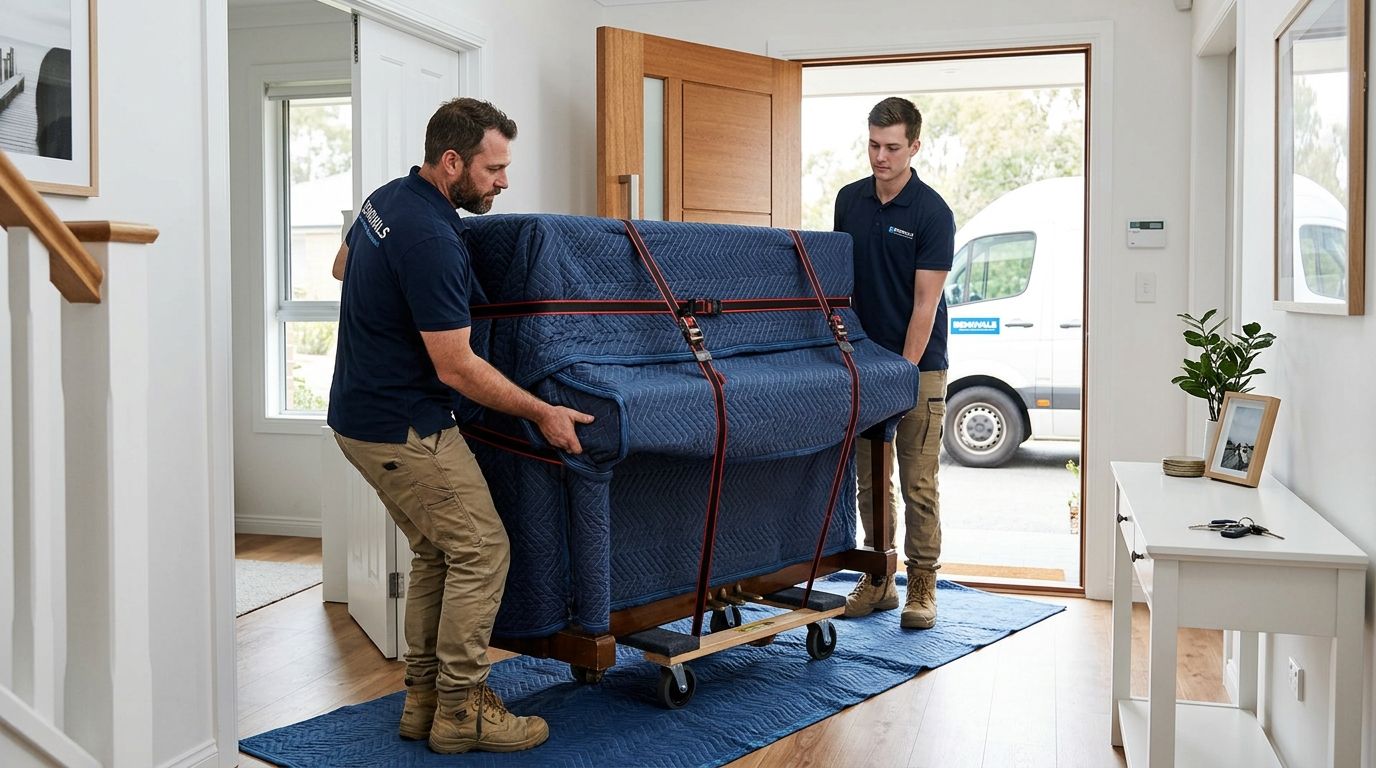
What proper gear changes
The equipment matters straight away. Piano dollies, skidboards or piano boards, heavy-duty straps, quilted pads, edge protection, and controlled-loading ramps all reduce the chance of drops, twisting, and impact damage. Wheels do the work where they can. Manual carrying is limited to the parts of the move where it is required.
Crew size matters too. Grace's piano moving advice notes that pianos need trained handlers and specialised equipment because of their weight, shape, and fragility. In practice, we would not send the same crew setup to move a compact upright in Woy Woy that we would use for a grand coming out of a first-floor apartment in Chatswood or a heritage property in Newcastle East.
Practical rule: If the team arrives without piano dollies, proper straps, and padded protection made for heavy instruments, you are looking at a general move crew, not a piano crew.
Local experience improves the result. On the Central Coast, salt air and humidity can affect wraps, loading time, and the settling period after delivery. In Sydney and Newcastle, access rules can be just as important as lifting skill. Strata managers may require lift bookings and protection for common areas, while heritage sites can limit where a truck can stop and how the piano can be brought out.
The trade-off is simple. Specialist piano movers usually cost more than a standard furniture service, and they often need to be booked earlier. You are paying for trained handling, purpose-built equipment, and a lower chance of damage to the piano, the property, and the people moving it.
2. Assess Accessibility and Plan Your Route Before Moving Day
A piano move can look straightforward until the first tight corner, short landing, or lift booking problem stops the job cold. The safe way to avoid that is to inspect the route early and plan every stage before moving day.
That starts with the full path, not just the front door. We measure doorways, hallways, stairwells, corners, lift interiors, entry thresholds, and the space where the piano will be placed at the new address. We also check the surfaces underfoot, because polished tiles, wet paths, steep driveways, and uneven access points all change how the team handles the move.
A local plan matters more in the Central Coast, Sydney, and Newcastle than many people expect. Coastal homes around Terrigal, Avoca, and Wamberal can have sloped blocks, narrow side access, and weather exposure that slows loading. In Sydney, strata rules often decide the move window before the truck even leaves the depot. In older parts of Newcastle, heritage buildings can limit truck position, entry points, and how much room we have to turn an upright or baby grand safely.
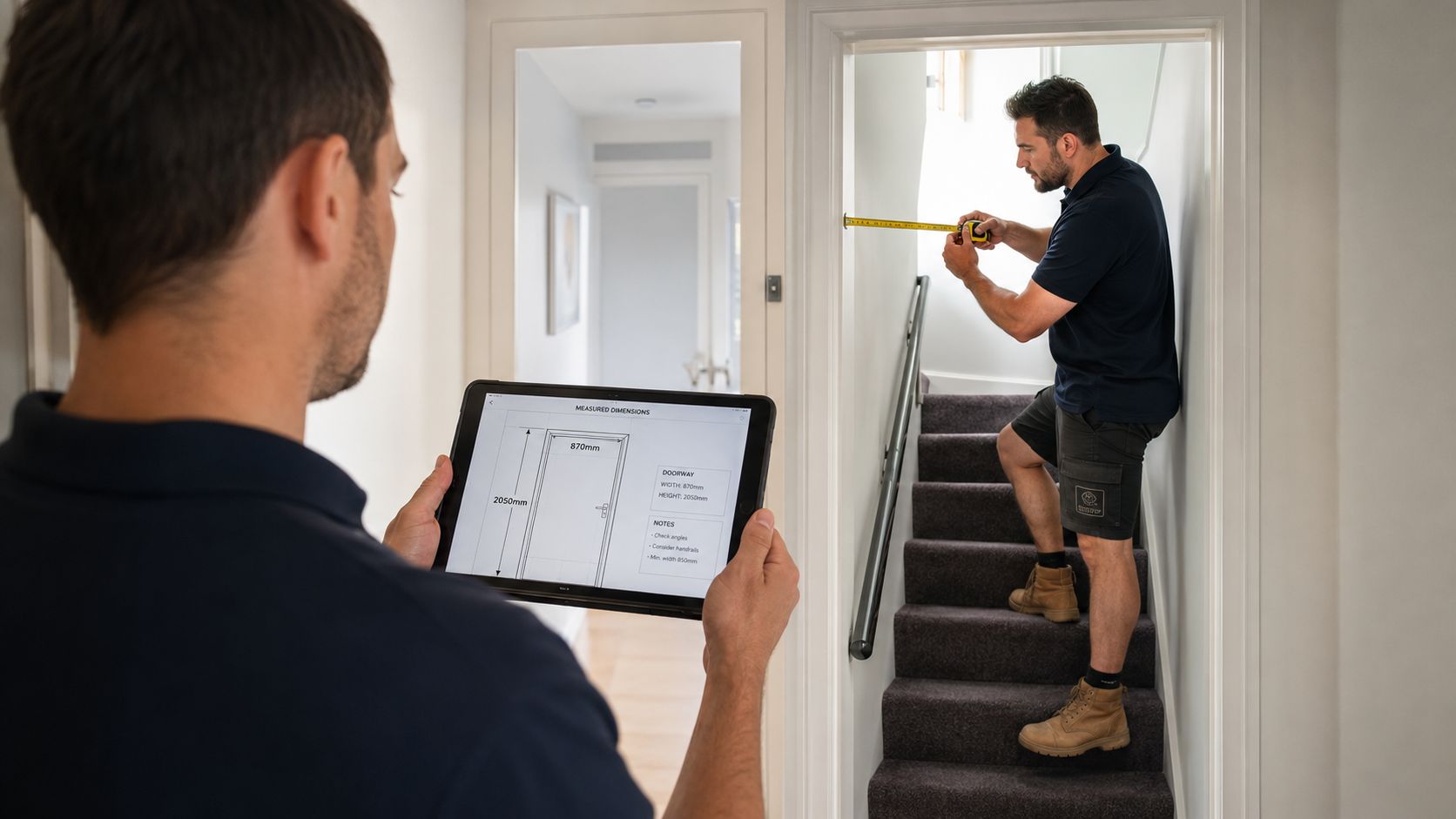
Local access issues that change the plan
Stairs are usually the first thing that changes both difficulty and timing. Each flight adds handling time, extra setup, and more points where the piano has to be controlled carefully. Even a compact upright can become a slower, more technical move once the team is working through turns, half-landings, or narrow staircases.
For apartments and unit blocks, we check the building rules as carefully as the measurements:
- Lift booking windows: Some buildings in Sydney and Newcastle only allow moves at set times, and missed bookings can delay the whole job.
- Protection for common areas: Strata managers may require pads in lifts, foyers, and hallways before access is approved.
- Parking and truck position: Loading zones, tight streets, and low-clearance entries affect how close we can get to the door.
- Approvals and notices: Some sites require advance notice, moving permits, or caretaker sign-off before the crew arrives.
There are trade-offs here. A site visit or detailed pre-move assessment takes extra time up front, but it usually saves time, money, and stress on the day itself. It also helps avoid the expensive version of problem-solving, where the piano is already on the trolley and someone realises the lift is too small or the stair turn is too tight.
If you are moving from a house in Gosford to a high-rise in Sydney, or from a federation home in Newcastle East into a modern apartment near the water, route planning gives you a realistic picture of what the move involves. It also lets us schedule the right arrival time around school traffic, commuter peaks, and loading restrictions, which matters on busy corridors between the Central Coast, Sydney, and Newcastle.
The safest piano move is usually the one that feels methodical from the start.
3. Secure Comprehensive Insurance That Specifically Covers Piano Relocation
Insurance is one of the first places piano moves go wrong on paper, even when the lifting is done properly on the day. We regularly find that owners assume a standard moving policy covers every stage of a piano relocation, then discover the wording is narrower than expected once loading, stair work, lift access, or placement damage is involved.
A piano needs to be listed and covered for what it is. It is a heavy, delicate instrument that can be affected during handling, transport, and delivery into the new room. Before you approve the move, ask for the policy details in writing and check how the piano is described, what stages of the move are included, and what happens if there is damage to the instrument or the property around it.
What to check before you approve the move
We suggest checking two sets of cover. One is the removalist's policy. The other is your own home and contents insurer, especially if the piano is a family heirloom, a quality upright or grand, or part of a longer move between the Central Coast, Sydney, and Newcastle where timing, storage, or third-party access can complicate responsibility.
Focus on practical points:
- Transit and handling: Does the cover include loading, road transport, unloading, and final positioning?
- Piano-specific listing: Is the piano treated as a declared specialty item rather than folded into general household goods?
- Building damage: Does the policy address accidental damage to lifts, walls, stair rails, foyers, or other common property?
- Claims steps: Do you know who records condition, who lodges the claim, and what photos or paperwork are required?
That last point matters more than people expect.
For apartment and unit moves in Sydney and Newcastle, strata managers often want proof of cover before they confirm lift bookings or allow access through common areas. In older buildings around Newcastle East or parts of Sydney with tight foyers and heritage finishes, building management may be especially careful about damage to timber, tiles, or balustrades. If that paperwork is missing, the crew can be ready and the piano can still be going nowhere.
There is a cost trade-off here. Better cover usually means a higher premium or a slightly dearer moving quote, and policy wording takes time to read properly. But that extra effort is usually cheaper than sorting out a dispute after a difficult carry through wet coastal conditions, a steep driveway on the Central Coast, or a late-afternoon unload delayed by traffic.
Reliable service matters here too. Clear communication, accurate paperwork, and turning up as scheduled help keep piano moves safe and predictable across the Central Coast, Newcastle, Lake Macquarie, and Sydney.
4. Prepare Your Piano and Home Environment Weeks Before Moving Day
Good preparation makes the actual relocation shorter and safer. It also gives you time to sort out the surrounding details that often cause delays, like parking space, pets underfoot, furniture in the path, or a destination room that still isn't ready.
One point many guides miss is what happens after the piano arrives. According to Find a Mover's piano mover information, Central Coast humidity fluctuations average 65% annually, and that local moisture variation affects string tension after relocation. In the same source, 30% of pianists are said to retune within 72 hours post-move, while only 12% of removalists mention it in service agreements. That gap matters if you're moving into one of the Central Coast's coastal areas where indoor conditions can shift quickly.
What to do before the team arrives
Start with the instrument itself. Close and secure the lid, clear anything sitting on top of the piano, and make sure the access path is free of rugs, stools, décor, and small trip hazards. If there are loose doorstops, low artwork, or furniture corners close to the route, remove or protect them.
At home, the preparation should include:
- Clear the path: Make sure the route from the piano to the truck is open and stable.
- Protect the area: Floors, corners, and doorframes benefit from protective coverings where access is tight.
- Manage parking: Reserve practical space for the truck as close to the property as possible.
- Ready the destination room: Decide where the piano will go before arrival so it doesn't need repeated repositioning.
If you're in a unit block in Gosford, Lake Macquarie, or central Newcastle, also confirm lift access and move-in rules well ahead of time. In Sydney, parking and loading arrangements can take longer than clients expect, especially on busy streets or near restricted zones.
If children or pets will be home on moving day, keep them well clear of the access route. Pianos leave no room for sudden movement.
Preparation also helps if you're weighing DIY packing against full packing services for the rest of the move. A lot of clients pack ordinary household items themselves but leave specialty protection and placement work to us. That split can make sense. The key is being realistic about what should stay in professional hands.
5. Coordinate Logistics and Timing to Minimise Disruption and Costs
A piano job can start going wrong before anyone touches the instrument. We see it when a truck arrives in Sydney and the loading zone is full, or when a Gosford unit booking gets held up because the lift was never reserved. Good timing saves money because it cuts waiting time, rehandling, and last-minute changes.
This matters even more across the Central Coast, Sydney, and Newcastle because each run has its own pressure points. Sydney jobs need extra allowance for traffic and restricted access. Newcastle and older heritage buildings can bring tight stairwells, small landings, and limited truck positioning. On the Coast, steep driveways, coastal weather, and longer carries from kerbside are common.
Pricing usually follows those practical factors. A straightforward upright move with easy ground-floor access will cost less than a grand piano going through a strata building with booked lift times, stair work, and a long walk from the truck. Interstate work also needs earlier planning because delivery windows, storage timing, and transfer points all have to line up properly.
The goal is a clean run sheet that matches the property, the building rules, and the road conditions on the day.
Timing choices that make a real difference
A few decisions consistently reduce disruption:
- Book around strata and building access rules: Many apartment buildings in Sydney, Gosford, and Newcastle allow moves only in set time blocks and require lift bookings in advance.
- Choose a practical truck window: School traffic, commuter peaks, and weekend congestion can turn a simple booking into paid waiting time.
- Prepare the destination room before arrival: If the piano can go straight into position, the crew avoids extra manoeuvring and the job finishes faster.
- Leave margin for weather: Rain, sea air, and damp conditions slow outside handling and call for more protective wrapping, including quality coverings such as The Box Warehouse removal blankets.
There is usually a trade-off. The time that suits your diary best is not always the time that gives the safest access or the lowest overall cost. We would rather recommend a better slot and complete the move in a controlled way than squeeze the job into a booking window that creates pressure from the start.
That approach is especially helpful for regional runs between the Central Coast, Sydney, and Newcastle. A little planning on parking, access times, and traffic buffers often prevents the delays clients assume are just part of moving day.
6. Use Specialist Handling Equipment and Protective Materials Throughout the Move
At this stage, the job becomes visibly different from an ordinary household relocation. The right gear doesn't just make the move easier. It changes the level of control from one stage to the next.
Piano castors are a common misunderstanding. They're designed only for very short movement within a room and shouldn't be relied on for relocation. Golden Bay Relocation's piano transport guide explains that castors are not suitable for proper transport and that a heavy-duty piano dolly or skidboard is required, especially in multi-level buildings, stairs, or narrow corridors.
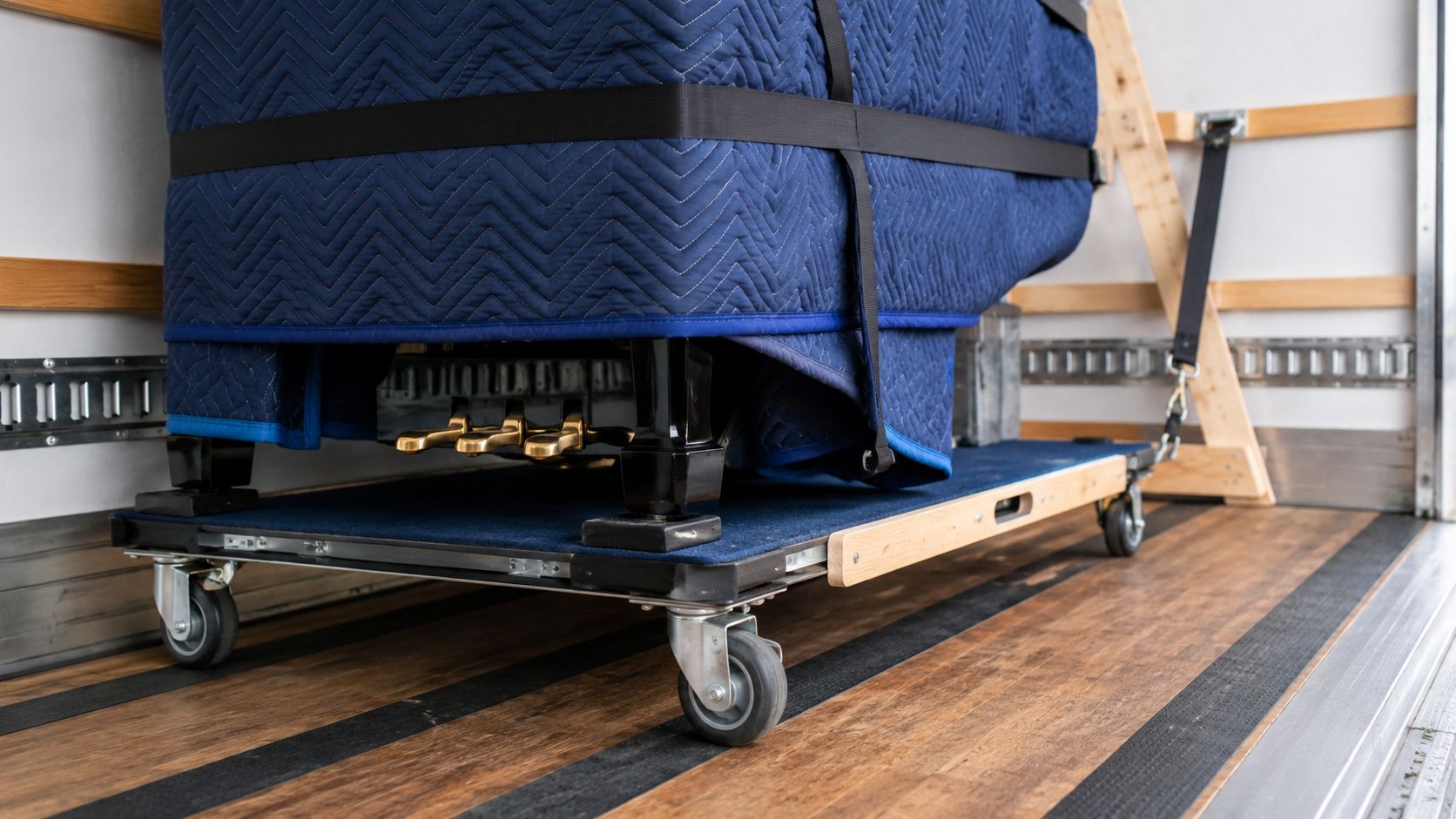
What works and what doesn't
A proper setup usually includes a piano dolly, piano board or skidboard where needed, furniture straps, quilted pads, and vehicle tie-downs. The wrapping also matters. Blankets protect the finish, but they need to be secured correctly so they don't slip at the worst time.
One detail that gets overlooked is pedal protection. In a video on piano moving technique, DIY handling is linked with bent pedals when wrapping is inadequate, and the same reference argues that bubble wrap alone is often not enough for that vulnerable area. In practice, that matches what we see. Pedals and lower front sections are easy to damage when the instrument is tipped, turned, or set down carelessly.
On-site advice: If someone suggests rolling the piano out on its own castors, stop the job and rethink the method.
To see the kind of visual care standard we're talking about, even basic removal blankets used in furniture protection show why thick, padded coverings are preferable to thin improvised wraps.
A short demonstration can also help clients understand the difference between general handling and specialist setup. This example shows the type of controlled loading approach worth looking for in a provider.
Watch this piano handling demonstration
The downside is time and cost. Specialist gear requires investment, maintenance, and training. Wrapping and bracing properly also takes longer than a quick furniture lift. But that extra time is where a lot of damage prevention happens, especially in apartments, on stairs, and through narrow access points.
7. Plan Post-Move Care with Tuning, Positioning and Acclimatisation
The piano is in the new room, the truck has gone, and everyone wants the job to feel finished. For the instrument, that is only the halfway point. The first few days after delivery have a big impact on tuning stability, timber movement, and long-term reliability.
Acoustic pianos usually need a retune after a move. The cost varies by technician, the piano's condition, and how far it has drifted, but it should be allowed for in the moving budget. In practice, we tell clients not to book the tuner for the same day as the move unless a technician has advised otherwise. A short settling period usually gives a better result.
Placement matters just as much as tuning. Put the piano on an internal wall if you can, away from direct sun, air-conditioning outlets, heaters, and spots that swing from hot to cold through the day. That advice matters even more around the Central Coast, where coastal humidity can rise quickly, and in older Newcastle homes where insulation and drafts are often less predictable.
Moves between Sydney, the Central Coast, and Newcastle often involve a real change in conditions, not just a change of address. A piano coming out of a climate-controlled apartment in North Sydney can react differently once it is set up in a breezier house at Terrigal or an older property in Cooks Hill. Timber, felt, and strings all respond to that change.
A practical post-move plan looks like this:
- Let the piano acclimatise: Give it time to settle into the new temperature and humidity before tuning.
- Choose the final position carefully: Avoid windows, external walls, damp corners, and direct airflow from vents.
- Arrange tuning in advance: Book a technician early so you are not waiting weeks once the piano has settled.
- Watch the room conditions: If the room feels damp, salty, or exposed, ask your tuner whether a humidity-control solution makes sense.
We also encourage clients in strata buildings and heritage properties to think past delivery day. If building rules limited where the piano could be brought in, or if access forced a less-than-ideal temporary position, plan a final adjustment once approvals, furniture layout, or room setup are sorted. It is much easier to reposition the piano carefully once than to keep shuffling it around the room.
Bundled mover-and-tuner services can be convenient, but the trade-off is scheduling. One booking is simpler to manage, though it may not give the piano enough time to settle if the service is rushed. Separate bookings take a bit more coordination, but they often suit households moving from one microclimate to another, especially along the coast.
Before we leave, we can help you choose the safest wall and the most stable spot in the room. That small decision can save you money on avoidable tuning issues and help the piano play properly sooner.
7-Point Piano Moving Comparison
A quick comparison helps when you are weighing cost, risk, access, and timing across the Central Coast, Sydney, and Newcastle. The table below is designed for decision-making, not a recap.
| Item | Best fit | Main trade-off | What it helps you avoid | Local factor to check | Why clients choose it |
|---|---|---|---|---|---|
| Hire Specialist Piano Removalists with Proper Training and Equipment | Uprights and grands with stairs, tight turns, or high replacement value | Higher upfront spend than a general furniture move | Injury, case damage, dropped corners, poor lifting technique | Steep driveways on the Coast, terrace access in Sydney, older entries in Newcastle | Lower handling risk and a crew that knows piano weight distribution |
| Assess Accessibility and Plan Your Route Before Moving Day | Apartments, heritage homes, split-level houses, narrow hallways | Takes planning time before booking day | Failed access on arrival, extra labour time, rushed decisions | Strata lift bookings, loading zones, verandah widths, lane access | Fewer surprises and a more accurate quote |
| Secure Specific Insurance That Covers Piano Relocation | Valuable instruments, long-distance jobs, shared-access buildings | Extra paperwork and policy checking | Disputes over what is covered during lifting, loading, transit, or storage | Building management requirements and documented pre-existing marks | Clearer cover if something goes wrong |
| Prepare Your Piano and Home Environment Weeks Before Moving Day | Households coordinating painters, floor protection, or staged access | Requires earlier organisation | Scratched floors, blocked routes, avoidable delays at pickup or delivery | Coastal moisture, wet weather access, renovation schedules | Cleaner access and less day-of disruption |
| Coordinate Logistics and Timing to Minimise Disruption and Costs | CBD moves, school-zone areas, busy strata sites, multi-stop relocations | Less flexibility if bookings are locked in early | Waiting charges, parking issues, traffic blowouts, missed lift windows | Sydney traffic, Gosford and Newcastle loading conditions, body corporate rules | Better timing control and fewer avoidable add-on costs |
| Use Specialist Handling Equipment and Protective Materials Throughout the Move | Grands, polished finishes, long carries, uneven ground | Equipment-heavy setup can take longer | Strap pressure marks, wheel damage, slipping on ramps, knocks to walls and banisters | Sloped blocks, gravel paths, damp coastal conditions | Better control through difficult access points |
| Plan Post-Move Care with Tuning, Positioning and Acclimatisation | Moves between different microclimates or room conditions | Results take patience, not an instant tune-up | Tuning instability, moisture stress, poor room placement | Salt air near the coast, air-conditioned apartments, older draughty homes | Helps the piano settle properly in its new room |
The pattern is usually straightforward. The harder the access and the more valuable the instrument, the less room there is for shortcuts. In beachside suburbs, moisture and salt air also matter more than clients expect. In Sydney apartments, access windows and loading rules often shape the whole job. In Newcastle, older properties can look simple from the street and still present tight internal turns or entry steps.
If you are comparing quotes, do not just compare price. Compare access planning, equipment, insurance wording, and whether the crew has handled pianos in your type of building before. That is usually where the main difference sits.
Your Piano Relocation Checklist for the Central Coast, Sydney & Newcastle
A piano move often looks simple until the crew reaches a steep driveway in Wamberal, a narrow terrace hall in Newcastle, or a Sydney apartment loading dock with a strict booking window. By then, the result depends on the planning already done.
Use this final check before you lock in your move. Confirm who is responsible for strata approvals, lift bookings, loading zones, and key access. Check whether the destination room is ready, dry, and clear before the piano arrives. If you are moving in a coastal suburb, allow for the instrument to settle before tuning. If the property is older or heritage-listed, flag stairs, tight turns, and delicate surfaces early so the right equipment and crew size can be scheduled.
Local knowledge saves time and avoids preventable trouble. On the Central Coast, salt air and damp conditions can affect timing, storage, and post-move settling. In Sydney, traffic, parking restrictions, and building management often decide the best day and truck access plan. In Newcastle and Lake Macquarie, older homes, raised entries, and sloping blocks change how we load and unload.
If the piano is part of a larger move, it also helps to keep the specialist lift, carry, and loading sequence separate from general furniture flow. That is why some clients coordinate the wider relocation through local house removals across the Central Coast, Newcastle and Sydney while we schedule the piano handling around access and protection requirements.
We have seen the same pattern for years. The smoother jobs are the ones where access details are confirmed early and nothing important is left to guesswork.
If you want clear advice before booking, talk to Gentle Giant Removals. We work across the Central Coast, Newcastle, Lake Macquarie, and Sydney, and we can help you assess access, timing, building requirements, and the safest setup for your piano move. Request a free quote, book an in-home assessment, or call us if the job is urgent.