
Moving week often turns a bedroom into a mess of half-packed clothes, open suitcases and hangers everywhere. One minute you think, “It’s only clothes.” The next, you’ve got dresses crushed into bags, work shirts folded badly, and no idea what you’ll wear the first morning in the new place.
That’s usually the point where people realise wardrobe packing can either stay simple or become one of the most annoying parts of the whole relocation. If you’re moving from Terrigal to Newcastle, from Gosford into Sydney, or out of a Newcastle apartment with tight stairs and lift booking rules, keeping clothing organised matters more than is generally realized.
A port a robe solves that problem neatly. It keeps hanging clothes hanging, helps your wardrobe stay sorted, and makes unpacking much faster. If you’re still working through the bigger moving plan, a practical moving in checklist will help you line up the rest of the job as well.
Planning Your Move and Protecting Your Wardrobe
We see the same scene all the time. A family is nearly ready for the truck, the kitchen is packed, the books are done, and then the wardrobes are still full because no one wants to deal with them. So the last-minute solution becomes suitcases, shopping bags, or garbage bags.
That works, but only in the loosest sense of the word. Clothes slide around, hangers tangle together, and anything structured, like jackets, dresses or uniforms, comes out looking tired. If you’ve got a property handover, a strata move window, or a long day ahead through Sydney traffic, that’s one more problem you don’t need.
A port a robe gives you a cleaner way to handle it. You lift a section of clothes straight from the wardrobe and place it into a temporary hanging unit for transport. The clothing stays organised, easier to carry, and much easier to put away once you arrive.
Clothes are often the last thing packed and the first thing needed. That’s why they deserve a better plan than “we’ll figure it out on the day”.
What Exactly Is a Port a Robe?
A port a robe is a temporary wardrobe made for relocations. Think of it as a hanging cupboard for the truck. Instead of folding your hanging clothes into cartons, you keep them on their hangers and transfer them directly into the box.
That sounds simple because it is. Good packing equipment often works that way. It removes extra handling.
The three parts that matter
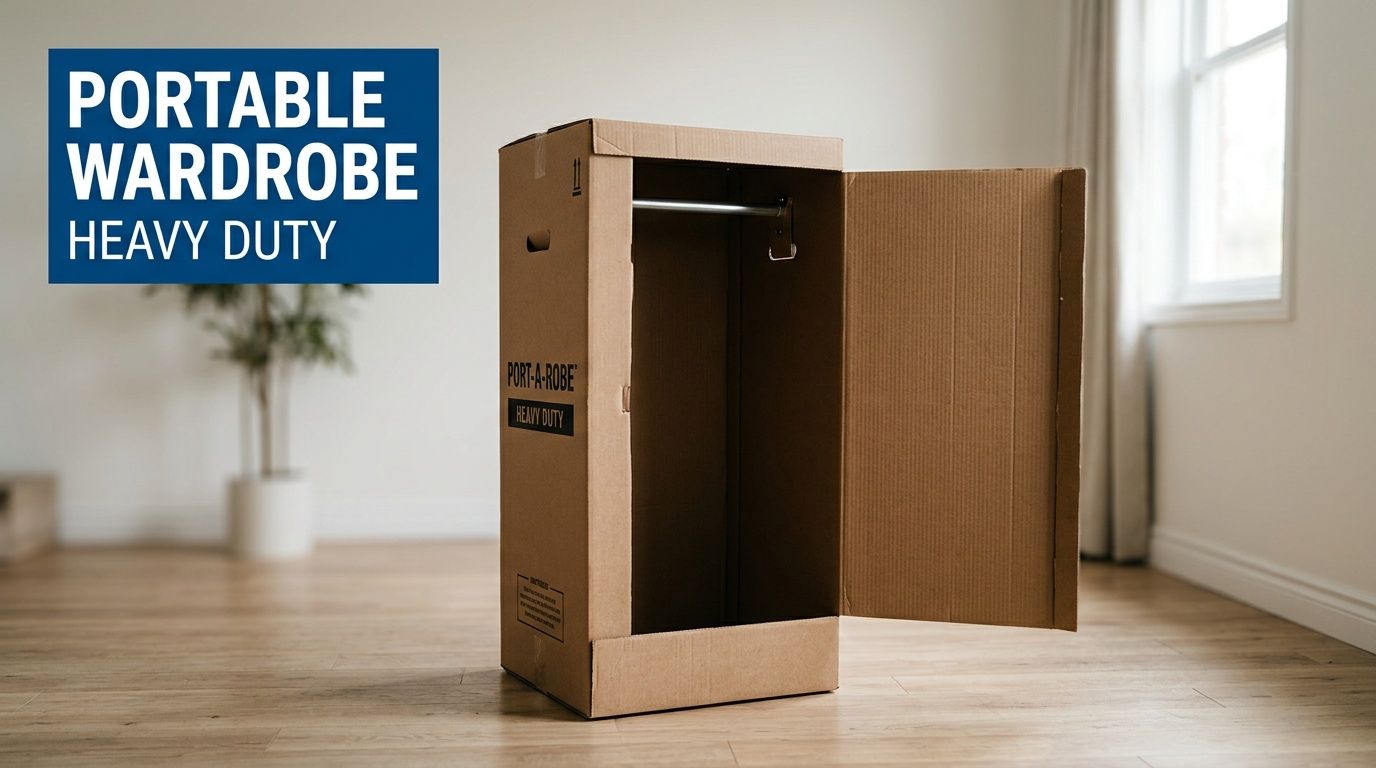
The first part is the box itself. Port-a-Robe boxes use twin-cushion cardboard construction with a heavy-duty 2-ply wall, designed for shock absorption during transit, according to the Visy Port-a-Robe clothes moving box specifications.
The second part is the metal hanging rail. That rail lets shirts, dresses, jackets and coats stay upright rather than being folded into stacks. The same product specifications note standard assembled dimensions of 595mm (L) × 476mm (W) × 1080mm (H), with the integrated rail engineered to hold approximately 20-25kg of clothing.
The third part is the front access flap. That gives you quick access without fully unpacking the unit. If you need tomorrow’s work clothes on the first night in your new place, you can reach them quickly instead of tearing through five cartons.
For people comparing options, moving boxes and wardrobe cartons make more sense when you understand what each one is designed to do.
Why people get confused about them
A lot of people assume a port a robe is only for expensive clothing. It’s useful for formal wear, of course, but that’s not the full story. It’s just as handy for everyday clothes if you want speed, order and less ironing after the relocation.
Another common mistake is treating it like a general storage carton. It isn’t. A port a robe works best for hanging garments, not shoes, books, folded linen or loose household items.
Practical rule: If it normally lives on a hanger, a port a robe is probably the right place for it on moving day.
When it helps most
You’ll notice the biggest difference when you have:
- Workwear to protect that needs to be ready soon after arrival
- Delicate fabrics that crease easily in suitcases
- A staged relocation where some rooms are packed before others
- Apartment access limits where you need quick loading and unloading
- A family move where several wardrobes need to stay sorted by person
In a three-bedroom home, that can save a lot of sorting later. Instead of one mixed pile of clothing in bags, each port a robe can be assigned to a room or family member.
How to Pack Your Wardrobe Like a Professional
Packing a port a robe properly is straightforward, but a few small choices make a big difference. If you rush it, the box gets too heavy, the rail can strain, and carrying it becomes awkward. If you load it well, it’s one of the easiest items to manage on the day.
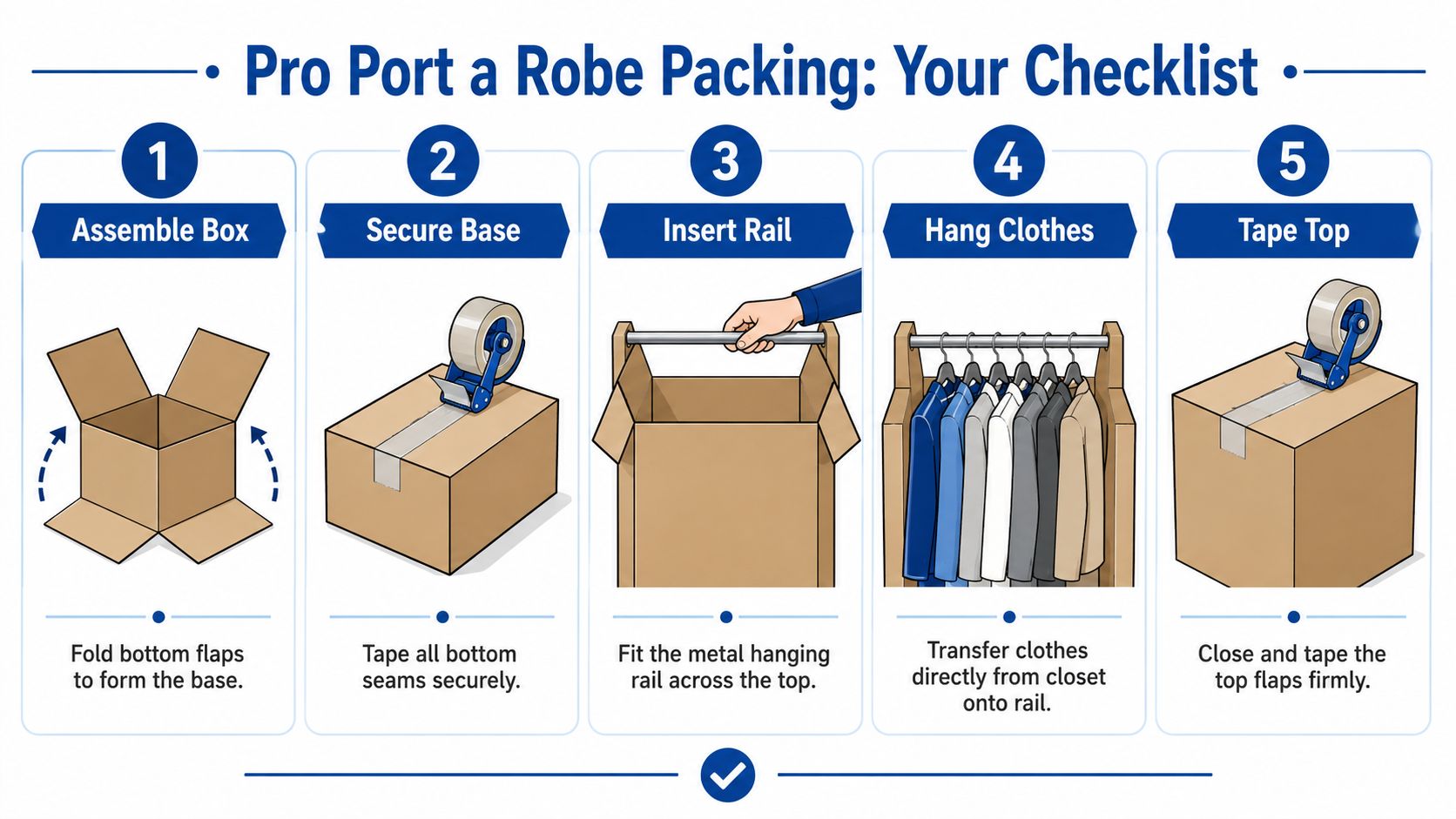
This is the sequence we recommend.
Start with assembly
Fold the bottom flaps carefully so the base sits flat, then tape the seams firmly. Don’t use one short strip and hope for the best. The base carries all the load.
Once the bottom is secure, place the hanging rail into its slots at the top. Check that it’s seated properly before adding clothes. A rail that isn’t fitted well can shift while the carton is being carried.
Transfer clothes in sections
The easiest method is to work wardrobe by wardrobe, not item by item. Take a manageable section of hanging clothes and move them directly across on their existing hangers. That keeps everything in order.
If you want unpacking to be even easier, group by type. Put work shirts together, dresses together, jackets together, or sort by person if more than one person shares a room.
A helpful walkthrough on how to pack clothes for moving can also help if you’re splitting items between hanging clothes and folded clothes.
What to do and what to avoid
Here’s where people usually go wrong.
- Alternate bulky and light items so the weight sits more evenly across the rail.
- Keep garments facing the same direction because it makes unloading faster.
- Leave some breathing room so clothes aren’t crushed together.
- Use standard cartons for heavy extras like shoes, handbags with hardware, or boxed accessories.
- Tape the top securely once the contents are loaded.
What you shouldn’t do is over-pack it. Even though the carton is sturdy, too much weight makes the unit harder to lift and less stable to carry through hallways, stairs and doorways.
If a port a robe feels difficult to tilt slightly and move safely, it’s probably packed too full.
A simple example
Say you’re moving from a townhouse in Erina to a house in Lake Macquarie. You’ve got office clothes, school uniforms and a few formal outfits. Instead of stuffing everything into mixed bags, you use one port a robe for business wear, one for everyday clothes, and one for the children’s school and dress clothes. When you arrive, each one goes straight to the right bedroom.
That’s the main benefit. Less handling in. Less handling out. Fewer wrinkles, less confusion, and a much smoother first night.
Renting vs Buying Port a Robes Which Is Right for You
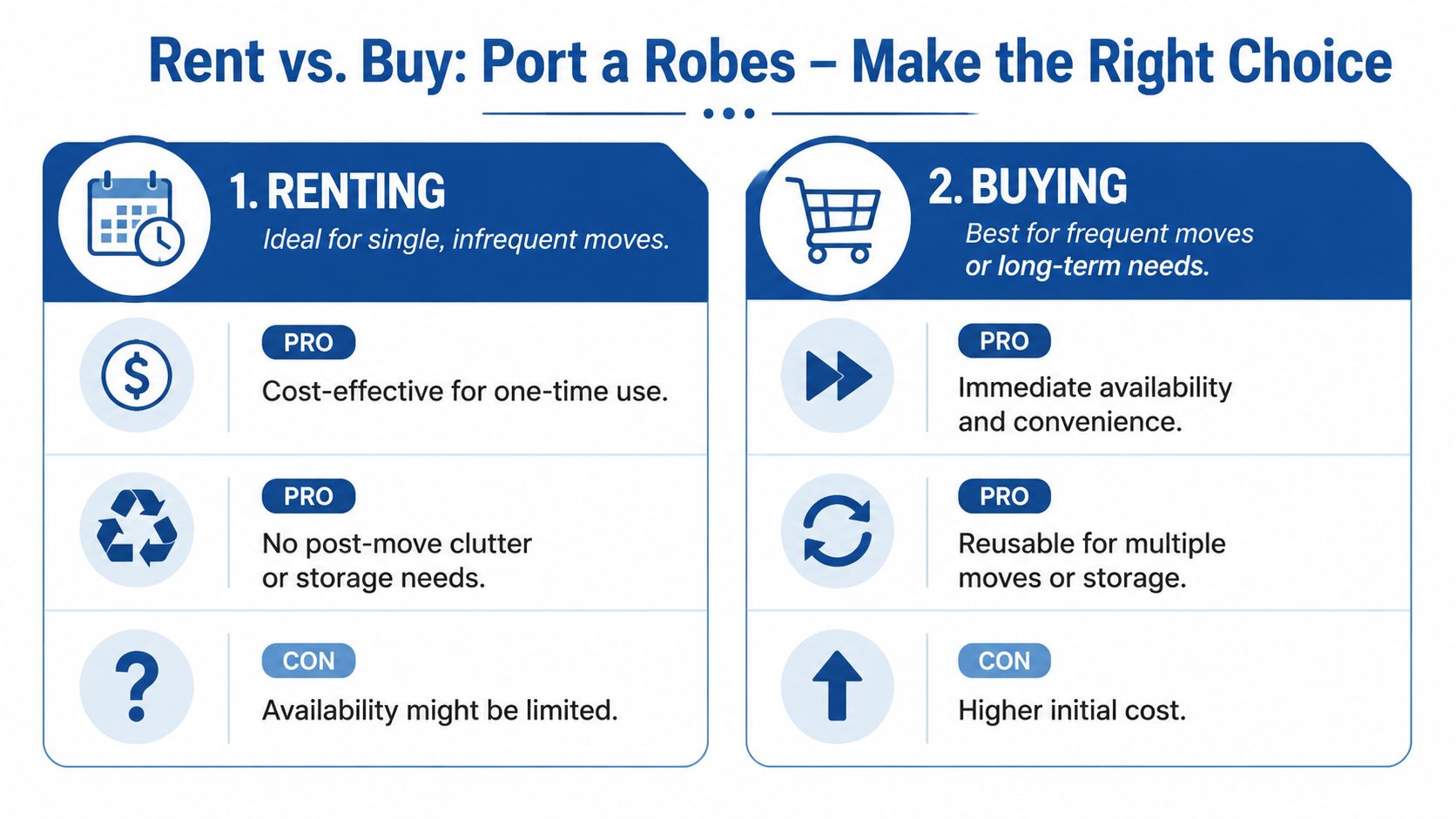
This choice depends less on the product and more on the shape of your move. Some people need port a robes for one relocation and never again. Others need them across several stages, storage periods or repeat moves.
For many households, the right answer comes down to convenience, storage space after the move, and whether you’ll use them again.
When renting makes more sense
If you’re doing a single local or intrastate move, renting or using a deposit-based supply model is usually the more practical option. You get the cartons for the job, use them for the relocation, then return them instead of finding somewhere to store large empty wardrobe boxes afterwards.
That matters more than people think. After a move, garages and spare rooms fill quickly. Hanging onto oversized packing materials can become one more piece of clutter.
This is especially relevant in NSW because 1.2 million households relocated intrastate in 2024-25, with 35% of those moves occurring in regional areas, according to the Australian Bureau of Statistics household and family projections release. When so many relocations involve regional routes, practical packing decisions matter.
When buying can be the better option
Buying your own can suit a more complex setup. That might include:
| Situation | Why buying may suit |
|---|---|
| Multi-stage relocation | You may need the same wardrobe units across several dates |
| Renovation overlap | Clothes may need temporary hanging storage beyond moving day |
| Frequent relocations | Reuse becomes more convenient |
| Longer-term storage planning | You may want dedicated wardrobe cartons on hand |
This can work well if you’re relocating in stages from Sydney to the Central Coast, or moving out first, into storage second, and into the final property later.
A practical decision test
Ask yourself three questions.
Is this a one-off move?
If yes, renting often suits better.Will you need wardrobe storage after the truck is unloaded?
If yes, buying may be worth considering.Do you have space to keep them after the move?
If not, there’s not much value in ownership.
Renting suits people who want the function of a port a robe without the after-move clutter.
A Gosford apartment move to Newcastle is a good example. If you’re doing one clean relocation with a fixed move date, short access windows and limited storage at the new place, temporary use is usually the neatest fit. If you’re renovating in stages or coordinating with storage, ownership becomes easier to justify.
Safely Transporting Porta Robes on Moving Day
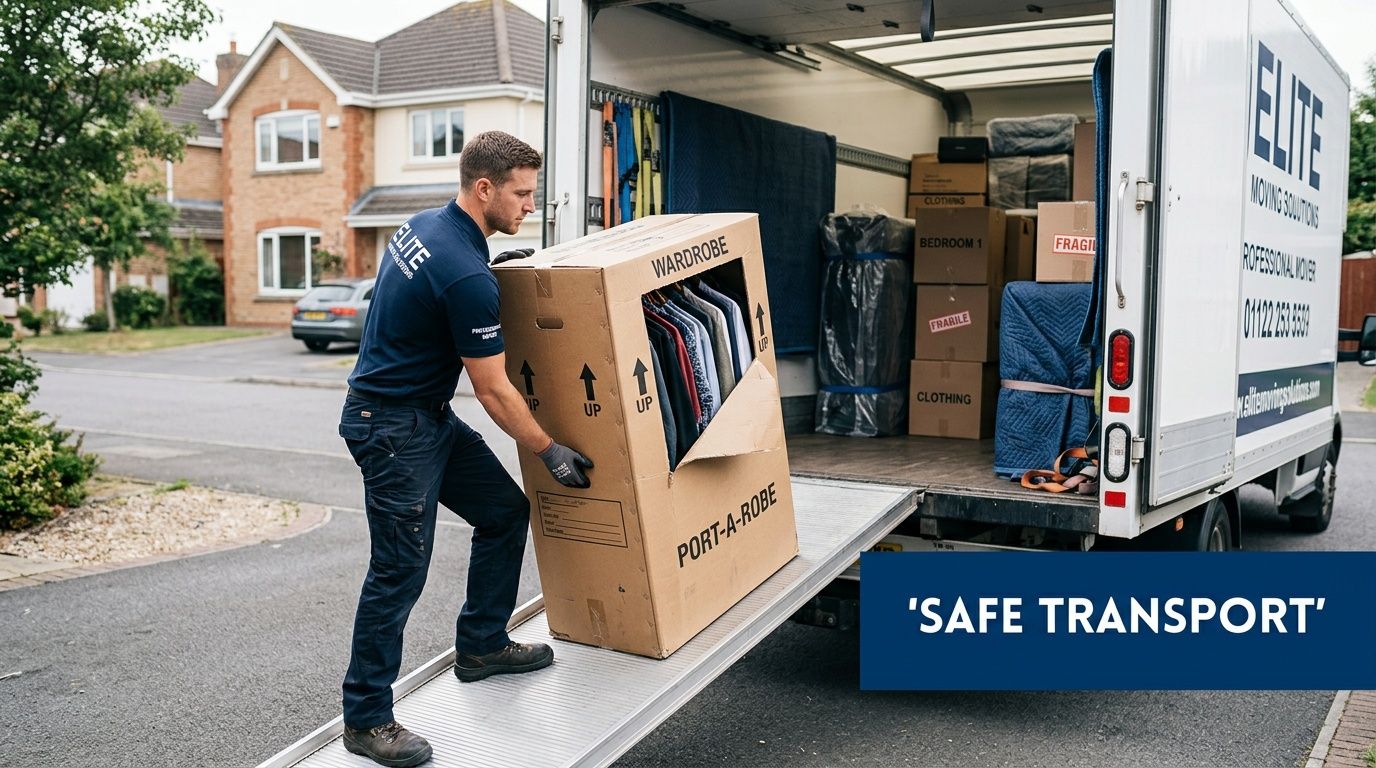
A packed port a robe can still go wrong if it’s handled badly in transit. This is the part most DIY guides miss. They show how to build the carton, but not how to get it from a bedroom in Sydney to a truck, then from the truck into a home on the Central Coast without tipping, crushing or moisture issues.
That’s where transport method matters.
The risks people don't see at first
Porta robes are tall and narrow. That shape is convenient for hanging clothes, but it also means they can become unstable if they’re left unsupported in a vehicle.
For regional NSW relocations, rougher road surfaces and coastal moisture add another layer of risk. As noted in a YouTube transcript and transport guidance reference about Port a Robe use, most online guides focus on assembly and overlook transport logistics. The same reference notes that variable road quality and coastal humidity pose real risks, and highlights securing the internal folding rail and using quilted pads to reduce vibration and impact.
How to keep them secure
A good loading plan treats port a robes as part of a bigger wall of freight, not as standalone items. They should sit upright and be supported by compatible items around them so they can’t sway while the truck is moving.
Useful protection methods include:
- Rail security so the internal bar doesn’t shift under movement
- Quilted pads to soften vibration and reduce rubbing against nearby items
- Stable placement beside other firm, well-loaded cartons or furniture
- Clear carrying paths through doors, stairs, lifts and ramps
If you’re planning your own materials, this guide to packing materials for a damage-free move helps you think beyond the carton itself.
Why local conditions matter
A relocation from a freestanding house in Wamberal is very different from one out of a heritage apartment in Newcastle or a unit block in inner Sydney. In apartment buildings, you may need lift bookings, loading bay access, body corporate approval, and protection for shared areas. In narrow streets, timing matters because standing room for the truck may be limited.
Weather matters too. In the Central Coast’s coastal areas, damp air can affect anything cardboard-based if it’s left sitting too long in the wrong conditions. That’s another reason to load efficiently and unload promptly.
Safety note: A port a robe should protect clothing, not create a manual handling problem. If it’s awkward to lift safely, reduce the load before moving it.
Advanced Uses for Porta Robes Beyond Moving Day
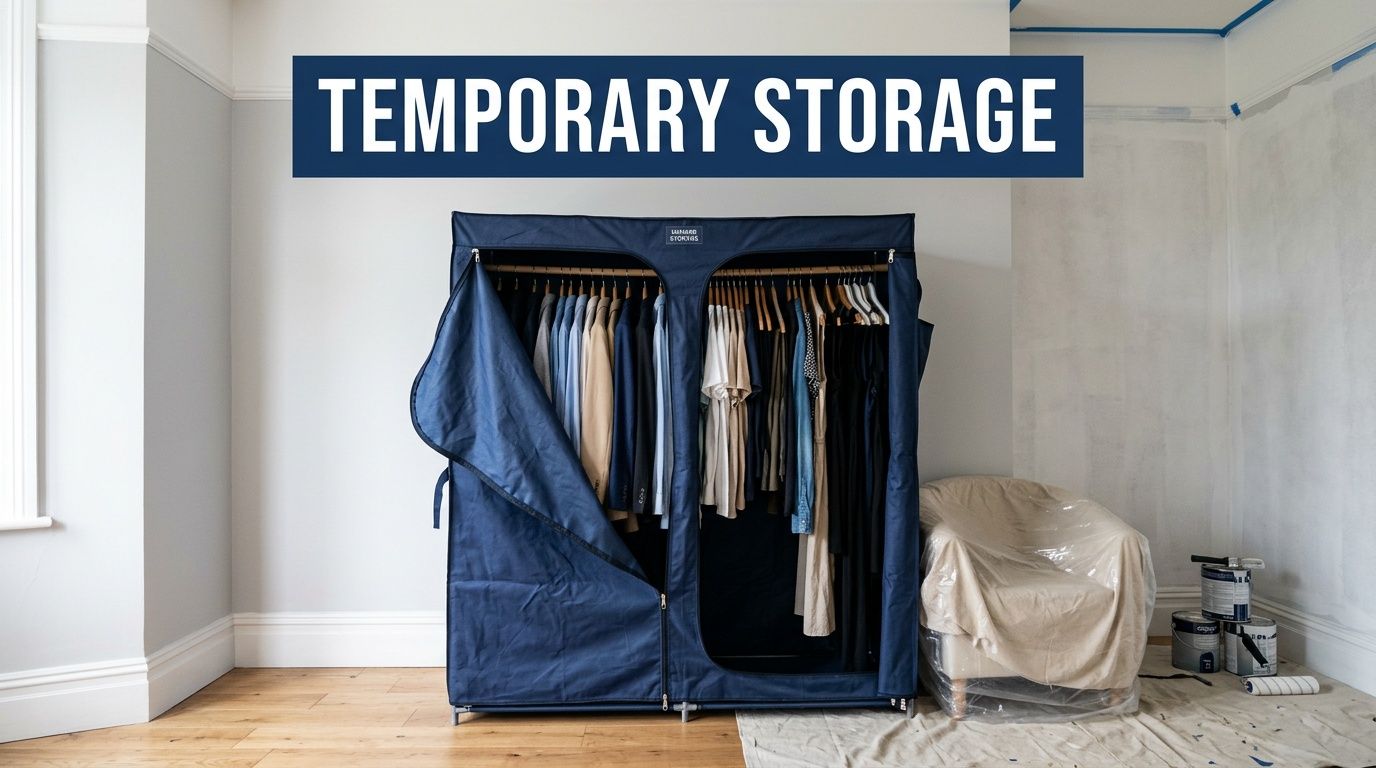
Port a robes are often first recognized as a moving-day item, but they’re also useful before and after the truck leaves. Once you start thinking of them as temporary wardrobe space, more options open up.
That matters in real homes, because many relocations aren’t neat one-day jobs. People renovate, stage homes for sale, downsize gradually, or move a family member into care over several steps.
Temporary wardrobe space during changeovers
If a bedroom is being painted, carpeted or repaired, a port a robe lets you move hanging clothes out of the room without turning them into piles. The same idea works during partial renovations, floor sanding, or when tradies need full access to built-in wardrobes.
They’re also helpful during pre-sale preparation. If you’re decluttering to make wardrobes look larger for inspections, you can remove part of the clothing while keeping it accessible and organised.
Helpful for staged and supported relocations
Port a robes prove to be more than a packing tool. For staged relocations, especially for senior clients moving into aged care, they can provide routine and easy access to clothing while the rest of the home is in transition.
According to the portable wardrobe product page discussing staged relocations, setup is 40% faster than assembling flat-pack furniture. In practice, that means clothing can be accessible sooner, without relying on drawers, cupboards or suitcases on day one.
Good uses outside a standard house move
- Renovations where wardrobes need to be emptied temporarily
- Seasonal clothing storage for coats, jackets or occasion wear
- Property styling and inspections where built-ins need to look less crowded
- Downsizing moves where only part of the home is unpacked straight away
- Care transitions where familiar daily clothing needs to stay easy to reach
For people who need continuity, easy access to familiar clothing can make an unsettled week feel more manageable.
That’s easy to overlook if you only think in terms of cartons and truck space. In reality, wardrobe access is part of how a home functions.
How Gentle Giant Makes Your Relocation Easier
The biggest advantage of using port a robes well isn’t the carton itself. It’s having the whole relocation planned properly around access, timing, protection and the right amount of packing materials.
That starts before moving day. A proper assessment helps work out how many wardrobe cartons you’ll need, whether some clothing should go into standard cartons instead, and whether your property has any restrictions that affect loading. In strata buildings, that may include lift bookings, move-in windows, shared-area protection and parking arrangements. In older Newcastle buildings or busy Sydney streets, access planning can be just as important as the packing.
Support that goes beyond supplying cartons
Some people want packing materials delivered so they can do the job themselves. Others want a team to handle the packing as well. Both approaches can work, but the right choice usually depends on your timeline, mobility, family commitments and how complex the move is.
A reliable removalist should also explain what protection is included, how belongings are handled in transit, and whether there’s full insurance coverage in place. If you’re weighing up providers, this guide on how to choose the right removalist is worth reading before you book.
Why the small details matter
A smooth relocation often comes down to details that don’t look dramatic on paper. Will the truck have suitable access in a narrow street? Have parking permits been checked if needed? Are there stairs, long carries, or lifts to manage? Do fragile items and hanging clothes need separate handling plans? Is there storage coordination if settlement dates don’t line up?
Those are the questions that reduce problems on the day.
For households moving across the Central Coast, to Sydney, to Newcastle or further into regional NSW, good preparation usually means fewer surprises, safer handling, and a faster start at the other end. Port a robes fit into that bigger picture well because they solve one common problem cleanly. Your clothes stay hanging, easy to identify, and ready to unpack without the usual mess.
If you’d like help planning a wardrobe-friendly move, Gentle Giant Removals & Relocations can assist with packing materials, professional packing, transport planning, and careful relocations across the Central Coast, Sydney, Newcastle and beyond. You can get a free moving quote, request a free in-home assessment, or call for urgent moves if your dates are close.