
Relocating, whether it's from Terrigal to Newcastle or a bigger move interstate, involves a lot of moving parts. It's more than just getting your belongings from point A to point B; it's about managing timelines, coordinating services, and ensuring nothing important gets left behind. As removalists with over 40 years of experience helping families across the Central Coast, Sydney, and Lake Macquarie, we've seen first-hand how a solid plan can transform a relocation. A disorganised move creates unnecessary stress, while a well-structured one feels controlled and efficient. That’s why we’ve created this ultimate relocation checklist Australia, breaking down the entire process into manageable, timeline-based steps.
Think of us as your friendly local team, guiding you through each stage, from the initial clear-out eight weeks before you move to settling into your new home. This comprehensive guide is designed to keep you organised and confident, covering everything from notifying authorities and booking reliable removalists to managing utilities and preparing for the final property inspection. We'll provide actionable advice tailored for moves within NSW and interstate, addressing specific challenges like navigating Sydney's busy traffic or dealing with apartment strata requirements in Newcastle. This checklist will serve as your single source of truth, ensuring every detail is covered for a smooth transition. By following these steps, you can focus on the excitement of your new beginning, knowing all the logistics are well in hand.
1. Notify Relevant Authorities and Update Address Details
One of the most crucial administrative tasks in any Australian relocation checklist is systematically updating your address with all relevant organisations. This isn't just about ensuring your mail follows you; it's a vital step to maintain legal compliance, access essential services, and protect your identity. Failing to update your details can lead to missed bills, lapsed insurance policies, and even fines.
Why It’s a Top Priority
Imagine moving from a rental in Newcastle to a new home on the Central Coast. If you forget to update your car registration with Service NSW, a toll notice or fine could be sent to your old address, leading to late fees you aren't even aware of. Similarly, not updating your details with the Australian Electoral Commission (AEC) can affect your ability to vote in local or federal elections. A comprehensive list of who to notify is the first step towards a smooth administrative transition.
Key Organisations to Contact
We recommend you start this process 4 to 6 weeks before your relocation date of 15/07/2024. Create a master checklist of every service and authority connected to your name and address. Here’s a typical list to get you started:
- Government: Australian Taxation Office (ATO), Medicare, Centrelink, Australian Electoral Commission (AEC), and state-based transport authorities (like Service NSW for your driver's licence and vehicle registration).
- Financial Institutions: Banks, superannuation funds, credit card providers, and any personal loan or investment companies.
- Utilities & Services: Your electricity, gas, and water providers for both disconnection at your old address and connection at the new one. Also, remember internet and phone providers.
- Insurance: Update your home and contents, car, health, and life insurance policies. Your premium may change based on your new postcode.
- Other Subscriptions: Don't forget magazine subscriptions, streaming services with registered addresses, loyalty programs, and online shopping accounts.
Keep a record of when you contacted each organisation and any confirmation numbers provided. Having digital or physical proof of your new address, like a signed lease agreement or rates notice, will make these updates much quicker.
2. Arrange Professional Removalists and Obtain Quotes
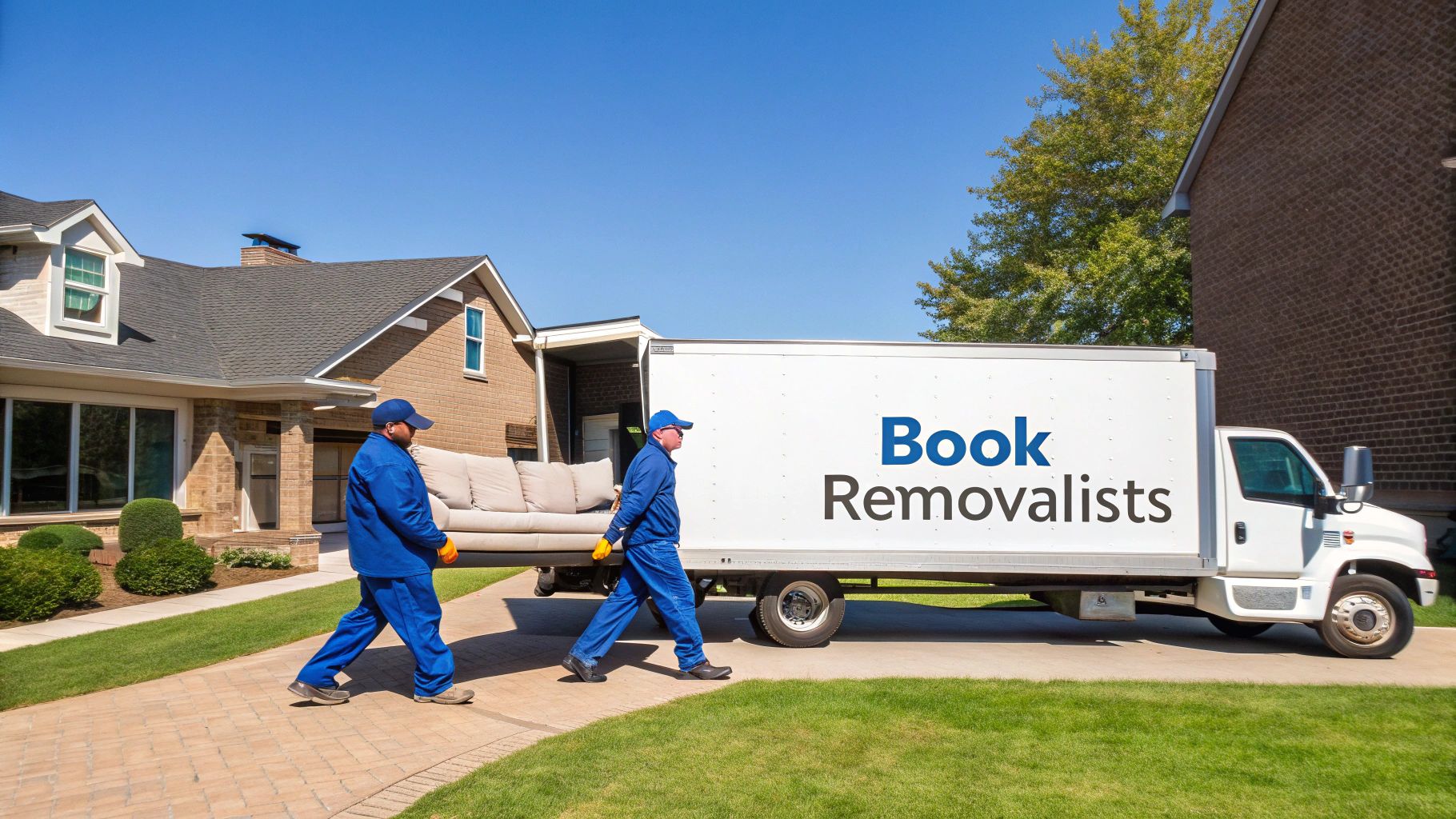
Selecting the right removalist is one of the most significant decisions you'll make in your entire relocation. A professional team does more than just lift heavy boxes; they provide the expertise, full insurance coverage, and equipment to transport your life's possessions safely and efficiently. The process of getting multiple quotes is crucial for comparing services, understanding costs, and finding a company that fits your specific needs, whether you're moving locally on the Central Coast or heading interstate.
Why It’s a Top Priority
Imagine booking the first removalist you find for a relocation from a Newcastle apartment to a house in Sydney, only to discover on moving day they aren’t fully insured for high-rise buildings or don't have the right equipment for your oversized sofa. Obtaining detailed, itemised quotes from reputable companies prevents these costly surprises. It allows you to vet their credentials, check their insurance coverage, and confirm they can handle potential accessibility challenges like steep driveways or strata building regulations. This step is a cornerstone of any effective relocation checklist in Australia, safeguarding both your belongings and your budget.
Key Actions for Booking a Removalist
Start your research and request quotes at least 4 to 8 weeks before your move, especially during peak seasons like summer or school holidays. A thorough approach ensures you secure a reliable team that offers an "On Time, Every Time" service.
- Get Multiple Quotes: Contact at least three different removalist companies. For a precise quote, provide a detailed inventory of your belongings. Reputable companies like Gentle Giant Removals offer a free in-home assessment to accurately gauge the volume of your items.
- Verify Credentials: Check that the company is a registered business with a valid ABN. Ask for proof of their Public Liability and Transit insurance. Don't rely on verbal assurances; request documentation.
- Compare Services, Not Just Price: Look at what each quote includes. Does it cover packing materials, professional packing services, or disassembly and reassembly of furniture? A cheaper hourly rate might hide extra costs for services you assumed were standard.
- Read Recent Reviews: Look for reviews on independent platforms like Google. Pay attention to comments about punctuality, communication, and how the team handled unexpected issues.
- Ask About Interstate Moves: If you’re relocating between states, clarify transit times, communication protocols during the journey, and how they handle regulations like quarantine inspections.
3. Inventory and Declutter Your Possessions
One of the most effective ways to reduce costs and streamline your relocation is to conduct a thorough inventory of your possessions. This isn't just about listing what you own; it's a strategic process of deciding what is truly essential to bring to your new home. By decluttering, you reduce the volume of goods to be moved, which directly lowers removalist costs, simplifies packing, and allows you to start fresh in your new space.

Why It’s a Top Priority
Imagine you're moving a three-bedroom home in Terrigal to Newcastle. The cost of your relocation is heavily influenced by the total volume—that's the space your belongings take up, measured in cubic metres. A family that successfully reduces their possessions by 20% can see a significant drop in their final quote. It also means less time spent packing and unpacking non-essential items, freeing you up to focus on settling into your new home. This step is a cornerstone of an efficient and cost-effective relocation checklist in Australia.
Key Decluttering and Inventory Tips
We recommend starting the decluttering process at least 8 weeks before your relocation to avoid last-minute stress. Go through your home one room at a time, categorising every item.
- The Four-Box Method: Use four distinct categories for every item you assess: Keep, Sell, Donate, and Discard. Be honest about what you genuinely need and use.
- Sell Unwanted Goods: For quality items you no longer need, platforms like Gumtree and Facebook Marketplace are excellent for generating some extra cash. Set a firm deadline for selling, such as three weeks before moving day.
- Donate and Dispose: Schedule a collection with a local charity like Vinnies or The Salvos for donatable goods. For larger items to be discarded, check your local council’s hard rubbish collection dates well in advance.
- Create a Detailed Inventory: For the items you are keeping, create a detailed list. As you begin to inventory your possessions, exploring a robust home inventory management software can streamline the process significantly. This list is invaluable for insurance purposes and helps you keep track of everything during the relocation.
4. Organise Utilities Disconnection and Connection
Managing the handover of essential services is a non-negotiable part of any successful relocation. This involves carefully coordinating the disconnection of electricity, gas, water, and internet at your old address and organising their connection at your new home. Timing is everything; a seamless transition ensures you aren't paying for utilities you no longer use while guaranteeing your new property is comfortable and functional from the moment you arrive.
Why It’s a Top Priority
A well-timed utility switch is crucial for both financial and practical reasons. Imagine finishing a long moving day from Sydney to Newcastle only to discover there's no power or running water. Conversely, forgetting to disconnect services at your old Central Coast rental could leave you liable for the new tenant's usage. Organising this early prevents billing disputes, avoids unnecessary costs, and ensures your move-in day is as smooth as possible.
Key Organisations to Contact
We recommend you contact your utility providers at least 2 to 4 weeks before your moving date to book disconnection and connection appointments. This is especially important for internet services, as installation can sometimes require a technician visit. For those setting up a new service, understanding the fiber internet installation process can help you schedule effectively.
- Energy Providers: Contact your electricity and gas retailers to arrange a final meter reading at your old property and a new connection at your destination. Ask if you can transfer your existing account, as this is often simpler than setting up a new one.
- Water Corporation: Notify your local water authority of your move-out and move-in dates. In many cases, this is handled by your real estate agent if you are renting, but it's always wise to confirm.
- Telecommunications: Schedule the disconnection of your current phone and internet services. When arranging the new connection, provide a date a day or two after your move to allow flexibility for setup without the pressure of it being on moving day itself.
- Confirmation is Key: Always request and keep a record of confirmation numbers for your disconnection and connection requests. Double-check that the disconnection date aligns perfectly with your lease-end or settlement date to avoid any overlap in billing.
5. Arrange Professional Packing or Gather Packing Materials
Deciding whether to pack your own belongings or hire professionals is one of the most significant choices in your relocation checklist. This decision impacts your budget, timeline, and the safety of your items. Opting for professional packing services can save immense time and reduce stress, while DIY packing offers cost savings but requires careful planning and quality packing materials.
Why It’s a Top Priority
The way your belongings are packed directly affects their condition upon arrival. Imagine moving delicate glassware from a heritage apartment in Newcastle to a new home in Sydney. Improperly packed items are far more likely to break during transit, no matter how carefully they are handled. Professional packers are trained to use specific techniques and materials, like quilted pad wrapping for furniture and specialty cartons for artwork, ensuring maximum protection and giving you peace of mind.
Key Packing Strategies and Materials
Whether you choose professional services or DIY, a structured approach is essential. Start this process 4 to 6 weeks before your relocation to avoid last-minute chaos. Here are some key strategies to consider for a successful Australian relocation:
- Professional Services vs. DIY: Assess your timeline and budget. If you're short on time or have many fragile, valuable, or sentimental items, investing in professional packing is a wise choice. For a more budget-conscious move, gathering your own materials and packing room by room is effective.
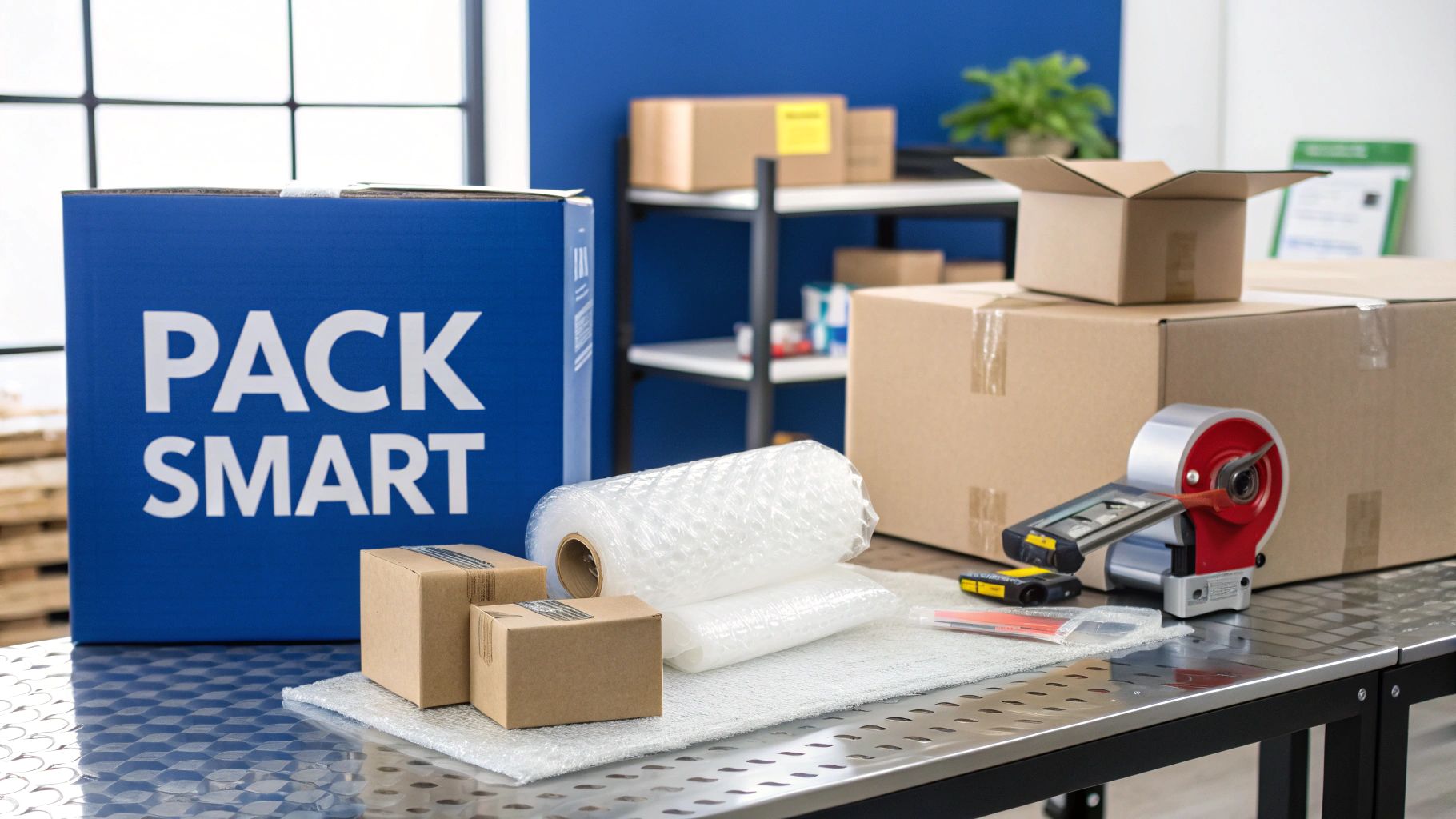
- Sourcing Quality Materials: If packing yourself, don't skimp on supplies. You'll need sturdy boxes in various sizes, packing tape, bubble wrap, packing paper, and markers. Reputable Australian removalists, like Gentle Giant Removals, can supply these, sometimes with sustainable options like refundable-deposit boxes to reduce waste and cost.
- Strategic Packing: Pack heavy items like books in smaller boxes and lighter items in larger ones. Clearly label every box with its contents and the destination room (e.g., "Kitchen – Plates & Mugs"). Create a colour-coded or numbered system to easily track your inventory.
- The Essentials Box: Always pack a separate, clearly marked box with everything you'll need for the first 24 hours in your new home. This should include toiletries, a change of clothes, medications, basic kitchen supplies, and important documents.
6. Update Insurance Coverage for New Property
One of the most overlooked parts of a relocation checklist in Australia is updating your insurance policies. Your home and contents insurance is specifically tied to your address, property type, and security features. Moving without notifying your insurer can render your policy void, leaving you completely unprotected against damage, loss, or theft during one of the most vulnerable times for your belongings.
Why It’s a Top Priority
Imagine your removalist truck is involved in an accident between your old apartment in Newcastle and your new house on the Central Coast. If you haven't arranged 'in-transit' coverage or updated your policy, your standard contents insurance may not cover the damage. Similarly, the premium for your new home may differ significantly based on its location, construction materials, and local risk factors like bushfires or flooding, all of which must be accurately declared.
Key Organisations to Contact
You should contact your insurance providers at least 6 to 8 weeks before your moving date to ensure there are no gaps in your coverage. This gives you time to understand any changes to your premium, adjust your level of cover, and compare quotes if necessary.
- Home & Contents Insurer: This is your primary contact. Inform them of your moving dates and new address. Ask specifically about coverage for your belongings while they are in transit and if this is included or requires an additional premium.
- Car Insurer: Your garaging address is a key factor in determining your car insurance premium. Moving from a secure garage in a quiet suburb to on-street parking in a busy city centre like Sydney will likely increase your costs.
- Health & Life Insurance: While less likely to be affected by a local relocation, it's good practice to update your address to ensure all correspondence reaches you promptly.
- Specialty Insurers: If you own high-value items like fine art, antiques, or musical instruments, confirm whether your standard policy provides adequate cover or if you need a separate, specialised policy for the relocation.
When updating, have a detailed inventory of your belongings, especially high-value items. This is also the perfect time to review your 'sum insured' amount to ensure it accurately reflects the replacement cost of your possessions at your new property.
7. Plan and Schedule Your Moving Day
A successful relocation hinges on meticulous moving day planning. This crucial step on your Australian relocation checklist involves more than just having boxes ready; it's about orchestrating a seamless flow of activities from the moment the removalist truck arrives until the last box is placed in your new home. Effective scheduling ensures minimal downtime, reduces stress, and prevents costly delays.
Why It’s a Top Priority
Imagine your removalists arrive at your Newcastle apartment, but you haven't booked the lift or secured a parking permit. The entire schedule is thrown off, potentially costing you extra in hourly rates and causing friction with body corporate. A well-coordinated plan, communicated clearly with your removalist, prevents these logistical nightmares. It ensures everyone, from the cleaning crew to the real estate agent conducting the final inspection, knows their role and timing.
Key Organisations to Contact
Your moving day schedule is a master timeline that you must confirm with all involved parties. We recommend finalising these details one to two weeks before the move and reconfirming 24-48 hours prior.
- Your Removalist: This is your most important call. Confirm their arrival time, provide detailed access information for both properties (including any narrow streets, steep driveways, or stairwells), and discuss the estimated duration. Confirm the crew size and truck details to ensure adequate parking can be arranged.
- Building/Strata Management: If you live in an apartment in Sydney or a managed complex, you must book the lift and any loading docks for a specific time slot. Provide them with your removalist’s details and proof of their public liability insurance if required.
- Real Estate Agent/Landlord: Coordinate the timing for the final property inspection and key handover. Ideally, this should happen after the removalists have left and the vacate cleaners have finished, allowing you to showcase an empty, clean property to secure your bond.
- Vacate Cleaners: Book your professional cleaners to arrive as soon as the house is empty. Provide them with a clear deadline, especially if the final inspection is scheduled for the same afternoon.
- Child and Pet Care: Arrange for children and pets to be cared for off-site. A busy moving environment is not safe for them and their absence allows you and the removal team to focus without distractions.
8. Arrange Vacate Cleaning and Final Property Inspection
A crucial final step in any Australian relocation checklist, especially for renters, is organising a professional vacate clean and coordinating the final property inspection. This isn't just about tidying up; it's a contractual obligation often required to secure the return of your rental bond. For homeowners, a thorough clean leaves the property in impeccable condition for the new owners, ensuring a positive handover.
Why It’s a Top Priority
Imagine you've moved out of your Newcastle apartment, but the vacate clean doesn't meet the real estate agent's strict standards. They could hire their own expensive cleaners and deduct the cost directly from your bond, leaving you out of pocket. To avoid this, a professional end-of-lease clean is designed to bring the property back to the standard outlined in your initial condition report, tackling everything from ovens and carpets to windows and skirting boards.
Key Tasks to Coordinate
Booking a reputable cleaning service is essential for a smooth exit. We recommend scheduling this 2 to 3 weeks before your relocation, particularly during peak seasons like summer or the end of the month.
- Confirm Lease Requirements: Before booking, review your tenancy agreement. Some agreements specify mandatory steam cleaning for carpets or professional window washing. Get these requirements in writing from your property manager.
- Book Professional Cleaners: Request an itemised quote that covers all required areas. Schedule the clean for the day after your removalist has cleared the property, ensuring the cleaners have full, unobstructed access. Keep the paid invoice as proof.
- Document Everything: Once the clean is complete, take detailed, date-stamped photos and videos of every room, inside cupboards, and all appliances. This documentation is your best defence in case of a bond dispute.
- Schedule the Final Inspection: Arrange for the property manager or landlord to conduct the final "walk-through" inspection within 48 hours of the clean. Being present allows you to address any minor issues on the spot.
- Finalise the Bond Refund: After a satisfactory inspection, confirm the process and timeline for your bond refund. Ensure the property manager has your new forwarding address and bank details to finalise the payment promptly.
9. Prepare Special Items and Fragile Goods
Not all household belongings are created equal. Items like pianos, delicate artwork, antiques, and high-end electronics require more than just standard packing materials. Preparing these special items is a critical part of any relocation checklist in Australia, ensuring your most valuable or sentimental possessions arrive without a scratch. Attempting to move them without specialist knowledge or equipment can lead to irreparable damage and significant financial loss.
Why It’s a Top Priority
Imagine trying to manoeuvre a family heirloom grand piano from a heritage apartment in Newcastle down a narrow staircase. The risk of damaging the piano, the property, or causing personal injury is extremely high. Professional removalists like Gentle Giant Removals have the specific training, purpose-built equipment like piano trolleys and hydraulic lifts, and experience to handle such complex tasks safely. Proper preparation and professional handling are non-negotiable for protecting these unique assets.
Key Considerations for Special Items
Start by creating a detailed inventory of every item that needs specialist care. We recommend organising this 4 to 6 weeks before your moving day to allow ample time to book the right services.
- Pianos & Heavy Instruments: These require specialist removalists who understand their delicate internal mechanisms and immense weight. Climate control during transit is often necessary to prevent warping.
- Artwork & Antiques: Custom crating, acid-free packing materials, and climate-controlled transport are essential. You should also arrange specialised insurance coverage for these high-value pieces.
- Electronics: If possible, use the original packaging. Otherwise, use anti-static bubble wrap and sturdy boxes, clearly labelling them as "FRAGILE". Ensure they are well-cushioned and packed securely to prevent movement.
- Plants: Check for any interstate quarantine restrictions if you're relocating from Sydney to another state. For local moves, transport them in a well-ventilated vehicle to prevent overheating.
Always photograph valuable items before they are packed for your insurance records. When booking a removalist, specifically ask about their experience with your items and request a written confirmation detailing their handling methods and liability limits.
10. Unpack, Organise, and Set Up Your New Home
The final, and often most underestimated, stage of any relocation checklist in Australia is the unpacking and organisation of your new home. While the removalist has finished their job, yours is just beginning. A systematic approach to unpacking transforms an overwhelming mountain of boxes into a functional living space, helping you settle in faster and reduce the lingering stress of the move.
Why It’s a Top Priority
Imagine arriving at your new apartment in Sydney after a long relocation from Newcastle. You're exhausted, and the first night is crucial for recovery. If essential items like bedding, toiletries, and basic kitchen supplies are buried in unlabelled boxes, that first evening becomes a frantic, stressful search. Prioritising the setup of key areas like the bedroom and bathroom ensures immediate comfort and establishes a sense of normalcy, making the rest of the process feel much more manageable.
Key Strategies for an Organised Unpack
A methodical unpacking plan is essential. We recommend tackling one room at a time to avoid feeling overwhelmed and creating unnecessary clutter. Here are some actionable steps for a smooth setup:
- Prioritise Essentials: Begin with what we call a "first night" box. This should contain bedding, towels, toiletries, phone chargers, basic cookware, and snacks. Unpack the kitchen and at least one bathroom and bedroom first.
- Systematic Unloading: Direct the removalist team (or yourselves) to place boxes directly into their designated rooms. This simple step prevents double-handling and keeps hallways clear.
- Assemble Furniture First: Before you unpack smaller items, assemble major furniture like beds, sofas, and tables. This defines the layout of each room and provides surfaces to place items on.
- Check and Document: As you unpack, inspect items for any damage that may have occurred during transit. Take clear photos immediately and cross-reference with your inventory list to ensure everything has arrived safely for any potential insurance claims.
- Break It Down: Don't try to unpack everything in one day. Set achievable daily goals, such as completing the kitchen on day one and the living room on day two. Taking breaks to explore your new local neighbourhood can also help you feel more at home.
For those short on time or energy, many professional removalists offer unpacking services. They can handle everything from placing items in cupboards to assembling furniture, turning a multi-day task into a professionally organised home in hours.
Australian Relocation Checklist — 10-Point Comparison
| Item | Implementation complexity | Resource requirements | Expected outcomes | Ideal use cases | Key advantages |
|---|---|---|---|---|---|
| Notify Relevant Authorities and Update Address Details | Moderate — multiple agencies, paperwork | Time, proof of address, internet/phone | Updated records, avoided penalties, continued legal entitlements | Any residential move requiring legal/tax updates | Prevents missed mail, compliance, fraud protection |
| Arrange Professional Removalists and Obtain Quotes | Moderate–High — compare providers, schedule logistics | Budget, multiple quotes, references, advance booking | Safe transport, predictable pricing, reduced manual effort | Interstate or large-volume moves, specialty items | Professional handling, insurance, time savings |
| Inventory and Declutter Your Possessions | Moderate — systematic sorting and decisions | Time, selling/donation channels, storage/disposal options | Reduced volume/costs, streamlined packing, potential resale income | Downsizing, cost reduction before long moves | Lowers transport costs, simplifies packing, aids donations |
| Organize Utilities Disconnection and Connection | Moderate — coordinate timing with providers | Provider contacts, meter readings, scheduling windows | Utilities active on arrival, avoided double billing | All moves where utilities must be active at move-in | Ensures continuity, prevents extra charges |
| Arrange Professional Packing or Gather Packing Materials | Low–High — DIY or professional choice | Packing materials or packers, time or additional cost | Protected items, organized boxes, easier unpacking | Fragile/valuable moves, limited time for packing | Reduces damage risk, speeds packing/unpacking |
| Update Insurance Coverage for New Property | Moderate — policy review and changes | Insurance documents, valuations, time to compare quotes | Continuous, appropriate coverage for new risks | Moves to different property types or higher-risk areas | Prevents coverage gaps, tailored protection, peace of mind |
| Plan and Schedule Your Moving Day | High — detailed coordination and contingency planning | Removalist coordination, parking permits, helpers, timing | Smooth, timely move with fewer delays or access issues | Large households, tight schedules, interstate moves | Minimizes delays, reduces stress, clear responsibilities |
| Arrange Vacate Cleaning and Final Property Inspection | Low–Moderate — timing-critical booking | Cleaning service, time buffer after removal, documentation | Higher chance of full bond recovery, property ready for handover | Ending a rental lease, preparing property for sale | Maximizes bond return, meets agent standards |
| Prepare Special Items and Fragile Goods | High — specialist packing and handling required | Specialist movers, custom crates, extra insurance | Lower damage risk, compliant transport for valuables | Pianos, artwork, antiques, delicate electronics | Specialized protection, proper equipment, enhanced coverage |
| Unpack, Organize, and Set Up Your New Home | Moderate — systematic unpacking and assembly | Time, unpacking help or professional service, tools | Functional, organized living spaces, faster settlement | Families, time-constrained occupants, long-distance moves | Speeds settling-in, organized layout, reduced transition stress |
Ready to Plan Your Central Coast, Sydney, or Newcastle Move?
Navigating a relocation, whether it’s from a heritage apartment in Newcastle, a busy Sydney high-rise, or a coastal home in Terrigal, hinges on structured, methodical planning. This comprehensive relocation checklist Australia has been designed to transform what can feel like an overwhelming project into a series of clear, manageable steps. By breaking down the process into a timeline, from eight weeks out to settling into your new home, you empower yourself to stay in control and minimise last-minute complications.
The key takeaways from our guide are simple yet powerful: start early, be organised, and choose the right partners. Addressing administrative tasks like updating your details with Medicare and the Australian Electoral Commission well in advance prevents crucial mail from going astray. Similarly, coordinating utility disconnections and connections early ensures you’re not left in the dark on your first night. Remember the unique challenges of our region; booking lifts and securing parking permits for strata buildings in Sydney or planning for access on narrow Central Coast streets are non-negotiable details that a professional removalist will manage on your behalf.
The Value of a Detailed Plan
Decluttering isn't just about getting rid of old things; it's a strategic move that directly impacts your final quote by reducing the cubic metres of belongings we need to transport. Similarly, engaging professional packers or sourcing high-quality packing materials isn’t an expense but an investment in the safety of your possessions. Protecting fragile items, from glassware to electronics, requires specific techniques that can make all the difference. Every item on this checklist, from arranging a vacate clean to conducting a final property inspection, is a crucial piece of the puzzle. It’s about more than just moving boxes; it’s about ensuring a smooth transition for your family or business with minimal disruption.
By following this guide, you’ve taken the most important step: preparing for a successful relocation. You now have the framework to tackle everything from government notifications and utility transfers to the physical logistics of the move itself. The difference between a stressful relocation and a seamless one often comes down to this level of detailed preparation. Choosing a reliable, fully insured removalist who understands the local landscape of Sydney, the Central Coast, and Newcastle is the final, and most critical, part of that plan.
Ready to put your plan into action with a team that knows your area inside and out? Gentle Giant Removals & Relocations is here to support you at every stage, from providing a free in-home assessment to executing a flawless moving day. For a truly professional and reliable service that ticks every box on your relocation checklist, get a free, no-obligation moving quote from our friendly local team today.