
Planning a relocation can feel like trying to solve a tricky puzzle, especially when the timing isn't perfect. That’s where short term storage comes in. Think of it as a flexible, secure home-away-from-home for your belongings, bridging the gap when your moving dates don't quite line up. It gives you some much-needed breathing room, something we see all the time in the busy property markets of Sydney and the Central Coast.
Why Short Term Storage Is Your Relocation Ally
Moving house is rarely as simple as leaving one place on Friday and walking into your new one the same afternoon. Settlement dates get pushed back, renovations run over schedule, or maybe you're downsizing and just need more time to sort through everything. This is where short term storage becomes an absolute lifesaver, turning a potential disaster into a manageable pause.
Imagine you're selling your three-bedroom home in Terrigal, but the settlement on your new apartment in Newcastle is still a month away. Instead of rushing or living in a maze of boxes, you can move your belongings into a secure facility. It keeps your current home looking its best for buyers and gives you the flexibility to handle your relocation without all the pressure.
Common Scenarios We See Every Day
We’re constantly helping clients across the Central Coast and Lake Macquarie arrange temporary storage. Most of the time, it’s for one of these reasons:
- Settlement Gaps: This is the big one. You've sold your home, but your new place isn't quite ready for you to move in.
- Downsizing: Moving into a smaller home means making tough decisions. Storage gives you the time to sort, sell, or donate items without cluttering up your new space from day one.
- Decluttering to Sell: A clean, open-plan home can make a huge difference to its sale price. Storing extra furniture makes your property feel more spacious and appealing to potential buyers.
- Home Renovations: If you're renovating before moving in, getting your furniture and other items into storage protects them from dust, paint, and damage.
At its core, short term storage provides a buffer. It ensures your possessions are safe and out of the way until you’re actually ready for them, taking a huge logistical headache off your plate when you're dealing with the unpredictable nature of property sales.
Being prepared is everything. Our guide to creating a moving day survival kit can help you keep your essentials with you while everything else is stored. For a deep dive into all things temporary storage, check out this fantastic ultimate UK guide to short term storage.
Comparing Your Short Term Storage Options
When you find yourself in that limbo between moving out and moving in, you’ve got a few solid options for stashing your belongings. Knowing the ins and outs of each will help you make the right call, whether you’re relocating a small apartment in Sydney or a large family home on the Central Coast.
The three main players are traditional self-storage units, portable storage containers, and the all-inclusive removalist-managed storage. Each one solves a different problem, so let's break them down.
The Do-It-Yourself Approach: Self-Storage Units
Self-storage facilities are probably what first comes to mind. Think of those complexes you see around Gosford or Lake Macquarie with rows of roller doors. You rent a locked space, pack your belongings, hire a truck (or use your own ute), and load it all in yourself.
The biggest plus here is control. You hold the key and can get to your belongings whenever you need to during business hours. The downside? It’s all on you. You’re doing every bit of the heavy lifting, which is a massive task without the right gear or an experienced crew. It’s a lot of physical work and requires careful planning.
This simple decision tree helps visualise when short term storage becomes a necessary part of your moving plan.
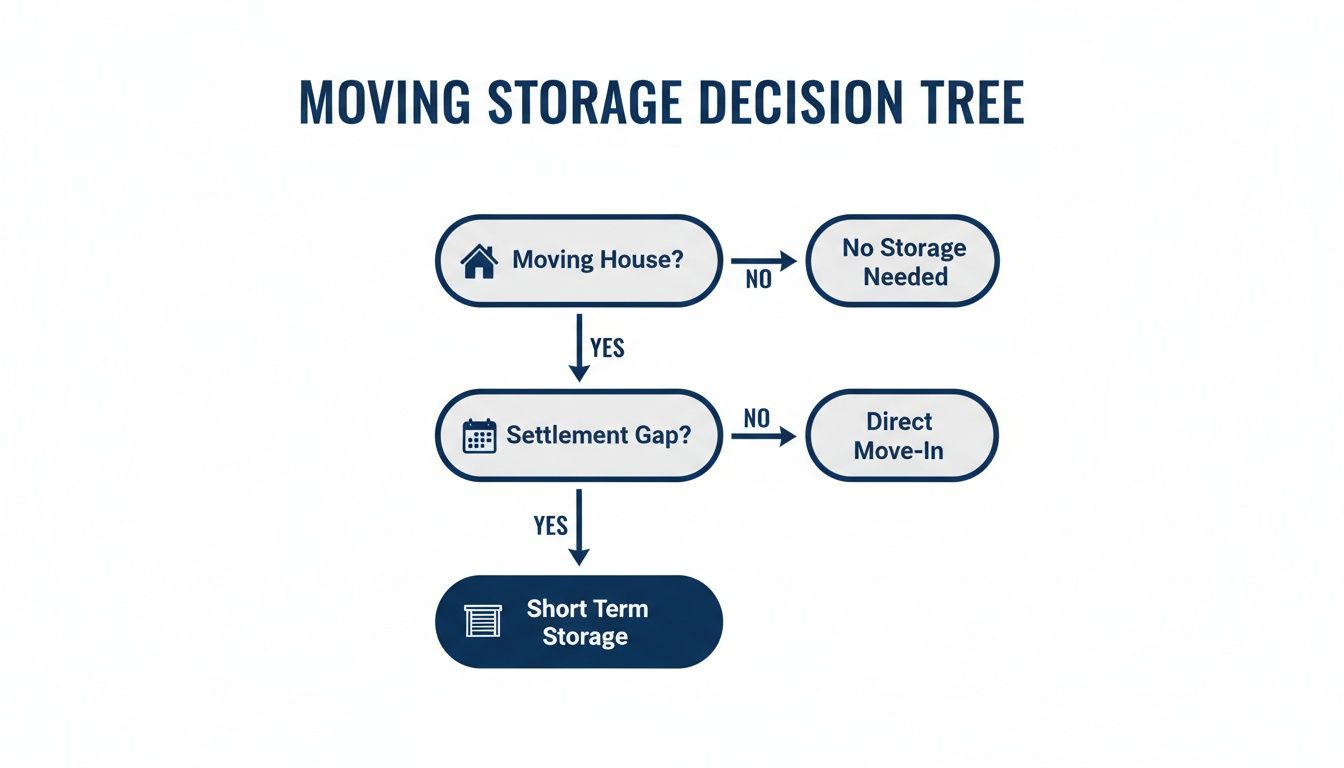
As the flowchart shows, that gap between settlement dates is the most common reason people suddenly need to find a temporary home for their belongings.
Convenience At Your Doorstep: Portable Storage Containers
A popular alternative is the portable storage container. A company drops off a large container right on your property, and you load it up at your own pace. When you’re ready, they’ll either move it to your new address or whisk it away to their secure facility until you give them the green light.
This option scores big on convenience by cutting out the trip to a storage facility. But it’s not always a practical choice. You need a fair bit of space on your property to even place the container, which can be a real headache in dense areas like inner-city Sydney. On top of that, many strata-managed buildings in Newcastle have strict rules that won’t allow a massive container sitting in the car park or on the street.
The All-In-One Solution: Removalist-Managed Storage
This is easily the most seamless and reassuring option. When your removalist manages the storage, it becomes a fully integrated part of your move. At Gentle Giant, our professional team can pack your items, load them into our truck, and transport them directly to one of our secure, vetted partner facilities.
This method offers the highest level of security and convenience. Your belongings are handled by professionals from start to finish, and they remain protected under our comprehensive insurance policy throughout the entire process—from your old home to storage, and finally to your new home.
We handle all the logistics. Say you're moving from a tricky access property on the Central Coast's coastal fringe; we navigate the transport challenges for you. When you’re ready for your belongings, we retrieve them and deliver them straight to your new place. You don’t lift a single box or juggle multiple companies. It's the simplest way to bridge a storage gap during a complex relocation.
Comparing Short Term Storage Options
Here's a side-by-side comparison to help you choose the best fit for your move.
| Feature | Self-Storage Unit | Portable Container | Removalist-Managed Storage |
|---|---|---|---|
| Convenience | Low – Requires self-transport and loading. | High – Delivered to your door. | Highest – Completely hands-off. |
| Labour | DIY – You do all the lifting. | DIY – You load the container. | None – Professionals handle everything. |
| Accessibility | High – Access during facility hours. | Low – No access once it's in storage. | None – We manage access and delivery. |
| Security | Good – Facility security (CCTV, gates). | Good – Secure, weatherproof container. | Excellent – Pro handling + secure facility. |
| Best For | People on a tight budget with time and ability for DIY. | Decluttering or flexible loading schedules. | Complex relocations, settlement gaps, maximum peace of mind. |
Ultimately, the right choice depends on your budget, timeline, and how much work you're willing to put in yourself. For a truly worry-free relocation, letting the experts handle it from end to end is always the best bet.
How to Pack and Prepare Your Belongings for Storage
Getting your belongings ready for short-term storage is about more than just chucking them in boxes. It's about making sure everything comes out in the exact same condition it went in.
Good preparation is what protects your valuables, whether they’re being stored for a few weeks during a Sydney settlement gap or a couple of months while you renovate your Newcastle home. It all comes down to the right approach and the right packing materials.
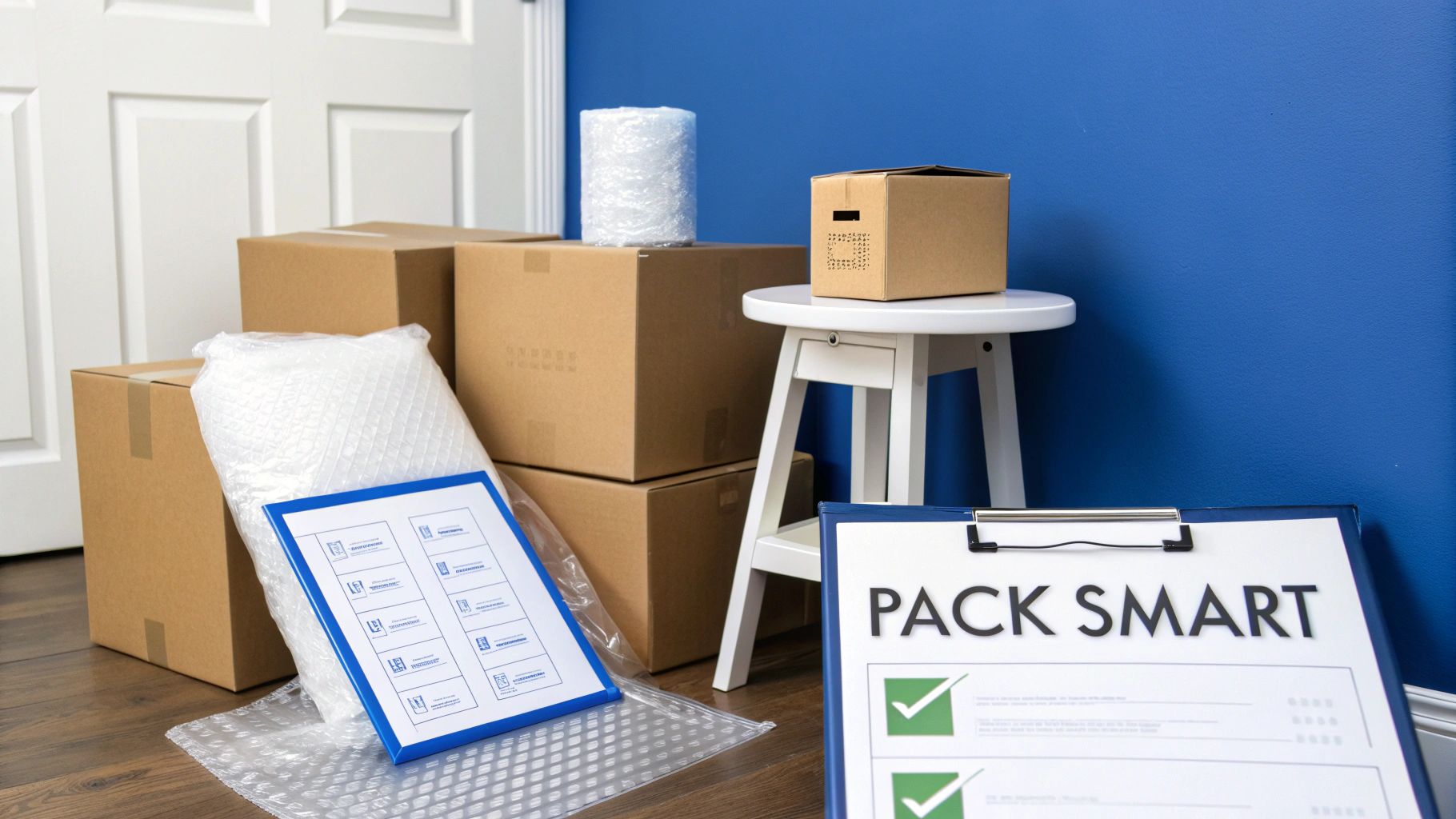
Using high-quality, sturdy boxes is a must. It’s tempting to grab freebies from the supermarket, but they often aren’t strong enough to be stacked and can collapse, crushing whatever is inside. Investing in proper removalist-grade boxes gives you the structural integrity needed to keep it all safe.
Protecting Your Fragile Items
Breakables like glassware, electronics, and artwork need a bit of extra attention. Every plate and glass should be individually wrapped in packing paper or bubble wrap before you place them vertically in a box—never flat. This simple trick reduces pressure and dramatically lowers the risk of cracks and smashes.
If you still have the original packaging for your electronics, that’s your best bet. If not, wrap them in anti-static bubble wrap and make sure they’re well-cushioned inside a strong box with no room to slide around. Slap a "FRAGILE" and "This Way Up" label on these boxes so our crew knows to handle them with extra care.
Preparing Furniture and Appliances
Your larger items also need a bit of prep before they go into storage. Give your furniture a thorough clean and, if you can, disassemble it to save space and prevent damage during the move. Keep all the screws, bolts, and little parts together in a labelled bag and tape it securely to the main piece of furniture. You'll thank yourself later.
Appliances like fridges, freezers, and washing machines absolutely must be clean, dry, and defrosted before storage. This stops mould and mildew from growing, which can cause permanent damage and some pretty nasty smells. Just prop the doors slightly ajar to let the air circulate.
Peace of mind comes from knowing your belongings are not only packed correctly but also fully protected. Our professional packing services ensure everything is prepared to the highest standard, and our comprehensive insurance covers your items throughout their entire journey—from your home to storage and back again.
Labelling and Inventory Management
One of the most important things you can do is create a simple but effective labelling system. On each box, just write the room it belongs to (e.g., "Kitchen," "Main Bedroom") and a quick summary of what’s inside ("Plates and Cutlery," "Summer Clothes"). This tiny bit of effort is a total lifesaver when you need to find one specific thing or when it’s finally time to unpack.
An inventory list is also a brilliant idea. A simple spreadsheet or notebook where you list what's in each numbered box helps you keep track of everything, which is especially handy if your items are going to be in storage for more than a few weeks. For a deeper look into what you'll need, check out our guide on the 7 essential packing materials for a damage-free move.
The Dos and Don'ts of Packing for Storage
Sticking to a few simple rules can save you from major headaches down the track. Here’s a quick checklist to guide you:
Do:
- Use uniform, high-quality boxes: They stack better and offer much better protection.
- Clean everything thoroughly: Dirt and leftover food bits can attract pests and cause mould.
- Label every box clearly: Make sure to include the room and a quick summary of what's inside.
- Distribute weight evenly: Put heavier things at the bottom of boxes and lighter ones on top.
- Wrap fragile items individually: Be generous with cushioning like bubble wrap and packing paper.
Don't:
- Store perishable food: This is a guaranteed invitation for pests.
- Pack flammable or hazardous materials: This means things like aerosols, paint, fuel, and cleaning chemicals.
- Overpack your boxes: They get too heavy to lift safely and are much more likely to break open.
- Store anything damp or wet: Make sure all your items, especially fabrics and appliances, are completely dry.
- Seal away valuables or important documents: Keep passports, legal papers, and irreplaceable sentimental items with you.
Managing the Logistics of Moving Into Storage
Getting your belongings safely tucked away in a short-term storage unit involves a lot more than just loading up a truck. The real-world logistics can be surprisingly tricky, which is where our experience as professional removalists really makes a difference. We’ve seen firsthand how a little bit of planning can prevent a mountain of problems on moving day.

Picture this: you’re moving out of a heritage apartment building in Newcastle. You can’t just show up with a truck. More often than not, you'll need to book the service lift weeks in advance and stick to strict move-in/move-out times set by strata management. It’s a similar story in many parts of inner-city Sydney, where narrow streets and clearway restrictions mean you need a council parking permit just to get the truck anywhere near your property.
These are the kinds of details that can easily derail a DIY move. At Gentle Giant, we take care of these headaches for you. We'll liaise with building managers, secure the right permits, and plan the entire day around any access restrictions to make sure everything runs like clockwork.
Navigating Access and Building Rules
Every property throws its own unique challenges into the mix. We factor these into every single relocation we plan, whether it’s a city high-rise or a house with tricky access on the Central Coast.
- Strata and Body Corporate: Many apartment buildings have a long list of rules for moving. We proactively check for lift booking requirements, designated moving hours, and any regulations about protecting shared areas like lobbies and hallways.
- Parking and Accessibility: Finding a spot for a large removalist truck can be tough. We assess parking ahead of time and organise permits where needed, ensuring our truck is positioned for safe and efficient loading.
- Physical Obstacles: Stairs, tight corners, and steep driveways all change how a move needs to be handled. Our experienced team uses specialised equipment to safely navigate these challenges, protecting both your belongings and the property.
The Importance of a Smart Storage Plan
Once your belongings are on the truck, the next job is getting them into the storage unit efficiently. This is where a good plan makes all the difference, especially if you think you might need to grab something while it’s in storage.
A detailed inventory list isn't just for insurance; it’s your roadmap. Knowing exactly what’s in each box and where it’s located in the unit can save you from having to empty the entire space just to find one specific item.
We strategically load the storage unit for you. Items you won’t need anytime soon, like seasonal decorations, go right to the back. Things you might want to get to, such as documents or specific tools, are placed near the front for easy access. We also make sure to leave a small walkway down the centre so you can move around inside the unit safely.
The need for this kind of planning is clear when you look at the market's growth; Australia now has around 2,590 self-storage facilities, showing just how many people rely on these services during big life changes. You can discover more insights about the maturity of the Australian self-storage market on stortrack.com.
Ultimately, managing these logistics comes down to foresight and problem-solving. By anticipating potential issues and planning for them, we turn a complicated process into a straightforward one, letting you focus on the more important parts of your move.
Working Out Storage Costs and Finding the Right Place
We can’t give you a one-size-fits-all price tag for short-term storage, but we can definitely walk you through what goes into the cost. Understanding these factors is the key to creating a realistic budget for your move, whether you’re in Sydney, Newcastle, or right here on the Central Coast.
The biggest driver of the price is, unsurprisingly, the size of the unit you need. This is measured in cubic metres—that's the space your belongings take up. A few boxes from a one-bedroom apartment will always cost less to store than the entire contents of a four-bedroom family home. Simple as that.
Key Factors That Influence the Price Tag
Beyond the size of your unit, a few other things will move the needle on your final quote. To get an accurate picture of your budget, it's worth understanding how much self storage costs by looking at these common variables:
- Location, Location, Location: Just like with real estate, a storage facility in a prime spot in Sydney’s CBD will naturally cost more than one in a quieter part of Lake Macquarie.
- How Long You Need It: Even though we're talking short-term storage, the exact duration matters. Some facilities might offer a better weekly rate if you commit to a couple of months versus just a few weeks.
- The Bells and Whistles: Need a climate-controlled unit to protect sensitive electronics, antiques, or wooden furniture from humidity and temperature swings? Expect to pay a bit of a premium for that peace of mind.
What to Look For in a Storage Facility
Choosing the right facility isn't just about finding the cheapest deal. It’s about being able to sleep at night knowing your belongings are safe and sound. When we help coordinate storage for our clients, we only ever partner with trusted facilities that meet our own high standards.
Security should be your number one priority. We're talking non-negotiables like 24/7 CCTV surveillance, secure electronic gate access, and decent lighting. These are the basics for ensuring your belongings are protected around the clock.
Next up is cleanliness. A tidy, well-maintained, and pest-free environment is a huge indicator of a well-run facility. It shows the managers actually care about looking after their customers' property. You'll also want to confirm they have comprehensive insurance, which works alongside our removalist insurance for total protection.
When you arrange storage through Gentle Giant, we handle all this vetting for you. We make sure the facility is secure, clean, and properly insured, so you don't have to. This integrated approach not only saves you the headache of juggling multiple contracts but often works out to be better value, too.
By knowing what drives the costs and what makes a facility genuinely good, you can make a smart choice that protects both your budget and your belongings.
If you’re trying to piece together the total cost of your move, including any storage you might need, our moving cost estimator is a great place to start.
Your Short-Term Storage Questions Answered
We get a lot of questions about using short-term storage during a move, and for good reason. It’s an extra step in what can already feel like a complicated process, so it makes sense to want all the details sorted. Here are some straightforward answers to the most common queries we hear from our clients across the Central Coast, Sydney, and Newcastle.
What Size Storage Unit Do I Need?
This is easily the number one question we're asked. As a rough guide, a standard three-bedroom home usually fits into a storage unit about the size of a single-car garage—that’s around 10 to 15 square metres. If you're in a one or two-bedroom apartment, you'll likely only need about half that space.
But you don't have to guess. As part of our service, we provide an accurate assessment of the volume your belongings will take up, measured in cubic metres. This ensures you only pay for the space you actually need, without any wasted room.
How Does Insurance Work for Stored Items?
This is a crucial point for peace of mind. When you hire Gentle Giant Removals, your belongings are protected by our comprehensive insurance from the moment we start loading at your old home until we finish unloading at your new one. That coverage extends to the entire time your items are in a storage facility that we've arranged for you.
Important: If you decide to go the DIY route with a self-storage solution, you will need to arrange your own separate insurance policy. Most self-storage facilities require you to have cover, and your standard home and contents insurance typically won't extend to items stored off-site.
What Can’t I Put in Storage?
For safety and hygiene reasons, there's a clear list of things that can't go into a storage unit. You should never store anything flammable, hazardous, or perishable.
This includes common household items such as:
- Petrol, paint, and cleaning chemicals
- Aerosol cans and gas bottles
- Fresh or perishable food items
- Plants and anything living
- Illegal items or firearms
When we pack for you, our team makes sure these items are set aside and handled separately according to safety regulations. Keeping these things out of your unit protects your other belongings and keeps everything above board with the facility's terms and conditions.
Can I Access My Belongings While They Are in Storage?
This really depends on the type of storage you choose. With a traditional self-storage unit, you can usually access your belongings whenever the facility is open.
However, if you opt for our seamless removalist-managed storage, we handle everything for you. This means we retrieve and deliver your items when you’re ready for them, but for security reasons, direct client access to the unit isn't generally available. It's a trade-off between convenience and hands-on access.
Planning the details of your relocation can feel overwhelming, but you don't have to do it alone. The team at Gentle Giant Removals & Relocations is here to help coordinate every aspect, from packing and transport to secure storage. For a clear, no-obligation quote, visit us online or call us to chat about your needs.