
Chances are, if you're getting ready for a move, you've heard the term ‘tea chest box’. It's more than just a piece of cardboard; it's the industry-standard packing material we rely on across Australia. Its specific size and tough, double-walled design make it the absolute workhorse of the removalist world. When planning a relocation on the Central Coast, understanding your options helps everything run smoothly.
So, What Exactly Is a Tea Chest Box?
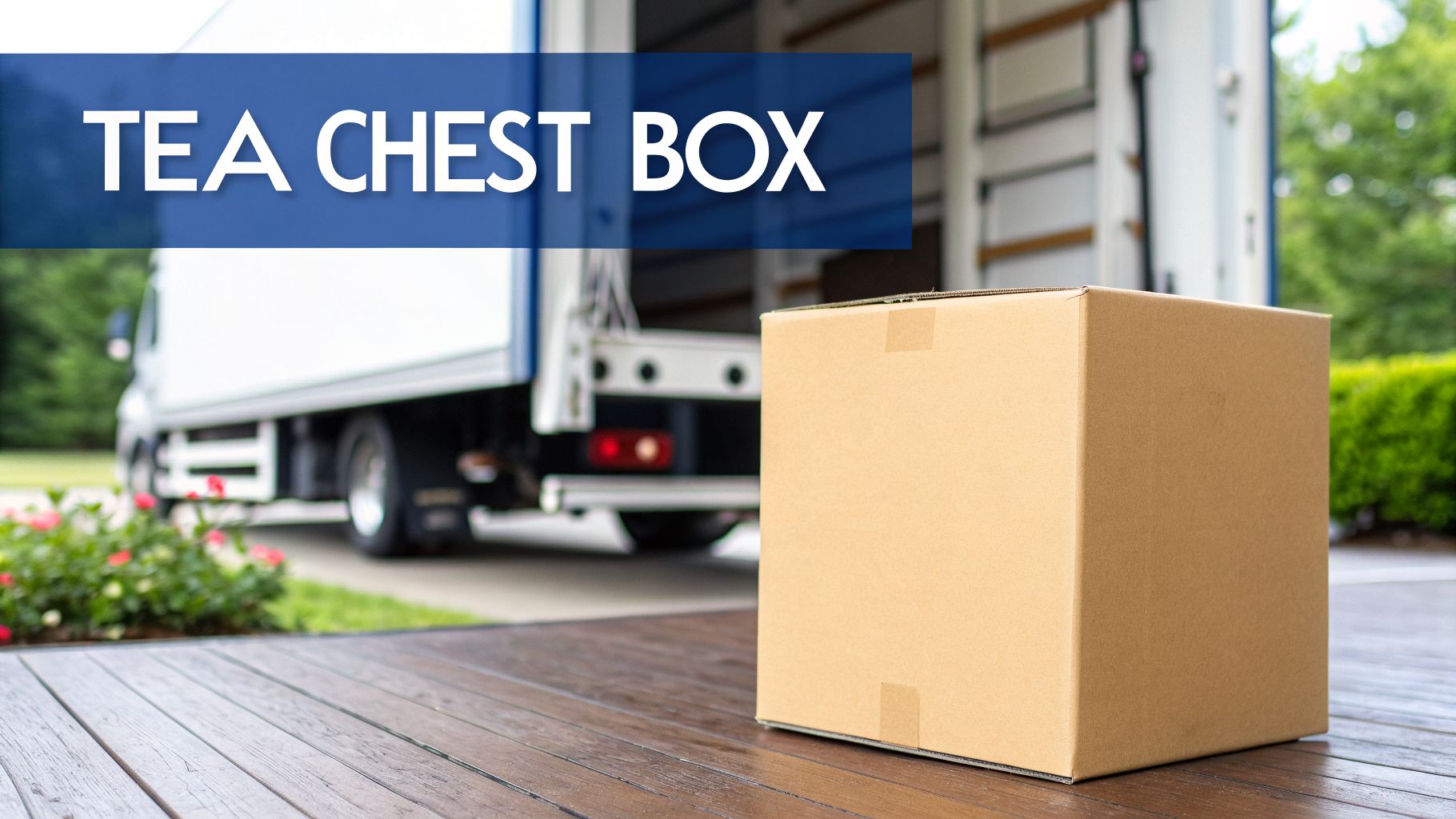
Think of the tea chest as the most important tool in our kit. It’s a specific type of heavy-duty cardboard box with two layers of corrugated board. That double-wall construction gives it the strength to protect what’s inside, preventing the box from being crushed when stacked and giving it far better resistance to knocks and bumps during a relocation.
While the exact dimensions can differ slightly, a classic tea chest box is about 43cm x 41cm x 60cm. That size isn't an accident. It’s the sweet spot our industry has perfected over decades. It's big enough for bulky items like kitchen pots, linen, or toys, but it’s still a manageable size that won’t get dangerously heavy if you pack it right.
Why a Standard Box Size Is So Important for Your Move
Having a uniform box size is the secret to loading a truck properly. It allows our removalist team to build stable, secure walls of boxes that won't shift, slide, or fall over during transit. Our full insurance coverage is there to protect you, but proper packing is the first line of defence.
Picture this: we're moving your family from a two-bedroom apartment in Terrigal to a bigger place up in Newcastle. As we load the truck, we create tight, interlocking stacks with the tea chests. This solid structure means your belongings are safe, even when we’re navigating Sydney's busy traffic or the winding roads along the Central Coast. If we were working with a jumble of odd-sized boxes, it would create gaps and weak points, which is when damage happens.
For our team, the tea chest box isn’t just a container; it's the foundation of a safe and efficient relocation. Its strength and consistent shape let us use every bit of truck space while keeping risks to a minimum.
Understanding the humble tea chest box is a great first step toward a smooth relocation. To see all the professional-grade packing materials we use, you can check out our complete guide to moving boxes and supplies.
The Surprising History of the Original Tea Chest
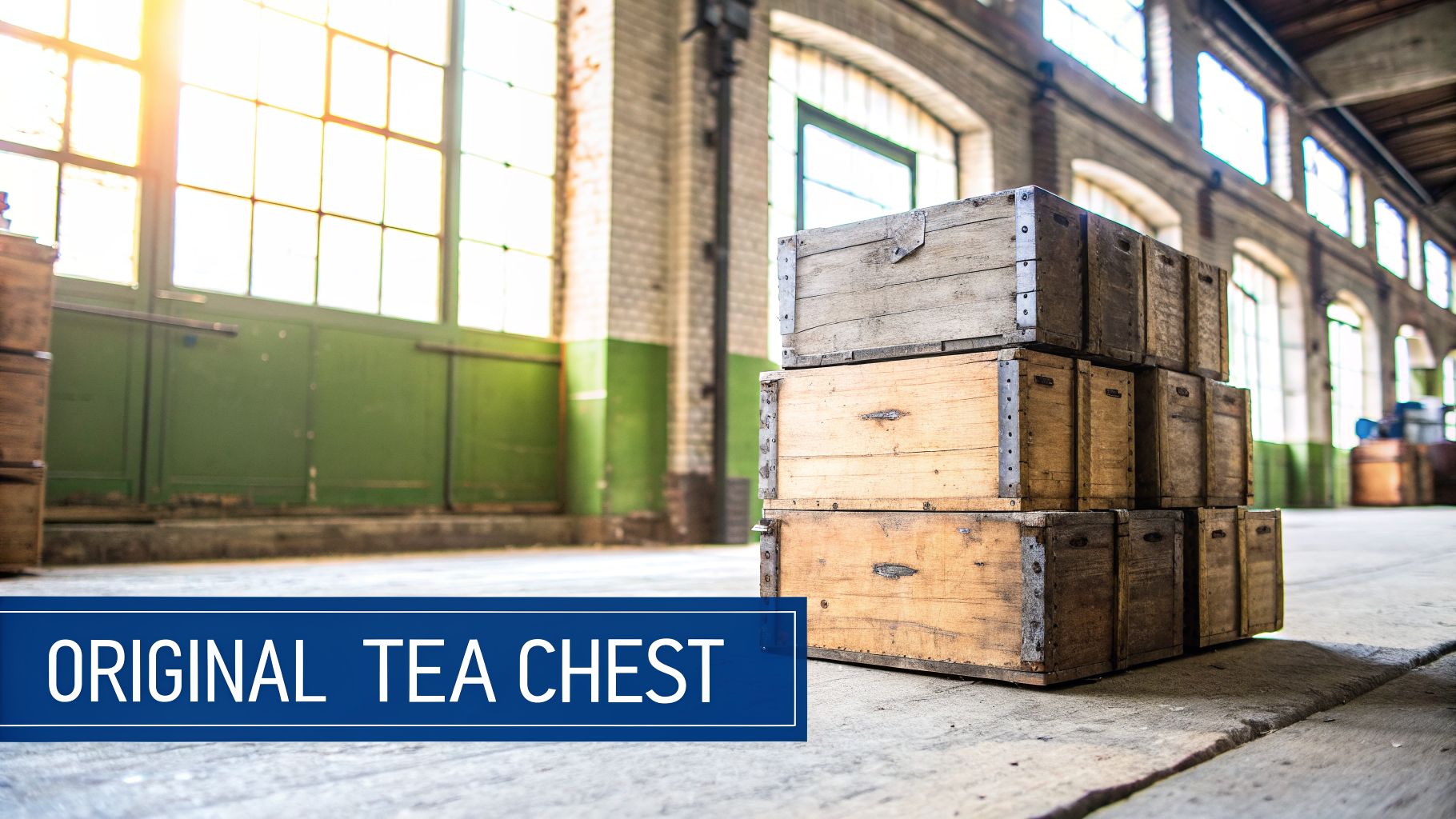
Long before the cardboard boxes we rely on today, the original tea chest was a seriously tough wooden crate. Its whole purpose was to transport precious tea leaves from plantations across the globe to ports right here in Australia, including Sydney and Newcastle.
These chests weren't flimsy. They were built from plywood, often lined with foil to keep the tea fresh, and designed to survive long, rough voyages at sea. Once the tea was unloaded, the chests themselves became incredibly useful, and early Australian removalists were quick to realise their potential for moving a family's belongings.
From Tea Imports to Moving Homes
This clever repurposing quickly became a cornerstone of the removals industry. By the 1970s, Australia's demand for tea was massive, with imports reaching over 30,000 tonnes annually. This meant there was a steady supply of empty, sturdy wooden chests that removalist companies could get their hands on cheaply.
As you can read in The Story Of Tea, the beverage's rich history is what fuelled this global trade in the first place.
For decades, these crates were the gold standard for moving house. If you look at local industry reports from the Central Coast, you’ll see that in the 1980s, over 70% of household relocations used these repurposed wooden tea chests. If you moved house in Gosford or Wyong back then, your life was almost certainly packed into one.
The spirit of the original tea chest lives on in its modern counterpart. While we now use a high-quality, eco-friendly cardboard tea chest box, the core principle remains the same: using a strong, reliable container to protect your items.
This shift from wood to modern cardboard reflects a long-standing commitment to getting your belongings moved safely. Just as those early removalists trusted the strength of wooden crates, we rely on the engineered durability of our double-walled cardboard boxes to do the job right. It’s a tradition of protection that has stood the test of time.
How to Pack a Tea Chest Box Like a Professional
Packing a tea chest box correctly is one of those skills our professional removalists have perfected over years on the job. There’s a real technique to it, and getting it right is the single best way to make sure your belongings arrive safe and sound, whether you’re just moving across the Central Coast or heading interstate. A well-packed box prevents damage, makes unpacking easier, and keeps everyone safe.
The very first step, before a single item goes in, is to build a solid foundation. Create a soft base inside the box using scrunched-up packing paper, a folded blanket, or a few cushions. This bottom layer acts as a crucial shock absorber, protecting everything from the inevitable bumps on the road.
Building Your Box from the Bottom Up
Once you’ve got your cushioned base sorted, you can start loading. The most important principle here is to put your heaviest and most durable items at the bottom. This gives the box a stable centre of gravity and stops heavy things from crushing whatever is underneath.
Imagine you're packing up a kitchen in a Gosford apartment. You’d start with the heavy hitters at the bottom of the tea chest: pots, pans, and sturdy appliances like a toaster or slow cooker. These items can easily handle the weight on top and create a solid base for everything else.
From there, you just work your way up in layers, going from heavy to light. After the pots and pans, you could add smaller appliances or a stack of cookbooks. The very top layer should be saved for the lightest and most crushable things, like your tea towels, plastic containers, or oven mitts.
The Secrets to Packing Fragile Items
When it comes to fragile items like plates and glassware, a few extra steps are non-negotiable for their safety.
- Wrap Individually: Every single fragile item needs to be wrapped separately in packing paper. This prevents them from clinking against each other, which is how chips and cracks happen.
- Stack Vertically: This might sound strange, but plates are much stronger when they're stacked on their sides, a bit like records in a crate. This vertical position helps them withstand pressure far better than being stacked flat.
- Fill All Gaps: Empty space is the enemy of a well-packed box. Any gaps allow items to shift and break during the move. Use scrunched-up paper, bubble wrap, or even soft fillers like socks and tea towels to fill every nook and cranny, making sure the contents are snug.
A critical safety tip from our crew: never over-pack a box. We strongly recommend keeping the total weight of any single tea chest box under 20kg. A box that’s too heavy is a major risk to your back, our removalists, and the box itself. If you can’t lift it comfortably, it’s too heavy.
Finally, make sure you seal the box properly with good quality packing tape. Tape firmly along the bottom and top seams, then run two more strips across the edges to create an ‘H’ pattern. This simple trick reinforces the box’s weakest points and stops it from bursting open in transit. For a complete rundown of packing techniques, you can check out our detailed guide on how to pack for a move.
Comparing the Tea Chest Box to Other Packing Materials
When you're getting ready to move, it’s easy to think all boxes are created equal. But knowing the difference between a tea chest and other packing materials will make your life a whole lot easier, ensuring your belongings are packed safely and your truck space is used efficiently.
The most common mix-up is between a tea chest box and a book box. Think of a book box (sometimes called a half-tea chest) as the tea chest’s smaller, stronger cousin. It’s built specifically for those deceptively heavy items like books, wine bottles, or your collection of tools. If you tried to pack those in a large tea chest, you’d end up with a box that’s impossible to lift safely and at risk of falling apart.
Choosing the Right Box for the Job
So, what goes in a tea chest? Just about everything else. A good rule of thumb is that the tea chest box is your workhorse for roughly 80% of your household goods. It’s the perfect size for items that are bulky but not back-breakingly heavy.
Use it for things like linen, towels, clothes, pots, pans, small kitchen appliances, kids' toys, games, lampshades and decorative pillows. Using a standard box like the tea chest for the majority of your items helps our removalist team create solid, stable tiers in the truck. This is vital when we’re navigating the narrow streets of Sydney or dealing with tight accessibility in Newcastle's heritage apartments, as it stops things from shifting around and getting damaged.
At Gentle Giant, we often see DIY packers arrive with a random assortment of box shapes and sizes. It creates a real-life game of Tetris that’s unstable and risky. Sticking to tea chests for general goods and book boxes for the heavy stuff is how the pros get a safer, faster, and more secure load.
This simple infographic breaks down the best way to pack any tea chest box.
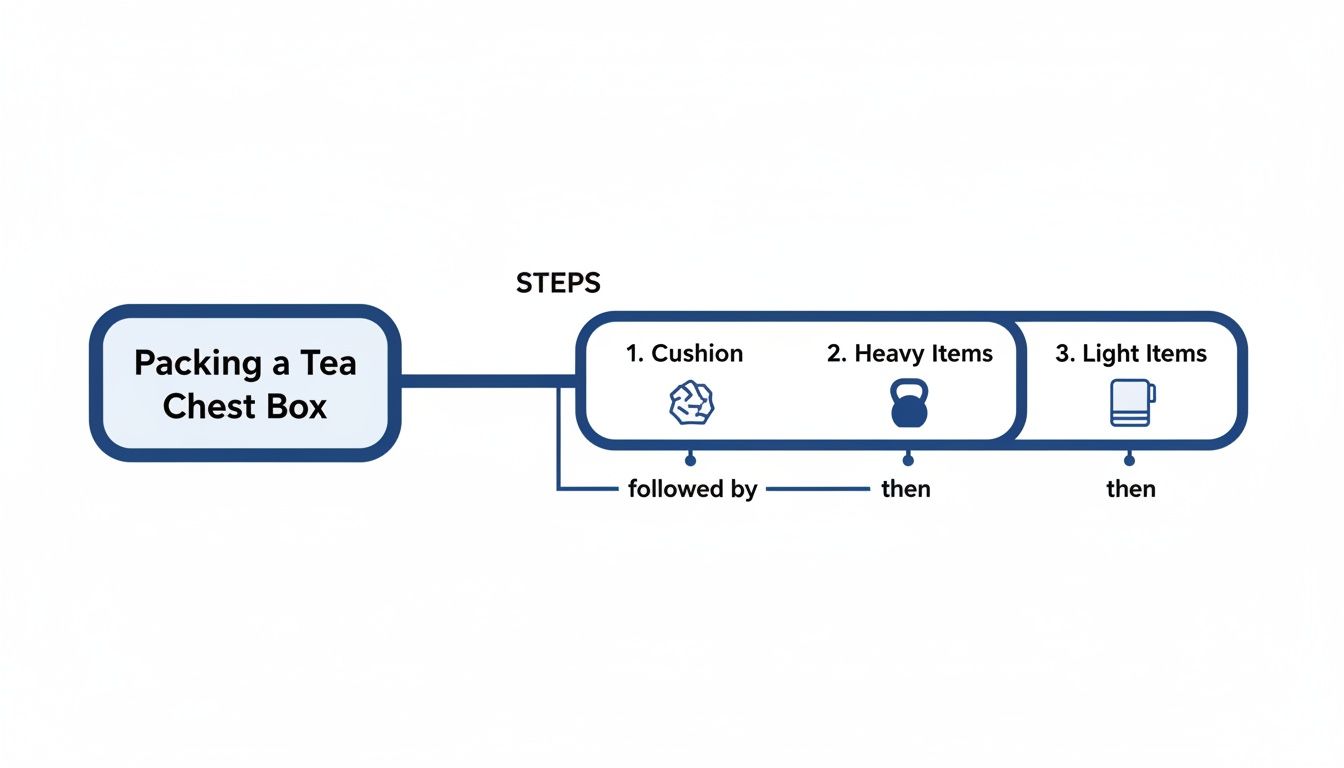
The logic is simple: build a cushioned base, then layer your items from heaviest on the bottom to lightest on top. It’s a packing principle that never fails. For a deeper dive, check out our guide on the 7 essential packing materials you need for a damage-free move.
To make it even clearer, here’s a quick comparison of the most common moving boxes and what they’re best for.
Choosing the Right Box for Your Belongings
This table compares common moving box types to help you decide which to use for different items during your relocation.
| Box Type | Common Size (approx.) | Best For | Key Advantage |
|---|---|---|---|
| Tea Chest Box | 43cm x 41cm x 60cm | Bulky but lighter items: kitchenware, linen, toys, clothes. | The standard "go-to" box for most household goods. |
| Book Box | 41cm x 30cm x 34cm | Small, heavy items: books, documents, wine, tools. | Prevents boxes from becoming too heavy to lift safely. |
| Port-a-Robe | 60cm x 48cm x 110cm | Hanging clothes: suits, dresses, coats. | Keeps clothes on their hangers, preventing creases. |
| Picture Box | 104cm x 7.5cm x 78cm | Flat items: artwork, mirrors, small TVs. | Telescopic design adjusts to protect fragile, flat items. |
Choosing the right tool for the job makes any task easier, and packing is no exception. By matching your items to the right box, you’ll protect your belongings and make loading and unloading far more efficient.
A Smarter, Greener Way to Get Boxes
We know that buying brand-new boxes for an entire house can get expensive quickly. It can also feel wasteful. That's why we started our refundable-deposit box program.
It’s simple: we deliver our professional-grade tea chest boxes to your door, whether you’re on the Central Coast, in Sydney, or around Lake Macquarie. After you’ve moved in and unpacked, we’ll come and pick them up, and you get your full deposit back. It saves you money and dramatically cuts down on the waste from your relocation.
Labelling Your Boxes for a Seamless Unpack
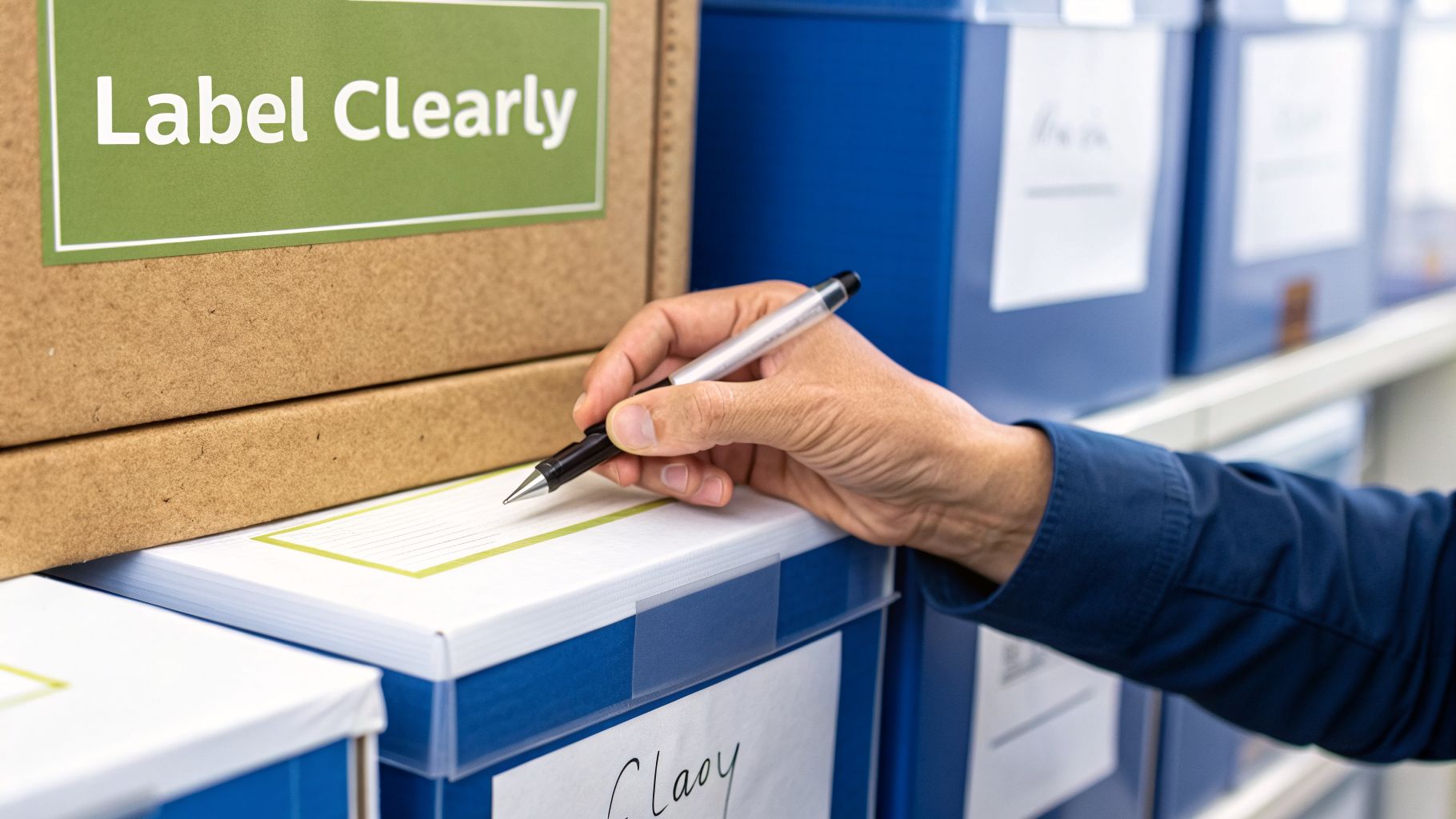
A well-labelled box is your best friend on moving day. Once you’ve packed your tea chests, spending just a few extra minutes on labelling will save you hours of guesswork and frustration when you’re unpacking. It’s the difference between organised calm and total chaos.
This simple step allows our removalist team to place every single box directly into its correct room. Imagine walking into your new Central Coast home to find the kitchen boxes are already in the kitchen and the bedroom boxes are sitting in the right bedrooms. It makes the whole process so much easier.
The Professional Labelling System
To keep your relocation as smooth as possible, we recommend the same clear and consistent labelling system our own professional packers use. For every box, just write two key pieces of information on the top and at least two of the sides.
- The Destination Room: Be specific here. Instead of just 'Bedroom', write 'Main Bedroom', 'Liam's Room', or 'Office'. This tells our team exactly where it needs to go.
- A Brief Summary of Contents: List the main items inside, like 'Pots and Pans', 'Towels and Bed Linen', or 'Board Games'. This helps you find what you need and decide which boxes to open first.
For really clear labelling, especially if you have a lot to write, consider using large labels for storage bins and moving. They give you plenty of space and make it easy for everyone to see the details at a glance.
An Extra Layer of Organisation
If you want to take your organisation to the next level, you can add a simple numbering system. Just give each tea chest a number (e.g., 1, 2, 3…) and keep a list on your phone or in a notebook.
Your list might look something like this: "Box 14: Kitchen – Cutlery and Utensils" or "Box 25: Lounge – Photo Albums". This makes it easy to do a quick inventory check and know exactly what's what, especially if you have items going into storage.
A Critical Safety Note: When you're packing anything fragile, clear labelling is absolutely essential for keeping it safe. Always mark these boxes on all visible sides with “FRAGILE – GLASSWARE” or “FRAGILE – HANDLE WITH CARE” using a thick, dark marker.
Taking a bit of time for this prep work before moving day really does pay off. It helps our team work quickly and carefully, ensuring your belongings are treated with respect and end up right where you want them.
How to Source Your Moving Boxes and Supplies
Getting the right packing materials is one of the first, and most important, steps for a smooth relocation. You've got a couple of options, from hunting down used boxes yourself to using our professional removalist supply service. We'll walk you through the pros and cons so you can make the right call.
Sourcing used boxes from local shops or online marketplaces can look like a great way to save a few dollars. The problem is, this approach comes with some hidden risks. You never really know a box's history—it could have weak spots from being used before, hidden moisture damage that can lead to mould, or even unwanted pests.
Our Professional Supply Options
To make sure your boxes are strong, clean, and up to the task, we offer two simple and reliable ways to get your packing materials sorted. We can deliver everything you need right to your door, whether you’re in a high-rise apartment in Sydney or a family home in Lake Macquarie.
You can purchase our brand-new, high-quality, double-walled tea chest boxes outright. They’re built to handle the demands of a professional relocation and are yours to keep for storage or another move down the track.
A popular and eco-friendly alternative is our refundable-deposit box program. You use our sturdy, professional-grade boxes for your move, and once you've unpacked, we'll collect them and provide a full refund of your deposit.
This program is a fantastic way to save money and reduce the environmental footprint of your relocation. It gives you access to the best quality packing materials without the cost of buying new or the hassle of getting rid of them afterwards.
As you get ready, you might also find our guide on how to get free moving boxes and save money on your relocation helpful.
Common Questions About Tea Chest Boxes
To help you get your relocation planning sorted, we've put together answers for some of the most common questions our clients ask about using a tea chest box. Having clear answers right from the start makes your preparation a whole lot smoother and gives you confidence as moving day gets closer.
How Many Tea Chest Boxes Do I Need?
This is one of the first questions people ask, and the truth is, the answer really depends on the size of your home and how you live. A key factor is the volume of your belongings, which we measure in cubic metres.
As a general guide, a one-bedroom apartment on the Central Coast might need around 10-15 tea chest boxes. For a larger three-bedroom family home in Newcastle, you could easily be looking at 30-40 boxes, or even more if you have a lot of belongings.
The best way to get a really accurate count is to have one of our team members pop over to your property. During a free in-home assessment, we can see exactly what you need to move and give you a precise recommendation on the number of boxes and other packing materials you’ll need.
Can I Reuse Tea Chest Boxes?
Absolutely. We supply high-quality, double-walled cardboard boxes that are built tough enough to last more than one trip. If you buy your boxes from us, they're perfect for putting into storage after you unpack or for saving for your next relocation, as long as you keep them clean and dry.
A great eco-friendly option we offer is our refundable-deposit program. You get all the benefits of our professional-grade boxes, and when you’re done, we simply collect them to be used by the next family. It’s an approach that minimises waste and saves you the hassle of getting rid of them.
What Should I Not Pack in a Tea Chest Box?
While the tea chest box is incredibly versatile, there are definitely some items you should never pack inside. Safety is always our first priority, so it’s vital to handle certain things separately.
Here are the main items to leave out of your tea chest boxes:
- Hazardous Materials: This covers anything flammable, corrosive, or toxic. Think chemicals, paints, gas bottles, and aerosols.
- Liquids: Unless they are perfectly sealed and protected against any possible leaks, it's best to transport liquids separately to avoid damaging your other items.
- Perishable Food: Anything that can spoil should be moved in a cooler or disposed of before the move.
- Valuables and Important Documents: Things like jewellery, passports, birth certificates, and precious sentimental keepsakes should always be kept with you personally.
For more detailed moving advice, you can find a wealth of information in our frequently asked questions section.