

If you’re searching for cardboard box sydney, chances are the move is already feeling real. Maybe you’re leaving a unit in Parramatta, booking a lift in Zetland, or trying to work out how many boxes it takes to pack a family home from the Central Coast to Newcastle without filling the garage with cardboard you do not need.
Generic hardware-store advice usually falls short. Sydney moves come with apartment rules, loading zones, narrow streets, traffic, body corporate bookings, and the simple fact that a box that works for a linen cupboard does not work for books, kitchenware, or hanging clothes. We see the same problems again and again. Wrong box sizes, boxes packed too heavy, weak cartons for fragile items, and too many last-minute trips to find more packing materials.
A good move starts with the right packing materials, but it also comes down to choosing the right system. Buying boxes can suit some moves. Reusable or refundable-deposit boxes suit others. If you’re comparing DIY packing with a full packing service, or planning a local relocation between Sydney, the Central Coast, Lake Macquarie, or Newcastle, the details matter.
For local routes and planning support, our Central Coast removalists, Sydney removals service, packing services, and interstate moving guide can help you line everything up before moving day.
Choosing the Right Types of Moving Boxes
A proper moving setup works like a tradie’s toolbox. You do not use one tool for every job, and you should not use one box size for everything in the house.
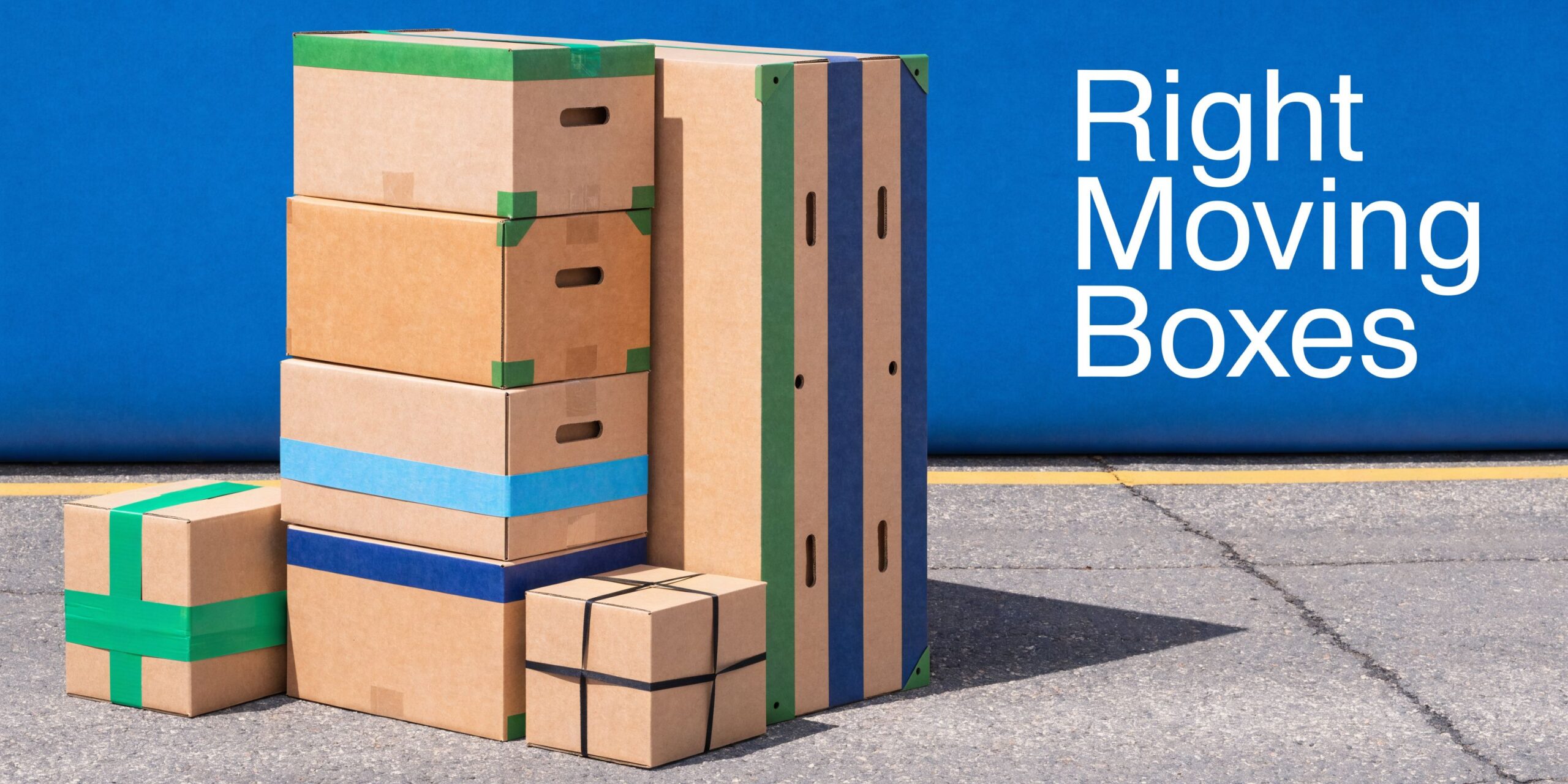
The three box types we rely on most
The first is the Book or Wine box. This is the smaller, stronger carton for heavy items. Books, pantry goods, tools, records, and glassware all belong here because a small box stops you from overpacking by weight.
The second is the Tea Chest. This is the all-rounder for lighter, bulkier household goods. Think toys, linen, lampshades, folded clothes, cables, and pantry overflow.
The third is the Porta-Robe. This is for hanging clothes that need to stay on the hanger. It saves time, keeps garments cleaner, and helps a lot when you’re moving out of an apartment with limited space to sort things on moving day.
Tip: If a box needs two people to lift because of the weight, it is usually packed wrong, not just packed full.
Why box strength matters
Not all cardboard is equal. Professional removalists rely on boxes with ECT (Edge Crush Test) ratings of 32-44 lbs/inch, which means they can be stacked up to 2.5m high in a truck without collapsing under load, according to Boxes 24’s custom cardboard box guidance. That matters on longer runs between Sydney, the Central Coast and Newcastle, where boxes are stacked, shifted, unloaded, and sometimes held briefly while access is sorted.
In plain English, ECT is a measure of how well a box handles pressure from above. If the carton walls are weak, the bottom box fails first. Then the stack leans, crushes, or bursts. That is when crockery breaks and labels become useless because everything ends up in the wrong place.
If you want a broader overview of choosing the right cardboard box types, that guide is useful for understanding how different box styles suit different contents. For moving-day use, though, strength and handling matter just as much as size.
What works and what does not
A simple mix works well in most homes:
- Small strong boxes for heavy things
- Medium or large cartons for lighter goods
- Porta-Robes for hanging clothing
- Specialty cartons for fragile or awkward items when needed
What does not work is packing books into giant cartons, putting plates into supermarket produce boxes, or mixing heavy kitchen items with loose décor in one oversized box. Those choices slow down the crew, increase handling risk, and make stairs, lifts, and long carries harder than they need to be.
If you need purpose-made options rather than guessing in the aisle, our moving boxes page shows the types commonly used for household relocations.
How Many Boxes Do You Need
This is one of the first questions people ask, and it is usually followed by a second one a week later. “Why do I suddenly need more than I thought?”
The short answer is that home size gives you a starting point, but lifestyle changes the total. A tidy one-bedroom unit in Newcastle East packs very differently from a one-bedroom apartment in Chatswood with bookshelves, hobby gear, and years of kitchen extras.
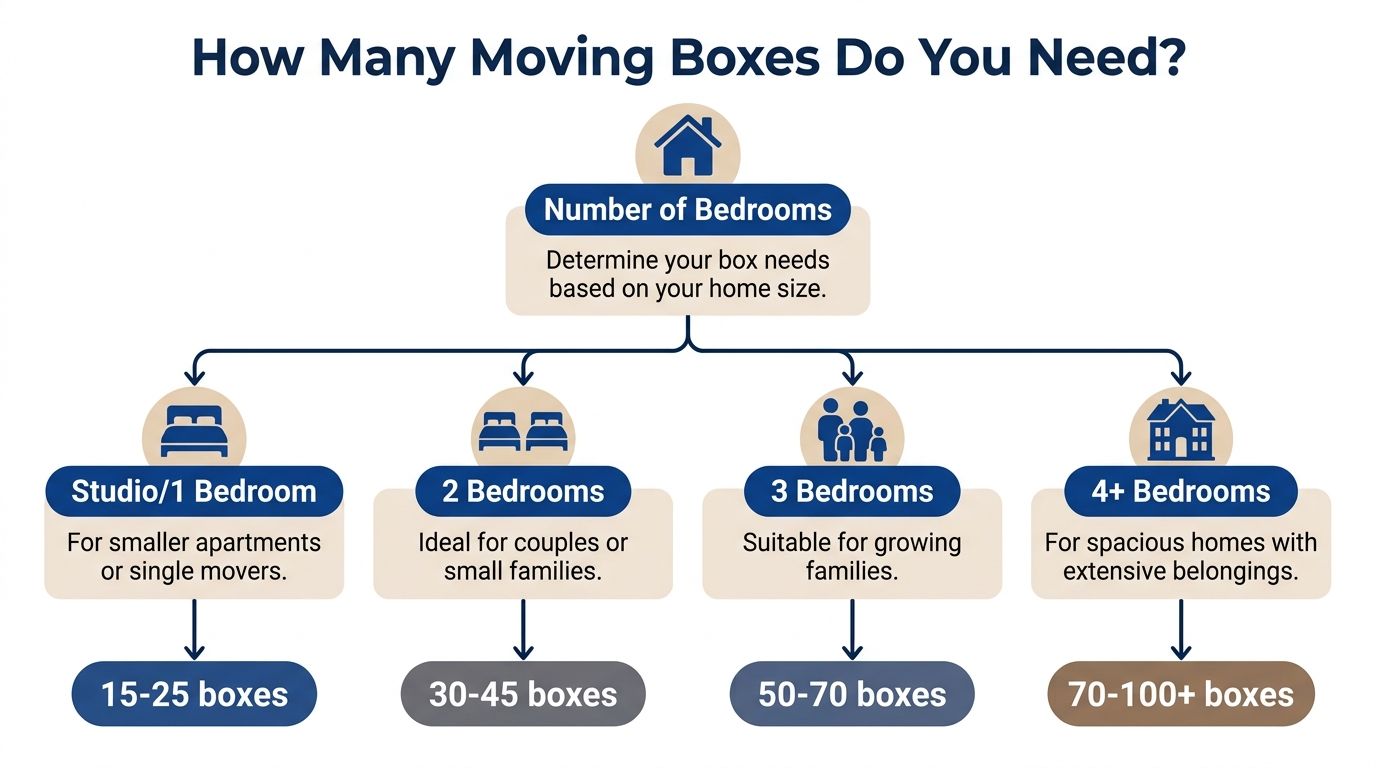
A practical rule of thumb
This guide gives a reasonable planning range:
| Home size | Typical box range |
|---|---|
| Studio or 1 bedroom | 15-25 boxes |
| 2 bedrooms | 30-45 boxes |
| 3 bedrooms | 50-70 boxes |
| 4+ bedrooms | 70-100+ boxes |
Treat that as a planning tool, not a promise. The total changes fast if you have a home office, a full garage, children’s toys, or a lot of books and decor.
The easiest way to refine the estimate
Walk room by room and sort your items into three groups.
- Dense items like books, files, tools, canned food, and glassware
- Bulky light items like doonas, cushions, toys, and folded clothes
- Awkward items like lamps, artwork, monitors, and kitchen appliances
Dense items use more small boxes. Bulky light items use more tea chests. Awkward items often need extra packing paper, void fill, or special cartons, even if they do not add much to the raw box count.
A moving inventory helps more than people expect because it stops duplicate buying and shows where the volume really sits. If you want a simple format, this moving inventory list template is handy for planning room by room.
What cubic metres means in plain language
Removalists often talk about cubic metres. That just means the total space your belongings take up in the truck. It is useful because your box count, furniture volume, and access conditions all affect the same thing. Time, truck space, and handling.
Take a three-bedroom apartment move from Chatswood to Newcastle. If the apartment has a lift booking, limited loading dock time, and basement parking clearance issues, a clean box count matters. If the family packs in a hurry and ends up with loose shopping bags, mixed tubs, and half-filled cartons, the move becomes slower and less safe even if the cubic metres stay similar.
Tip: Count your boxes again three days before the move, not just when you first order them. Pantry shelves, laundry cupboards, and “I’ll do that later” wardrobes always add more.
The best estimate is the one that also accounts for access. Stairs in older Newcastle buildings, steep driveways on the Central Coast, and busy Sydney streets all influence how fast those boxes can be moved from home to truck and back again.
Buying vs Renting Boxes in Sydney
Once you know your box mix, the next decision is how to get them. In Sydney, common approaches involve three options: buying new boxes, sourcing free second-hand cartons, or using a reusable or refundable-deposit system.
Each can work. The right choice depends on your timeline, access, and how much post-move clean-up you are willing to deal with.
Buying new boxes
Buying new is straightforward. You get clean cartons, predictable sizing, and a better chance of getting stronger board grades that stack properly in the truck.
This option suits people who want to pack over time, keep some cartons for storage, or stage a move in parts. It can also make sense for interstate relocations where you may want to keep some packing materials for settling in.
The downside is leftover cardboard. After the move, you still need to flatten, store, recycle, or dispose of it all. In apartment buildings across Sydney, that can become a bigger job than people expect, especially if the building has strict waste room rules.
Chasing free boxes
Free boxes from supermarkets, bottle shops, online marketplaces, and workplaces look cheap at first. Sometimes they are good enough for lightweight items, but they are inconsistent.
Some are too soft. Some have old moisture damage. Some are odd sizes that do not stack well. Others come with food residue, torn corners, or weak bases that open when lifted. For a short DIY relocation with only a few non-fragile items, you might get away with that. For a full household move involving stairs, long carries, lifts, or interstate transport, it often creates more work than it saves.
If you’re weighing up that route, our guide on finding boxes for moving free gives a realistic view of what to check before you rely on second-hand cartons.
Reusable or refundable-deposit boxes
This is usually the most practical middle ground when convenience matters. You get a planned number of moving-ready cartons, then return them after the job instead of dealing with a mountain of cardboard in your new place.
For people who move more often, reusable deposit-based box systems can cut moving waste by up to 40% and reduce overall costs by 15-20%, according to Boxes for Business. That benefit is easy to understand in Sydney, where renters, downsizers, and short-turnaround relocations are common.
One option available locally is Gentle Giant Removals & Relocations, which supplies boxes through a refundable-deposit arrangement as part of its removals offering. That setup suits clients who want packing materials delivered before the move and picked up after unpacking, rather than storing or disposing of them.
What usually works best by move type
- Apartment moves in Sydney: reusable or deposit-based systems often win because waste-room space and lift booking times are tight.
- Family homes on the Central Coast: buying can work if you pack gradually and may keep some cartons for garage storage.
- Office relocations in Newcastle: uniform reusable cartons make stacking, labelling, and quick unpacking easier.
- Very tight budgets: free boxes can help, but only if you are selective and use strong cartons for anything fragile or heavy.
The hidden trade-off is time. Buying costs more upfront but is simple. Free boxes cost less upfront but take effort and can create packing problems. Deposit systems reduce clean-up and clutter after the move, which many people appreciate most once they have the keys to the new place and just want the cardboard gone.
Where to Get Your Packing Materials in Sydney
Many movers start the same way. They grab a few boxes from a hardware store, pick up some tape from the supermarket, then realise halfway through packing that they still need paper, labels, wardrobe cartons, and stronger boxes for the kitchen.
That scattered approach can work for a small move from a house in Woy Woy to a unit in Gosford. It gets harder when the move involves Sydney traffic, a booked loading bay, or a commercial relocation where downtime matters.
The common supply options
Sydney gives you plenty of choice. Hardware chains stock basic cartons and tape. Packaging suppliers offer broader ranges. Local box manufacturers can help when you need bulk quantities or stronger board grades.
There is also a bigger market behind all this. The Australian corrugated boxes market is forecast to grow to USD 6.9 billion by 2033, largely driven by e-commerce, according to IBISWorld’s industry overview. More availability is good news for households and businesses, but it also means quality varies. A removals-grade carton is not always the same as a general retail carton.
The one-stop option many prefer
The smoothest setup is usually getting packing materials from the same team handling the relocation. That way, the cartons, packing paper, tape, and specialty items all arrive in one system and are chosen to suit the job.
A family moving from Terrigal to Lake Macquarie might need tea chests, book cartons, paper for kitchenware, mattress protection, and a few porta-robes. An office in North Sydney may need labelled cartons, computer protection, and a tighter delivery window because access is restricted outside business hours. In both cases, buying materials from one place and booking removalists somewhere else can create mismatches.
For a practical overview of what should be in your packing kit, our guide to the 7 essential packing materials you need for a damage-free move is a good starting point.
What to ask before you order
Ask simple questions.
- Will these cartons suit heavy items or only light household goods
- Can the supplier deliver before the weekend
- Do they also provide packing paper, tape, and specialty protection
- If you live in a unit, can the order arrive within your building access hours
Tip: If your building needs a lift booking or loading dock reservation, organise your packing material delivery early as well. Boxes arriving late often causes the whole packing timeline to slip.
For Sydney apartments, this matters more than people think. Concierge desks may reject oversized deliveries. Loading zones may be short-term only. Body corporate rules can limit move-in times. Good materials are important, but getting them at the right time is what keeps the plan workable.
Pro Packing Tips for a Safer Relocation
The right box helps. The way you pack it is what protects your belongings, your property, and the people carrying it.

A box that is badly taped, overloaded, or packed with loose empty space can fail even if the cardboard itself is good. On apartment moves in Sydney, that risk gets higher because cartons are handled through lifts, hallways, ramps, and shared entrances. On Central Coast and Newcastle jobs, stairs, sloped driveways, and weather can add another layer.
Build the box properly first
Tape the bottom seams before anything goes in. Use enough tape to support the load, especially for books, kitchenware, and pantry items. Then line the base with packing paper or another suitable cushioning material if the contents are fragile.
Heavy items go at the bottom. Lighter items go on top. Empty gaps should be filled so the contents do not shift in transit.
A carton should feel stable when you lift it. If the base bows or the sides bulge, repack it.
Fragile items need the right carton and the right wrap
Glassware, ceramics, and sentimental items deserve more than a quick layer of paper. Wrap each item separately. Cushion the base and top of the carton. Keep pieces from touching each other inside the box.
Boxes with a burst factor greater than 200 kPa can prevent up to 90% of glassware breakage during transit, according to Tailor Made Packaging. That is why fragile kitchen cartons and breakables boxes matter on aged-care relocations, long-distance runs, and any move where handling conditions are less forgiving.
Tip: Plates travel more safely on their edge with proper cushioning than stacked flat in a loose box.
For a fuller room-by-room approach, our guide on how to pack for a move breaks down what to do before moving day.
Labelling saves time on both ends
Label every carton with the room and a short contents note. “Kitchen” is helpful. “Kitchen. Plates and serving bowls” is better.
For strata buildings in places like Mascot, Rhodes, or Newcastle West, good labels reduce time spent sorting boxes in lobbies and common areas. That keeps shared spaces clearer and helps everyone move faster, which matters when lift bookings run to the minute.
If you are moving an office, number the boxes and keep a simple list of who owns what. That makes unpacking easier and cuts downtime when staff need files, monitors, or desk contents quickly.
A short visual guide can help if you’re packing breakables yourself:
Keep safety ahead of speed
Overweight cartons are one of the most common problems on moving day. They are harder on your back, harder on the crew, and more likely to split when carried down stairs or across wet ground.
A few habits make a big difference:
- Keep book boxes small: dense items become unsafe quickly.
- Do not mix sharp and soft items: tools and kitchen knives should never sit loose with linen or clothing.
- Separate essentials: medications, keys, chargers, paperwork, and children’s overnight items should travel with you.
- Prepare access areas: clear hallways, reserve parking where needed, and confirm lift bookings and body corporate requirements in advance.
When clients use a professional packing service, the big benefit is not just speed. It is consistency. Cartons are packed to handle the journey, the property is protected during loading, and the work is covered by full insurance arrangements attached to the relocation service.
Sustainability and What to Do with Boxes After Your Move
The move is done, the truck is gone, and now the spare room is full of cardboard. This is the point where your earlier decision about buying or reusing boxes starts to matter.
Paper and cardboard make up 36% of Australia’s total packaging materials, and current recycling rates sit at 64%, with national targets aiming for 80%, according to Mordor Intelligence’s Australia paper and paperboard packaging market overview. In practical terms, reuse is worth prioritising where you can, and proper recycling matters when reuse is not possible.
The easiest post-move option
Reusable or refundable-deposit boxes are the cleanest finish to a move. Once you have unpacked, the cartons go back into circulation instead of sitting in your garage, cluttering the balcony, or overflowing the recycling bin.
That is especially useful in Sydney apartments, where waste rooms fill quickly and body corporate rules often require cardboard to be flattened properly before disposal.
If you bought cardboard boxes
Flatten every box as you empty it. Remove excess tape where practical. Keep the cardboard dry and stack it neatly for kerbside recycling or drop-off if your council requires it.
Do not leave loose piles in shared foyers, car parks, or bin rooms. Apart from being messy, it creates access and fire-safety issues in apartment buildings.
Tip: Unpack the bedrooms and kitchen first, then break down those cartons immediately. You get usable space back faster and the new place feels organised sooner.
If you want the rest of your moving admin to be just as tidy, our relocation checklist Australia helps you keep the final jobs under control.
If you’re planning a move in Sydney, the Central Coast, Newcastle or Lake Macquarie and want practical advice on box types, packing materials, access issues, or refundable-deposit box options, Gentle Giant Removals & Relocations can help. We offer free quotes, in-home assessments, and support with packing, local and interstate relocations, strata access planning, and urgent moves. For a quick answer, call the team directly. For everything else, request a free moving quote online and we’ll help you work out the safest, most sensible setup for your move.