

If you're getting ready to hand back the keys, you've probably got two jobs happening at once. One is the physical relocation. The other is making the property look right for final inspection. In our line of work across the Central Coast, Sydney, Newcastle and Lake Macquarie, that overlap is where a lot of bond problems start.
People pack late, the truck runs longer than expected, the fridge comes out and leaves a dirty outline on the floor, or the apartment lift booking finishes before the cleaner gets proper access. The end of lease cleaning requirements nsw renters deal with aren't impossible, but they do punish poor timing. If you treat the move and the vacate clean as separate problems, small details get missed. If you plan them together, the handover is usually much smoother.
Understanding Your Legal Obligations in NSW
The legal side usually becomes real at the end, when the truck has gone, the keys are due back, and the agent is comparing the property against your entry report. In NSW, the standard is straightforward. You need to return the place reasonably clean and in roughly the same condition as the start of the tenancy, allowing for fair wear and tear, as outlined in this NSW end of lease cleaning overview.
That sounds simple until moving day gets involved.
Across Sydney, Newcastle, and the Central Coast, I regularly see the same problem. Tenants understand they have to clean, but they plan the clean without planning the move. Then the last load comes out, dust drops from behind the fridge, wardrobe tracks are full of grit, and the final hour disappears into avoidable rework. That is where bonds get chipped away, not because the law is hard to follow, but because the handover sequence was wrong.
What fair wear and tear actually looks like
Fair wear and tear means normal ageing through ordinary use. It does not cover dirt, grease, staining, residue, or marks caused by how furniture was moved out.
A faded blind, older carpet flattening in a walkway, or ageing around window frames in an older Gosford unit will usually sit in the wear-and-tear category. Fresh oven grease, soap scum on shower glass, food crumbs left in drawers, or scrape marks from dragging a lounge through a narrow hallway will not.
A practical example helps. If an apartment in The Hill, Newcastle, already had worn carpet noted at the start, nobody can fairly expect brand-new carpet at the end. If the same carpet now has a fresh desk-chair stain and the skirting boards are carrying months of dust, those are exit issues.
Compare the property to the day you moved in, not to a display suite.
Your condition report is the benchmark
The entry condition report does the heavy lifting in a bond dispute. If you still have it, use it before the last week. Walk the property room by room with the report in hand and check the actual surfaces, fittings, tracks, blinds, appliances, and floors. Guessing from memory is how small misses turn into cleaning claims.
Timing matters here too. If the report showed existing wear when you moved in, that can protect you. If it showed a clean oven, clear shower screen, and unmarked walls, the exit clean needs to bring those areas back to that standard as closely as reasonably possible.
This is one reason we tell customers to book the move and the vacate clean as one plan, not two separate jobs. Once the property is empty, you can match the report properly. Before that, wardrobes, appliance recesses, garage corners, and wall edges are often still hidden behind boxes or furniture.
If you are still sorting access, truck timing, lift bookings, or handover order, our moving FAQ for Central Coast, Sydney and Newcastle relocations helps you line those details up before they affect the cleaning window.
What agents can reasonably expect
Agents can expect a property that is properly cleaned and ready for inspection. They can compare it to the entry report and photos. They can raise issues where the property is dirtier, more damaged, or less presentable than it was at the start, outside normal wear.
They cannot reasonably require an old property to present like a newly renovated one. If a rental in Wyong had tired grout, aged paint, or older aluminium window tracks recorded at move-in, the obligation is to leave them clean, not to restore them. That distinction matters, especially in older homes around the Central Coast and parts of inner Newcastle where age shows up in fittings long before a tenant moves in.
A useful outside perspective on that difference is this article on protecting Setauket rental investments, which separates routine property upkeep from tenant cleaning responsibilities.
Why the move plan affects your legal position
A rushed move creates legal problems in practical form. Clean before the removalists finish, and floors get marked again. Leave rubbish for the end, and the bins overflow before inspection. Miss the strata lift slot in a Sydney apartment, and the cleaner loses access time you already paid for. In a house move on the Central Coast, the same issue shows up as garage dust, garden debris tracked inside, or a wet driveway walked back through the kitchen.
The better approach is simple. Move everything out first. Check the entry report. Clean the now-empty property in detail. Then do a final walkthrough in good light before handing back the keys.
That order gives you a much better chance of meeting your NSW obligations without arguments over avoidable mess.
The Ultimate Room-by-Room Vacate Cleaning Checklist
The final inspection isn't a weekly tidy. It's a detail check. NSW Fair Trading benchmark data cited in this end of lease cleaning guide for tenants says 78% of bond disputes stem from incomplete cleaning, with carpet condition (35%), bathrooms (25%), and kitchens (20%) as the main trouble spots. The same source notes that professionals dismantle rangehood filters and soak them in enzyme solutions to achieve 95% grease removal, which is one reason DIY jobs often fall short.
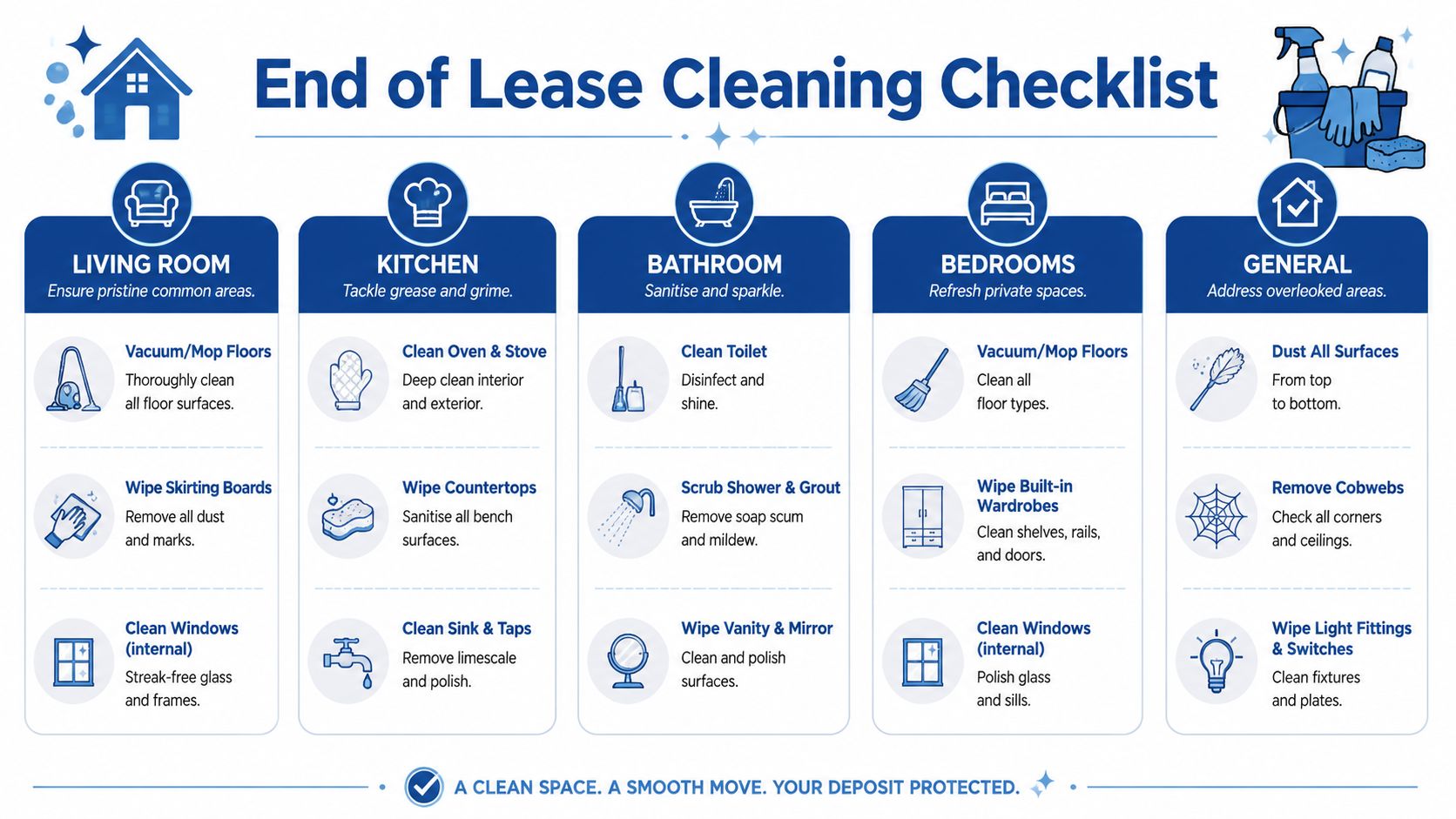
If you're moving out of a house in Terrigal or a unit in Charlestown, the same principle applies. Agents check edges, corners, handles, filters and tracks. They don't just look at the middle of the room.
Kitchen
Kitchens lose bonds because grease hangs around in places tenants stop noticing. Bench tops can look fine, but the rangehood, oven seals, splashback edges and cupboard fronts tell a different story.
Start high, then work down. Clean the top of overhead cupboards if they're accessible, the rangehood exterior, and the light fitting. Move to cupboard doors, handles, shelves, and the inside faces of drawers. After that, tackle the harder items.
Focus on these areas:
- Oven interior and door glass: Remove baked-on residue, clean trays and racks, and check the lip around the door where grease collects.
- Rangehood filters: Take them out if the design allows it and clean the filter properly, not just the visible face.
- Stovetop and knobs: Lift what can be safely lifted and clean around burner bases.
- Sink and taps: Polish off residue and check the drain surround.
- Dishwasher: Clean the door edges, filter area and rubber seals.
- Behind and beside appliances: Once the fridge is out, wipe the wall, floor, skirting and power point area.
Agents often crouch down in the kitchen before they do anything else. They're checking the oven, kickboards and the floor line under appliances.
If you're after a commercial-style mindset for overlooked hygiene points, this piece on improving facility cleanliness for business growth is useful because it reinforces how visible cleanliness and hidden grime are judged differently by inspectors.
Bathroom and laundry
Bathrooms are all about residue. Soap scum, mould, hair, dust on exhaust covers, and mineral build-up around tapware all signal an incomplete clean.
Do the dry work first. Dust the exhaust fan cover, wipe light switches, clean mirrors, and remove cobwebs. Then move to wet cleaning so you don't re-soil finished surfaces.
Pay extra attention to:
- Shower screens and tracks: Clear soap film and sediment from the lower channels.
- Grout lines and corners: Especially around the shower base and behind the toilet.
- Vanity drawers and cupboards: Empty, wipe and dry them.
- Toilet base and hinges: This is a common miss.
- Laundry trough and taps: Clean splash marks, lint and detergent residue.
- Behind the washing machine position: Once the appliance is moved, clear old dust and grime from the wall and floor.
For coastal suburbs on the Central Coast, bathrooms can show salt and moisture wear faster than inland homes. That means exhaust covers, window frames and shower recesses often need more attention than tenants expect.
Bedrooms and living areas
These rooms look easy because there isn't much grease or moisture. That's exactly why tenants rush them. The final inspection then turns on dust, marks and detail work.
Work top to bottom. Ceiling corners first, then light fittings, wardrobes, blinds or window frames, skirting boards, doors, switches and floors. Built-ins matter. Agents open them.
A practical sequence that works well is:
- Remove cobwebs and dust high points
- Wipe doors, handles and switch plates
- Clean inside wardrobes, rails and shelves
- Wipe skirting boards and visible wall marks
- Vacuum edges and corners before the main floor clean
- Finish with internal windows, sills and tracks
In Newcastle heritage apartments, you'll often find deeper window ledges, older sash frames and more detailed trim. In newer Sydney units, the issue is usually compact spaces with mirrored robes, aluminium tracks and lots of white painted surfaces that show every mark.
Floors, windows and the areas people forget
The room may look clean from standing height, but final inspections often swing on the low and awkward areas. Floor edges, balcony tracks, sliding door channels, air vents and the top edge of skirtings are repeat offenders.
A short checklist for the last pass helps:
| Area | What to check |
|---|---|
| Floors | Vacuum corners, under where furniture sat, and along skirting lines |
| Windows | Internal glass, frames, sills and tracks |
| Switches | Finger marks and dust build-up |
| Doors | Top edge, around handles, and frame rebates |
| Outdoor spaces | Balcony glass, cobwebs, drains, and swept surfaces |
If the property has a courtyard, garage, or balcony, treat it as part of the tenancy, not an optional extra. Sweep leaves, remove rubbish, clear cobwebs and wipe down any obvious marks. In apartment blocks across Sydney and Lake Macquarie, also make sure common areas used during the relocation are left clean if your lease or building management expects that.
For a more detailed explanation of what cleaning teams usually include after a property is emptied, this guide to professional move out cleaning inclusions is worth reading before your final pass.
DIY Cleaning vs Hiring Professional Vacate Cleaners
This decision usually comes down to risk, time, and the standard you can realistically achieve after the relocation is done. Plenty of tenants can handle a basic clean. Fewer can handle a full vacate clean well after packing, key coordination, utility cut-offs, access issues and a long moving day.
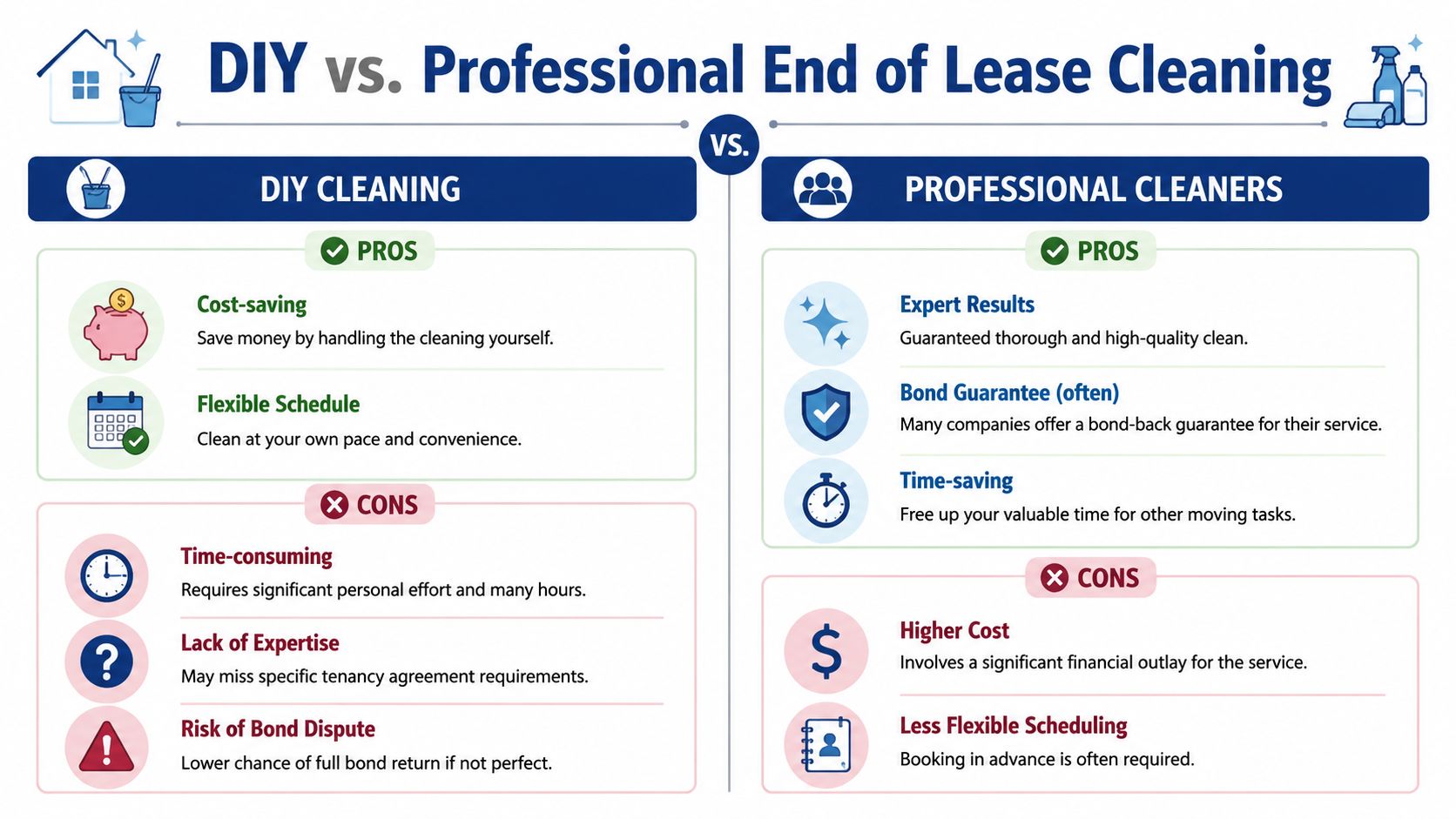
The financial trade-off is clearer than it initially appears. According to this NSW vacate cleaning cost guide, professional cleaning isn't legally required but is contractually required in most leases, professional cleaners are associated with a 95% bond refund success rate compared with 60% for DIY, and average NSW bonds sit between $1,500-$2,500.
When DIY can work
DIY can work if the property is already in good shape, you've maintained it well during the tenancy, and you have enough uninterrupted time after the removalist has finished. It also helps if the layout is simple. A small unit with no carpets, no balcony, and no heavy cooking residue is a different job from a family home with pets, built-ins, and years of daily use.
DIY usually falls down in three places. The first is fatigue. The second is equipment. The third is inspection blindness, where you've lived with a mark or smell so long that you stop noticing it.
When a professional clean is the safer choice
A professional clean makes more sense when the property has carpets, mould-prone bathrooms, heavy kitchen use, pet-related issues, or awkward access. It also makes sense when your move itself is already complicated, such as a terrace in Sydney with limited parking, a multi-level home in Newcastle, or a waterfront Central Coast property where access paths and weather can slow the day down.
The other value is coordination. If the property is emptied on schedule, the cleaner gets clear access. If the cleaner is booked too early, they work around furniture and the result suffers. If they're booked too late, key return becomes stressful.
The clean should happen after the last item is out and before the handover window closes. That's the sweet spot.
A side-by-side view
| Option | Best for | Main risk |
|---|---|---|
| DIY | Smaller, well-kept properties with enough spare time | Missed detail and re-clean requests |
| Professional | Busy households, larger homes, complex leases, tighter timelines | Higher upfront outlay |
Take a tenant relocating from Woy Woy to Newcastle. If the bond is at the top end of the average NSW range noted above, the question isn't just what the clean costs. It's whether saving money on the clean is worth risking part of a bond that size, plus the stress of arguments after you've already moved.
A good removal plan helps either way. If you're still weighing up who should handle what on moving day, this guide on how to choose the right removalist will help you think through access, timing, insurance, and service scope. Full insurance coverage matters here too, because protecting your belongings and protecting the property during the relocation are part of the same handover standard.
Documenting Your Clean for a Smooth Handover
Cleaning without documentation leaves you exposed. You can do a solid job and still end up arguing about what the property looked like at handover if you don't keep proof.
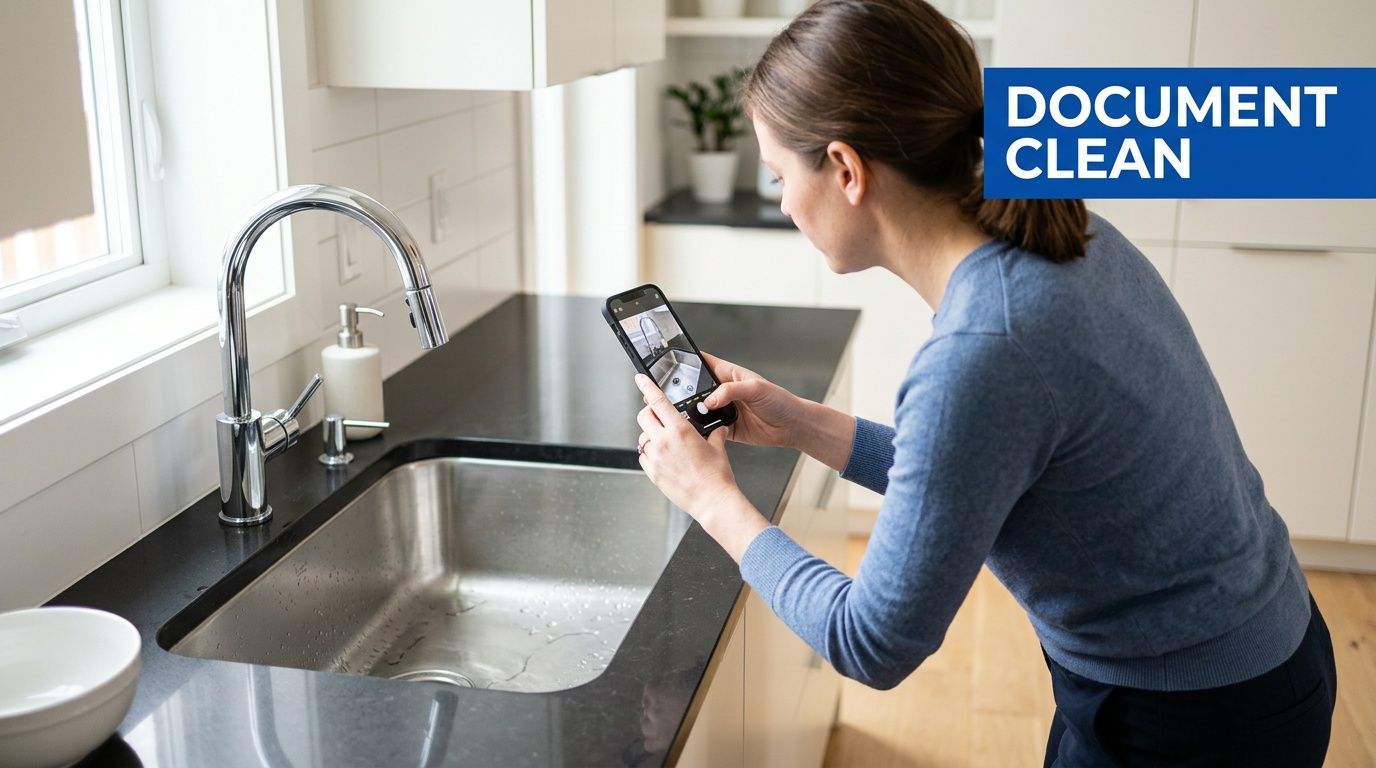
That proof matters even more now. As noted in this guide covering end of lease cleaning and digital bond claims, tenants using the NSW Digital Bond Portal can see up to 40% faster refunds, with an average of 14 days vs 28, when they upload cleaning evidence such as timestamped photos and a professional cleaner's receipt.
What to photograph and how to do it properly
Take your photos after the property is fully empty and after the final clean is complete. Open curtains and blinds for natural light. Stand in the doorway and take wide photos of each room first. Then take close-ups of higher-risk items such as the oven, shower screen, vanity, inside wardrobes, window tracks, sink, rangehood, laundry area and any place that was noted on the entry report.
Video helps too, especially for continuity. A slow walk-through showing each room in sequence can be useful if someone later claims the property was left in poor condition. Keep your footage steady and narrate only if it adds context.
Use this approach:
- Wide room shots: One from each corner where possible.
- Detail shots: Appliances, fittings, tracks, skirtings, floors and wet areas.
- Condition report matches: Photograph the same kinds of items mentioned at entry.
- Access points: Front door, balcony, garage, storage cage if included in the lease.
Keep receipts and written records
If you hired cleaners, carpet technicians, pest control, or rubbish removal, keep the paperwork together. One digital folder is best. Save invoices, text confirmations, inspection emails and your own photos in the same place.
If you don't receive a professional receipt in the format you need, a template for create cleaning service receipts can help you understand the sort of details a proper record should contain. The point isn't presentation. It's clarity. The document should show who did the work, where, and when.
After every move, there are a lot of small jobs competing for attention. A practical moving house checklist helps make sure the documentation step doesn't get dropped in the rush.
How to handle the final inspection calmly
Be present if you can. Bring your photos, your condition report, and any receipts. If the agent points out something minor, deal with it on the spot if it's reasonable and practical. Wiping a missed shelf is easier than debating it.
If there's a bigger disagreement, don't argue emotionally in the property. Ask them to identify the issue clearly and note it against the relevant area. Your records matter more than a hallway debate.
A short video can also help you prepare for what agents usually look for during handover.
Good documentation doesn't just support your claim. It changes how confidently you can respond when an issue is raised.
What Happens If There Is a Bond Dispute
Even when the property looks good, disagreements can still happen. The key is not to panic and not to rely on memory. Cleaning-related bond disputes make up about 25% of all claims according to this NSW end of lease cleaning dispute guide, and that same source notes tenants often lose money because they misunderstand fair wear and tear. It gives a practical example too. Light marks from furniture are fair wear, but significant scuff marks are the tenant's responsibility to clean.
Step one is direct communication
Start with the agent or landlord. Ask for the exact cleaning items they say are unsatisfactory. General comments like "the place wasn't cleaned properly" aren't enough to work with. You need the specific room, the specific item, and ideally the comparison point against the entry condition report.
Sometimes the issue is minor and can be fixed quickly. A return visit to wipe a missed cupboard shelf or reclean a shower screen is easier than escalating immediately.
If agreement isn't reached
If the claim still looks unreasonable, gather your evidence in one file. Include your condition report, your exit photos, any receipts, and any messages about the property condition. Keep everything dated and clearly named.
Methodical records handle the heavy lifting in these situations. The same dispute guide above makes the point clearly that photo evidence is essential at an NCAT hearing. Lacking such proof, the discussion can collapse into one side's word against the other's.
NCAT is formal, but manageable
If the matter goes to the NSW Civil and Administrative Tribunal, the process is more structured than is often expected. You don't need to be dramatic or combative. You need to be organised. Show what the property looked like when you moved in, what you did when you moved out, and where the claim goes beyond your actual obligation.
A practical order for your evidence is:
- Entry condition report and move-in photos
- Exit photos and video
- Cleaning invoices or service records
- Emails or messages with the agent
- A short timeline of the move-out and handover
Stay factual. Tribunals respond better to clear evidence than to frustration.
For tenants juggling a dispute while also trying to settle into a new place, the moving admin can snowball. A planning article on moving backfill and transition logistics is useful for keeping the rest of your relocation organised while you sort the bond side properly.
Frequently Asked Questions About End of Lease Cleaning
Do I legally have to hire a professional cleaner
NSW law focuses on the condition of the property at handover. It does not automatically require you to pay for a cleaning company. The job is to return the place reasonably clean, taking fair wear and tear into account.
In practice, some properties are hard to get to inspection standard without help. I see this often after a full move-out in Sydney apartments, older Newcastle rentals with grease built up in kitchens, and family homes on the Central Coast where pets, carpets, and bathrooms need more work than tenants expect.
Can the landlord tell me which cleaner I must use
You can use your own cleaner or do the work yourself. An agent or landlord can recommend a business, but they cannot force you to hire that specific company if the property is cleaned to the right standard.
What matters at final inspection is the result. If the oven, showers, skirtings, cupboards, and floors are up to standard, the name on the invoice is secondary.
Do carpets always need steam cleaning
Carpets do not always need steam cleaning. The answer depends on the lease, the starting condition, and how the carpet presents at the end.
If there are pets, odours, stains, or obvious traffic marks, professional carpet cleaning is usually the safer call. The same applies if your lease specifically requires carpet cleaning at the end of the tenancy. If the carpet is still in good order and there is no special clause, the issue usually comes back to condition rather than a blanket rule. This NSW guide to end of lease cleaning requirements explains the point in more detail: https://premiumclean.au/blog/a-comprehensive-guide-to-end-of-lease-cleaning-requirements/
From a moving side, timing matters here. If cleaners attend before the last boxes, bed frame, and sofa come out, fresh marks on the carpet are common. That is one of the easiest ways to lose part of a bond.
Who deals with mould
That depends on what caused it.
Surface mould from day-to-day use, poor ventilation, or leaving bathrooms damp may fall to the tenant to clean. Mould linked to a leak, failed waterproofing, or another building issue is a different matter. If you reported the problem during the tenancy, keep that record and photograph the area before you leave.
What about marks on walls
Fair wear and tear is different from dirt and avoidable marks. Light ageing happens. Scuffs near hallways, finger marks around switches, blu-tack residue, and bed-head rub marks usually need attention before inspection.
Use a gentle method first. I have seen tenants scrub too hard on flat paint in Gosford and inner Sydney units, then create a bigger issue than the original mark.
When should the vacate clean happen
Book the clean after the property is empty and before key handover. That gives proper access to wardrobes, skirtings, behind doors, under appliances, and the areas hidden by furniture during the tenancy.
Move planning saves money. When your removalists and cleaners are booked as one coordinated job, the property can be emptied, checked, cleaned, and photographed in the right order. That approach cuts down on the common last-minute problems agents pick up in Sydney, Newcastle, and the Central Coast, like debris left in the garage, dust where the fridge was sitting, or dirty floors marked during the move.
What should I keep after handover
Keep your photos, video, receipts, condition report, and emails until the bond is returned and the matter is finished.
Do not assume the job is over once the keys are back. A well-planned exit usually runs better when the move, clean, and handover are treated as one job, not three separate bookings.
If you're planning a move anywhere across the Central Coast, Sydney, Newcastle or beyond, Gentle Giant Removals & Relocations can help you coordinate the relocation properly so the vacate clean happens at the right time, with the right access and less last-minute pressure. If you need practical advice on timing, packing materials, strata access, parking, or a free moving quote, get in touch online or request a free in-home assessment. For urgent moves, a quick phone call is often the fastest way to sort out the plan.