

If you're sitting in a unit in Gosford, a terrace in Newcastle, or an apartment in Sydney trying to work out what “interstate” means for your move, you're not overthinking it. It sounds simple. You're crossing a border, loading a truck, and heading off.
In practice, an interstate relocation has more moving parts than a local job. Access at both ends matters. Quarantine can matter. Timing matters even more than commonly anticipated. The legal side is different too, which affects how carriers operate and how your move should be planned.
From our side of the Central Coast, we see the same pattern all the time. People are usually well organised on the obvious jobs like packing clothes and booking cleaners, but the problems tend to come from the details they didn't know to ask about. That's where understanding the interstate meaning in Australia makes the whole process easier.
For practical prep before anything is booked, a solid moving checklist for Australia helps you keep the small jobs from turning into last-minute issues.
Planning a Big Move Across State Lines
A typical example is someone leaving a Newcastle apartment for a family home interstate. They know they need a removalist, they know they need packing materials, and they know the trip is longer than a run from Lake Macquarie to Sydney. What they often don't realise is that the move starts well before loading day.
Australia is a mobile country, and interstate relocation is common. Approximately 415,000 Australians moved between states in the most recent 12-month period, marking an acceleration after a brief cool-down in 2024, according to this Australian interstate migration update. That matters because busy lanes fill early, especially on popular routes out of New South Wales.
If you're moving from the Central Coast to Queensland, or from Sydney to Victoria, the practical questions start straight away. Is your destination a house with clear driveway access, or a strata building with lift bookings and move-in restrictions? Are there narrow streets, basement parking limits, or body corporate rules about protecting shared areas? Those details change the plan.
Practical rule: The longer the route, the less room there is for vague planning.
A smooth interstate job usually comes down to three things. First, know exactly what's going. Second, know how access works at both addresses. Third, leave enough time to fix surprises before moving day.
Some clients choose full packing because work, kids, or travel plans leave them short on time. Others do the packing themselves and ask us to handle the heavy furniture, fragile pieces, and loading. Both approaches can work. The one that doesn't work is starting late and hoping the difficult items will sort themselves out on the day.
What Interstate Really Means in Australia
In plain language, interstate means moving from one Australian state or territory to another. Gosford to the Gold Coast is interstate. Sydney to Newcastle isn't. That second move stays within New South Wales, so it's intrastate.
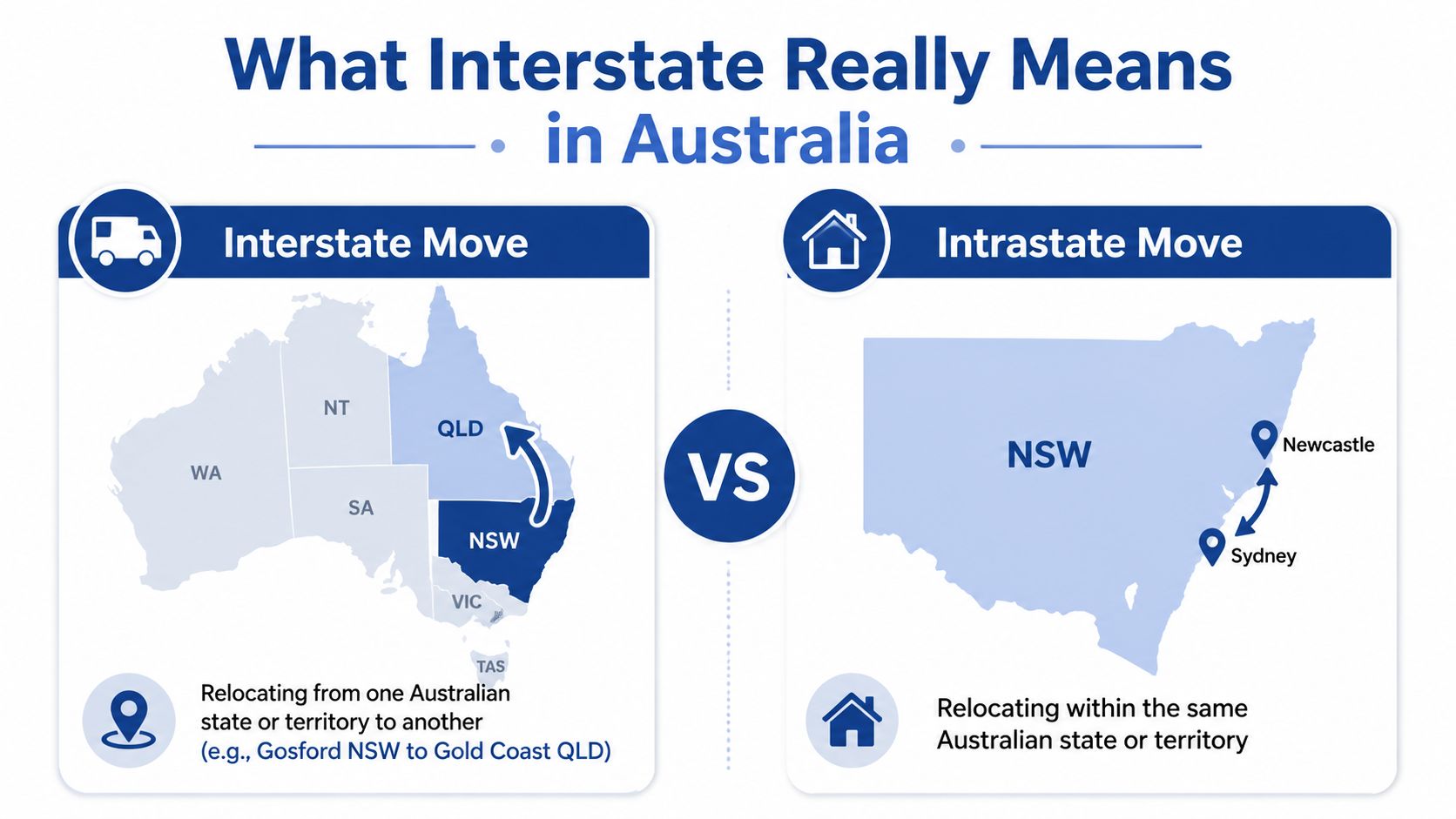
That simple definition is useful, but it's only the first layer. If you're searching for the interstate meaning in Australia because you're planning a real move, the important part is what changes once you cross a state line.
The practical difference from an intrastate move
An intrastate relocation usually follows one state's operating environment. An interstate relocation can bring in a different regulatory setting, different road planning, different quarantine concerns, and a different handover process at the destination.
That's why a move from Terrigal to Newcastle feels straightforward compared with a move from the Central Coast into Queensland or South Australia. The truck isn't just travelling further. The planning standard needs to be tighter.
A good plain-English comparison is on this page about local and interstate removals, especially if you're still deciding which service type fits your job.
Why the legal meaning matters
There's also a legal distinction that most quick guides skip. Most existing content defines “interstate” merely as crossing state lines but fails to explain the critical legal distinction between interstate and intrastate trade under Section 51(i) of the Australian Constitution, which determines whether the Commonwealth or state government regulates a move or business relocation, as outlined in this explanation of interstate and intrastate trade in Australia.
For clients, that matters because the move can involve different transport obligations and different compliance issues from a same-state job. For businesses relocating offices, it can matter even more because the line between moving stock, equipment, records, and workspaces can bring in extra checks.
Interstate isn't just “far away”. It's a different category of relocation.
Where people get caught out
The usual mistake is assuming every removal job works the same way. It doesn't. A Sydney apartment exit with lift windows, loading dock rules, and booked parking already needs careful coordination. Add a state border, destination access limits, and item restrictions, and the margin for error gets smaller.
That's why experienced interstate removalists ask more questions up front. It's not overkill. It's how we avoid damage, delays, and awkward surprises at the other end.
Your Interstate Moving Timeline From NSW
The best interstate moves from New South Wales start early. Not because every move is complicated, but because early planning gives you room to solve access issues, packing delays, and travel timing before they become expensive problems.
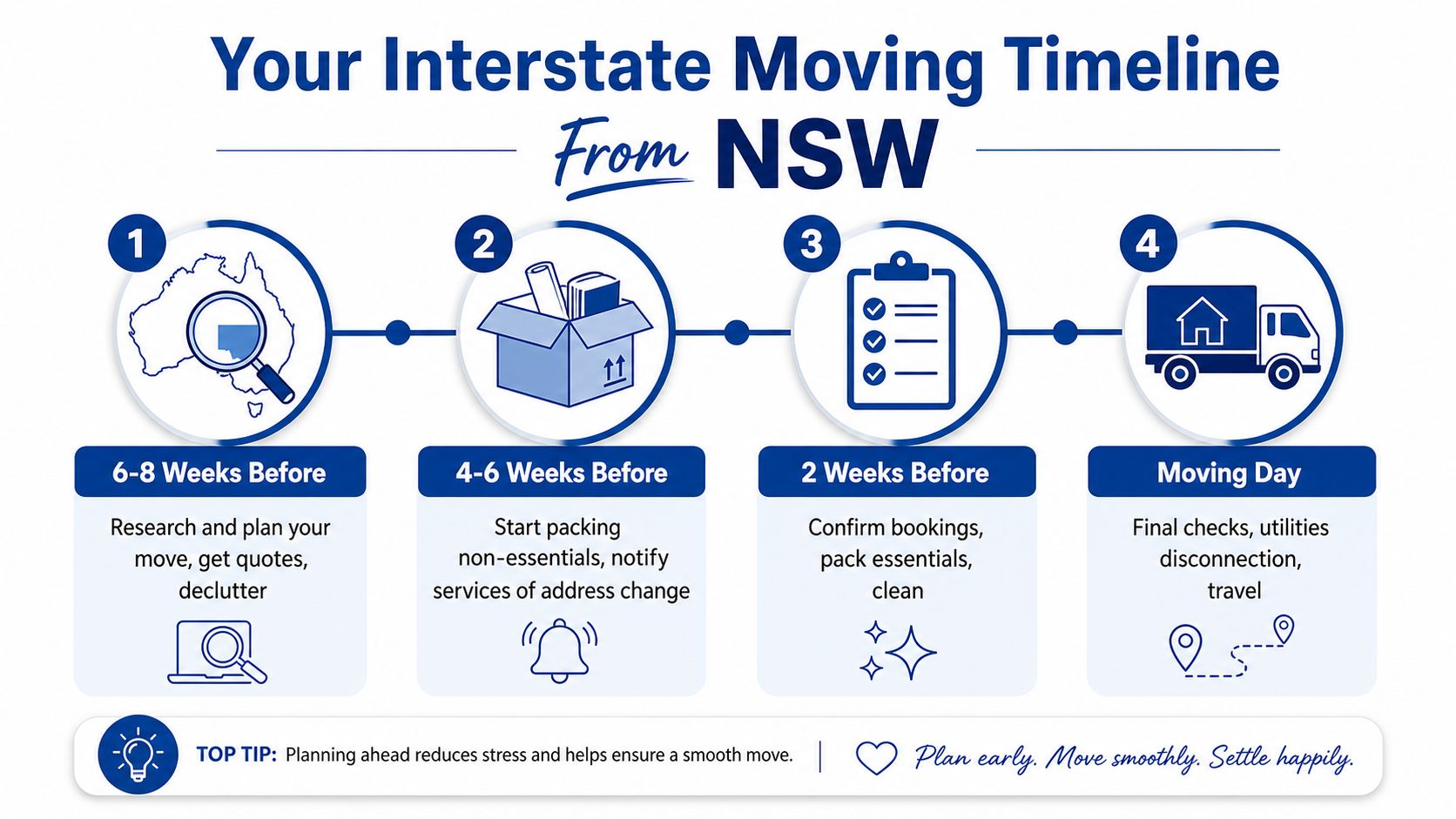
Planning should begin 6 to 8 weeks before the move date to lock in your moving window, confirm destination addresses, and check access details such as stairs, basement parking, or loading docks at both properties, based on this interstate moving planning guide. That timing is realistic for most households and especially important when you're moving out of Sydney's busy traffic corridors or from apartment buildings with booking requirements.
If you're trying to judge lead times around settlement, handover, or lease expiry, this guide on how long it takes to move house is a useful reference point.
Six to eight weeks out
Start with volume and access. Volume means the space your belongings take up in the truck. Removalists often talk about cubic metres, which means how much room your furniture and cartons occupy. A three-bedroom house in Lake Macquarie and a compact two-bedroom unit in Newcastle may need very different truck space even if both households say, “We don't have that much.”
This is also the right time to declutter. Don't pay to transport things you already know you won't use. Old outdoor settings, spare fridges, broken gym gear, and half-filled storage cupboards add labour, truck space, and handling risk.
Four to six weeks out
Book your removalist once your dates are clear enough to lock in a moving window. If you're leaving a strata building in Sydney or arriving at one, confirm lift bookings, loading zones, and any body corporate requirements for protecting common property.
At this stage, decide whether you're packing yourself or using a packing service. DIY packing suits clients with time, patience, and a decent setup of cartons, butcher paper, tape, and labels. Professional packing makes more sense when you have fragile items, limited time, or a household that's still running at full pace.
Pack the non-essentials first. If you haven't used it in the last few weeks, it probably doesn't need to stay out until moving day.
Final two weeks and moving day
By the final stretch, the job becomes about confirmation. Recheck keys, travel plans, address details, and contact numbers. Keep essentials separate, including documents, chargers, medications, and the items you'll need as soon as you arrive.
On moving day, safety comes first. Clear walkways. Keep children and pets out of the lifting path. Make sure parking is ready and that the crew can get clean access to the property. At apartment sites, shared areas need protection and timing matters because lift windows are often strict.
A calm moving day usually comes from decisions you made weeks earlier, not heroics on the morning.
Navigating Interstate Rules and Quarantine
State borders can affect what you're allowed to carry, how it's transported, and what gets checked along the way. This is the part many people don't think about until they're already packing the ute or watering the pot plants the night before departure.

The biggest surprise is usually plants, soil, and garden items. For plant material restricted under quarantine conditions when moving interstate in Australia, you must obtain a Plant Health Certificate, a Plant Health Assurance Certificate, or a Biosecure HACCP Biosecurity Certificate, or accredit your business under the Interstate Certification Assurance Scheme, according to the official interstate quarantine guidance for moving plant goods.
Items that need extra thought
Most households don't need certificates for every item they own. The problem is that people often assume their balcony plants, veggie tubs, or garden equipment are harmless. Border rules don't work on assumption. Soil, pests, seeds, and plant matter can trigger restrictions.
A few common risk items include:
- Pot plants and cuttings: These can be restricted depending on the destination state and the plant type.
- Outdoor tools: Shovels, lawn gear, and pots can carry soil or organic residue.
- Garage and shed contents: Camping gear, wheelbarrows, and stored garden products often need cleaning before transport.
Clean garden tools and outdoor items before they're loaded. Even when an item is allowed, dirt and residue can still create problems.
Carriers and compliance
There's also the transport side. Interstate carriers crossing Australian state lines operate under a different regulatory setting from purely intrastate operators. That's one reason an interstate relocation shouldn't be treated as just a longer local run.
For households, this mostly shows up in the quality of planning and paperwork behind the scenes. For office relocations, it can affect how equipment, inventory, and scheduled delivery windows are managed. If a company can't clearly explain how it handles interstate work, that's worth paying attention to.
Pets, vehicles, and the small admin jobs
Pet planning can be overlooked until late in the process. If you're relocating with an animal and want a practical checklist around entry, preparation, and documentation, Passpaw insights for Australia pet travel are a helpful starting point.
Then there are the smaller jobs that still matter. Check your destination state's licence and registration requirements. Confirm any apartment move-in rules before the truck is on the road. If you're heading from the Central Coast to a large building interstate, ask early about loading dock bookings, restricted hours, and whether protective floor coverings are mandatory.
These aren't glamorous jobs, but they're exactly the sort of details that keep an interstate move on schedule.
What Factors Influence Your Interstate Moving Cost
There's no flat interstate price that fits every household. The quote changes with the work involved, the truck space needed, the route, and the conditions at both properties.
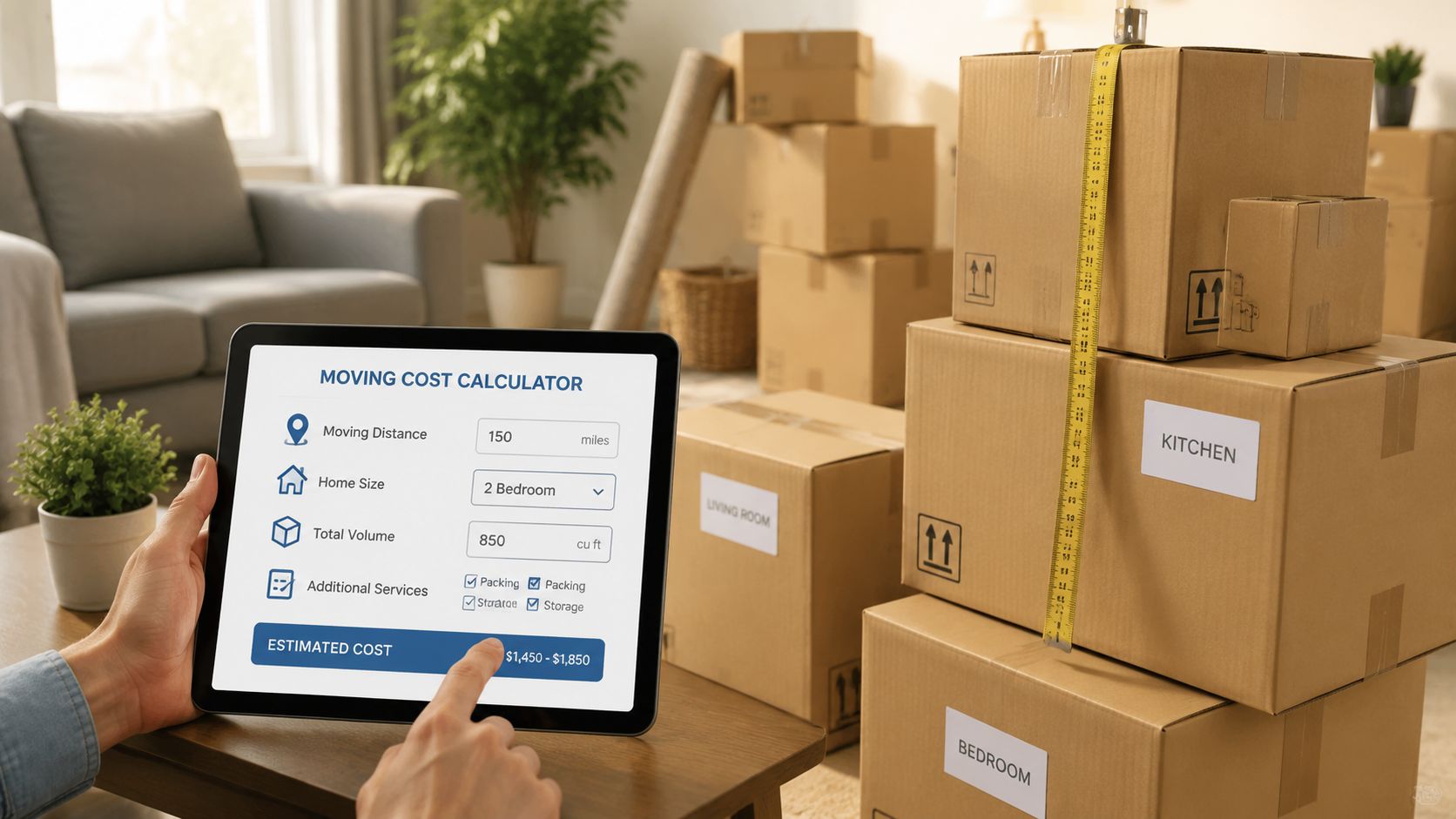
The first cost driver is volume. In removalist terms, that means cubic metres, or the actual space your goods use in the truck. A lightly furnished two-bedroom apartment in Sydney may take less space than a neatly packed but full three-bedroom home in the Central Coast hinterland. Volume affects truck allocation, labour, and sometimes whether the load can be grouped or needs dedicated space.
For a rough planning tool before you request a formal quote, a removalist cost calculator can help you think through what's likely to affect your job.
Access changes the labour
Access sounds minor until it isn't. A level driveway in Lake Macquarie is one thing. A terrace in Sydney with tight stairs, no nearby parking, and a booked loading slot is another. Newcastle's heritage apartments can bring narrow entries, older lifts, or restrictions designed to protect common areas.
Those details affect carrying distance, loading time, and the way fragile or oversized items are handled. They also affect safety. A good team plans around property protection, crew lifting safety, and the quickest workable route through the site.
Timing matters more than people think
One factor that catches people out is the calendar. Current articles rarely address the emerging 2024 to 2025 trend of off-peak interstate moving premiums in Australia, where moving companies charge 15 to 25% higher rates during school holidays and public holidays due to intensified demand, based on this interstate moving advice from Grace.
That doesn't mean every holiday move is a bad idea. Sometimes settlement dates, school terms, or job starts leave you no choice. It does mean you should ask about date flexibility. Shifting the move window can change availability, route efficiency, and total labour time.
Service level changes the quote too
A transport-only job is different from a full service relocation. The quote usually changes depending on whether you need:
- Pre-packing: Kitchenware, books, linen, and breakables packed before move day
- Special handling: Pianos, antiques, glass cabinets, artwork, or unusually heavy items
- Unpacking and setup: Reassembly, carton placement, and removal of used packing materials
If you want the most accurate quote, don't understate your inventory or gloss over access difficulties. Honest details give you a better plan and fewer surprises.
Choosing the Right Interstate Removalist
Choosing an interstate removalist isn't just about finding the lowest number on a quote. You're choosing who handles your furniture, your timing, your keys, and often the handover between one chapter of life and the next.
Start with experience on your intended route. A company that regularly works between the Central Coast, Sydney, Newcastle, and interstate destinations will usually ask the right questions early. That includes apartment access, parking permits, body corporate rules, and whether there are move-in restrictions at the destination.
This guide on choosing interstate removalists in Australia is useful if you're comparing providers and want to know what to ask before signing off.
What to look for before you book
A reliable interstate operator should be clear about scope, timing, and protection. That means full insurance coverage should be discussed plainly when your belongings are in handling and in transit. It also means they should care about safe loading, property protection, and realistic access planning, not just how quickly they can get the job booked.
Here's what usually separates a solid operator from a risky one:
- Clear assessment: They ask about stairs, lifts, narrow streets, parking, and fragile items.
- Accurate service options: They explain packing services versus DIY packing without pushing one approach on everyone.
- Real communication: They tell you what's needed from you before the day, including permits, lift bookings, and access windows.
If a quote seems quick but the company hasn't asked about access, inventory, or building rules, the quote probably isn't complete.
One practical way to compare options
Ask each company how they'd handle your exact move. Not a generic move. Your move. A Gosford house with a steep driveway going to a Brisbane apartment. A Sydney unit heading to a regional home. A Newcastle office with sensitive equipment and limited dock time.
Gentle Giant Removals & Relocations is one option for clients needing interstate removalist services from the Central Coast, Sydney, Newcastle, and Lake Macquarie, with packing, transport, and relocation planning handled as part of the job. Whether you book us or another provider, the same rule applies. Choose the team that plans properly, communicates clearly, and treats punctuality as part of the service. On Time, Every Time only means something when it shows up in the process.
If you're planning an interstate relocation from the Central Coast, Sydney, Newcastle, or Lake Macquarie, Gentle Giant Removals & Relocations can help you work through access, packing, timing, and transport without guesswork. You can get a free moving quote, request a free in-home assessment, or call for urgent moves if your dates are tight. We're happy to talk through the practical details and help you choose the service level that suits your home, building, and schedule.