

Moving day usually starts long before the truck arrives. You’re sorting cupboards in Bateau Bay, trying to work out what stays and what goes, chasing keys with the agent, and remembering you still need to update your address, organise utilities, and figure out how to get a lounge through a stairwell without marking the wall.
That’s where many people hit the same point. They realise the move itself isn’t just transport. It’s timing, access, packing materials, lifting, protection, coordination, and a lot of small decisions that can go wrong if they’re rushed.
If you’re planning a relocation anywhere between the Central Coast, Sydney, Newcastle, or Lake Macquarie, it helps to treat it like a practical job rather than a last-minute scramble. A good checklist makes that easier. This Moving Into New House Checklist is a useful companion because it covers the house side of the move while your removalist handles the logistics side.
Your Guide to a Smoother Relocation
A common scenario looks like this. A family in Terrigal is selling a three-bedroom home and moving to Newcastle. One parent is juggling work, the kids still need to get to school, settlement dates are tight, and the new place has a narrower driveway than expected.
Nothing about that move is unusual. That’s exactly why planning matters.
Professional packing and moving services help when the move has more moving parts than first anticipated. It’s not only about lifting furniture. It’s about protecting your belongings, keeping shared areas in apartment buildings clear, allowing enough time for lift bookings, and making sure the truck can stop close enough to load safely.
On the Central Coast, local conditions matter more than generic moving advice suggests. Coastal properties often have sloped driveways, stairs, soft ground after rain, or tight access around garages and retaining walls. In Newcastle, heritage apartments can mean awkward staircases and stricter handling around older finishes. In Sydney, the challenge is often time windows, traffic, body corporate requirements, loading zones, and parking permits.
Professional help makes the biggest difference when access is difficult, the timeline is fixed, or you simply don’t have spare days to spend packing room by room.
The best moves are usually the quiet ones. The crew arrives on time, the packing is organised, fragile items are protected properly, and you’re not making decisions under pressure at 7:00 am with a half-packed kitchen. That’s what people are usually looking for when they ask about professional packing and moving services. They want fewer surprises, better protection, and a clear process from start to finish.
What Professional Packing and Moving Really Means
Professional packing and moving services cover the full chain of the move, not just the truck and labour at the end. That starts with working out what’s being moved, how much space it takes up, what needs special handling, and what access issues could slow the job down.
It starts with the right assessment
Before anyone packs a single carton, the first job is to assess volume and access. You’ll often hear the term cubic metres, which means the amount of space your belongings take up in the truck. That matters because a poor estimate can leave you with the wrong vehicle, wasted time, or an extra run that could have been avoided.
A proper assessment should also cover the details people forget to mention the first time around. Stairs. Narrow hallways. Steep driveways. Underground parking. Lift size. Building booking windows. Whether a truck can park legally and safely near the entry.
If you’re moving from a unit in Gosford to an apartment in Sydney, those details can affect the whole day more than the travel time itself.
Packing is a technical job, not a last-minute tidy-up
Good packing follows a system. Books go into smaller cartons so they stay liftable. Linen and clothing can go into larger cartons or porta robes, which are hanging wardrobe cartons designed to keep clothes on their hangers. Fragile items are wrapped individually, heavier pieces are packed low, and cartons are labelled by room and priority.
For local jobs, that system saves time at the other end. For longer runs, it becomes even more important.
Professional packing for interstate moves requires specialised material selection, like protective wrapping for furniture and reinforced boxes, to withstand vibration and stacking pressure over long journeys. This technical approach reduces damage claims significantly compared to DIY methods, where improper packing is a primary cause of damage during transit between cities like Sydney and Newcastle, as explained in this guide to interstate moving with professional removalists.
Practical rule: If an item can scratch, chip, crack, dent, leak, or shift in transit, it needs more than a standard carton and a bit of tape.
That includes furniture. A dining table isn’t “packed” just because it’s empty. It may need padding, edge protection, careful stacking, and separation from hard items that could rub against it during transit. The same goes for fridges, washing machines, TVs, artworks, mirrors, antiques, and pianos.
Loading and transport are part of the packing service
People often think packing ends when the cartons are sealed. It doesn’t. Loading is where many DIY moves come unstuck.
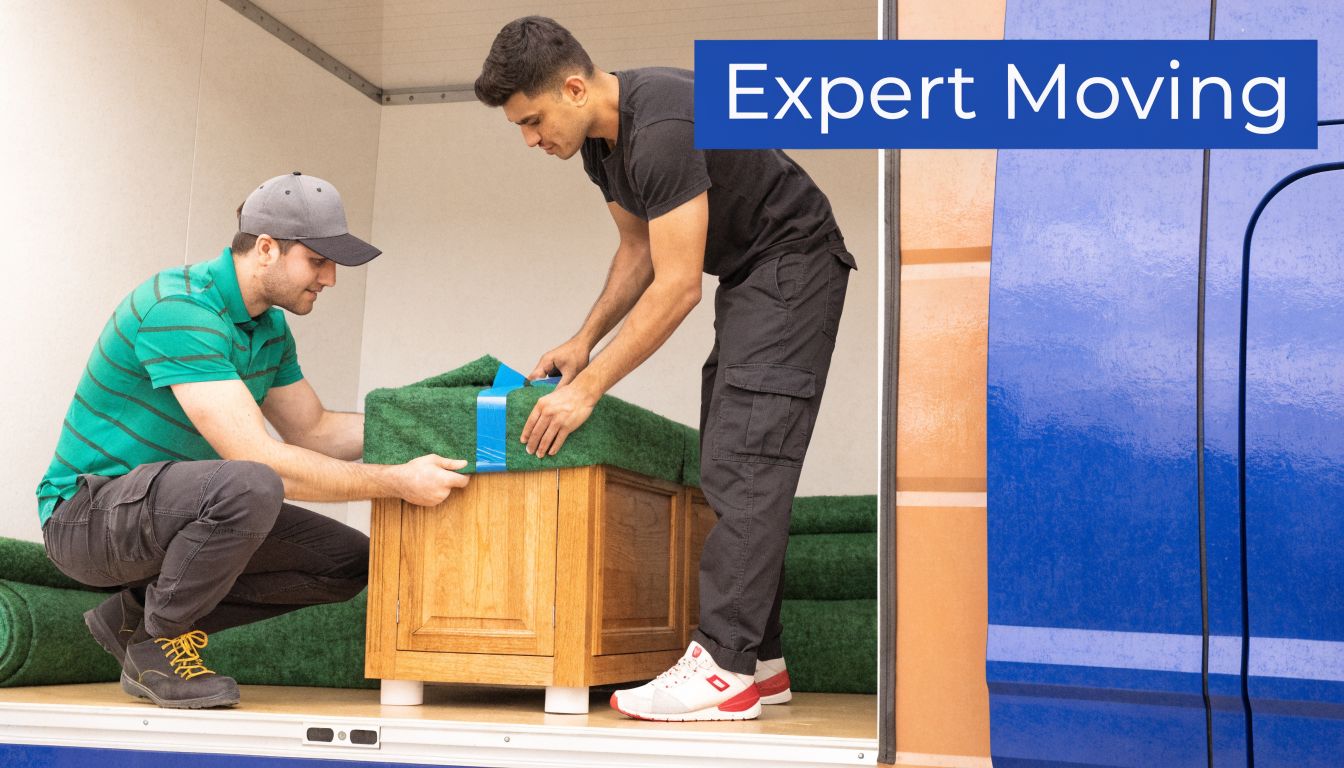
A professional crew loads by weight, shape, fragility, and delivery sequence. Quilted pads protect furniture surfaces. Straps and load placement reduce movement in transit. Appliances are positioned to travel securely. The truck isn’t filled randomly. It’s built like a stable load.
A quick look at how an organised crew works helps make that clearer.
Unloading and setup matter too
At delivery, the job isn’t finished when everything reaches the front door. Good service means placing items in the correct rooms, protecting floors and shared areas where needed, and making sure the layout works before the crew leaves.
That’s especially useful in strata buildings where move-in windows can be short and lift access is booked. The more organised the labels and loading order were at the start, the easier unloading becomes.
In plain terms, professional packing and moving services mean this:
- Assessment and planning so the right truck, crew, and timing are set from the start
- Supply of suitable packing materials including cartons, wrapping, cushioning, and hanging wardrobes
- Systematic packing and labelling so unpacking is manageable
- Secure loading and transport with surface protection and proper load restraint
- Unloading and placement so you’re not left dragging heavy furniture from room to room later
That’s the difference between hiring a truck with help and booking a properly managed relocation.
The True Benefits of Hiring Professional Removalists
The biggest benefit is simple. You reduce avoidable risk.
That risk isn’t only about a broken plate. It’s the risk of hurting your back trying to move a fridge. It’s the risk of scraping walls in a new apartment stairwell. It’s the risk of missing a lift booking in a Sydney building and losing your delivery window for the day.
Safety for people, property, and belongings
Packing and lifting are two different skills. A lot of people can move a carton from one room to another. Fewer can carry awkward furniture through a tight turn, protect polished timber, and keep the path safe while doing it.
A professional crew works with handling techniques, trolleys, padding, tie-downs, and loading systems that lower the chance of damage. That matters just as much for your home as it does for your furniture. Door frames, stair rails, common property, and lift interiors all need protection during a move.
It also matters for peace of mind that the job is backed by full insurance coverage when you’re discussing protection and liability. If you’re comparing companies, don’t treat insurance as a footnote. Ask what’s covered and how claims are handled.
Time goes back to you
People often underestimate how long packing takes until they try to do it around normal life. A kitchen alone can take far longer than expected because every fragile item needs individual handling, and the room still has to function until close to moving day.
That’s one reason demand for professional help is strong. The Australian moving services industry reached approximately AUD 2.8 billion in 2024, with NSW accounting for about 28% of national activity. In the same market, 62% of full-service moves involve professional packing, across more than 450,000 annual relocations in the state, according to this overview of Australian moving industry statistics.
Those numbers reflect what many households already know from experience. When time is tight, packing help isn’t a luxury. It’s a practical way to keep the move on track.
If your settlement date is fixed, your lift is booked for a narrow window, or you need to hand keys over that afternoon, reliability matters more than good intentions.
Better coordination when plans change
Moves rarely happen in isolation. Storage might need to bridge a gap between properties. Vacate cleaning might need to happen after loading. Office furniture may need to leave one site and arrive at another outside business hours.
That’s where joined-up service helps. If your dates shift, it’s useful to have one plan that can include transport, packing, and short-term furniture storage options rather than juggling separate providers who don’t communicate with each other.
Professional removalists also help with timing in ways clients don’t always see. They account for school-zone traffic, loading restrictions, building rules, weather, and access. On the Central Coast and between Sydney and Newcastle, that local knowledge saves time that doesn’t show up on a map.
DIY Packing vs Professional Packing Services
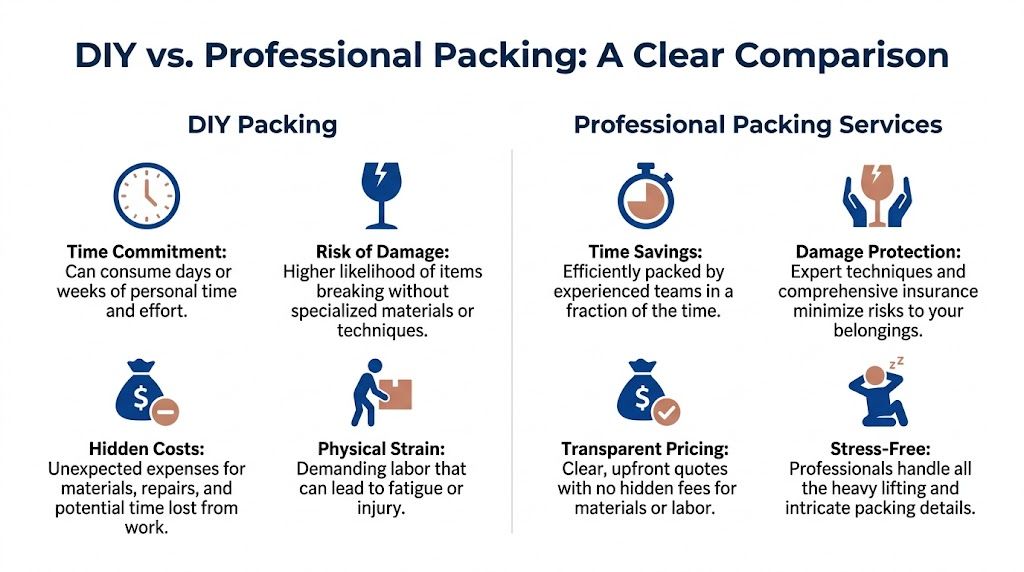
DIY can make sense. So can professional packing. The right choice depends on your time, your budget, your property access, and how many fragile or awkward items you own.
What doesn’t work well is assuming DIY is always the cheaper option once everything is counted properly.
Where DIY works well
If you’re moving a small flat locally, you’ve got time over a few weeks, and most of your belongings are straightforward, DIY packing can be a sensible approach. Clothes, linen, books, toys, and everyday kitchenware are often manageable if you start early and stay organised.
It can also suit people who want tighter control over personal items. Some clients prefer to pack paperwork, keepsakes, jewellery, and daily essentials themselves, even when they book professional packing for everything else.
A halfway approach often works best. You pack the simple items. The removalist handles fragile pieces, artwork, mirrors, glassware, and bulky furniture.
Where DIY starts costing you elsewhere
The trouble with DIY usually isn’t the carton itself. It’s the knock-on effect.
People run out of suitable packing materials. They use oversized cartons for heavy items. They leave packing too late and end up doing it tired. Labels get vague. Fragile items get grouped with heavier items because there’s no time left to repack them properly.
Then moving day takes longer because the load isn’t ready, cartons are too heavy to stack safely, or there are loose items everywhere.
A cheap carton packed badly can become an expensive mistake once it reaches the truck.
This is especially true for homes with stairs, apartments with limited lift time, or houses in coastal areas where access is already slower. If the crew has to stop and rework cartons before they can load safely, the job drags out.
A side-by-side look
Here’s a practical comparison.
| Factor | DIY Packing | Professional Packing Service |
|---|---|---|
| Time | Takes your evenings, weekends, and often the final days before the move | Completed by an organised crew much faster |
| Materials | You source everything yourself and guess quantities | Packing materials are selected for the item and the trip |
| Fragile items | Easy to underestimate what needs cushioning or reinforcement | Wrapped and packed with proven methods |
| Physical effort | You still do the repetitive lifting, bending, and carrying | The crew handles most of the physical work |
| Access challenges | Harder when you’re also dealing with stairs, lifts, and parking | Planned around building rules and loading conditions |
| Unpacking later | Can be messy if labels are rushed or inconsistent | Room-based labelling helps placement and unpacking |
| Protection | Depends on your experience and patience | Usually stronger for delicate and high-value items |
| Budget control | Looks cheaper at first, but time and breakage can change that | Higher upfront cost, but fewer surprises when done well |
DIY vs Professional Packing at a Glance
A family moving a four-bedroom house from Wamberal to Lake Macquarie might spend weeks packing around work and school. That can be fine if they’re organised and happy to do the labour. But if they reach the final two days with the kitchen, garage, and fragile items still untouched, the move becomes rushed.
Professional packing services are often better value when:
- Your timeline is tight and you can’t spend multiple days preparing
- You have breakables or valuable furniture that need proper wrapping
- You’re moving to or from a unit with lift bookings and body corporate rules
- You want clear room labelling so unpacking is faster
- You need supplied materials and don’t want to chase cartons yourself
DIY makes more sense when:
- The move is small and mostly local
- You can start early and pack gradually
- You’re comfortable sourcing materials and doing the labour
- Most of your items are low-risk and easy to replace
If you’re trying to cut costs without taking on the whole job, start by sourcing your own moving boxes and packing supplies options and then book professional help for the fragile rooms or the final pack. That hybrid approach often lands in the sweet spot.
Understanding Your Moving Quote and Key Cost Factors
A clear quote should tell you what you’re paying for and why. If it doesn’t, ask questions before you book.
That matters even more now because 35% of consumers report quote discrepancies over 20% due to unlisted surcharges, and reputable operators respond by giving itemised quotes that explain costs such as access challenges or specialised materials like quilted pads, as noted in this article on quote transparency and packing inclusions.
Volume, distance, and access drive the quote
The first big factor is volume. Again, that means cubic metres, or the amount of truck space your goods take up. More volume usually means a larger truck, more labour, or both.
Distance also matters, but not in isolation. A simple house move from one Central Coast suburb to another can still be slower than a longer job if access is poor. A house in a quiet Newcastle street with easy driveway parking is very different from a move out of a CBD apartment with a booked service lift and a limited loading zone.
Access details shape labour time more than many clients expect. Tell your removalist if you have:
- Stairs or split levels at either property
- Lift bookings or strata move windows
- Narrow streets or difficult parking
- Long carries from the truck to the front door
- Body corporate rules about shared area protection
Packing, storage, and add-on services
A quote also changes depending on how much help you want. Full packing, partial packing, unpacking, storage coordination, and vacate cleaning all affect the final figure.
That doesn’t mean extras are unnecessary. Sometimes they’re the most efficient part of the job. If settlement dates don’t line up, storage can keep the move controlled instead of chaotic. If the lease requires a thorough handover clean, bundling that work into the moving plan can simplify the whole week.
The cheapest quote is only useful if it covers the job you actually need done.
If you compare quotes, compare scope, not just the total.
How to get a more accurate quote
Good quoting works both ways. The more complete your information, the more accurate the estimate.
A useful enquiry should include:
- Property type. House, townhouse, unit, office, or storage.
- Access conditions. Stairs, lifts, steep driveways, loading dock, or restricted parking.
- Large or fragile items. Pianos, antiques, artwork, glass tops, gym gear, or oversized lounges.
- Timing. Settlement date, key pickup, building booking window, or business downtime limits.
- Service level. Transport only, partial packing, full packing, unpacking, storage, or cleaning.
If you’re moving into Sydney, this becomes even more important because loading zones, permit requirements, and traffic timing can change the whole plan. For a clearer sense of the variables involved, this guide on the cost of removalists in Sydney is worth reading before you request quotes.
Who Benefits Most From Professional Removalists
Some moves are straightforward. Others have enough moving parts that professional help quickly pays for itself in time, protection, and coordination.

Families balancing work, school, and a full house
Families usually benefit because the move doesn’t happen in empty spare time. It happens while everything else is still going on.
Take a household moving from Erina to Newcastle. The kitchen is in daily use until the last minute. The kids’ rooms can’t be fully packed too early. There may be a trampoline, bikes, outdoor furniture, and a garage full of things nobody wants to sort on moving week.
Professional packing and moving services help by taking the technical and physical work off the family’s plate. Parents can focus on schools, utilities, and handover arrangements instead of trying to wrap every glass and dismantle every bed after dinner.
Offices that need downtime kept low
Business relocations are different again. The priority is rarely emotion. It’s continuity.
A Newcastle office move might involve workstations, monitors, filing, reception furniture, and staged delivery so teams can get back to work quickly. The challenge isn’t only transport. It’s sequencing the job so the old site is cleared efficiently and the new site is usable as soon as possible.
For offices, the value of a professional crew is in planning. Furniture is labelled by area, equipment is grouped sensibly, and truck capacity is matched to the job so you don’t waste time with poor load planning.
In commercial relocations, speed matters. Order matters more.
Seniors and clients with accessibility needs
This is one area where generic moving guides often fall short. In NSW alone, there are over 1.4 million seniors, and customized services that handle mobility aids, offer partial packing to manage costs, and coordinate vacate cleaning are critical for a supportive transition, as highlighted in this article about specialised moving support for seniors.
For seniors, the right support is often more important than the fastest possible move. Mobility aids may need careful transport. Medication and daily-use items must stay accessible. Family members may be coordinating from another suburb or another state. Aged care relocations can also involve tighter documentation, limited room space, and emotional pressure around downsizing.
A patient, well-organised move helps enormously here. Partial packing can be a good fit because it lets the client or family stay involved with personal items while the crew handles furniture, fragile items, and the physically demanding work.
Interstate clients and longer-distance moves
Interstate and longer intrastate moves benefit because there’s less room for error. Once the truck leaves, forgotten details become bigger problems.
A relocation from the Central Coast into Sydney or north toward Newcastle and beyond might still be manageable as a day move, but the planning standard needs to be higher. Longer travel means the load needs stronger preparation, clearer inventory control, and better coordination around delivery timing.
Specialised packing, clear labelling, and proper furniture protection stop being optional extras. They become part of doing the move properly.
Choosing the Right Removalist in Sydney Newcastle and the Central Coast
A good removalist should make the move clearer from the first conversation, not more confusing.

What to look for first
Start with the basics. Check that the company explains its service clearly, answers practical questions directly, and understands the area you’re moving in.
A removalist working regularly across the Central Coast, Sydney, Newcastle, and Lake Macquarie should be comfortable talking about access issues like steep driveways in coastal suburbs, apartment move windows, parking permits, strata approvals, service lift bookings, and traffic timing into busy metro areas.
You should also ask about:
- Insurance cover and what protection applies in transit and handling
- Reviews you can verify through established public platforms
- Packing options ranging from partial packing to full service
- Special item handling for pianos, antiques, artwork, and mobility equipment
- Arrival reliability and communication on the day
If local knowledge matters to you, this guide on finding a Central Coast removalist covers the kind of questions worth asking before you commit.
Red flags worth taking seriously
Some warning signs show up early. Vague pricing is one of them. If a quote is light on detail, there’s a reason to be cautious.
Another is poor questioning. If the company doesn’t ask about stairs, parking, building access, or large items, it may not be planning properly. That can lead to delays, disputes, or extra charges later.
Watch out for:
- Large cash deposits upfront without a clear written scope
- No written quote or a quote missing inclusions
- No discussion of access even when your property is clearly complex
- Unclear branding or inconsistent communication
- Pressure to book quickly without enough information
A reliable removalist will usually ask more questions than you expected. That’s a good sign, not a nuisance.
The best fit is the one that plans well
The right company for a local house move in Wyoming might not be the right fit for a CBD apartment relocation or an office transfer into Newcastle. Match the provider to the complexity of the job.
Good operators don’t just turn up with a truck. They plan the sequence, confirm the access, protect the property, communicate clearly, and arrive ready to work. That’s what you’re really paying for.
Let Us Take the Weight Off Your Shoulders
A relocation doesn’t have to be chaotic. When the packing is done properly, access is planned in advance, and the crew understands the Central Coast, Sydney, and Newcastle corridor, the whole job runs better.
Professional packing and moving services are most useful when time is short, access is difficult, or the items you’re moving need proper protection. That might mean a family home in Gosford, a unit in Sydney with a booked lift, a Newcastle office that needs to reopen fast, or a senior move that calls for patience and extra care.
The easiest next step is to get clear advice based on your actual property, timing, and access conditions. You can request a free moving quote online and ask for an in-home assessment if you want a more accurate plan. If your move is urgent, calling directly is often the fastest way to lock in practical help.
A good first conversation should leave you with fewer unknowns, not more.
If you're planning a local, intrastate, or interstate move, Gentle Giant Removals & Relocations can help with practical advice, careful packing, reliable transport, and personalized support across the Central Coast, Sydney, Newcastle, and beyond. You can request a free quote online or call the team on 02 4353 5410 for urgent moves or a free in-home assessment.