
You’re probably in the middle of packing right now. The kitchen’s half done, the books are in cartons, and then you look at the bed and realise the mattress is one of the biggest things left to deal with. It’s awkward, easy to dirty, and far more vulnerable than expected once it leaves the bedroom.
That’s why learning how to cover mattress when moving matters. A mattress isn’t just bulky furniture. It’s part of your daily comfort, and replacing one after a bad relocation is an expense many wish to avoid. On the Central Coast, Sydney, and Newcastle routes, we also deal with coastal air, sudden rain, apartment access issues, and truck loading conditions that can ruin an unprotected mattress fast. If you’re working through your broader packing plan, these essential tips for packing when moving house are a helpful companion read, and a practical moving in checklist can keep the final days organised.
Introduction
If you’re moving from Terrigal to Newcastle, or from a unit in Gosford into Sydney, your mattress needs more thought than a quick throw-over sheet or a bit of plastic from the garage. It has to get through hallways, stairs, truck loading, traffic, weather, and unloading without picking up dirt, moisture, or tears.
A proper cover isn’t an optional extra. It’s part of safe handling. In real relocation work, the mattress often gets exposed at the worst moments: waiting at the kerb, crossing a wet driveway, brushing a stairwell wall, or sliding past a tight bedroom door. If it isn’t covered properly before any lifting starts, you’re already behind.
The goal is simple. Keep it clean, keep it dry, keep its shape, and make sure it’s ready for your first night in the new place.
Why Covering Your Mattress Is Non-Negotiable in NSW
In NSW, mattress protection is less about being fussy and more about understanding what happens on moving day. Coastal conditions change fast. A dry start in Wamberal or The Entrance can turn into damp loading conditions by afternoon, and apartment moves in Sydney or Newcastle often involve extra time in shared corridors, loading zones, and lift lobbies.
A key reason to cover mattress when moving is hygiene. Truck interiors are work environments, not sterile spaces. Even well-maintained vehicles carry general dust and contact risk from loading activity. Once mattress fabric picks up grime or moisture, cleaning it properly is difficult, especially with foam and pillow-top models.
According to a 2023 Moving Satisfaction Report, 41% of households not using dedicated mattress covers reported post-move issues like dirt, moisture, or odours, compared to only 6% of those who did. That matters even more in NSW because Sydney averages 120 rainy days a year, which increases moisture exposure during loading.
What works better than guesswork
People often compare all cover options as if they do the same job. They don’t. The right choice depends on distance, access, weather, and the mattress itself.
| Option | Best use | Main advantage | Main limitation |
|---|---|---|---|
| Heavy-duty plastic bag | Short local relocations | Good barrier against dirt and splash exposure | Can trap moisture if used poorly |
| Quilted pad over cover | Premium mattresses and tighter access moves | Adds impact protection against scuffs and snags | Needs proper securing |
| Breathable fabric cover | Longer transport or temporary holding | Better airflow around the mattress | Not fully waterproof on its own |
A simple local relocation from Bateau Bay to Gosford may only need a strong mattress bag and careful loading. An intrastate run involving stops, delays, or overnight holding needs more thought. If your mattress is memory foam, hybrid, or particularly expensive, basic thin plastic is rarely the best answer.
Practical rule: If the mattress would upset you to replace, protect it like a premium item, not like spare furniture.
Why local access changes the risk
NSW relocations often involve conditions that generic moving advice skips. In Central Coast coastal suburbs, damp air and sea exposure make moisture management more important. In Newcastle heritage buildings and older Sydney terraces, access is the bigger problem. Tight turns, stair rails, rough walls, and narrow entries increase the chance of corner tears and abrasion.
That’s also where insurance matters. Full insurance coverage supports the broader protection plan, but it shouldn’t be treated as a substitute for proper wrapping. Safe relocation starts with prevention, then careful handling, then secure loading.
If you’re in a strata complex, there’s another layer to think about. Lift bookings, move-in windows, and body corporate rules can leave a mattress standing in a shared area longer than expected. A covered mattress handles those delays far better than an exposed one.
Choosing the Right Armour for Your Mattress
The best cover depends on what you’re moving, how far it’s going, and how long it will stay wrapped. A guest room innerspring mattress going from Lake Macquarie to another local address can usually travel well in a heavy-duty mattress bag. A thick memory foam mattress heading from the Central Coast to Sydney, or into short-term storage, needs a more careful setup.
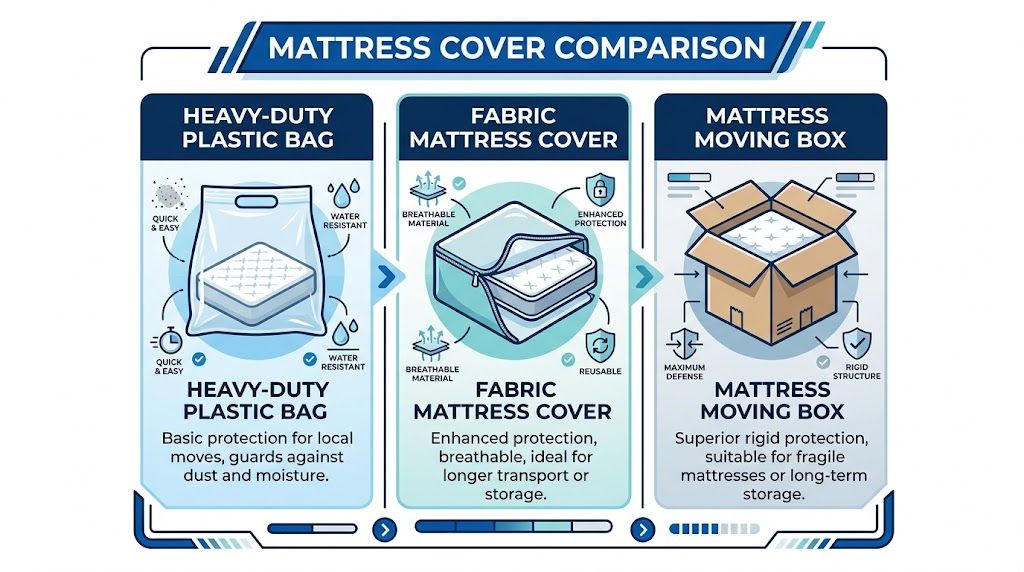
The three main options
A heavy-duty plastic bag is the standard starting point. It gives basic protection from dust, road grime, and light moisture. It’s far better than using a drop sheet, bin liners, or leftover builder’s plastic, which tear too easily around corners and handles.
A fabric mattress cover is a better option when airflow matters. This is especially useful for foam mattresses and relocations where the mattress may stay packed longer than a simple same-day move.
A mattress moving box adds more rigid protection, but it’s usually reserved for specific storage or fragile transport situations. It’s not the first choice for most household relocations because it adds bulk and handling complexity.
Why NSW humidity changes the decision
A lot of generic guides say “put it in plastic and tape it up” as though that settles it. In coastal NSW, that advice can backfire. According to guidance on covering a mattress for moving, humidity in coastal NSW commonly sits around 65-80% RH, and sealed plastic can trap condensation during transit. The same source notes that hybrid solutions, like quilted pads over breathable fabric covers, help prevent this issue, which is linked to 25% higher moisture damage claims in humid Australian moves.
That’s why the cover choice should match the route. A quick run across town is one thing. A longer day on the road, delays with settlement, or a few days between collection and delivery is another.
Breathability matters most when the mattress is clean, dry, and then sealed for longer than expected.
A practical way to choose
Use this as a simple decision guide:
- Short local move: Choose a heavy-duty bag if the mattress is dry and the trip is straightforward.
- Coastal or humid conditions: Use a breathable inner layer with padded protection over it.
- Premium foam or hybrid mattress: Prioritise airflow and shape protection, not just waterproofing.
- Storage involved: Use a cleaner, more durable setup that won’t trap stale moisture.
The wrapping process that prevents DIY damage
The wrapping itself matters just as much as the material. Start by removing all bedding and checking that the mattress is fully dry. If there’s any dampness from cleaning, body heat, or room humidity, don’t seal it yet.
Then stand the mattress upright on its long edge. That gives you more control and makes it easier to slide the cover over without dragging fabric on the floor. For deeper mattresses, allow enough cover depth so the plastic or fabric isn’t under strain from the start.
A common mistake is trying to pull the bag down from the top like a pillowcase. That usually catches at the corners and splits the seam. It’s safer to work from one end and guide the cover on gradually with two people.
If you’re gathering supplies first, this guide to packing materials for a damage-free move is useful because mattress protection works best when it’s part of the wider packing plan, not a last-minute add-on.
The Professional Method for Wrapping Any Mattress
Most mattress damage doesn’t happen because the item is fragile. It happens because people rush the wrapping. The professional method is slower at the start and faster everywhere else because it avoids rips, awkward rehandling, and unsafe lifting.
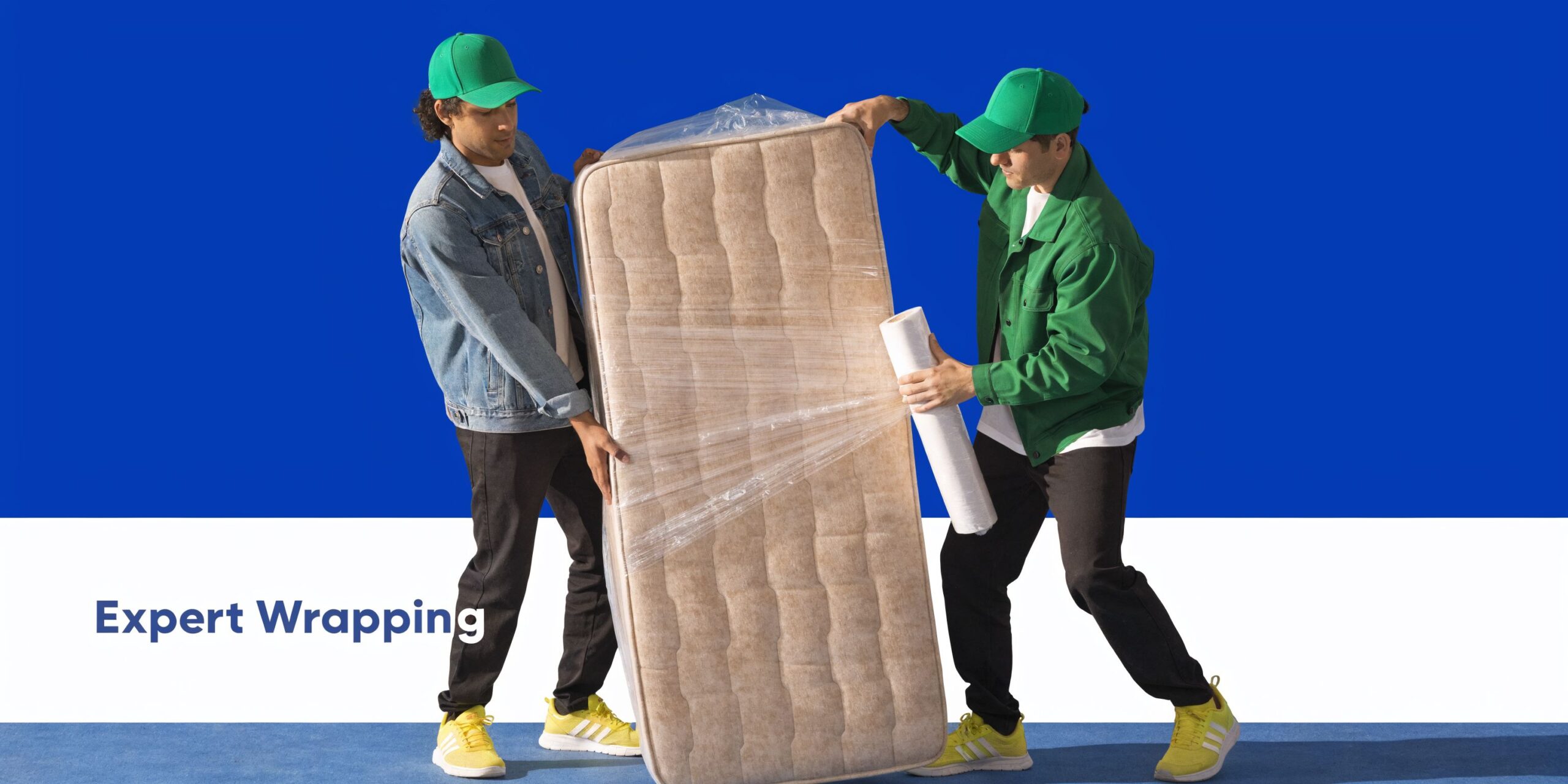
According to advice on moving a mattress properly, the two-person vertical bagging method has a 98% success rate in damage-free arrivals on NSW intrastate moves, compared with 65% for unprotected DIY attempts. That gap comes down to control. Two people can keep the mattress upright, guide the cover over the corners, and stop the bag from snagging before it tears.
Prepare the mattress before the bag goes on
Take off all bedding, protectors, and loose toppers. If the mattress surface needs cleaning, do that beforehand and make sure it is completely dry before you wrap it.
Clear the route from bedroom to truck as well. Check stair turns, door swings, hallway clutter, lift access, and any wet surfaces outside. In apartments around Sydney and Newcastle, it’s also smart to confirm lift bookings and loading arrangements early, because delays in common areas increase handling risk.
Use the two-person shimmy method
Stand the mattress on its side. One person stabilises it while the other opens the cover and feeds it over the lower end. Then both people work the bag upward in stages, adjusting the corners so the plastic or fabric doesn’t pull tight against one point.
This is the part many first-time movers get wrong. They try to force the cover over the top corners in one motion. That creates instant stress on the seam.
A better approach looks like this:
- Position the mattress upright so the weight is balanced and the corners are easy to reach.
- Slide the cover from one end instead of dropping it over the top.
- Guide each corner by hand so the material sits properly before moving further.
- Expel excess air gently once the mattress is fully enclosed.
- Seal the opening neatly with quality packing tape, keeping tape off the mattress fabric itself.
Keep the tape on the cover, not on the mattress. Adhesive residue on mattress fabric is hard to remove and easy to regret.
Add padding when the route is rough
If the mattress is going through a narrow stairwell, into a lift, or onto a truck with other large furniture, an outer layer of quilted pads makes a real difference. Padding protects the edges from wall scrapes, frame contact, and tie-down pressure.
This is especially useful for moves in older suburbs where access is tight. Newcastle heritage apartments, older homes in Lake Macquarie, and narrow terraces in Sydney often demand more turning and repositioning than modern homes do.
For homeowners deciding how much of the load handling to do themselves, this guide on choosing the right loading services helps sort out what’s worth leaving to professionals.
If you want a broader read on moisture barriers and bedroom protection products, the ultimate guide to waterproof mattress protectors is a helpful side reference.
Load with shape protection in mind
Wrapping is only the first half of the job. Once covered, the mattress should be carried upright and supported evenly from both ends. Don’t drag it. Don’t fold it to “just get around the corner”. Don’t lay it across uneven surfaces while you deal with other items.
This video shows the kind of controlled handling that makes mattress moves safer:
For foam and hybrid mattresses in particular, shape retention matters. If the mattress shouldn’t bend, keep it as rigid as possible from bedroom to truck. The cover protects the outside. Good technique protects the inside.
Loading Transporting and Storing Your Covered Mattress
A wrapped mattress can still be damaged if it’s loaded badly. Many DIY moves encounter problems at this stage. People assume the cover has done the hard work, then they lay the mattress flat in the truck, wedge furniture against it, or leave it unsecured for the drive up the M1.
Why flat loading is usually the wrong move
You might think laying a mattress flat is gentler because it looks stable. In practice, flat loading often creates the very sagging and compression you’re trying to avoid, especially when other items shift around it.
A covered mattress should usually travel upright against the truck wall, secured properly so it can’t slide, bow, or rub during braking and cornering. According to guidance on packing a mattress for moving, securing a mattress vertically to the truck’s E-track rails with padded ratchet straps reduces scuffs and vibration damage by over 50% on major routes like the M1 between Sydney and Newcastle. The same guidance recommends allowing the mattress to off-gas for 48 hours in a ventilated room after the move.
What proper transport looks like
A safe setup usually includes:
- Vertical placement: The mattress sits on its long edge against the truck wall.
- Padded strap contact: Ratchet straps hold it firmly without biting into corners.
- No heavy stacking: Nothing dense or sharp gets loaded on top of it.
- Clear separation: Bed frames, tools, and boxed furniture stay away from exposed edges.
If the truck has anchor points and straps, use them. If it doesn’t, the mattress faces greater exposure.
This matters even more on coastal and city routes. Sydney traffic means more stop-start movement. Newcastle and Central Coast jobs often involve driveways, side access, and uneven approaches that create extra loading shifts.
Storage changes the rules again
If the mattress is going into storage after transport, don’t assume the moving cover is enough forever. A mattress needs a dry, clean environment and careful positioning. Humid coastal conditions can catch people out, especially if they store the mattress in a garage, under a house, or in a shed that feels “dry enough”.
Short-term storage should still keep the mattress raised, protected, and away from anything that can transfer odour or moisture. If your relocation includes a gap between homes, it’s worth reading about short-term furniture storage options before moving day so the mattress doesn’t become an afterthought.
For apartment relocations, transport planning also includes practical building details. Check loading bay access, body corporate rules, and any restricted move-in windows. A well-covered mattress can still get damaged if it sits too long in a shared driveway waiting for access approval.
Common Mistakes and Special Considerations
The most common mattress mistakes are avoidable. They usually happen when someone treats the mattress as light, flexible, or low risk. It’s none of those things once you add stairs, rain, narrow hallways, or a long carry from the truck.
Mistakes that cause damage fast
The first is using the wrong size cover. Deep pillow-top mattresses need enough depth allowance or the seams pull apart during fitting.
The second is cheap tape. If the seal opens mid-move, the cover starts catching on walls, handrails, and door hardware.
The third is trying to bend the mattress because “it’s only for a second”. In older NSW homes, that decision can be expensive. According to advice on whether you need mattress covers for a move, older NSW homes often have narrow 70-80cm doorways, and bending a mattress can void the warranty on 55% of memory foam models. The same source notes that professional removalists use specialised equipment such as porta-robes for upright transport to get through tighter spaces without risking damage.
Tight homes need a different plan
Older apartments and houses around Newcastle and Sydney often come with steep stairs, tighter landings, and awkward door placement. In those homes, mattress protection isn’t only about wrapping. It’s also about route planning.
A few things matter more than people expect:
- Doorway checks: Measure before moving day, not while holding the mattress.
- Stair strategy: Decide who leads and where you’ll pivot before lifting.
- Shared spaces: Protect walls, lift interiors, and railings during turns.
- Parking access: If the truck can’t stop close, the mattress spends more time in transit by hand.
For moves during wet weather, the route from bedroom to truck becomes even more important. A dry mattress can pick up moisture quickly during loading if outdoor surfaces are exposed or slippery, which is why this practical guide on moving house in the rain is worth reading if the forecast looks ordinary.
Seniors, special needs, and low-strain handling
Some relocations need more than standard carrying technique. Senior moves and special needs relocations often involve reduced mobility, medical equipment nearby, tighter time windows, or a need to keep the bedroom setup simple and hygienic.
In those cases, professional packing and handling reduce physical strain and lower the risk of damage to both the home and the mattress. The mattress may be only one item in the house, but it’s one of the last things you want compromised on moving day.
Good mattress protection is never just about the mattress. It protects walls, door frames, truck space, and the people carrying it too.
Conclusion
If you want to cover mattress when moving the right way, keep the goal simple. Protect it from moisture, dirt, tears, and poor handling before the first lift happens. The right cover, the right wrapping method, and the right loading position make a big difference, especially in the Central Coast’s humid conditions and in tighter Sydney or Newcastle properties.
If your move includes stairs, strata rules, storage, rain, or a premium mattress that can’t be bent, it makes sense to get experienced help. A careful relocation starts with preparation, and your mattress deserves the same attention as any other valuable household item.
If you’d like experienced help with mattress protection, packing, loading, or a full home relocation, Gentle Giant Removals & Relocations can assist across the Central Coast, Sydney, Newcastle and beyond. We offer free quotes, helpful planning advice, and support for local, intrastate and interstate moves. For urgent relocations or tricky access jobs, get in touch early so we can talk through timing, building access, parking, and the safest way to protect your belongings.