

A move can go sideways long before the truck backs into the driveway. One family is trying to settle a father with dementia into a new place on the Central Coast, another is moving an autistic adult out of a noisy apartment in Newcastle, and everyone's already juggling keys, packing materials, lift bookings and nerves. What keeps the day steady is rarely luck. It's a communication plan that starts before anyone lifts a chair, gives the removalist crew clear boundaries, and helps the family stay calm without talking over the client.
That's how special needs communication works on a real job site. It isn't a polite extra, and it isn't just a therapy term. It's part of moving safely, protecting belongings, and making sure the person at the centre of the move keeps some control over what's happening around them. For families on the Central Coast, in Lake Macquarie, Newcastle or Sydney, that usually means planning for noise, routine changes, stairs, narrow streets, building rules and a crew that knows how to slow down when needed. A proper moving checklist helps, but a communication plan does more of the heavy lifting. Central Coast moving checklist
Why Special Needs Communication Starts Before the Truck Arrives
The day usually goes wrong in the first ten minutes, not the last ten boxes. A family might book a move from a ground-floor unit in Woy Woy to a granny flat in Hamlyn Terrace and assume the crew will “just work it out” on arrival. Then the truck turns up, a reversing alarm starts, three people talk at once, and the client who was coping at breakfast shuts down.
That's why the briefing has to happen before the truck is booked, not after the quote is accepted. Australian disability data shows 4.4 million Australians living with disability in the 2018 SDAC, with 3.9 million affecting core activities such as communication, mobility or self-care, so this isn't a niche issue, it's a broad functional one (AAC Counts report). In moving terms, that means the crew isn't just moving furniture, it's entering someone's communication environment.
What the crew needs to know early
A good pre-move conversation covers who the client trusts, how they show discomfort, and what pace keeps them settled. It also covers the practical stuff, like whether the person needs the same room left untouched until they've had breakfast, or whether they need a family member nearby before strangers start packing. The point is to prevent guesswork on the driveway.
Practical rule: if the client can't explain something clearly on the day, the plan has to explain it for them.
Families and removalists need to work as one team. The family knows the routines, the crew knows the loading sequence, and both sides need the same picture before the first item is moved. For a useful prep reference, our what is a removalist guide helps set expectations around what the crew handles and what the family should flag in advance.
A documented plan also cuts down on missed items and post-move complaints. When everyone knows who is speaking for the client, what the trigger points are, and when to pause, the move feels less chaotic and the chance of damage drops because people aren't rushing to “catch up” later.
The Pre-Move Communication Assessment
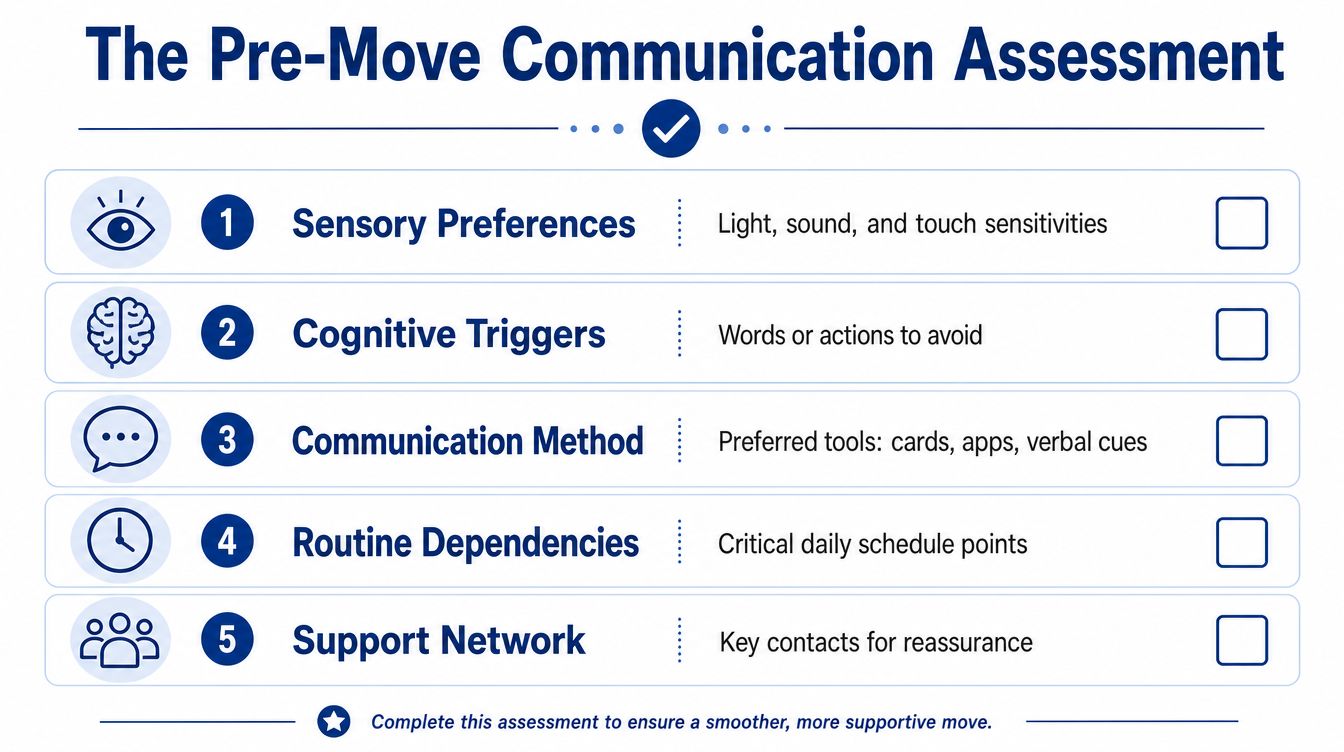
A proper assessment doesn't need to be complicated, but it does need to be written down. We treat it like a one-page handover that travels with the job file, because memories get fuzzy once the truck's booked and the day starts moving fast. If the answers are clear upfront, the crew can plan truck size, crew size, arrival windows and whether packing services are smarter than DIY.
Start with how the person communicates
Ask what works best, speech, cards, a phone app, gestures, or a family member interpreting short phrases. Then ask what doesn't work. Loud instructions, fast questions, and lots of overlapping voices can make a move feel unsafe, so the crew needs to know that before they arrive.
Map the triggers and routines
Loud beepers, sudden movement, unfamiliar tools, or too many people in one room can all matter. So can medication timing, meal breaks, quiet periods, and the time of day the client feels most settled. If the person has a strict routine, the running sheet should reflect that, not just the packing list.
Identify the people and places that support the move
The crew should know who the support worker is, who the calm family contact is, and whether that person is also packing or needs to stay free to reassure the client. On site, the access details matter too. That includes narrow Central Coast streets, body corporate rules, move-in windows, and lift bookings in Sydney apartments.
A simple handover table keeps everyone aligned:
| Field | Why it matters | Who confirms |
|---|---|---|
| Preferred communication method | Stops the crew defaulting to the wrong style | Family and client |
| Triggers and sensitivities | Reduces distress on arrival and during loading | Family or support worker |
| Routine and medication timing | Protects the person's energy and cooperation | Family and care provider |
| Property access notes | Avoids delays, fines and blocked lifts | Family and removalist |
| Emergency and support contacts | Helps the crew respond if plans change | Family |
If you're coordinating a move for an older relative, our moving for seniors guide is a useful companion to this process. It sits well alongside a pre-move chat because it keeps the focus on comfort, access and timing rather than only on furniture.
Matching Communication Techniques to Common Conditions
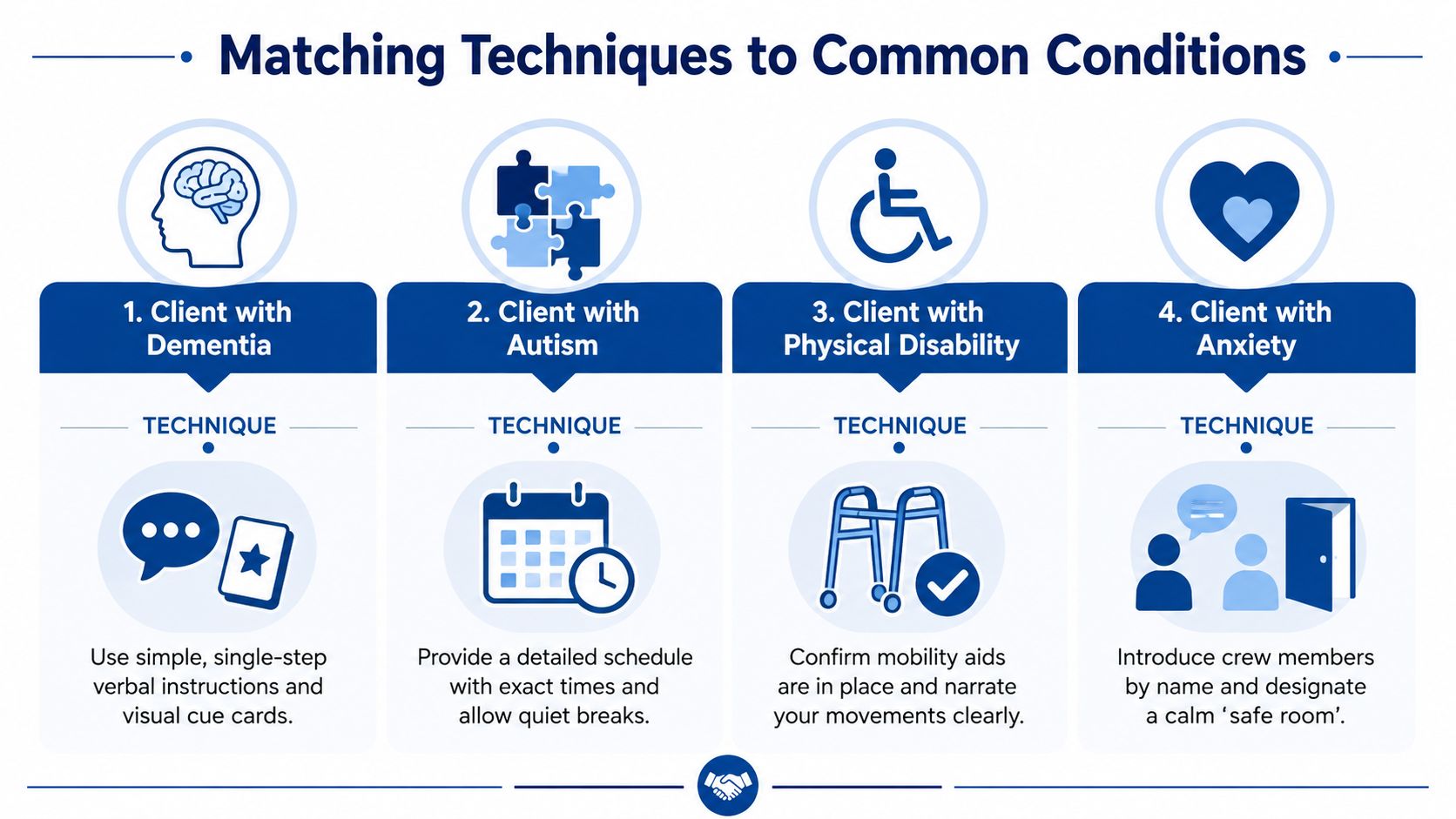
Different clients need different adjustments, and the wrong approach can slow everything down. A crew that uses the same language style for everyone will usually overwhelm some clients and under-brief others. The better approach is to match the communication style to the person in front of you, then keep it consistent across the move.
Dementia and short, steady orientation
For a client with dementia, the crew should use short sentences, one instruction at a time, and visible cues. “We're taking the lounge room chairs next” works better than a long explanation of the load order. Repeating the plan at the doorway helps the person stay oriented without feeling tested.
Autism and predictable sequencing
For an autistic adult, routine and visual structure usually matter more than friendly chatter. A detailed schedule with exact times, calm breaks, and a clear order of rooms can reduce uncertainty. That's also where another support issue can show up, and Nursing Assessment Australia's autism guide is a useful reference when families are thinking about sensory load, privacy and dignity together.
Hearing and vision impairment need directness
With hearing impairment, the crew should face the client, keep mouths visible, and follow up important points in writing. With vision impairment, the job is to narrate movement clearly. “I'm lifting the box from your left side” is better than silent handling, because it explains the space before the person has to guess it.
Don't talk around the client
The biggest mistake is speaking only to the family member and ignoring the client entirely. That might feel efficient for the crew, but it damages trust fast. It also strips away dignity, especially when the client can answer for themselves with the right support.
A recent discussion of communication barriers in autism also points to a wider system issue, not just an individual one, because the environment and the communication partner both shape how well the person can participate (Penn State on barriers to communication). That fits what we see on move days. The person isn't the only variable, the room, the pace and the crew's habits matter too.
On the-Day Scripts, Pacing and Crew Coordination
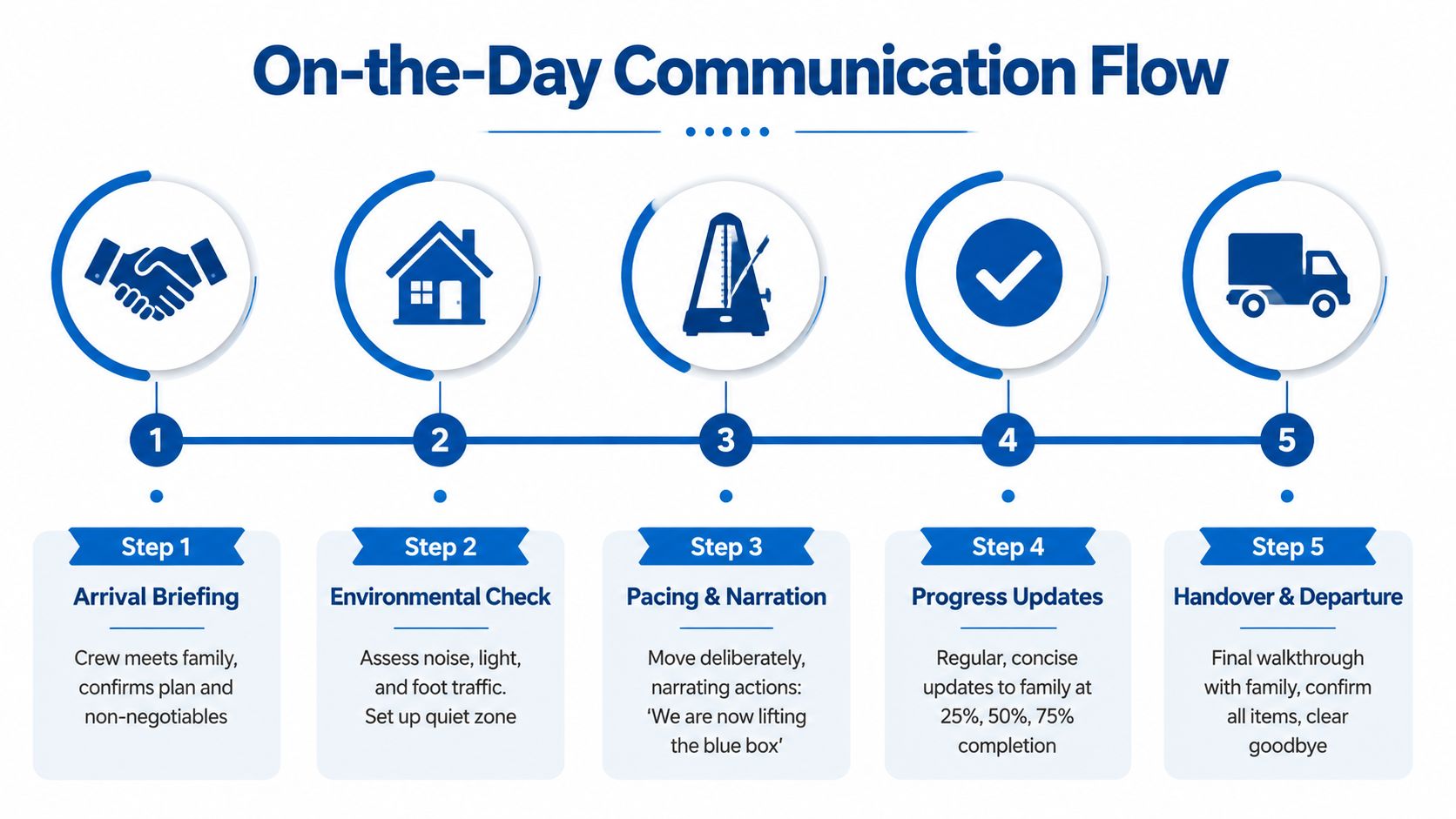
A calm move in Lake Macquarie usually starts with one person greeting the client by name, another checking access, and nobody talking over each other. We've found simple scripts work best because they keep the day predictable. “We're here, we've got the plan, and we'll let you know before each room starts” is better than a long introduction that disappears into noise.
Pace the work to the client, not the other way around
The crew should move in short blocks, then pause, especially if the client is tiring or getting restless. That's not wasted time, it's how you stop one bad moment from turning into a full stoppage. If a support worker is present, they need a clear place in the process, not a vague role where everyone assumes someone else is watching the client.
Use clear handoffs between rooms
A good script sounds plain. “We're moving the bedroom now.” “This wardrobe is staying.” “We're checking the hall before the next load.” Those brief lines help the client follow the work, and they help the crew avoid accidental double handling or leaving something behind.
Keep support people coordinated
If the family's calm contact is also organising paperwork, the move gets messy. One person should be free to reassure the client and answer questions. The crew should also protect meal and medication breaks, because a delayed lunch or missed routine can change the whole tone of the day.
For loading flow and truck discipline, our how to pack a moving truck guide shows why order matters. In special needs work, that order isn't just about efficiency, it's about keeping the client's environment stable enough that the move stays manageable.
Keep the narration plain and factual. Clients usually don't need encouragement every thirty seconds, they need to know what's happening next.
Equipment, Transport and Documentation Decisions
Communication support only works if the equipment and paperwork travel with the same care as the furniture. Mobility aids, hearing devices, vision supports and medical items should be identified early, packed separately where needed, and loaded so they're easy to access at the destination. If a client uses a communication board or device, it should stay with the client, not disappear into the truck load where it can't be used when needed.
We also record setup notes for anything that has to be reconnected at the new address. That might include a charging lead, device stand, or where a bedside aid was positioned in the old room. The same thinking applies to access notes, lift bookings, parking permits and body corporate rules, because a delay at the building entry can create the same stress as a missing item.
| Communication Plan Handover Fields | Why it matters | Who confirms |
|---|---|---|
| Assistive devices and mobility aids | Prevents accidental packing or damage | Family and crew |
| Setup notes for reconnection | Speeds up the first safe night in the new home | Family or support worker |
| Access and parking details | Avoids hold-ups at apartments and narrow streets | Removalist and family |
| Building rules and move windows | Keeps the job compliant with strata or body corporate | Family |
| Emergency contacts | Gives the crew a clear escalation path | Family |
How cost and insurance fit into the decision
A slower, higher-support move can affect the quote because it often needs extra crew time or more careful staging. That's normal, and it's better to plan for it than force a rushed job. Full insurance coverage matters here too, because the client, the crew and the belongings all need protection if something unexpected happens.
For practical handling and safe loading, our moving trolley guide is a good reminder that the right equipment reduces strain and keeps the move controlled. In special needs relocations, the transport decision is never just “can it fit”, it's “can it be used safely and found quickly when the client needs it.”
Post-Move Follow-Up and When to Escalate
The move doesn't end when the front door closes. We treat the first couple of days after arrival as part of the communication plan, because that's when assistive gear gets tested, routines settle, and families realise what still needs attention. A simple courtesy call within 48 hours is usually enough to check that key items arrived, devices are connected, and the client is settling into the new space.
If something's off, escalate it early. Missed support services, a missing mobility aid, or signs that the person is becoming more distressed than expected should be raised straight away with the family, the support worker and, if needed, the storage or cleaning team. The point is to fix the chain, not to wait and hope it sorts itself out.
A move is only successful when the person feels safe enough to use the new space. That's why good special needs communication stays active after the truck leaves, especially for aged-care moves and family relocations across the Central Coast, Newcastle, Lake Macquarie and Sydney.
If you need a crew that plans communication as carefully as lifting and loading, Gentle Giant Removals & Relocations can help with aged-care and special-needs moves, packing services, storage coordination and careful apartment access planning. Request a free in-home assessment or a custom quote for your move, and if the day is urgent, call the team on 0417 513 667 to talk through what needs to happen next. You can also visit Gentle Giant Removals & Relocations to organise a move with a calm, well-briefed crew.