
You're often down to the last big item when the move stops feeling simple. The packing materials are stacked, the smaller furniture is sorted, and then you're left staring at a queen bed, mattress or base that won't fit neatly through the door without a bit of planning. That's where most DIY relocations start to wobble.
Around the Central Coast, Sydney and Newcastle, the issue usually isn't raw strength. It's access. Tight hallways, stair turns, lifts that need booking, wet weather near coastal entries, and shared apartment corridors all change how you handle one awkward item from bedroom to truck. A moving trolley helps, but only when it's part of the whole item-to-truck workflow.
That Awkward Moment Before the Move
A common version of this happens in a unit in Terrigal or Gosford. The mattress is still leaning against the wall, the bed frame is half apart, and you realise the path out includes a narrow bedroom door, a turn into the hallway, then a lift shared with other residents. You can lift the mattress. What you can't do easily is control it.
That's where a moving trolley earns its keep. It gives you balance, control and a safer way to move something tall and awkward without dragging it along walls or flooring. The hand trolley, also called a hand truck or dolly, has been around since the 18th century, and its long staying power makes sense. It remains one of the most practical tools in removals because it reduces lifting and improves load control. Historical guidance notes that a hand truck can reduce the effort needed to move heavy items by up to 75% according to Monroe Engineering's hand truck overview.
That sounds straightforward until you try to get from the bedroom to the truck bay.
In real homes and apartments, the trolley is only one part of the job. The rest is preparation, protection, route planning and knowing when the item is stable enough to move at all. If any one of those goes wrong, the trolley stops being helpful and starts becoming risky.
Practical rule: The safest move starts before the item leaves the room.
Preparing Your Queen Bed for the Move
The first mistake people make is treating the mattress like it can handle a bit of dust and a few bumps. It can't. By the time it reaches the truck, it may have brushed against door frames, stair railings, lift walls, driveway surfaces or the inside of the truck body. Without proper protection, fabric tears and grime are hard to avoid.
Start with protection, not lifting
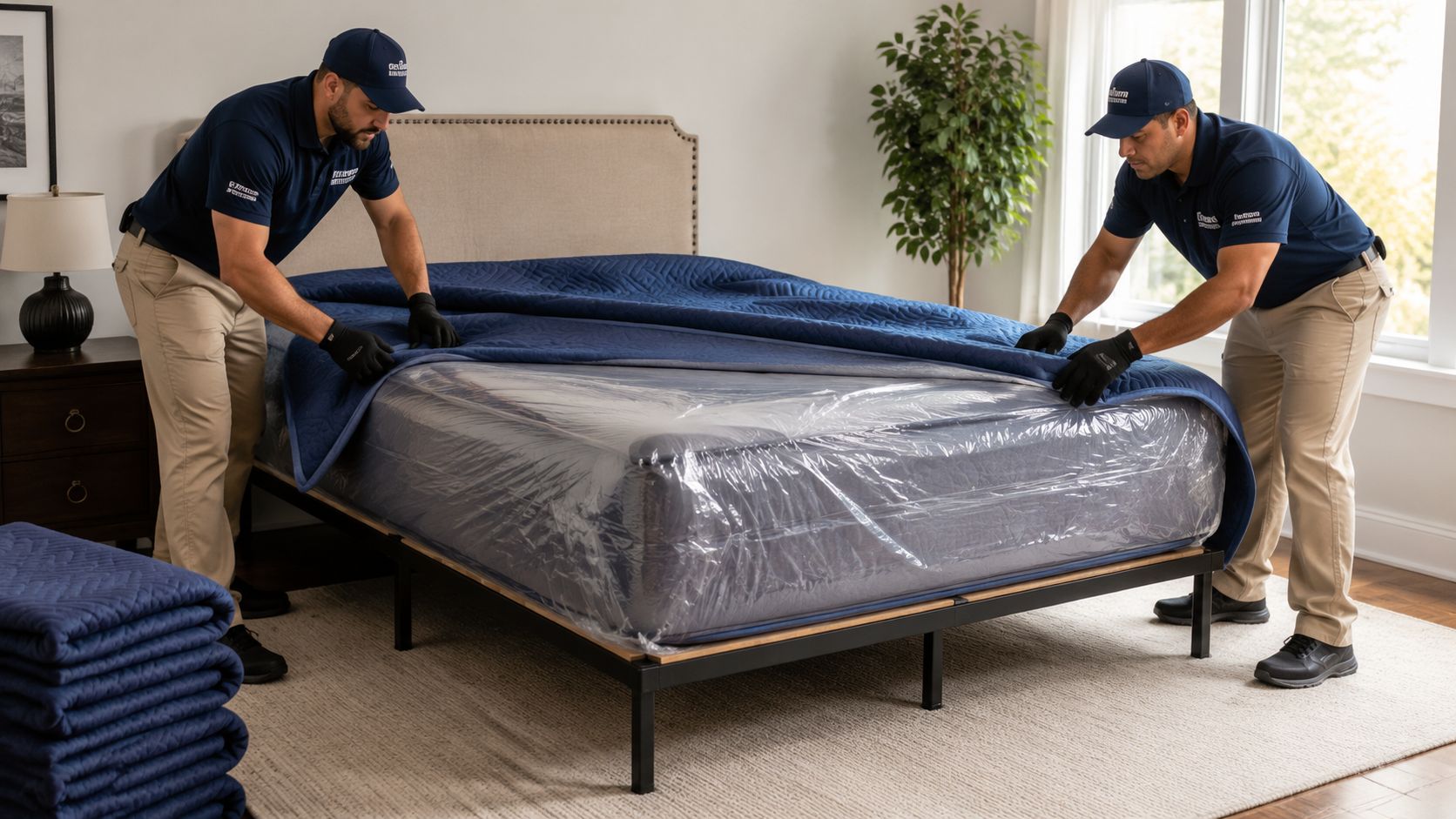
Strip all bedding first. Don't leave the fitted sheet on and assume it's enough. A proper mattress bag gives you a sealed outer layer against dust, light moisture and snags. Over that, a quilted moving pad adds cushioning where the mattress is most likely to meet a wall or door edge.
If you want a quick reference on bed dimensions before disassembly, New Zealand Bed Company's guide is useful for checking the typical footprint of a queen setup and understanding what you're manoeuvring.
Tape the mattress bag closed so it doesn't flap open during handling. Loose plastic catches on corners and can shift under your grip. If you're unsure what to use and why, this guide on how to cover a mattress when moving is worth reading before moving day.
Disassemble the bed properly
The frame matters just as much as the mattress. Slats, side rails, bolts and centre supports can scratch walls, gouge timber floors or disappear in the rush if they're not packed together.
Use a simple routine:
- Remove bedding completely so nothing trails or gets trapped underfoot.
- Take photos during disassembly if the frame has multiple brackets or support pieces.
- Bag all screws and fittings and label them clearly.
- Wrap long frame pieces with moving blankets or pads so sharp edges don't mark paintwork.
- Keep hardware with the bed parts, not in a random kitchen drawer you'll forget about later.
There's also a protection issue people overlook. If your belongings are covered under removal insurance, condition and packing method matter. A mattress shoved uncovered into a truck is harder to defend than one that's been bagged, padded and handled properly. Good preparation isn't just tidiness. It shows reasonable care was taken.
An unprotected mattress picks up damage in the small moments. Door edges, truck thresholds and dirty ground contact do most of the harm.
Think beyond the bedroom
Before you even stand the mattress up, look at the route. Will the wrapped mattress be too thick to pivot where it needs to pivot? Will the bed base clear the hallway ceiling light? In Central Coast homes with split levels, and in Newcastle or Sydney apartments with shared access, these details matter more than people expect.
A little prep at this stage saves a lot of awkward reversing later.
Choosing and Using the Right Moving Trolley
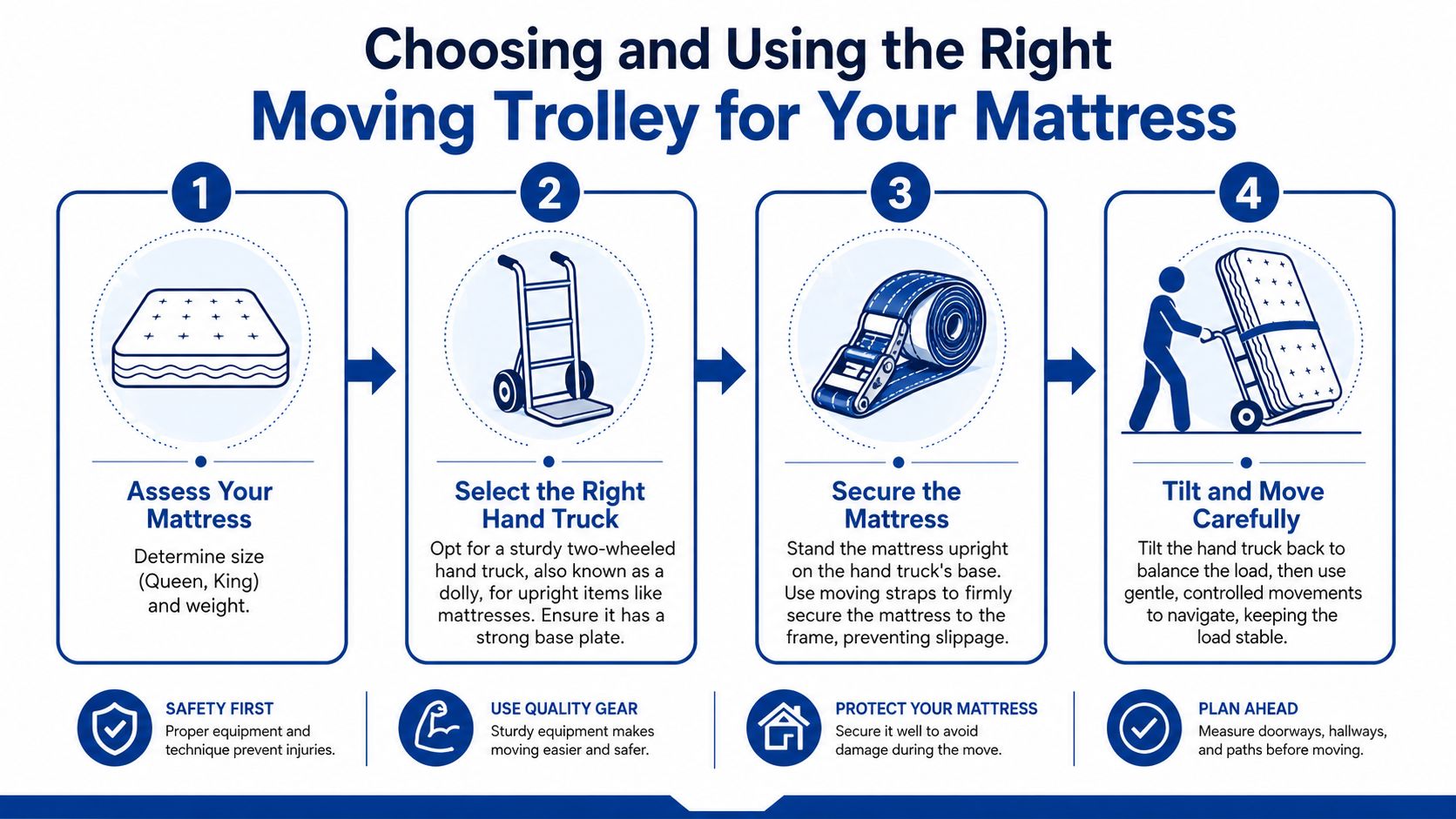
Not every trolley suits every item. For a mattress or other upright furniture, the usual choice is an L-shaped hand truck. The toe plate slides underneath the item, then the load is tilted back so its weight sits over the wheels. For bulkier stacked items or multiple cartons, a platform trolley often makes more sense because it gives you a four-wheel base.
Match the trolley to the load
For Australian handling guidance, platform trolleys commonly sit in a working-capacity range of about 100 kg to 2,000 kg according to Blue Trolley's platform trolley guide. That's a wide spread, and it explains why guessing by appearance alone gets people into trouble.
A larger trolley isn't automatically a safer trolley. The right choice depends on the item shape, the wheel type, the route and the combined load once coverings and accessories are added.
A useful way to think about it is this:
| Item type | Best trolley style | Why it works |
|---|---|---|
| Mattress or upright appliance | Hand truck | Easier to balance vertically and steer through doorways |
| Stacked cartons or low bulky items | Platform trolley | Better base support and less chance of side slip |
| Fragile furniture with awkward shape | Depends on route and stability | Sometimes hand carrying with pads is safer than wheeling |
The loading sequence that works
The basic hand truck method is simple, but the order matters. Tilt the mattress slightly forward. Slide the toe plate fully underneath. Then tilt the hand truck and mattress back together until the weight sits centrally over the wheels.
After that, strap the mattress firmly to the frame. Don't rely on one hand to steady it for the whole trip. A strapped load behaves predictably. An unsecured load shifts right when you hit a threshold or try to turn.
If you're also protecting surrounding furniture on move day, this guide on how to protect furniture when moving is a practical companion to trolley handling.
Load check: The trolley's working load limit is a hard limit, not a suggestion.
What usually goes wrong
Most trolley problems come from poor balance, the wrong wheel for the surface, or underestimating route changes. A polished apartment corridor in Sydney feels different from a rough driveway in Lake Macquarie. A concrete threshold can stop a small wheel abruptly. A slight ramp can pull the load sideways if it isn't centred.
One product specification for a heavy-duty platform trolley lists a 150 kg capacity, while broader market guidance shows many trolleys span from lighter to much heavier duties, which is why checking the actual rating matters more than checking the size according to Novo Dinamica's platform trolley specification.
The best technique is controlled movement. Small corrections. No rushing. If the item starts to lean, stop and reset rather than trying to save it mid-roll.
Navigating Your Home Without Damage
Once the mattress is on the trolley, the difficult part usually starts. In a newer house at Lake Macquarie with wide access, you may have a clean path out. In a Newcastle heritage apartment or a Sydney high-rise, the route can be the primary obstacle.
The route matters more than the weight
A common mistake is focusing only on what the item weighs. Practical guidance stresses measuring door widths and tight points in advance, because in many older Sydney, Newcastle, or Central Coast properties, the actual problem is not the trolley itself but whether it can safely clear the path without damage, as noted in this guide to dollies, hand trucks and safety tips.
That's why experienced removalists walk the route first. Bedroom door. Hallway turn. Stair landing. Lift opening. Building foyer. Path to the truck. Every point needs to be workable before the item starts moving.
For a simple visual way to think about clearance, planning for walkway and door dimensions can help you map where furniture movement is likely to tighten up.
Common Central Coast and city obstacles
Different areas create different handling problems.
- Central Coast coastal homes: External entries can be damp, sloped or sandy, which affects wheel grip.
- Newcastle heritage apartments: Narrow corridors, older staircases and tighter entry doors are common.
- Sydney strata buildings: Lift bookings, shared-area protection and move-in time windows often apply.
- Lake Macquarie homes: Split-level layouts and steeper driveways can turn a simple trolley move into a two-person control job.
If the move includes fragile items nearby, it's worth preparing them early. This advice on how to pack fragile items for moving can help protect the things sitting along the route as larger furniture comes through.
Go slow at corners and thresholds. Those are the points where a stable load suddenly stops being stable.
The precautions professionals take
Before moving the item, remove loose rugs, floor runners and anything that can slide under a wheel. Prop doors open so nobody is trying to twist the trolley one-handed while reaching for a handle. Protect vulnerable corners and handrails with moving blankets.
For apartments and office relocations, check building rules early. Some Sydney and Newcastle strata buildings require lift bookings, designated move windows, protective padding in lifts, or notice to building management. If the truck will need to stop on a narrow street, parking permits or loading-zone access may also need attention.
On stairs, communication matters more than strength. One person controls from above, another guides from below, and both move at the pace of the lower person. If either person loses footing, the job stops.
When DIY Moving Becomes a False Economy
There's a point where a moving trolley stops being a handy DIY tool and starts exposing you to unnecessary risk. That point usually arrives with stairs, ramps, unstable items, awkward office equipment, or access that leaves no room for error.
Where the savings disappear
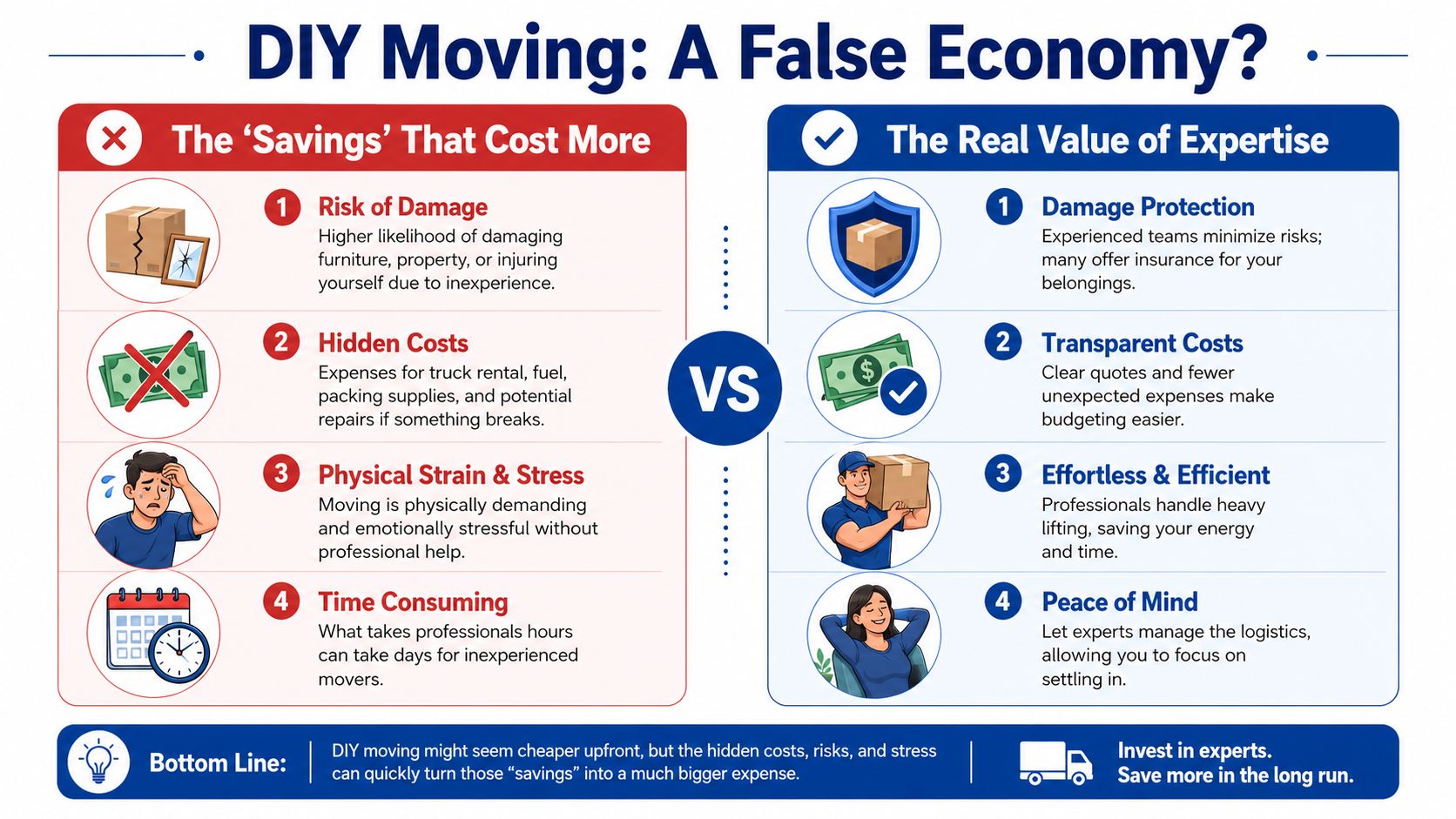
DIY looks cheaper until something goes wrong. A marked wall in a rental, a damaged lift panel in a strata building, a torn mattress cover, or a back strain can wipe out any saving very quickly. The hard part isn't just carrying the item. It's managing the risk around it.
General safety guidance is clear on the trade-off. A trolley can reduce effort yet increase damage risk if the item is unstable, exceeds the unit's capacity, or must be negotiated over stairs or ramps. Safety-focused guidance also emphasises balancing and strapping because tip-overs happen when users try to rush or improvise, as explained in Hevi Haul's dolly safety advice.
When to stop doing it yourself
Some jobs are better handed over from the start:
- Several flights of stairs: Even a light mattress becomes hard to control on repeated stair runs.
- Very tight access: If you need millimetre-perfect turns, experience matters.
- Heavy or awkward pieces: Appliances, pianos, office photocopiers and oversized lounges need more than a trolley.
- No reliable helper: One person trying to improvise is where injuries happen.
- Body corporate restrictions: Miss a lift booking or building requirement and your whole day can blow out.
If you're weighing up the actual expense of doing it yourself, a moving company cost calculator can help you compare the visible and hidden costs more sensibly.
Paying for experience is often cheaper than paying for repairs, delays and avoidable injury.
The bigger picture
This is especially true for office relocations in Sydney or Newcastle, where downtime matters, and for family homes on the Central Coast where the move already has enough pressure without a preventable mishap. Professional teams bring more than labour. They bring equipment, planning, timing and insurance-backed protection.
That's what turns a difficult item into a routine part of the day instead of the job that holds everything up.
How Our Removalist Team Makes Moving Easy
The difference between a rough move and a well-run one usually comes down to systems. Not just a trolley, but the right trolley, proper covers, quilted pads, straps, truck setup, route checks, parking planning and a crew that knows how to work through tight access without damaging your home or belongings.
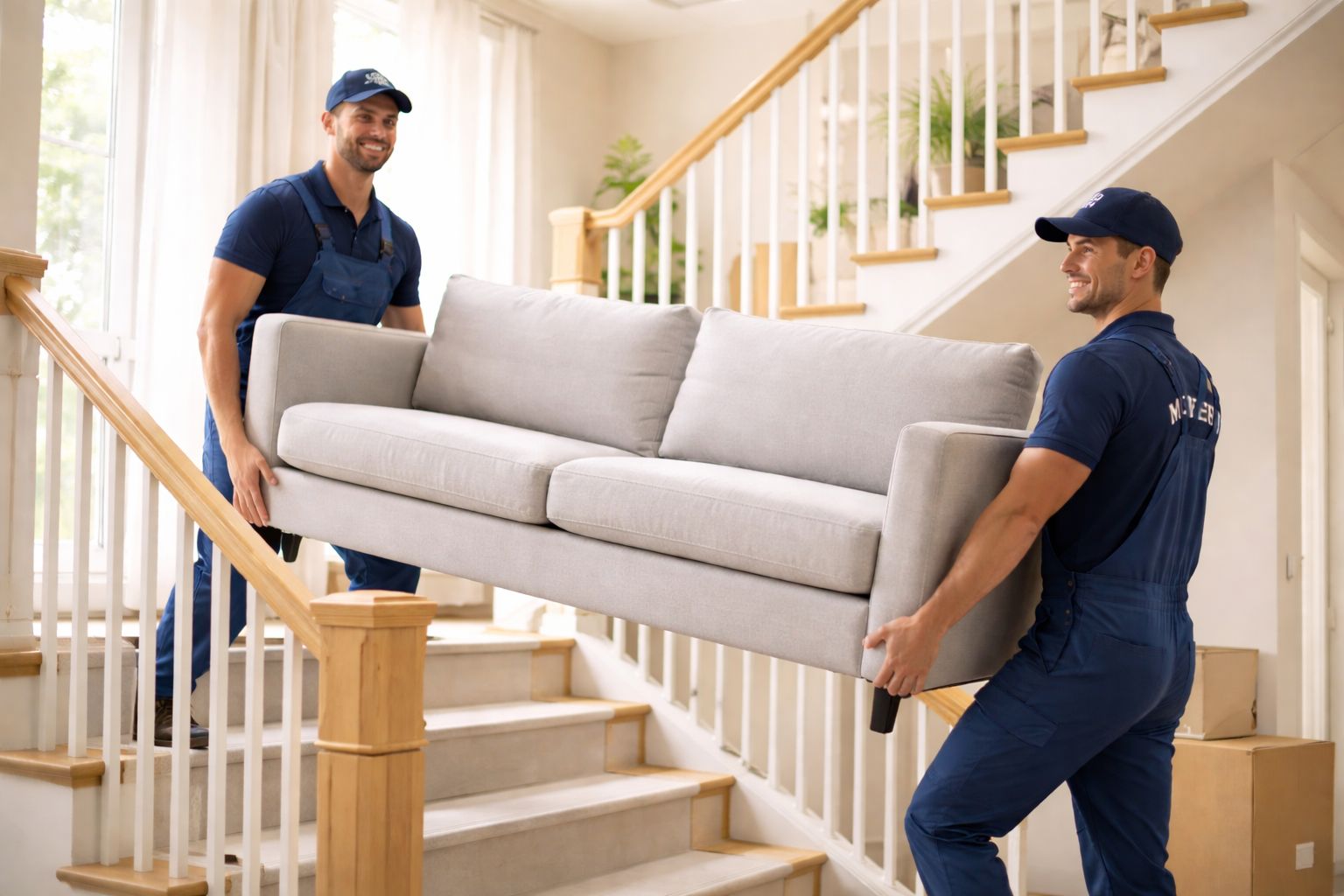
Across the Central Coast, Newcastle, Lake Macquarie and Sydney, we regularly deal with awkward stairwells, apartment lift rules, narrow streets, office access windows and coastal conditions that can change the handling plan on the day. We also know that some clients want a full packing service, while others prefer to pack themselves and just need the heavy lifting handled properly.
That's why it helps to work with a team that understands the whole relocation, not just the truck. If you're still comparing options, this explainer on what a removalist is gives a useful overview of what to expect from a professional service.
A reliable removalist should arrive prepared, protect shared areas, communicate clearly, and back the work with full insurance coverage. They should also be realistic about timing, access and building requirements, whether you're moving from a unit in Gosford, a terrace in Sydney, or an office in Newcastle.
On moving day, what you want is simple. On time, every time, careful handling, and no guesswork.
If you'd like a hand planning your next relocation, Gentle Giant Removals & Relocations can help with local, intrastate and interstate moves across the Central Coast, Newcastle, Lake Macquarie and Sydney. We handle home and office relocations, packing services, awkward access, strata requirements and careful furniture protection, all backed by full insurance. For urgent moves, it's best to call directly. Otherwise, you can get a free moving quote or request a free in-home assessment and we'll help you work out the safest, most practical plan.