
When you’re gearing up for a relocation, you’ll probably hear the term ‘goods in transit insurance’ thrown around. So, what is it? Put simply, it’s a specific insurance policy designed to protect your belongings while they're on the move from your old place to your new one.
Think of it as travel insurance for your furniture, covering everything against the unexpected, like damage or accidents during the relocation. It’s an essential part of a smooth move, whether you're relocating within the Central Coast or planning a bigger move to Sydney or Newcastle.
Why Your Standard Home Insurance Isn't Enough
A lot of people think their home and contents insurance has them covered during a move. While that policy is fantastic for protecting your things inside your home, its cover often stops the second your possessions cross the threshold and head for the truck. This creates a critical gap that goods in transit insurance is built to fill.
Imagine you're moving a three-bedroom home in Terrigal to Newcastle. The moment our removalist team loads your furniture onto the truck, it's officially ‘in transit’. Your home policy likely won’t cover it anymore, leaving your valuables vulnerable to road accidents on the M1, theft, or even accidental damage during the loading and unloading process. This is exactly where a dedicated transit policy becomes so important.
The Real Purpose of Transit Cover
Goods in transit insurance is your specialised safety net. It’s not just about covering items while they’re physically inside the truck; it protects them through the entire professional moving journey.
This includes:
- Loading: Protection kicks in while our crew carefully moves your items from your home and onto the truck.
- Transportation: Your goods are covered for the whole trip, whether it’s a short drive from Terrigal to Lake Macquarie or a longer haul down to Sydney.
- Unloading: The cover continues as we place your belongings safely inside your new home.
Without this specific insurance, you could be left footing the bill if something goes wrong. For instance, if a major traffic incident damages the removalist truck and everything inside, your standard home insurance probably won’t pay out for the replacement cost of your belongings.
A Note on Peace of Mind: The true value of goods in transit insurance is the confidence it gives you. Knowing your belongings are financially protected lets you focus on the excitement of setting up your new home, instead of worrying about what could go wrong on the road.
At Gentle Giant Removals, we believe in being fully prepared, which is why we always discuss insurance options with you. It’s all about creating a complete protection plan that combines our careful handling and packing with a solid financial backup, making sure your relocation is as smooth and secure as possible.
Understanding Your Moving Protection Options
Navigating the world of moving insurance can feel a bit like a minefield, but it doesn't have to be. When you're planning a relocation, you're going to come across a few different ways to protect your belongings, and each one offers a very different level of security.
Getting your head around these differences is the key to making sure you're properly covered for your move. Whether you’re heading from a heritage apartment in Newcastle to a modern home on the Central Coast, or just around the corner in Sydney, you want to avoid any nasty surprises.
Carrier Liability: A Basic Starting Point
First up, you’ll hear about Carrier Liability. This is a very basic level of cover that some transport companies are legally required to have. It's crucial to understand that this is not real insurance. Think of it more as a limited promise to cover your goods only if you can prove the removalist was negligent, which is often difficult to do.
What’s more, the payout is usually incredibly low. Carrier liability often covers your items based on their weight, sometimes for as little as a set amount per kilogram. Imagine a box with delicate glassware or an expensive TV—its value is in what it is, not how much it weighs. This means you could end up with a tiny fraction of its true replacement value, leaving you seriously out of pocket.
This diagram helps show where each type of cover fits in, highlighting how proper transit insurance acts as a complete shield for your move.
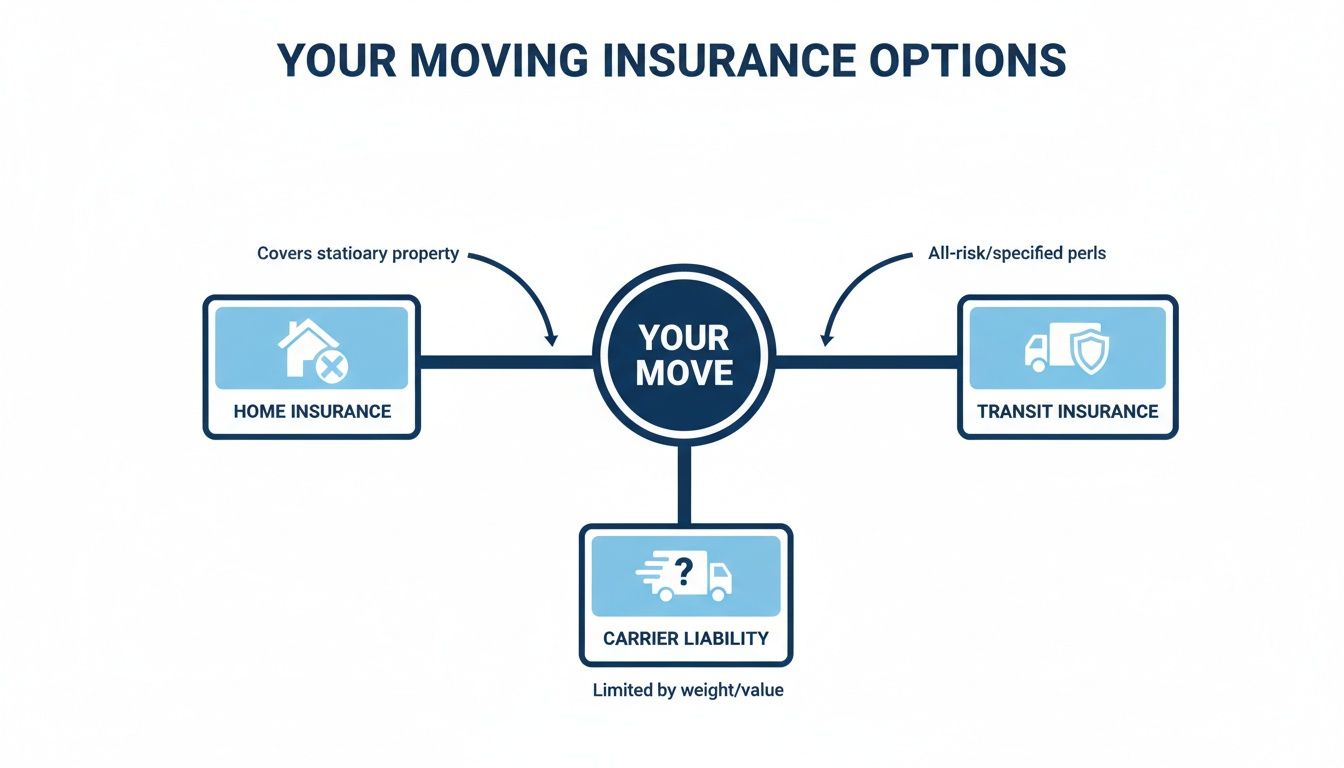
As you can see, while Carrier Liability and Home Insurance have their place, only dedicated Goods in Transit Insurance is specifically designed to protect your belongings throughout the entire moving process.
The Home and Contents Insurance Myth
This is a big one. A lot of people assume their existing Home and Contents Insurance policy will protect their belongings during a move. Unfortunately, that's rarely the case. Most standard policies are written to cover your possessions only when they are sitting at the insured address.
The moment your items are packed, loaded onto a truck, and driven away, they are no longer on your property, and your cover usually stops. While some insurers might offer a limited transit extension, these often come with strict conditions and a long list of exclusions. The only way to be certain is to read your policy's Product Disclosure Statement (PDS) or call your insurer directly. Never, ever assume you’re covered.
Goods in Transit Insurance: The Recommended Choice
This brings us to dedicated Goods in Transit Insurance. Unlike Carrier Liability, this is a proper, comprehensive insurance policy. It's designed to protect your possessions against accidental loss or damage throughout the entire relocation, from the second we start loading until the last box is placed in your new home.
This is the robust protection we always recommend for complete peace of mind.
With a dedicated transit policy, you don't have to prove who was at fault. If an insured event happens—like accidental damage during transit or a road collision—you are covered for the full value you've declared, subject to the policy terms. It’s a straightforward safety net built specifically for the unique risks of a relocation.
When you're moving high-value or sentimental items, like a family piano, this level of protection is absolutely essential. Arranging proper cover through your removalist is simply the safest and most reliable way to protect what’s important to you.
What Your Transit Insurance Actually Covers
When you’re planning a relocation, understanding what a policy truly covers versus what it excludes is the key to having real peace of mind. Comprehensive goods in transit insurance is a specific type of cover, designed purely for the unique risks that come with moving home. It’s there to protect you from the big "what if" scenarios that can happen on the road.
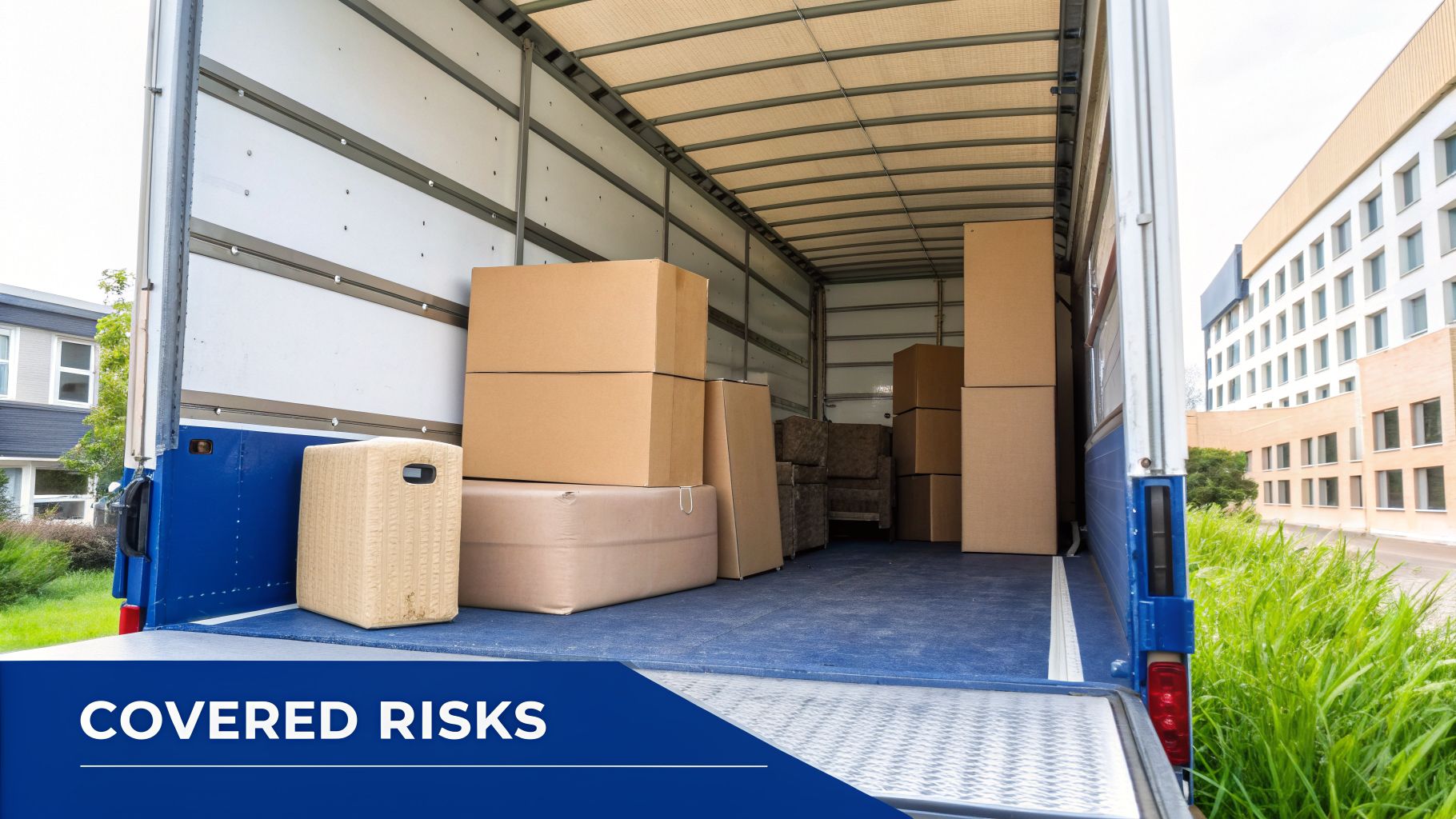
Let’s say we’re moving you from a quiet street in Terrigal to the heart of Sydney. Your insurance is built to kick in for major events like a vehicle collision on the M1, a fire, a flood, or even the theft of the truck while it’s parked. These are rare, of course, but their consequences can be devastating. That’s exactly what insurance is for—it provides a financial safety net for the replacement value of your goods.
But the protection doesn't just apply to the journey itself. A surprising number of moving-day mishaps happen during the loading and unloading phase. A good policy will also cover accidental damage that might occur while our team is carefully carrying your items in or out of your properties. It offers genuine, end-to-end protection.
What Is Typically Included
A solid policy gives you broad protection, acting like a shield for your belongings from the moment we arrive until the last box is inside.
Here’s what you should expect to be covered:
- Accidental Damage: This means breakages, scratches, or dents that happen while our professional team is loading, transporting, or unloading your items.
- Major Events: This includes any loss or damage caused by fire, explosions, lightning, and floods.
- Vehicle Incidents: You’re protected if the removalist truck is involved in a collision or overturns, causing damage to what’s inside.
- Theft: This covers you if your belongings are stolen from the locked removalist vehicle.
Key Takeaway: The main purpose of goods in transit insurance is to cover you against unforeseen accidents and major events that are outside of anyone's control. It’s about protecting the financial value of your belongings from these specific risks.
Understanding Common Exclusions
Just as important as knowing what’s covered is being clear on what isn’t. We believe in being transparent about exclusions to help you prepare properly and avoid any surprises down the track. No insurance policy covers absolutely everything, and transit insurance has its own specific limits.
One of the most common exclusions is for items you've packed yourself. Any cartons marked as 'Packed By Owner' (PBO) are often not covered for accidental damage. Why? Because the insurer can’t be sure the items were packed securely with the right packing materials. If a box you packed starts to rattle and something inside breaks, it generally won't be covered.
Here are a few other typical exclusions to be aware of:
- Pre-existing Damage: Insurance is there to cover new damage that occurs during the relocation, not scratches or faults that were already on an item.
- Atmospheric Conditions: Problems like mould, mildew, or rust that can develop over time are generally not included.
- Certain High-Value Items: Things like jewellery, cash, and important documents often need to be declared separately or may be excluded entirely. It's always best to transport these kinds of personal items yourself.
- Prohibited Goods: Policies will not cover items that are dangerous or illegal for us to transport. To learn more, check out our guide on the definitive list of ineligible items for removal.
The transport industry has seen insurance premiums rise recently, largely due to higher repair costs and more frequent claims. This makes it more important than ever for removalists like us to be crystal clear about what is and isn't covered. By understanding these boundaries from the start, you can make sure your most treasured possessions are properly protected.
How We Protect Your Belongings Before Insurance
At Gentle Giant, we have a simple philosophy: insurance should be the final safety net, not the first line of defence. While having comprehensive goods in transit insurance is essential for total peace of mind, our number one job is to prevent damage from ever happening in the first place. This commitment to hands-on care is at the very core of what we do.
We believe that true protection comes from skill and the right equipment. Our removalist teams have spent decades perfecting their craft, and they treat every piece of furniture as if it were their own. This isn't just a job for us; it's a responsibility we take seriously.
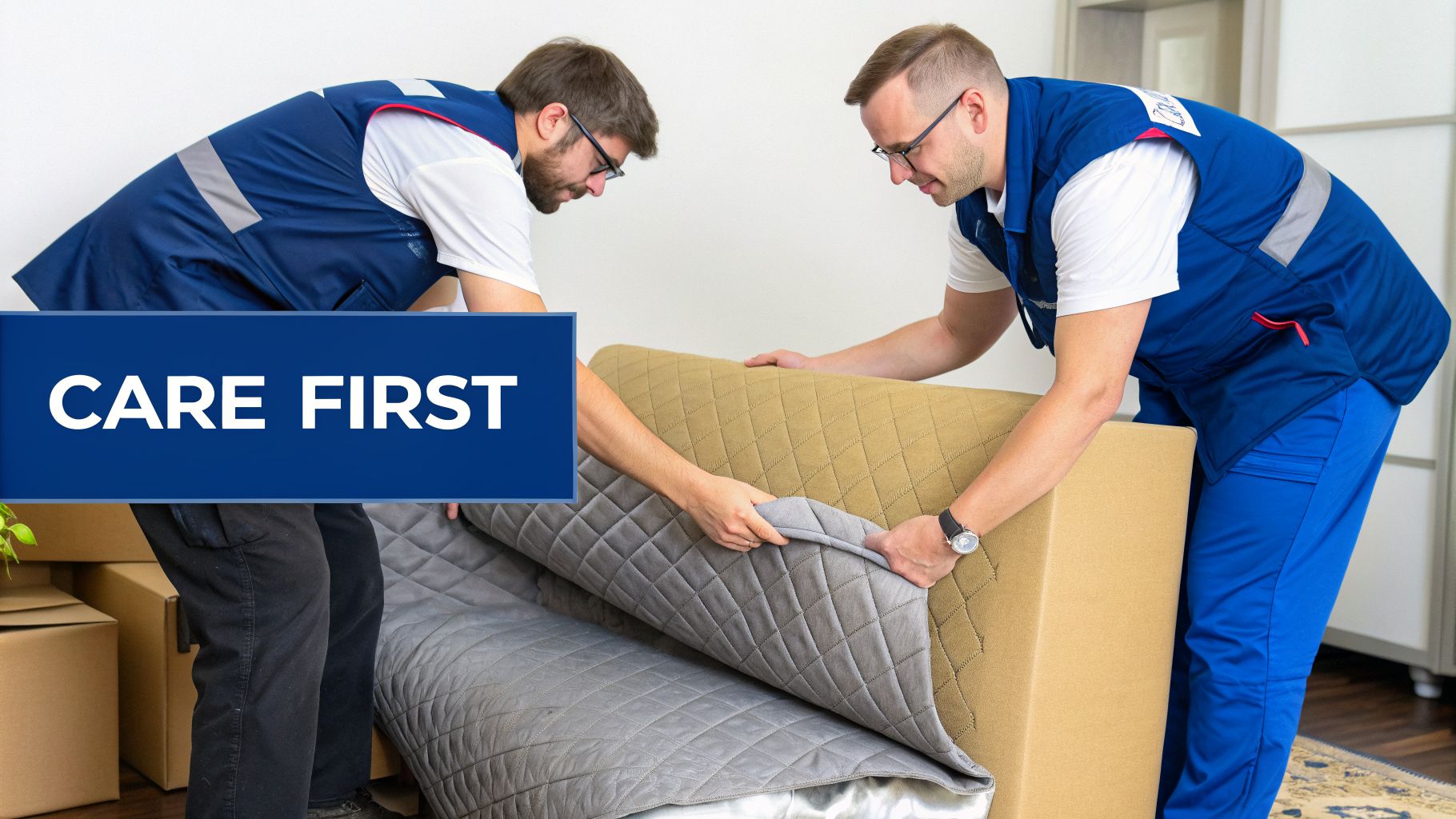
This proactive approach means your belongings are safeguarded at every single stage of the move. From the initial wrap to the final placement, our methods are designed to minimise risk and deliver your items in the exact condition they left in.
The Gentle Giant Method for Furniture Protection
You’ll never see our crew just carrying unwrapped furniture out to the truck. Every single piece is carefully wrapped in high-quality, thick quilted pads and blankets. Think of these professional-grade materials as a cushioned barrier, protecting surfaces from the scratches, dents, and scuffs that can so easily happen during a move.
We pay extra attention to vulnerable areas like table corners, chair legs, and delicate timber finishes. This meticulous wrapping process is a non-negotiable step in our service, whether you're moving a one-bedroom apartment in Newcastle or a large family home on the Central Coast.
Secure Loading and Strategic Packing
Once everything is wrapped, protecting your goods inside the truck is the next critical step. Our team uses specialised loading techniques to create a secure, stable environment for your belongings. It's a bit like a complex jigsaw puzzle, where items are stacked strategically to ensure they can't shift, tilt, or collide during transit.
Heavy base items go in first, creating a solid foundation, with lighter and more fragile pieces placed securely on top. We then use ties and restraints to hold everything firmly in place, so even on the busy M1 between Sydney and Newcastle, your items remain safe and stationary. This careful planning is fundamental to preventing the most common types of moving-day damage.
This meticulous approach is even more crucial as Australia's freight industry grows. Projections show a massive 77% increase in road freight by 2050, which means more trucks on the road and a greater need for expert handling. Learn more about the future of freight insurance in Australia at cbi.au.
Professional Packing for Maximum Security
For customers who opt for our professional packing service, we extend this same level of care to every single box. We use industry-grade packing materials, including durable cartons, bubble wrap, and clean packing paper, to protect everything from your fragile glassware to sensitive electronics.
Our packing methods ensure that items are properly cushioned and can't rattle around inside the box. For items that might need a temporary home before, during, or after a move, it's also worth checking out our advice on short-term furniture storage to ensure continuous protection.
This detailed preparation is how we provide a seamless relocation from start to finish. It’s also why our transit insurance works as a complete protection plan—backing up our hands-on care with a solid guarantee.
Arranging Your Transit Insurance Step by Step
Getting the right cover for your belongings shouldn't be a last-minute scramble. When you work with a professional removalist like Gentle Giant, we make the process simple and clear. Arranging goods in transit insurance is one of the final, but most important, steps to lock in total peace of mind for your relocation.
The whole thing is designed to be straightforward. It usually kicks off once you’ve accepted our quote. We’ll send you a customer declaration form where you list the items you want insured and, critically, their current replacement value. It’s an essential step to make sure your policy actually reflects what you own.
Declaring the Value of Your Goods
This is probably the most important part of the whole process: accurately valuing your belongings. We're not talking about what you originally paid for an item or what you could get for it on Gumtree. You need to list the current replacement value—what it would cost you to walk into a shop and buy a similar new item today.
Say you're moving from a two-bedroom apartment in Newcastle. Your sofa might be five years old, but replacing it with a comparable new one today could cost a lot more than you first paid. Being thorough here is vital. If you undervalue your goods to save a few dollars on the premium, you risk being underinsured and seriously out of pocket if you need to make a claim.
Our Tip: Grab a notepad or use your phone and do a walk-through of each room, listing your major possessions. A quick search online for similar new items will give you a solid idea of their current replacement cost, helping you build an accurate list.
Timing and Documentation
When it comes to insurance, timing is everything. Your goods in transit insurance must be arranged and confirmed before your moving day begins. Cover can’t be put in place once we’ve started loading the truck, so it’s best to get this sorted a week or so in advance. This gives you plenty of time to fill out the declaration without feeling rushed.
The main document you’ll handle is the insurance declaration and inventory form we provide. This, along with your moving contract, creates your protection plan. Keep a copy for your records so you have a clear inventory of what’s covered. It’s a simple bit of admin that provides a powerful layer of security for your relocation. For more tips on what to sort out before moving day, check out our guide on questions you should be asking moving companies.
Understanding the Cost Factors
We can't give exact prices here, but the cost of your insurance is driven by one main thing: the total replacement value of the goods you declare. The premium is simply a small percentage of this total value. So, the more your belongings are worth, the more the insurance will cost—but it’s a tiny investment compared to the potential financial hit from an accident.
The Australian cargo insurance market, which underpins these policies, is a big deal. It’s projected to hit USD 2,314.23 million by 2033, which just shows how vital this protection is for everyday Aussies on the move. When you stop and think about the combined value of your furniture, electronics, and personal treasures, you’ll realise that the peace of mind transit insurance offers is well worth the small cost. You can find out more about the Australian cargo insurance market at imarcgroup.com.
How to Make a Claim if Something Goes Wrong
Even with the most careful planning and professional handling, we know that sometimes, accidents happen. Our goal is always a flawless relocation, but being prepared for the unexpected is simply smart. If you discover an item has been damaged during the move, knowing the right steps to take will get things sorted out smoothly and quickly.
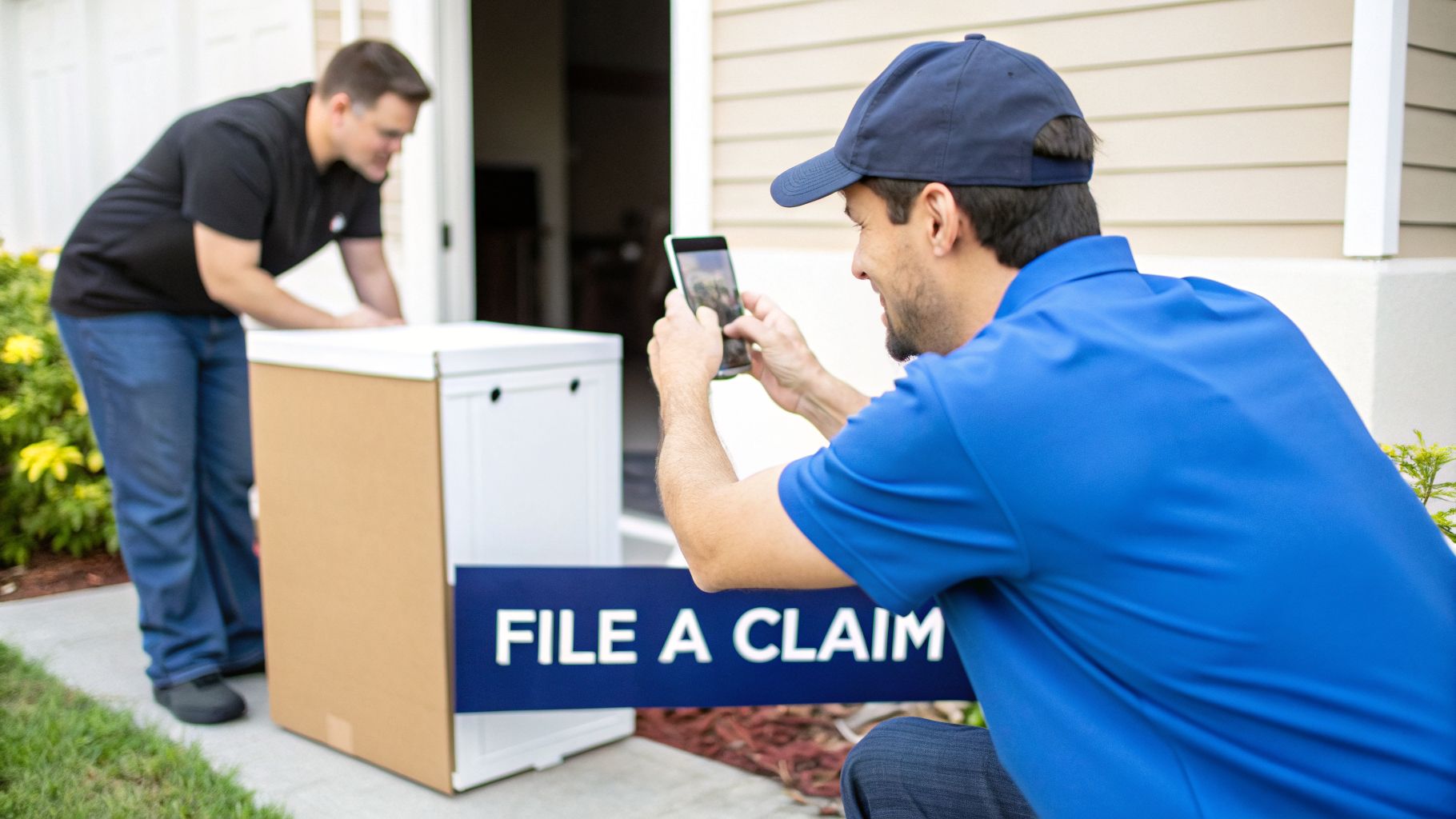
The claims process isn't complicated, but it does rely on you acting fast and documenting everything clearly. A professional removalist like Gentle Giant will be right there to guide you, coordinating with the insurance provider to make sure your claim is handled fairly.
Your First Steps on Delivery Day
The absolute best time to spot any potential issues is as we’re bringing your belongings into your new home. As our team unloads each item, take a moment for a quick inspection.
If you see anything amiss, the most important first step is to tell our on-site team leader straight away. Pointing it out on the spot creates an immediate record that the damage occurred during the relocation. This one simple action can make the whole claims process much faster. Our crew will make a note of it on the delivery paperwork, which acts as the first official report.
Documenting the Damage Thoroughly
After you’ve let our team know, the next job is to document the problem properly. Good documentation is really the foundation of any successful insurance claim.
Just follow these simple steps to build a clear record:
- Take Clear Photos: Use your phone to snap several pictures of the damaged item. Get a few wide shots to show the entire piece and then some close-ups that clearly show the specific damage. Good lighting is key here, so make sure the photos are bright and in focus.
- Grab Your Paperwork: Find your inventory list or the insurance declaration form you filled out. This is the document that lists all the items covered by your policy and their declared values.
- Find Proof of Value: To prove an item's worth, you'll need to find some documentation. A clear proof of purchase like a receipt is ideal for establishing both its value and that you own it.
Having this information organised and ready to go will make filing your formal claim much, much easier.
Submitting a Formal Claim
With your documentation in order, it's time to lodge a formal claim. Most insurance policies have a strict deadline for this, often requiring you to submit your claim in writing within 7 days of your relocation. Don't delay on this one.
Your written claim will need to include:
- Your name, contact details, and the date of your move.
- A clear, simple description of the damaged item.
- The photos you took as evidence.
- A copy of your inventory list.
- Any proof of value you have for the item.
Just send this information to us via email. From there, we take over. We will formally lodge the claim with the insurance provider on your behalf and act as your main point of contact throughout the entire process. Our role is to ensure your claim is looked at promptly and fairly, taking the stress off your shoulders so you can get back to what matters—settling into your new home.
Frequently Asked Questions About Moving Insurance
We get asked a lot about goods in transit insurance, so we’ve put together answers to the most common questions we hear from our customers moving across the Central Coast, Sydney, and Newcastle.
Do I Really Need Insurance if I Hire a Professional Removalist?
Even with the most careful and experienced removalists, some things are just completely out of anyone's control. Think of a major pile-up on the M1, an unexpected fire, or theft from a parked vehicle.
Even the best removalist can't prevent a freak road accident. Insurance is your financial safety net for these low-risk but high-impact events. It's there to make sure you can replace your belongings if the absolute worst happens.
Can I Use My Own Home and Contents Insurance?
It’s a common question, but the answer is almost always no. Most standard home and contents policies stop covering your belongings the second they’re carried out your front door.
A few policies might have a "goods in transit" clause, but it often comes with a long list of restrictions and a much lower level of cover. Always call your insurer and check your Product Disclosure Statement (PDS) before you assume you're protected for a professional relocation. In our experience, a dedicated transit policy is the most reliable way to go.
What’s the Difference Between Declared Value and Market Value?
This is a really important one to get right. You need to insure your items for their current replacement value—what it would actually cost you to walk into a shop and buy a similar new item today.
This isn't the same as its market value, which is what you might get for it on Gumtree. Insuring for replacement value ensures you have enough money to actually replace your things, not just get back a fraction of what they were worth.
Are Items I Packed Myself Covered?
Generally, cartons you’ve packed yourself (often marked 'PBO' for 'Packed By Owner') won't be covered for accidental damage to the contents. It makes sense when you think about it—the insurer can't know if the items were wrapped properly with the right packing materials.
However, PBO cartons are usually still covered for major events like the truck being in a fire or a major collision. If you want the most complete protection, professional packing services are the way to go. You can find out more about how services are priced by reading our guide on the cost of removalists in Sydney.
At Gentle Giant Removals & Relocations, our goal is to make every part of your move—including insurance—feel simple and straightforward. For a transparent chat and a free, no-obligation quote for your upcoming relocation, get in touch with our friendly local team. Visit us at https://gentlegiantremovals.com.au to plan your move with complete confidence.