

You've packed the kitchen, the removalists are booked, and the old place looks emptier by the hour. Then you notice the oven, the skirting boards behind the lounge, the bathroom grout, and the salt film on the glass doors. That's the point where house cleaning after moving stops being a quick tidy-up and becomes part of the relocation itself.
Around the Central Coast, Newcastle and Sydney, the clean at the end can affect your bond, your handover timeline, and how quickly you can settle into the next place. We see this all the time with rentals in Gosford, apartments in Newcastle, and family homes heading into or out of Sydney. If you treat the vacate clean as a last-minute add-on, it usually creates rework, access issues, and avoidable arguments with agents.
If you plan it properly, the clean becomes another job to sequence. Move belongings out safely, keep water and power on, clear access for the cleaner, and tackle the property in the order that works. This strategy helps save time, protect the property, and avoid dramas.
Your Vacate Clean Game Plan Supplies and Strategy
The fastest way to waste time is to clean in the wrong order. For vacate work in Australia, the method that holds up is simple: dry first, wet second, and always top to bottom. A practical guide to moving-house cleaning in Australia states that post-move vacate cleaning requires dry dusting high surfaces first, then mid-level, then low-level surfaces before any wet work begins, and that you should clean with detergent before disinfecting for proper sanitisation, as outlined in this AU vacate cleaning methodology.
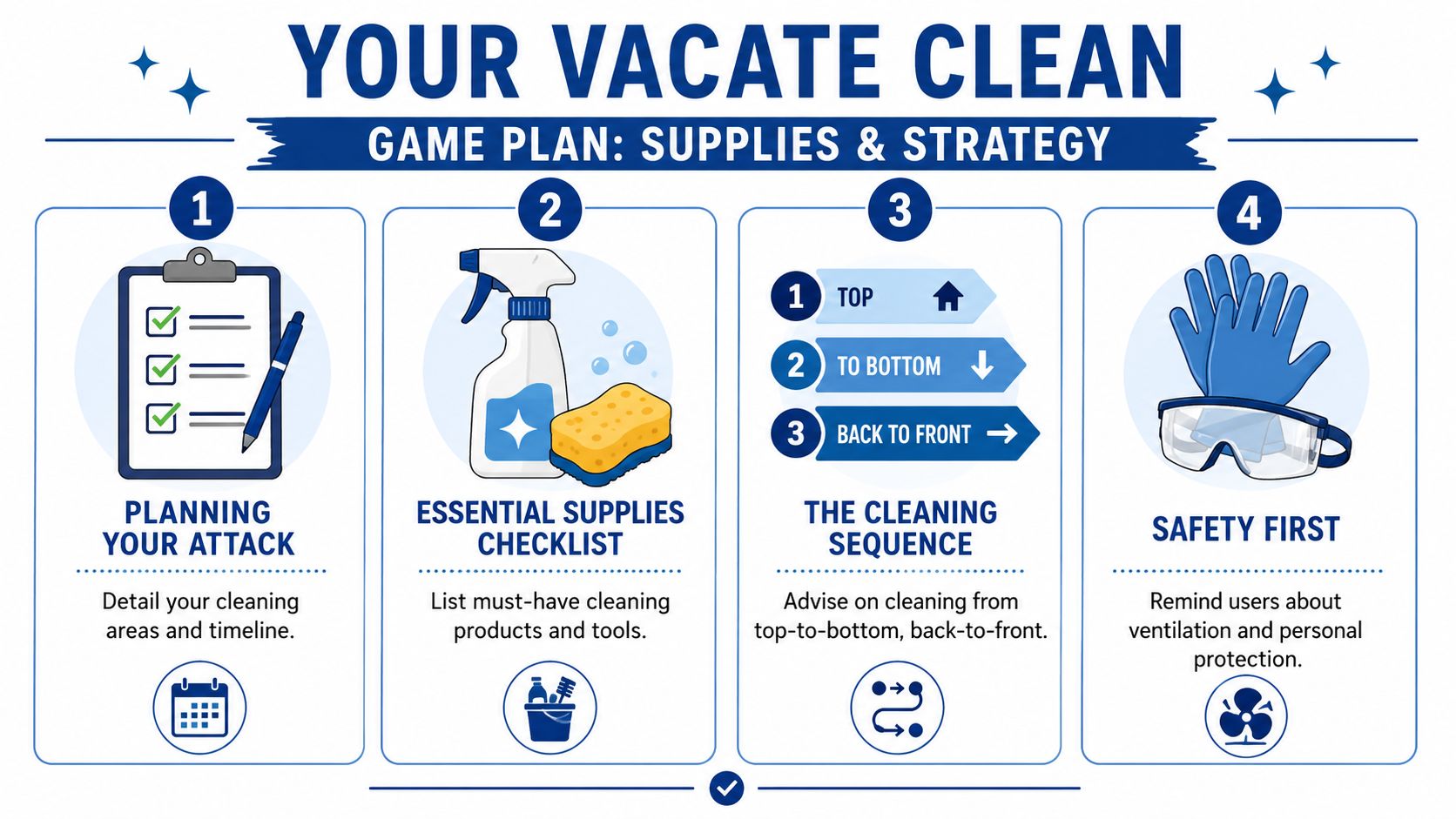
That order matters because dust drops. If you mop first and dust later, you've just created more work. The same goes for using disinfectant on greasy surfaces. It won't do the job properly if detergent hasn't already broken down the grime.
Start with a plan, not a spray bottle
Walk through the property with a notepad before you touch anything. Empty homes in Terrigal, Gosford or Doyalson often look clean at first glance, but the trouble spots are usually the ones hidden by furniture during daily life.
Write down:
- High points: Ceiling corners, exhaust fans, light fittings, tops of wardrobes, curtain rails
- Mid-level surfaces: Splashbacks, cupboards, shelves, mirrors, switches, door frames
- Low-level finish work: Skirting boards, tracks, corners, behind toilets, under vanities
- Outside access items: Sliding door glass, entry glass, accessible external windows
Practical rule: Clean the property in the same direction you'd move through it. Start at the back, finish at the front, and don't walk dirty shoes back over a finished floor.
If your move includes staging items in a garage, a friend's trailer, or a short stop before final delivery, it helps to sort that first. Keeping your access clear makes the clean quicker and safer. We've touched on that kind of sequencing in this guide on moving backfill planning, and the same principle applies to cleaning day.
The supplies that actually earn their keep
You don't need a trolley full of gimmicks. You do need the right gear ready before the truck leaves.
A practical vacate clean usually runs smoother with:
- Microfibre cloths: Use separate ones for glass, general surfaces, and greasy kitchen work
- Heavy-duty rubbish bags: For food scraps, bathroom clutter, and packing leftovers
- Vacuum with crevice tool: Essential for tracks, corners, wardrobe runners, and skirting edges
- Mop and bucket: Keep one pass for wash, one pass for rinse where needed
- Detergent and degreaser: Different jobs. Kitchen grease needs more than a light spray
- Scrub brush and old toothbrush: Good for grout lines, taps, hinges, and tight corners
- Gloves and ventilation: Basic safety. Some cleaning products sting skin and fumes build up fast in closed bathrooms
Eco-friendly options that still work
If you'd rather avoid harsh smells, that's fair. Warm water, mild detergent, bicarbonate of soda, and white vinegar can handle plenty of routine grime. Just be careful with natural stone, delicate finishes, and strong acidic mixes on the wrong surfaces.
For households with children, pets, or anyone sensitive to strong odours, lower-fragrance products can make the day easier. The trade-off is simple. Gentler products often need more dwell time and more elbow grease on ovens, soap scum, and built-up range hood grease.
The Room by Room Cleaning Checklist
The biggest mistake in house cleaning after moving is spending too long on the easy rooms and leaving the kitchen and bathrooms until you're already tired. Agents and landlords usually notice wet areas, cooking areas, tracks, switches, and glass first. That's where effort pays off.
Local providers clearly treat move-in or move-out cleaning as a dedicated service, and community conversations often focus on finding cleaners who can handle a thorough 3-bedroom, 2-bathroom clean, as noted in this Central Coast discussion about good house cleaners.
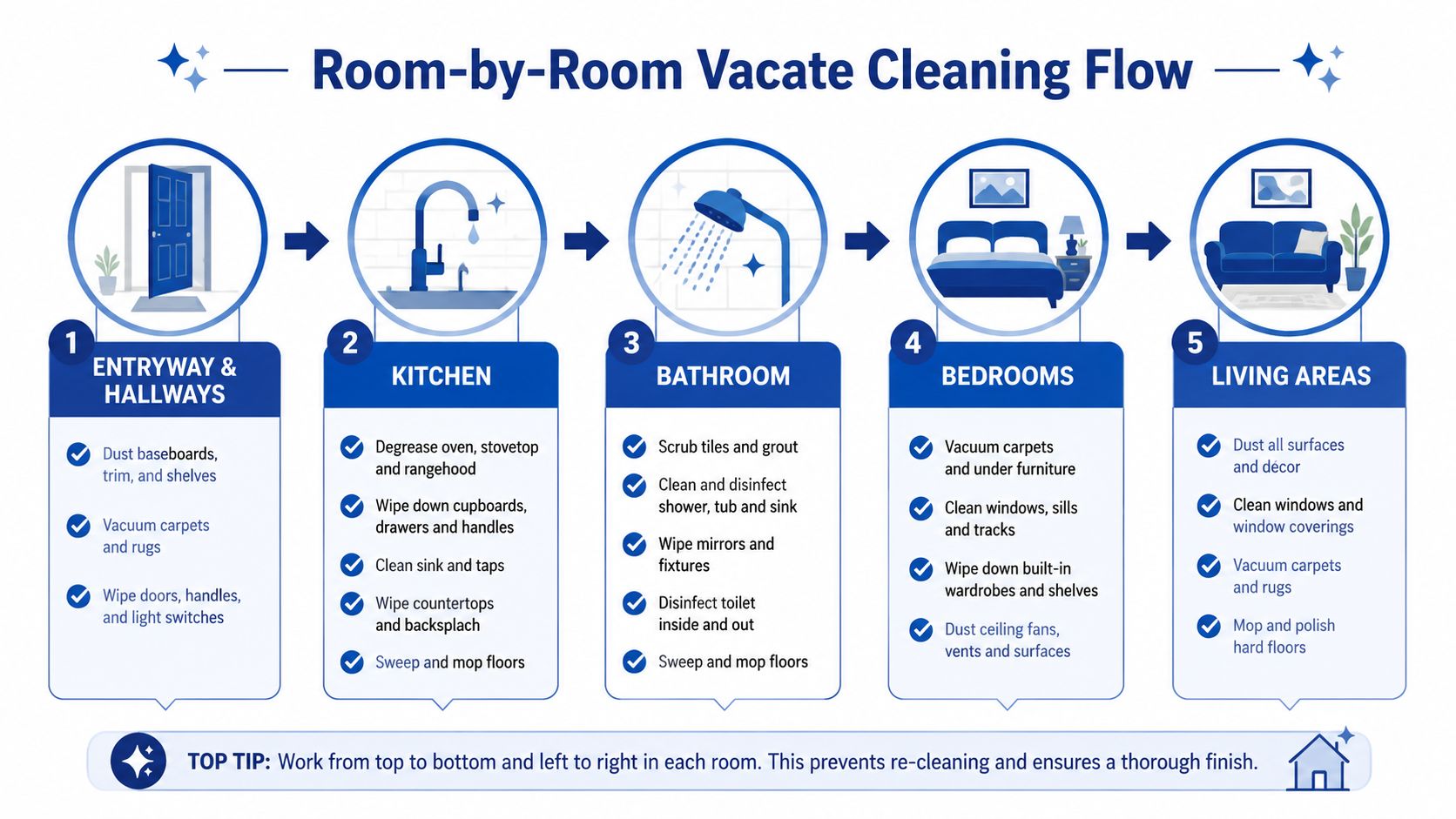
A useful walkthrough can help if you like seeing the order in action.
Kitchen and bathroom first if time is tight
The kitchen is where grease, crumbs and hidden residue usually cost people time. Start with the oven, because any degreaser needs time to work. While that sits, wipe inside cupboards, do the splashback, clean the range hood filters, and finish the sink and taps last.
In bathrooms, focus on what shows neglect. Soap scum on screens, residue around tap bases, hair in drains, and mould around silicone all stand out. If you've got heavy mould on ceilings or damp corners, proper remediation matters more than a quick wipe. For stubborn ceiling issues, this guide to professional mold cleaning by Newline Painting is a useful reference.
Leave toilet bowls and shower glass until near the end so you're not re-splashing or re-marking them while doing higher work.
Bedrooms, living areas and the spots people forget
Bedrooms and lounge areas look simple because they're empty. That's exactly why marks and dust jump out. In Newcastle's heritage apartments, settled dust often builds up around ornate trims and older window frames. In Central Coast coastal areas, glass and aluminium tracks can hold fine salt residue that needs more than a quick dry wipe.
Check these carefully:
- Wardrobe interiors and tracks: Dust, hair, grit, and forgotten items
- Light switches and door handles: High-touch points that show up fast
- Skirting boards: Especially behind beds, sofas and entertainment units
- Window tracks and sills: Often gritty, especially near busy roads or the coast
- Ceiling corners: Cobwebs are small, but they signal an unfinished clean
If the property still feels cluttered before cleaning starts, fix that first. A proper sort-out saves time and helps you see what really needs attention. This guide on how to declutter before moving house is worth a look before you start scrubbing.
Entryways and final pass work
Hallways, entries and shared access matter, especially in strata buildings. If you're leaving a unit in Gosford or heading out of a Sydney apartment with lift bookings and body corporate rules, don't drag dirty items back through cleaned common areas. Finish inside first, then do your last sweep at the front door.
A quick final pass should cover:
- Front door and frame
- Inside of cupboards and linen storage
- Floors after furniture is fully gone
- Any marks revealed once wall art comes down
A clean room isn't just one with no mess. It's one where every surface looks intentionally finished.
Decoding Your Lease and Landlord Expectations
“Reasonably clean” sounds simple until a bond inspection starts. In practice, it usually means the property should be clean enough for immediate handover, with obvious grime, residue, rubbish and neglected detail work removed. It doesn't mean perfection, but it does mean the place should look properly cared for.
A lot of disputes start before the cleaning even begins. One trade issue that doesn't get enough attention is utilities. Professional guidance on move-out cleaning notes that electricity and running water should still be available when the clean happens, because without them key tasks become harder and error rates increase, as explained in this move-out cleaning expectations video.
What agents usually notice straight away
Property managers don't inspect the way residents live. They inspect against handover condition. That means they notice presentation details that people stop seeing after living in a place for years.
A common problem in the Central Coast and Newcastle is window expectations. The same guidance above notes that sliding glass doors in kitchens and front-room windows accessible from outside need to be cleaned both inside and outside to meet Australian lease handover expectations.
That catches plenty of tenants out. They clean the inside glass, step back, and think it's done.
The practical reading of your lease
Read the cleaning clauses before booking your final day. If the tenancy agreement mentions carpets, pest treatments, outdoor areas, or professional cleaning for specific circumstances, you need to account for timing as well as cost.
Use this quick check before handover:
| Area | What to confirm |
|---|---|
| Utilities | Water and electricity remain on until the clean is finished |
| Access | Keys, alarm codes, parking access, lift bookings if needed |
| Glass | Internal glass plus accessible external glass |
| Appliances | Oven, cooktop, range hood and filters included |
| Shared areas | Strata requirements for common property protection |
For apartment relocations in Sydney or Newcastle, body corporate rules can complicate the final clean. Lift bookings, loading dock times, and protection of shared hallways all affect when cleaners can get in and when the property can be left empty. If you want a more detailed NSW-focused breakdown, this guide to end of lease cleaning requirements in NSW is a helpful next step.
If there's any grey area, ask the agent before the clean, not after the inspection.
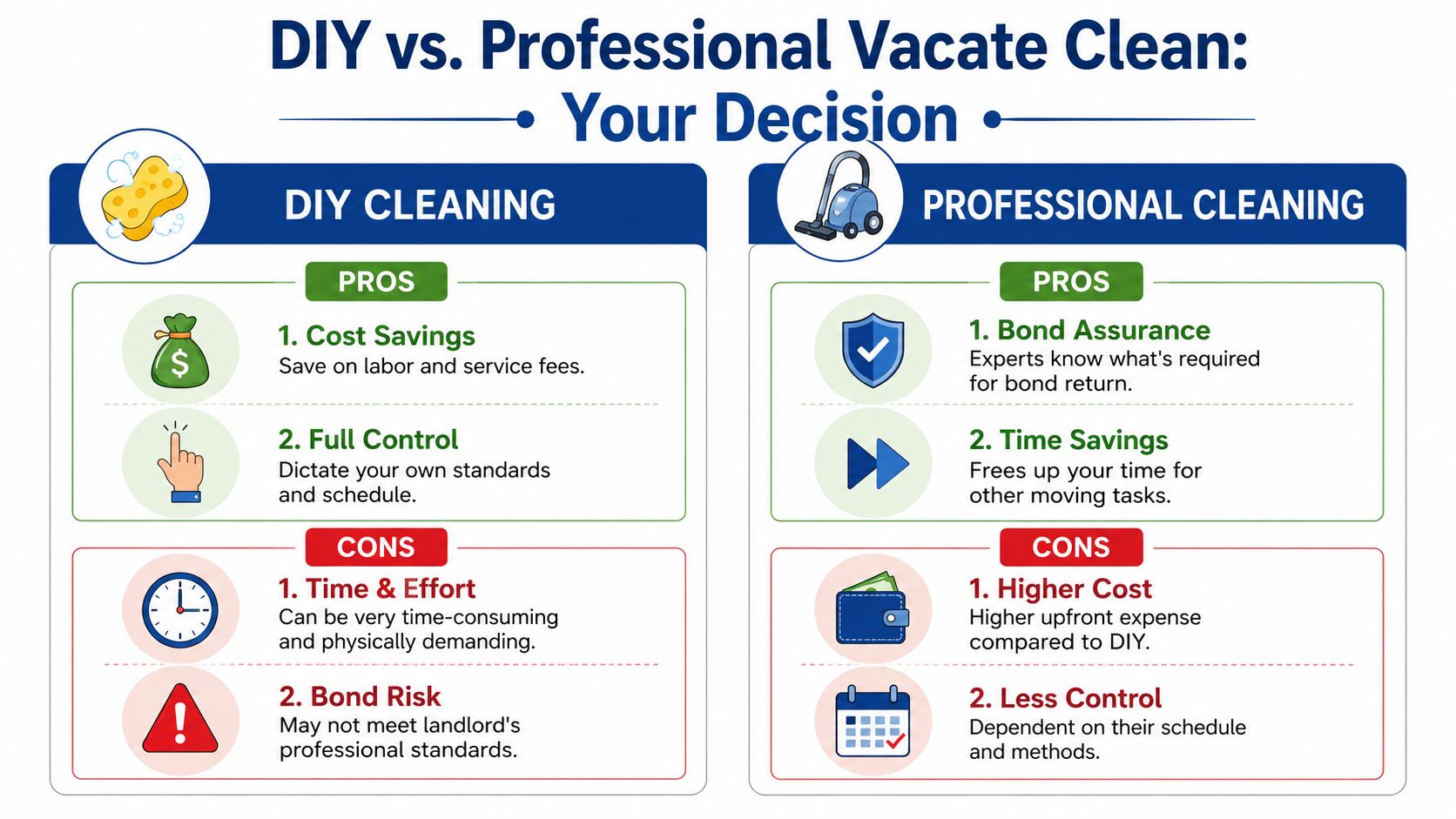
DIY Clean or Hire a Professional Vacate Cleaner
This decision usually comes down to three things. Time, energy, and how confident you are with detail work. Some people are absolutely capable of doing a strong DIY vacate clean. Others are already flat-out coordinating keys, school runs, settlement dates, parking permits, and the relocation itself.
On the Central Coast, community reports put professional move-in or move-out house cleaning at $40 to $70 per hour, with the most common rate falling between $50 and $60 per hour, based on residents actively hiring cleaners in the area, according to these Central Coast local cleaning price reports.
When DIY makes sense
If the place has been well maintained, you've allowed enough time, and you're comfortable doing fiddly work, DIY can be the right call. It also gives you full control over the standard, products used, and the order of the day.
DIY tends to suit:
- Smaller homes or newer finishes: Less built-up grime, fewer surprises
- Simple access: No lift bookings, no tight body corporate windows, easy parking
- Flexible schedules: You can return for touch-ups if the agent raises something
- Hands-on households: You'd rather trade time for savings
The downside is that vacate cleaning is tiring after a full move. By the time belongings are loaded, keys are changing hands, and the fridge is disconnected, the final third of the job often gets rushed.
When a professional cleaner is worth it
A professional cleaner earns their keep when the property needs detail, speed, or both. That's often the case with family homes in Lake Macquarie, older properties in Newcastle, and apartments in Sydney where access windows are tight.
Here's a plain comparison:
| Option | Best for | Main trade-off |
|---|---|---|
| DIY | Lower cash outlay, flexible timing | More labour, more fatigue, more bond risk if details are missed |
| Professional | Faster finish, experienced detail work | Higher upfront spend and less control over timing |
What to look for matters. Choose a provider who's properly insured, clear about inclusions, and realistic about access. If cleaning ties into the relocation itself, the same rule applies when choosing a removalist. You should verify proper licensing and full insurance coverage so your belongings are protected if something goes wrong, as explained in this guide to choosing local moving companies on the Central Coast.
If you're weighing up what a proper vacate clean should cover before you book anyone, this explainer on what's included in a professional move-out clean can help you compare like for like.
Gentle Giant's Seamless Relocation and Cleaning
The clean works best when it's planned as part of the relocation, not after it. That matters most when the property needs to be empty before proper cleaning can happen, but your next place isn't ready, your settlement is delayed, or you've got building access rules to work around.
Take a common Central Coast job. A family leaves a house in Gosford, some belongings go straight to Newcastle, and the rest need to be held aside while keys line up for the new place. If that vacate clean is booked without thinking about access, parking, shared driveways, or who still needs to be in the property, the day gets messy fast.
Why coordination changes the result
A well-run relocation plan leaves the old property empty at the right time, with water and electricity still connected, access clear, and fragile items already protected and removed. That's better for the clean, and it's safer for everyone involved.
For apartment moves, it also helps avoid common building problems:
- Lift bookings: Cleaners and removalists need the same access window to be sequenced properly
- Parking and loading zones: Important in Sydney and tighter Newcastle streets
- Shared area protection: Strata managers often expect common halls and lifts to stay clean during the move
- Narrow access or stairs: Better handled before cleaning starts, not while wet floors are down
Packing matters here too. If you've got breakables, artwork, or kitchenware that still needs sorting while the old place should be getting cleaned, the whole job slows down. Proper pre-move wrapping, labelled cartons, porta robes, and staged loading reduce that congestion. The timeline becomes easier to manage with professional packing and moving services.
Supportive cleaning for people who need a calmer process
Not every client experiences moving day the same way. Some need quieter communication, clearer sequencing, fewer people in the home, or a more predictable timetable. That's especially relevant for special-needs households and neurodivergent clients.
One underserved area in Central Coast cleaning content is neurodivergent-friendly vacate cleaning. A local service-page reference notes that 20% of NSW renters under 35 report anxiety-related stress during move-out cleanup, based on 2025 NSW Tenancy Advocate surveys, highlighted in this Central Coast cleaning services reference. That lines up with what many families already know. The physical work is only part of the strain. Noise, urgency, clutter, and too many moving parts can make the day much harder than it needs to be.
Clear timing, fewer surprises, and one coordinated plan often help more than any cleaning product ever will.
That same thinking helps with larger relocations too. If a household is preparing for a major interstate or overseas move after a Sydney departure, planning handover cleaning around freight, documents and departure dates becomes even more important. For anyone heading beyond Australia, this 2026 guide for Australians moving abroad is a useful planning resource.
Reliability matters just as much as elbow grease. You want the truck to arrive when promised, the packing materials ready before loading starts, and the final property left in a condition that supports a clean handover. That's how you protect your bond, your belongings, and your sanity.
If you'd like help coordinating your move and vacate clean in one practical plan, Gentle Giant Removals & Relocations can help. We work across the Central Coast, Newcastle, Lake Macquarie and Sydney, with support for packing, careful handling, access planning, and urgent relocation needs. For time-sensitive moves, call 0410 577 166. You can also get a free moving quote or request a free in-home assessment to map out the safest, most reliable option for your property.