

You're probably reading this with a quote open on one tab, strata emails in another, and a growing list of jobs to sort before moving day. If you're relocating from the Central Coast to Sydney, from Newcastle to regional NSW, or heading interstate altogether, “insurance” can feel like one of the vaguest parts of the whole process.
That confusion usually starts online. A lot of what you'll find is written for the US market, where interstate moving rules work very differently. In Australia, the practical question isn't whether there's a standard government default for your household goods. It's what your removalist contract says, what transit cover is available, and whether your paperwork matches the value and condition of what's on the truck.
For families moving out of a lift-access apartment in Gosford, a terrace in Newcastle, or a unit in Sydney with tight loading zones and strict booking windows, that difference matters. Good protection isn't just about paying for cover. It's about clear valuation, proper packing, accurate inventories, safe handling, and evidence if anything ever needs to be claimed.
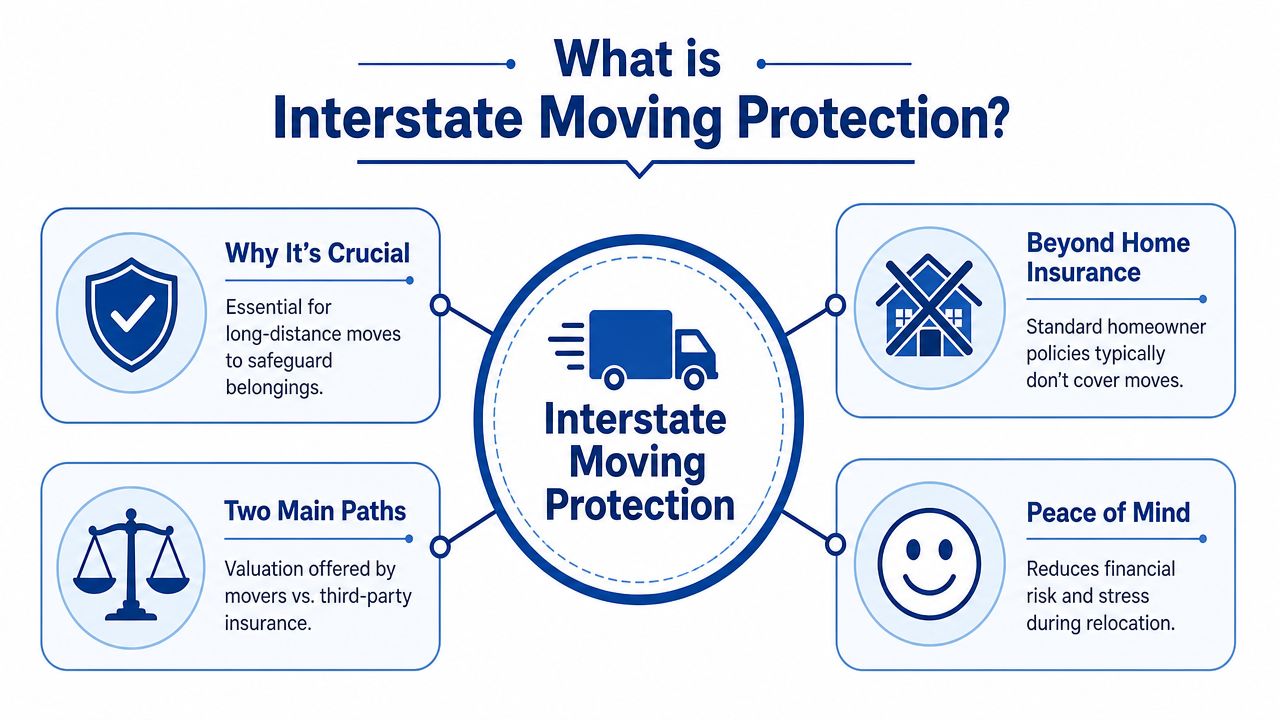
What Is Interstate Moving Protection Really
The phrase interstate moving insurance is often used to mean “cover for my things while they're being moved”. In Australia, that's a fair shorthand, but it helps to be more precise.
For interstate moves in Australia, household goods are generally not covered by a federally mandated released value system like the U.S. model. Instead, risk is usually governed by the removalist's contract plus any optional transit or marine cargo policy, as outlined in Australian interstate moving insurance guidance.
What people often get wrong
The biggest misunderstanding is assuming a removalist's business insurance automatically covers your belongings in transit. It usually doesn't work that way.
A removalist may carry public liability and workers compensation for its own operations. That protects against business-related risks. It is not the same thing as cover for your lounge, dining setting, artwork, office monitors, or packed kitchenware while they're travelling between addresses.
Practical rule: Ask two separate questions. “What insurance do you hold as a business?” and “What cover applies to my goods while they're in transit?”
That distinction matters even more in apartment relocations across Sydney and Newcastle. Body corporate managers often ask for the removalist's certificates before move day, especially for lift bookings and shared-area protection. Those certificates can satisfy building requirements without saying anything meaningful about cover for your belongings.
What actually protects your goods
In practice, there are a few layers to think about:
- Your contract with the removalist: This sets out liability, exclusions, and claims procedures.
- Transit or goods-in-transit cover: This is the part that may respond if your belongings are lost or damaged during the move.
- Your own documentation: Inventory lists, photos, declared values, and condition notes often make the difference between a clean claim and an argument.
If you want a plain-English overview of what goods cover can look like during transport, this guide to goods insurance in transit is a useful starting point.
Before any truck is loaded, build a home inventory. A practical way to do that is room by room, with photos and notes for condition, age, and standout items. These Vorby insurance inventory tips are worth reading because they make the prep work manageable instead of overwhelming.
Why this matters on real NSW moves
A straightforward house move from Lake Macquarie is one thing. A relocation from a Sydney apartment with basement loading restrictions, lift reservations, narrow access, and no legal all-day parking out front is another.
Those conditions don't mean something will go wrong. They do mean there are more handling points, more deadlines, and more room for confusion if no one has documented the job properly. The better the paperwork and the clearer the valuation basis before loading, the better protected you are if a dispute ever arises.
Valuation vs Third Party Insurance Explained
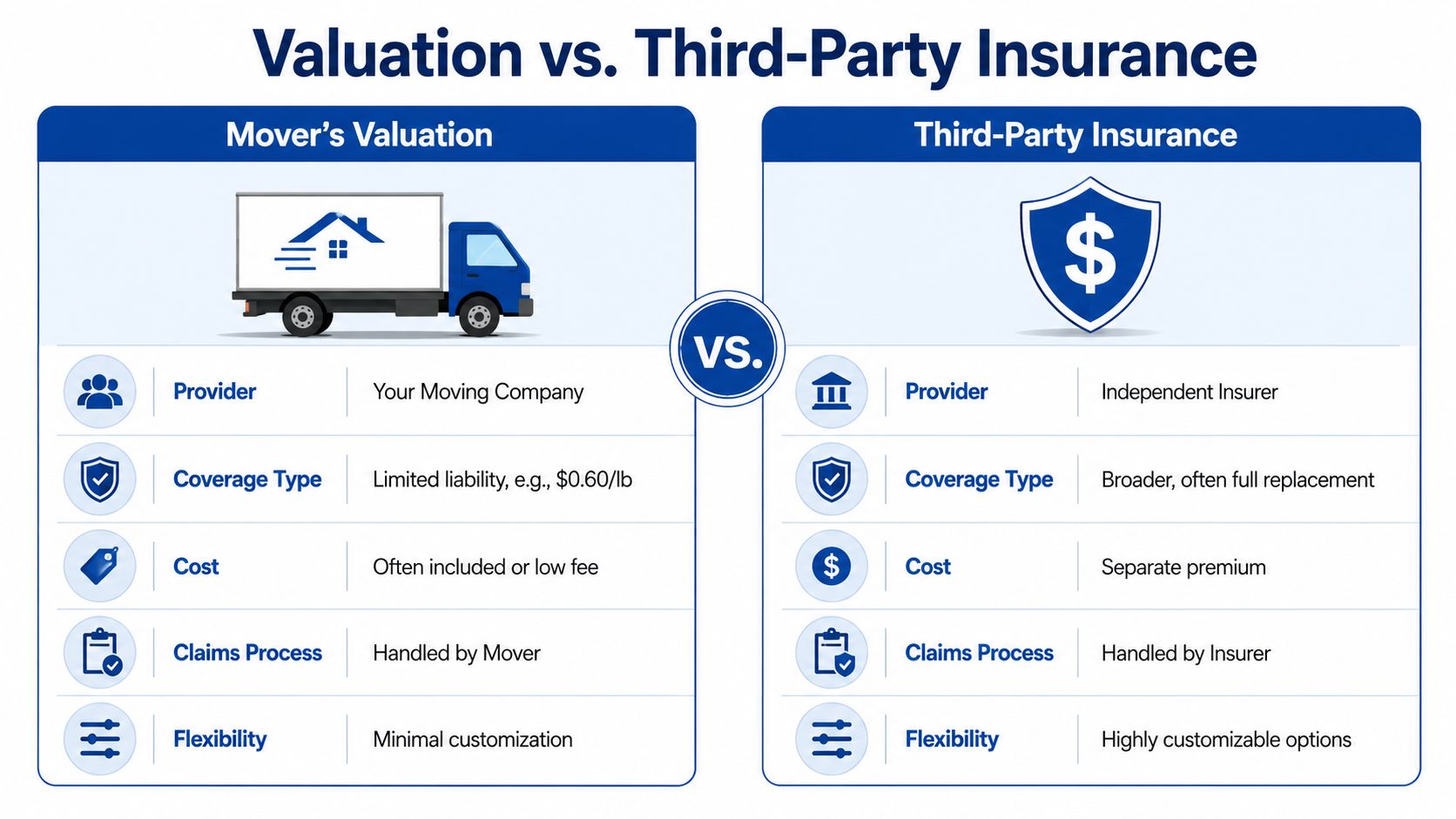
Once you've worked out that you want cover, you usually face two paths. You can accept a valuation arrangement tied to the removalist, or you can arrange a separate third party insurance policy.
They sound similar, but they work differently.
Valuation is about liability
A valuation arrangement is usually an agreement about the extent of liability the removalist accepts under the contract. It isn't always the same thing as a standalone insurance product issued by an insurer.
That's where people get tripped up, especially after reading US-based articles. In the U.S., federal guidance says interstate movers must offer either Released Value Protection or Full Value Protection, and the commonly misunderstood default pays only about 60 cents per pound per item, as explained by the FMCSA interstate moving protection guide. That's a very American framework. It's useful mainly because it shows how easily “protection” and “insurance” get blurred together.
Third party insurance is a separate product
A third party policy is generally issued by an insurance provider rather than the removalist. It may offer broader terms, different exclusions, and its own claims pathway.
That can suit people moving higher-value contents, households with fragile items, or business relocations where downtime and replacement pressure matter. Think about a small office moving from Newcastle into Sydney. If there are screens, specialist chairs, archived files, and tech packed into one job, the owner often wants formal policy wording and a direct insurer relationship rather than relying only on contractual liability.
A useful plain-language comparison sits in this guide on insurance for removals.
How the trade-off usually looks
Here's the practical difference.
| Option | Usually suits | Main advantage | Main caution |
|---|---|---|---|
| Removalist valuation | Standard household moves where simplicity matters | Easier to arrange as part of the move | You need to read the exclusions and declared value terms carefully |
| Third party insurance | Higher-value, fragile, specialist, or more complex moves | Can offer broader policy structure and more customisation | More paperwork, separate premium, and separate claims process |
A valuation arrangement can be perfectly suitable when the contract is clear, the inventory is accurate, and the goods are packed properly. A separate insurer can make more sense when you want another layer of formality or you're carrying items that need specific mention.
Here's a quick visual walkthrough if you prefer to see the difference explained aloud.
If a provider can't explain, in plain language, who pays, what's excluded, and how claims are lodged, keep asking questions before you book.
What works better in real life
For a routine family relocation from Terrigal to Sydney, many people want the simplest path. One quote, one contract, one set of documents. That usually pushes them toward the removalist's valuation option, provided the terms are clear.
For antiques, artwork, premium electronics, or a long-haul move with storage stages, separate insurance often feels more comfortable. Not because the removalist option is automatically poor, but because specialist items benefit from specialist wording.
What doesn't work is choosing based on the name alone. “Covered” only means something when you know the trigger for a claim, the evidence required, and any item limits or exclusions.
Understanding Costs and Coverage Levels
A family moving from Newcastle to a Sydney apartment often asks the same question after we finish the quote. “What should we insure for?” The practical answer is the amount it would cost to replace the contents you're putting on the truck, under Australian policy wording, not under the U.S. “released value” system people often read about online.
That distinction matters. In Australia, interstate moving protection is usually priced around the value you declare, the excess you choose, the type of goods involved, and whether the policy or valuation has item limits. The higher the declared value, the higher the premium or charge is likely to be. Inflate the figure and you pay more than you need to. Keep it too low and you can come up short when a claim is assessed.
If you want a plain-English explanation of how premiums are calculated, you can learn about insurance with My Policy Quote.
Set the value by replacement cost, not guesswork
Use current replacement cost for the goods you would need to buy again. That catches people out all the time. A lounge suite bought years ago for a modest amount may cost far more to replace now. The same goes for fridges, mattresses, desks, TVs, and kids' bedroom furniture.
For most moves between the Central Coast, Newcastle, and Sydney, start by grouping items into practical categories. Furniture. Whitegoods. Electronics. Clothing. Kitchenware. Garage and outdoor gear. Then stop on anything with a high replacement cost or a higher chance of breakage in transit.
A good budgeting habit is to compare your protection costs with the rest of the move budget before you book. This moving company cost calculator guide helps put that number in context.
Coverage levels are rarely as broad as people assume
The headline value is only part of the story. Many policies and valuation arrangements have per-item caps, excesses, exclusions, and stricter rules for certain goods. Jewellery, artwork, antiques, collectibles, and some electronics often need to be listed separately or packed to a stated standard before cover applies in full. Consumer guidance on transit insurance commonly warns that declared totals can sit alongside lower limits for individual items, as explained by Forbes Advisor's guide to moving insurance.
I tell customers to read the item limits before they read the sales language. That is where the trade-off sits.
A lower-cost option can be perfectly reasonable for a straightforward house move with ordinary household goods. It can also be the wrong fit for a home office setup, a marble dining table, or framed art going through a CBD loading dock.
Local conditions change the risk profile
Sydney moves bring their own pressures. Strata booking windows are tight. Lift access can be restricted. Some buildings require protective pads in lifts and hallways, and some loading zones give you very little margin if traffic runs against you. None of that means damage is likely. It does mean handling is more complex, and complexity is one of the things that should push you to check item limits and packing requirements properly.
For a move from Gosford or Terrigal into a Sydney unit, I'd pay close attention to anything large, fragile, or awkward to turn through corridors. For a Newcastle to Central Coast move in wet weather, I'd focus on how soft furnishings, timber pieces, and boxed electronics are packed and wrapped. The cover level and the preparation need to match the actual conditions on the day.
Worth remembering: The cheapest cover is often the one with the most restrictions once you read the fine print.
Your Step by Step Guide to Securing Coverage
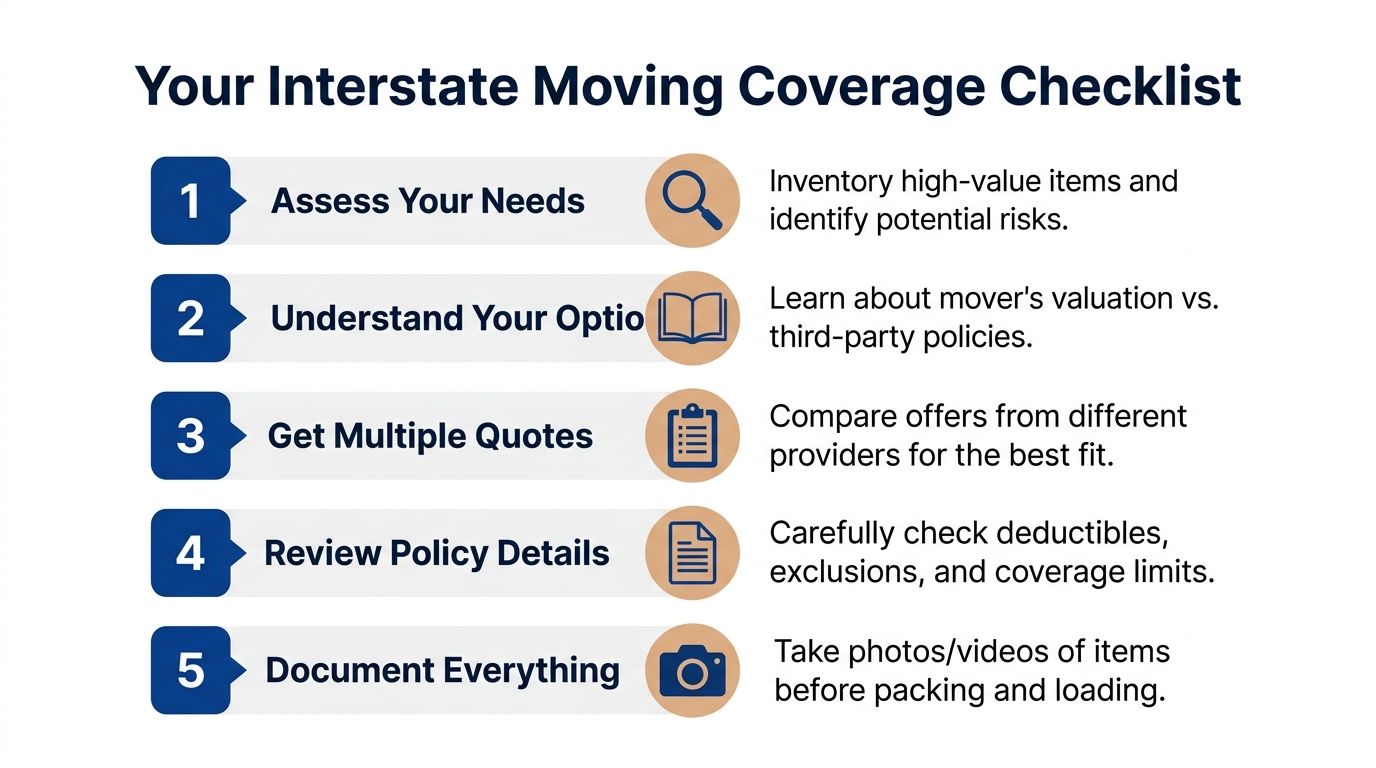
Most problems with interstate moving insurance start before the truck arrives. They start when nobody has written down what's being moved, what it's worth, or what condition it was in at pickup.
The cleanest way to avoid that is to work through the move in sequence.
Start with an inventory that's useful
A useful inventory isn't just a room list. It identifies goods that need extra attention, extra packing, or separate declaration.
If you're moving from a three-bedroom home in Wamberal to Sydney, you don't need a novel about every plate and saucepan. You do need a record of key furniture, electronics, artwork, mirrors, whitegoods, musical instruments, and any item you'd be upset to argue about later.
Declare high-value and fragile items early
Don't wait until move day to mention the expensive monitor, the antique sideboard, or the painting that came from a family estate.
Tell the removalist during quoting. Then confirm it again in writing. If the item needs special packing materials, custom crating, extra labour, or a different loading sequence, that can be planned properly. If you leave it until the crew is standing in the driveway, everyone is making rushed decisions.
The safest moves are the ones where the unusual items are the least surprising part of the day.
This matters in Sydney apartment buildings and some Newcastle complexes where lift times are fixed and loading zones are tight. If a building only allows moves during a narrow window, there's less room to improvise around a fragile item that suddenly needs different protection.
Check access and building requirements
Insurance and logistics overlap more than people expect.
If you're moving in or out of strata, ask about lift bookings, floor protection, loading dock rules, parking permits, body corporate certificates, and any restrictions on moving times. A building manager may ask for the removalist's insurance certificates for common property access. You still need to separately confirm what protection applies to your own goods.
For planning a longer relocation, this guide to best interstate removalists in Australia is worth reading because it highlights what to check before committing to a company.
Review the documents before loading
The paperwork should be clear enough that you can explain it back to someone else.
Check these points carefully:
What is being offered
Is it contractual valuation, transit cover, or a separately arranged third party policy?What value is attached to the shipment
Make sure the declared figure reflects your actual contents, not a rushed guess.What's excluded
Pay close attention to fragile goods, owner-packed cartons, pre-existing damage, and any condition about proper packing.How claims are made
Note who to contact, what evidence is needed, and when notification should happen.
Document condition at pickup
Do this before loading starts, not after the truck is packed.
Walk through the home and take dated photos of furniture, electronics, artworks, and anything with existing marks. If there's already a scratch on a timber buffet or a chip on the fridge door, record it. That protects both you and the removalist from arguments later.
For DIY packing, label cartons accurately and avoid overfilling. For breakables, use proper packing materials, not whatever happens to be in the cupboard. Professional packing is often the better option for kitchens, glassware, framed pieces, and business equipment because it removes doubt about how the item was prepared.
What to Do If Something Goes Wrong The Claims Process
A truck pulls up to a Sydney unit after sitting in traffic on the M1, the lift booking is tight, and everyone wants the unload finished fast. That is exactly when damage gets missed. A marked dining table, a cracked lamp base, or a crushed carton can turn into a harder claim if nobody records it properly at the door.
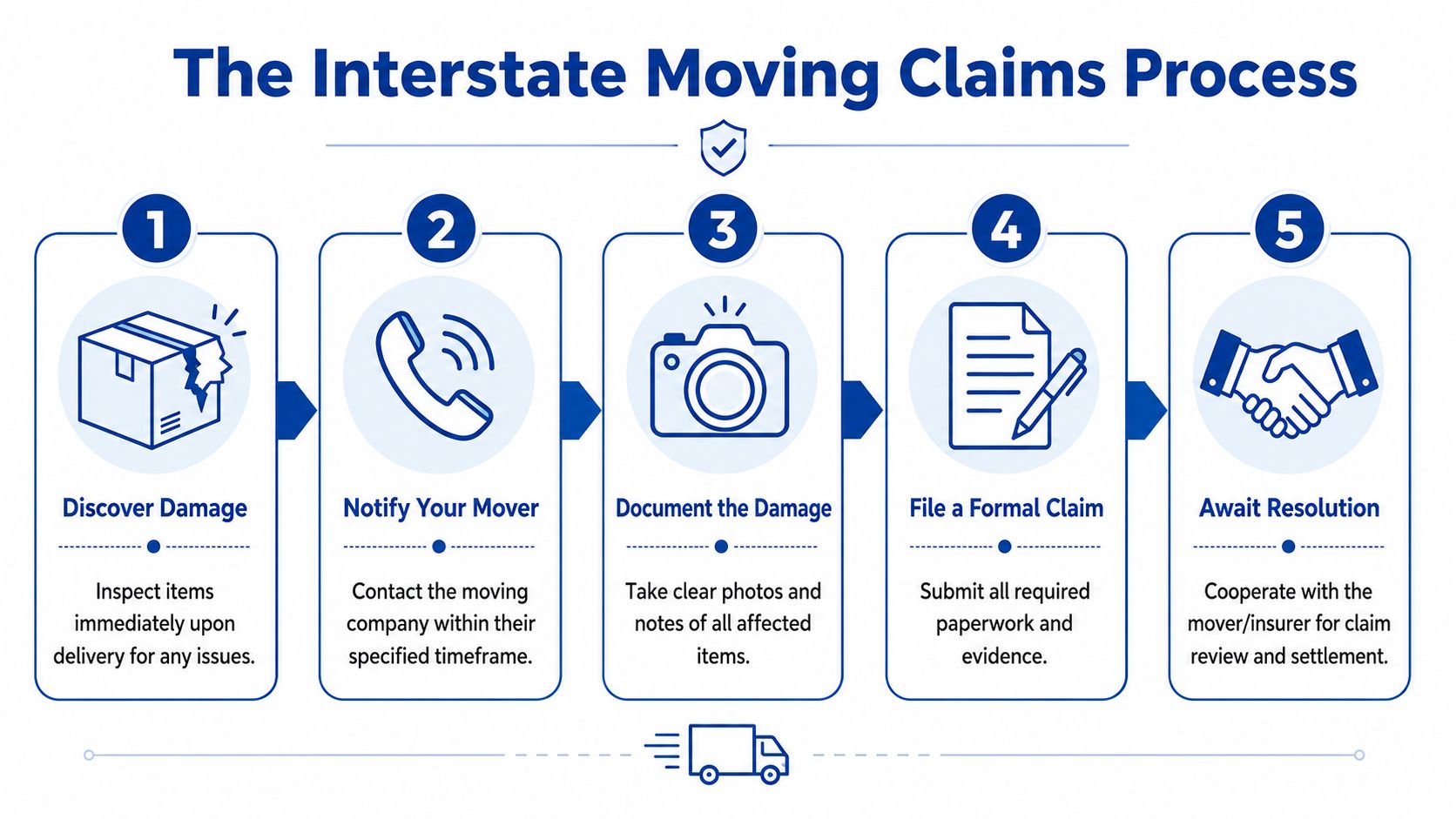
Good claims are built on timing and detail. In Australian interstate removals, that matters because you are usually dealing with contract terms, declared values, and insurer requirements, not the US-style "released value" system people often read about online. The process is more practical than people expect. Check the goods at delivery, record any issue clearly, and report it within the time set out in your paperwork.
Check goods as they arrive
Delivery is the key inspection point.
Before the crew leaves, look over the items most likely to show handling damage first. Focus on timber furniture, whitegoods, TVs, artwork, mirrors, mattresses, and any carton with crushing, punctures, water marks, or a damaged seal. On apartment moves in Sydney, Newcastle, and the Central Coast, common areas and lift pressure can make delivery feel rushed, so it helps to decide in advance who is doing the checking while everything is coming off the truck.
What to do on the day
Keep the process simple and orderly:
- Inspect visible problem areas first: Check corners, legs, glass panels, screens, and carton bottoms.
- Write down any exceptions at delivery: If there is delivery paperwork or a condition report, note the issue there before the crew leaves.
- Take clear photos straight away: Capture the item, the damage, and any wrapping or carton condition around it.
- Keep the packing materials: Crushed cartons, torn wrap, and broken internal packing can help show what happened.
- Separate new damage from old marks: That saves arguments later and keeps the claim cleaner.
A good comparison is a vehicle handover. This car shipping inspection report comes from a different transport field, but the lesson is the same. Condition notes carry more weight when they are made at handoff, not after the house is half unpacked and people are working from memory.
How to make the claim stronger
The strongest claims read like a clear timeline.
List the item properly. State where it was loaded, where it was delivered, what its condition was before pickup, what you found at delivery, and when you notified the removalist or insurer. Attach photos, inventory references, and any high-value declaration if one applies. If the item was owner-packed, say that plainly. If Gentle Giant packed it, include that too, because packing responsibility can affect how the claim is assessed.
Keep the tone factual. Dates, item descriptions, and photos do more work than frustration ever will.
What often causes trouble
These are the problems I see again and again on interstate moves:
| Problem | Why it creates friction |
|---|---|
| Damage reported late | It is harder to connect the issue to delivery |
| Item description is too vague | The claim may not match the inventory clearly |
| No delivery note or photos | There is less evidence of condition at handover |
| Special item not declared properly | Valuation or insurer terms may apply differently |
There is also a practical issue with strata moves. If access is tight, unloading may happen in stages, with some items going into a loading bay, lift lobby, or basement holding area before they reach the unit. That creates more handling points and more reason to inspect carefully as each item comes in.
If you are choosing between providers, read interstate moving company reviews from Australian customers and pay attention to how the company communicates when something goes wrong. Anyone can promise care before move day. The better test is whether the paperwork, reporting process, and follow-up are clear when a real problem needs to be sorted out.
FAQs for Your Interstate Move
Will my home and contents policy cover my move
Sometimes there may be limited overlap, but you shouldn't assume your existing home or contents policy automatically covers a relocation. Many people only discover the gap after they've booked the truck.
Ask your insurer directly whether goods are covered in transit, during loading and unloading, and during any temporary holding period. Then compare that answer with the removalist's contract so you know where responsibility starts and ends.
Do apartment moves need extra attention
Yes, often more than house moves.
A Sydney unit, Newcastle apartment, or Central Coast strata complex may have lift bookings, restricted move times, shared-area protection rules, and loading access limits. Those details affect handling and timing, which is why they should be discussed before move day, along with any building requirements for insurance certificates.
Does professional packing make a difference
It can.
Professional packing usually gives fragile items a better chance of arriving safely because the materials and methods are more consistent. It can also make documentation cleaner, especially for glassware, artwork, electronics, and awkward pieces that need custom protection. DIY packing can still work well, but only if cartons are packed properly, labelled clearly, and not overloaded.
What about business relocations
Office relocations need the same core thinking, but the risk profile is different.
If you're moving a business between the Central Coast, Newcastle, Lake Macquarie, and Sydney, look closely at computers, monitors, specialised equipment, archived files, and anything that would interrupt operations if damaged. The best cover in that setting is the one that matches both the item value and the practical cost of downtime.
Is interstate moving insurance worth it for a smaller move
That depends on what you're moving, not just how much of it there is.
A small move can still include expensive laptops, designer furniture, artwork, or sentimental items that are hard to replace. A larger move full of everyday furniture may feel lower risk by comparison. The better question is whether you'd be comfortable carrying the loss yourself if something went wrong.

How do seniors and special-needs clients approach this
Usually with more planning and less guesswork.
Moves for seniors or clients with accessibility needs often involve extra care around medication storage, mobility equipment, essential furniture setup, and timing. In those cases, clear inventories, careful sequencing, and well-documented protection arrangements matter even more because there's less room for disruption.
If you're planning an interstate relocation from the Central Coast, Newcastle, Lake Macquarie, or Sydney, Gentle Giant Removals & Relocations can help you sort through the practical side of moving protection, packing, access planning, and timing. For urgent moves, it's best to call directly. If you're still comparing options, you can also request a free moving quote or organise a free in-home assessment to get clear advice before you book.