
Backloading is when a removalist fills a truck that would otherwise return empty from a job, so you pay only for the space your belongings use. For NSW moves, that often means 30 to 50% less than a dedicated removal service when your dates are flexible, and on some routes it can be up to 50% cheaper.
If you're sitting on the Central Coast right now, trying to work out how to get your things to Sydney or Newcastle without paying for a whole truck you don't need, backloading is usually the option people hear about first and understand last. The name sounds a bit industry-heavy, but the idea is simple. It's shared truck space on a route that's already happening.
That can make real sense if you're moving out of a unit in Gosford, taking a smaller load from Terrigal to Newcastle, or relocating a few rooms' worth of furniture into a Sydney apartment. It can also be the wrong fit if your timing is tight, your building has strict lift booking rules, or you need exact-day delivery. That's where most confusion happens, so it's worth looking at the practical side before you book anything.
If you're weighing up backloading interstate removals, the key is knowing where the savings come from and what you give up in return.
What Is Backloading and How Can It Save You Money
Say you're moving from Woy Woy to a flat in Newcastle and you've got a sofa, bed, dining set and a handful of cartons. Hiring a full truck for that can feel like paying for empty air. Backloading works differently.
Backloading removals means your goods travel on a truck that's already done a delivery and would otherwise head back with unused space. In plain language, it's a bit like carpooling for your furniture. A removalist uses spare room on the truck for another customer heading the same way, and you pay for the space your belongings take up rather than the whole vehicle. That's the core definition given in this backloading overview from Quick & Easy Removalist Sydney.
The reason it can save money is straightforward. The truck is already travelling that route, so the operator isn't trying to recover the full cost of a dedicated trip from one customer alone. On Australian backloading jobs, pricing is often benchmarked at $150 to $250 per cubic metre, with 30 to 50% lower costs than dedicated removals depending on route and demand, according to Upmove's guide to backloading removals. Cubic metres just means the space your belongings take up inside the truck.
Practical rule: Backloading usually suits people who can be flexible on timing more than people who need the cheapest move at any cost.
There's another benefit people often like once they hear it properly. Because the truck space would otherwise go unused, backloading reduces empty return trips and makes better use of each run. For many households, that's a nice bonus alongside the savings.
The Backloading Process Explained Step-by-Step
Understanding of the concept generally brings comfort once its definition is known. The next question is how it works from enquiry to delivery.
Getting the quote right
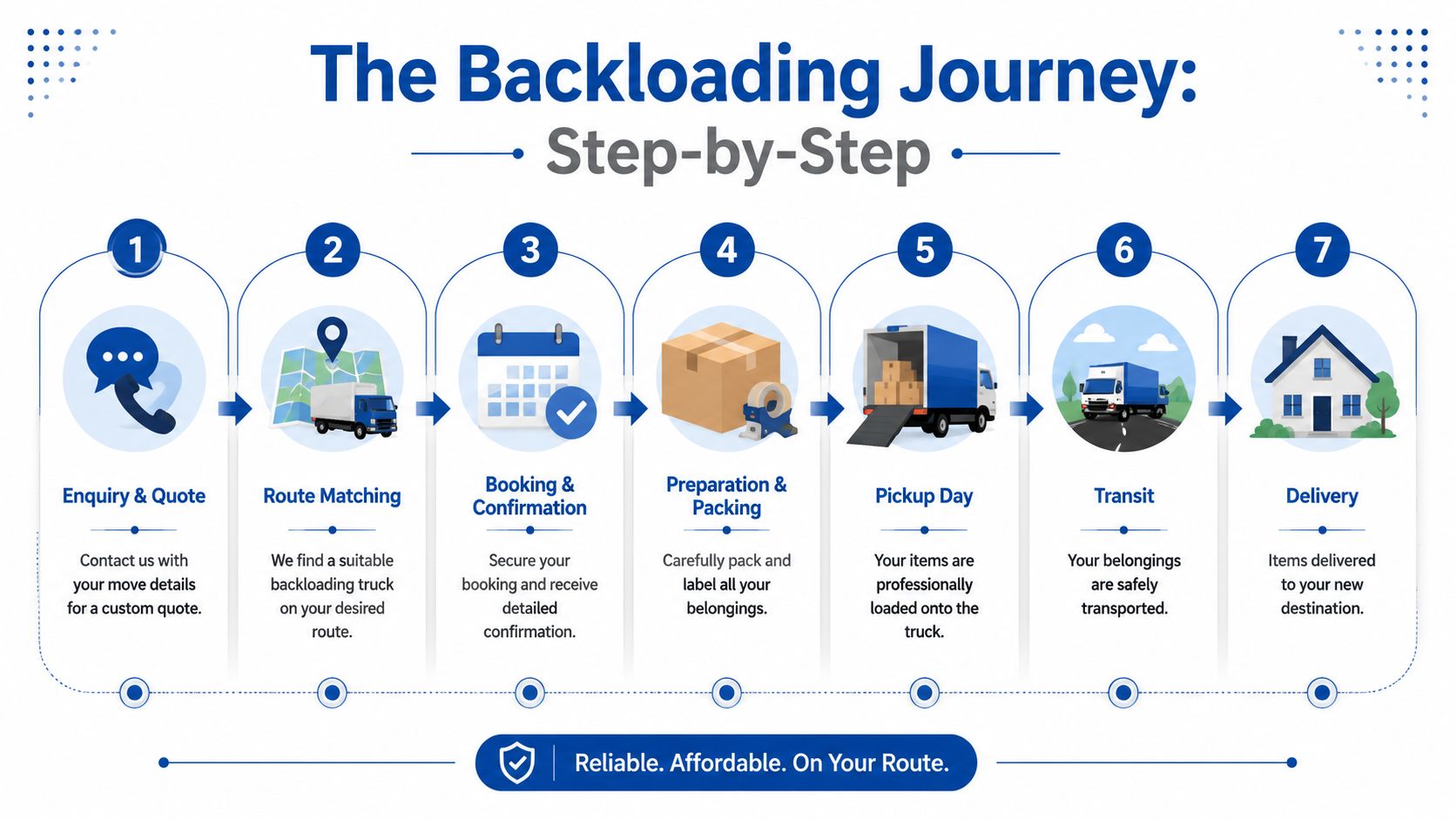
The process starts with the details of your move. A removalist will ask for your pickup suburb, delivery suburb, what you're taking, and roughly how much space it will use. That volume is measured in cubic metres, which means the amount of room your belongings occupy in the truck.
If you're not sure how to think about that, it helps to look at furniture as truck space, not room names. A fridge, washing machine, queen bed, two-seater lounge and several labelled cartons all add up to a cubic metre total. If you want a better feel for how loads are arranged, this guide on how to pack a moving truck shows why the way items fit together matters.
Matching your move to a route
After that, the removalist checks whether a truck is already travelling your route with spare capacity. This is the part that makes backloading possible. On common NSW runs between the Central Coast, Sydney and Newcastle, there's often a better chance of finding that match than on less frequent routes.
The key difference is timing. The backloading process relies on a logistical protocol where the client agrees to a flexible date window, usually 1 to 2 weeks, and the removalist uses specific load separation and labelling so shared goods don't intermingle even though they travel on the same truck.
The date window isn't a minor detail. It's the part of the agreement that makes the lower rate possible.
Pickup, loading and delivery
Once the route is confirmed, you book in and prepare your goods for collection. On pickup day, the crew loads your items professionally and keeps them distinct from other customers' goods through clear labelling and physical separation inside the truck. That matters for safety, accountability and smoother unloading at each stop.
A good operator will also ask about access before the day. On the Central Coast, that might mean steep driveways in coastal areas or limited parking in older streets. In Sydney, it can mean loading zone restrictions, body corporate approvals, lift bookings and narrow apartment loading docks. In Newcastle and Lake Macquarie, heritage apartments, shared accessways and tighter suburban streets can slow things down if nobody plans ahead.
For protection, ask exactly how your goods will be wrapped, how fragile items are segregated, and what full insurance coverage applies while your belongings are in transit. Shared truck space doesn't mean lower standards. It should still mean proper blankets, secure loading, safe lifting practices and careful handling from pickup to final placement.
Backloading vs Dedicated Removals A Clear Comparison
Say you're moving from Gosford to Newcastle and your dates have a bit of wiggle room. Backloading can be a sensible way to keep costs down. Now change the scenario. You're taking a full family home from Terrigal into a Sydney apartment with a booked lift, a loading dock time, and school starting on Monday. In that case, the cheaper option can become the harder option.
The biggest difference is what you're booking
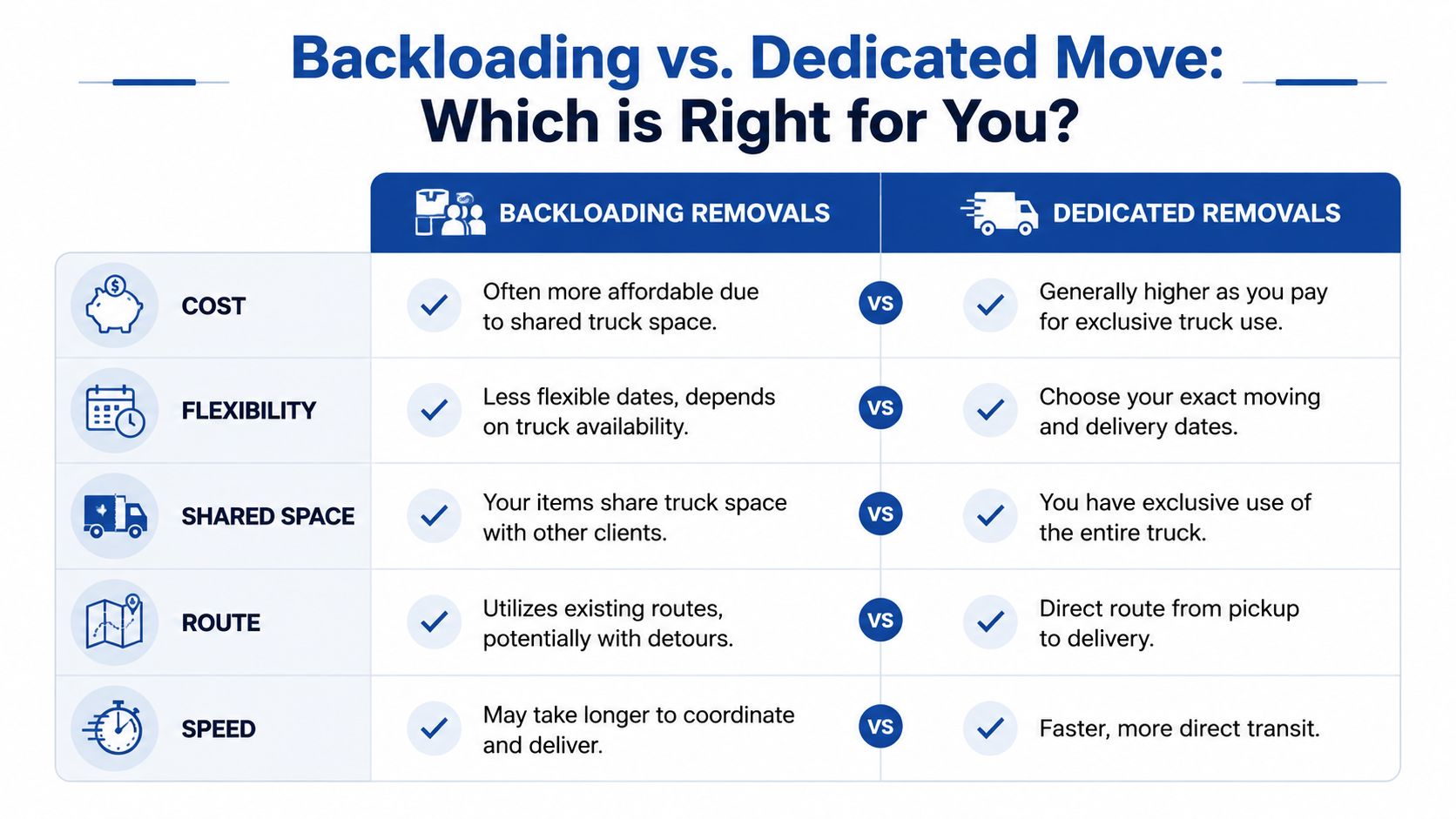
Backloading means you're booking space on a truck that is already running that route. Dedicated removals means you're booking the truck and crew for your move alone.
A simple way to look at it is a bus seat versus a taxi. Both get you there, but they work differently. Backloading usually lowers the price because you're sharing the trip. Dedicated removals usually give you tighter control over timing because the run is built around your job.
That difference matters more than many people expect. Price is only one part of the decision. The key question is whether your move has enough flexibility to suit a shared run.
If you're comparing local and interstate removals, this is often the line between them. Shared capacity suits some moves well. Exclusive capacity suits others far better.
A practical comparison
A one-bedroom move from Gosford to Newcastle often suits backloading nicely. The route is common, the load is usually manageable, and plenty of renters can work around a broader delivery window if their lease overlap gives them a few spare days.
A three-bedroom home from Terrigal to Sydney is a different job. A family move usually brings more furniture, more boxes, more coordination, and less room for delay. If you've already lined up parking permits, utility connections, cleaners, or access times with a strata manager, dedicated removals can save a lot of stress.
| Factor | Backloading | Dedicated removals |
|---|---|---|
| Cost structure | Pay for the space you use | Pay for exclusive truck use |
| Dates | Flexible date window | Set pickup and delivery timing |
| Truck space | Shared with other customers | Reserved for your load |
| Route | Follows an existing run | More direct |
| Best fit | Smaller or moderate loads with timing flexibility | Larger homes, strict deadlines, more complex access |
Access and building rules can outweigh the price difference
Complicated access makes certainty more valuable.
Sydney apartments are the clearest example. Some buildings require a booked lift, a loading dock slot, advance notice to building management, and proof of insurance before a truck can even start unloading. Miss the time slot and the whole day can blow out.
Newcastle has its own version of that problem. Older buildings can mean narrow stairs, awkward entries, and less forgiving parking. On the Central Coast, the challenge is often different but just as real. Steep driveways, tight suburban streets, coastal weather, and homes set above street level can all slow loading and unloading.
In those situations, a dedicated service often earns its keep. You're paying for more control, not just more truck space.
If your building gives you one approved move window, choose the service that fits that window.
Backloading still makes good sense for plenty of Central Coast moves into Sydney or Newcastle. It just works best when your timing has some breathing room, your access is straightforward, and your savings matter more than having the truck run to a tight personal schedule.
Is Backloading the Right Choice for Your Relocation
Honesty matters. Backloading is a smart option in the right circumstances, but it isn't the right answer for every household or every office relocation.
When backloading makes good sense
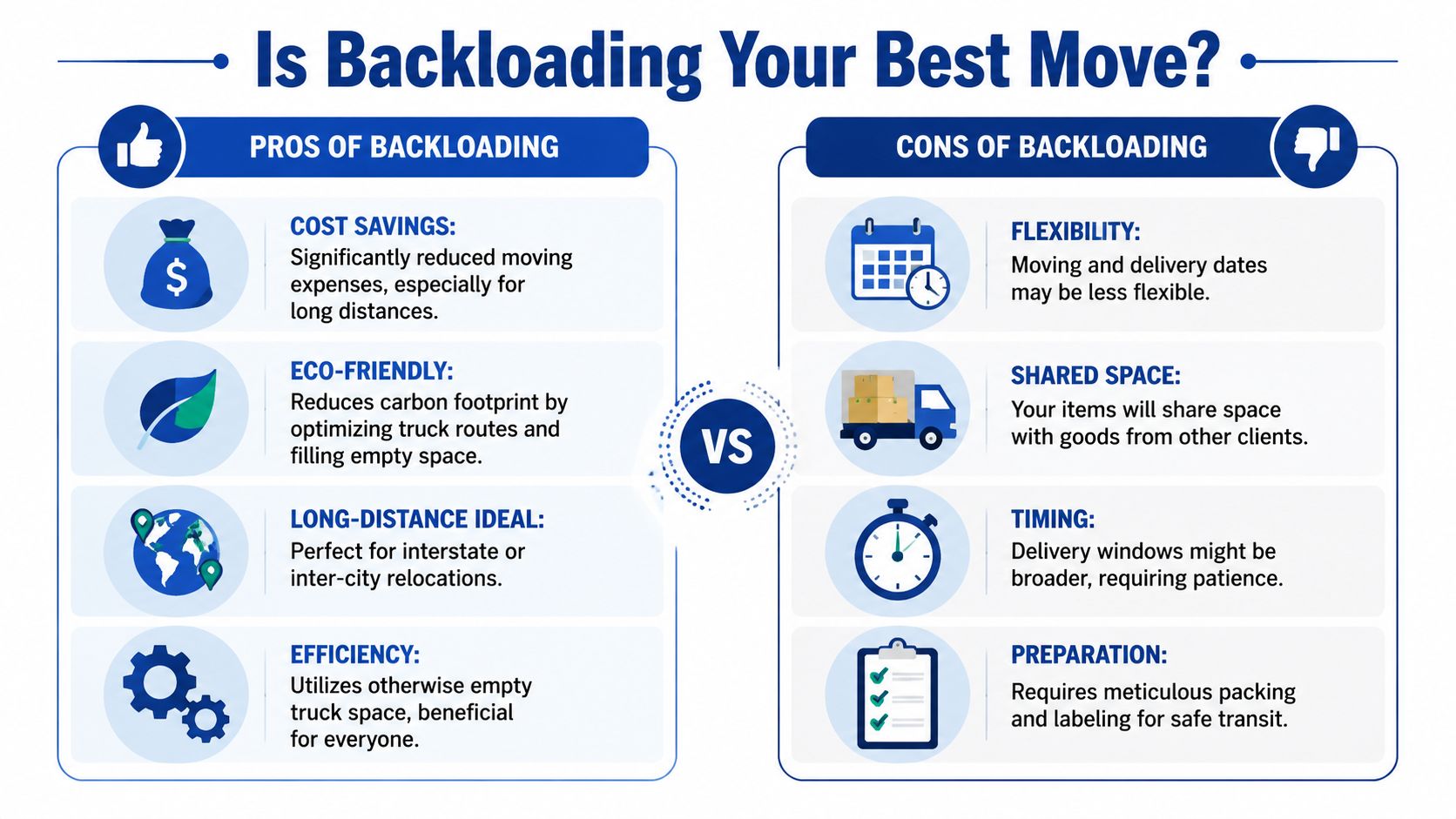
Backloading usually suits you if your dates have some breathing room and your load isn't especially awkward. A renter moving from The Entrance to Newcastle, a couple relocating from Gosford to Lake Macquarie, or someone taking selected furniture into a Sydney unit can all benefit when the schedule is flexible.
It also suits people who don't mind planning around a window instead of an exact day. If you've got a few days at each end, family support, or temporary sleeping arrangements while your goods are in transit, the lower cost can be worth it.
A few signs backloading is worth considering:
- Flexible move-in timing: You can work within a date window rather than needing one locked delivery day.
- Smaller or partial household loads: You're not moving a packed large family home with every room full.
- Budget pressure: Keeping relocation costs down is a real priority.
- Common NSW route: Your move is between places like the Central Coast, Sydney, Newcastle or Lake Macquarie where trucks travel often.
When a dedicated move is the better call
If your timing is strict, don't force a backload to fit. That's where frustration usually starts.
Industry reporting notes that while most backloads arrive within the estimated window, around 15% can face delays of 3 to 7 days or more, which is a real time cost for people with school enrolment deadlines, business relocations, or fixed start dates in Newcastle or Sydney, according to this analysis of backloading timing risks. If you're opening an office on Monday, handing keys back Friday, or coordinating aged care support for a parent, that uncertainty may not be acceptable.
Dedicated removals are often the safer choice when:
- Your building controls access tightly: Think strata lift bookings, body corporate rules, loading dock times or limited parking permits.
- You have high-value or delicate items: Pianos, fine furniture, artwork or anything that needs extra handling and careful timing.
- You need minimal downtime: Especially for business relocations where every extra day affects operations.
- Your family timeline is fixed: School commencement, settlement dates, or a job start in Sydney.
Shared space can still be handled professionally, but a strict deadline changes the whole decision.
There's also the insurance question. Before you agree to any service, read the details of goods insurance in transit and ask what full insurance coverage applies to loading, transport and unloading. That's especially important if your goods are moving through several stops before delivery.
A Locals Guide to Backloading in NSW
On paper, backloading sounds like a national logistics concept. In real life, it's often a very local NSW story.
Why it works well on our local corridors
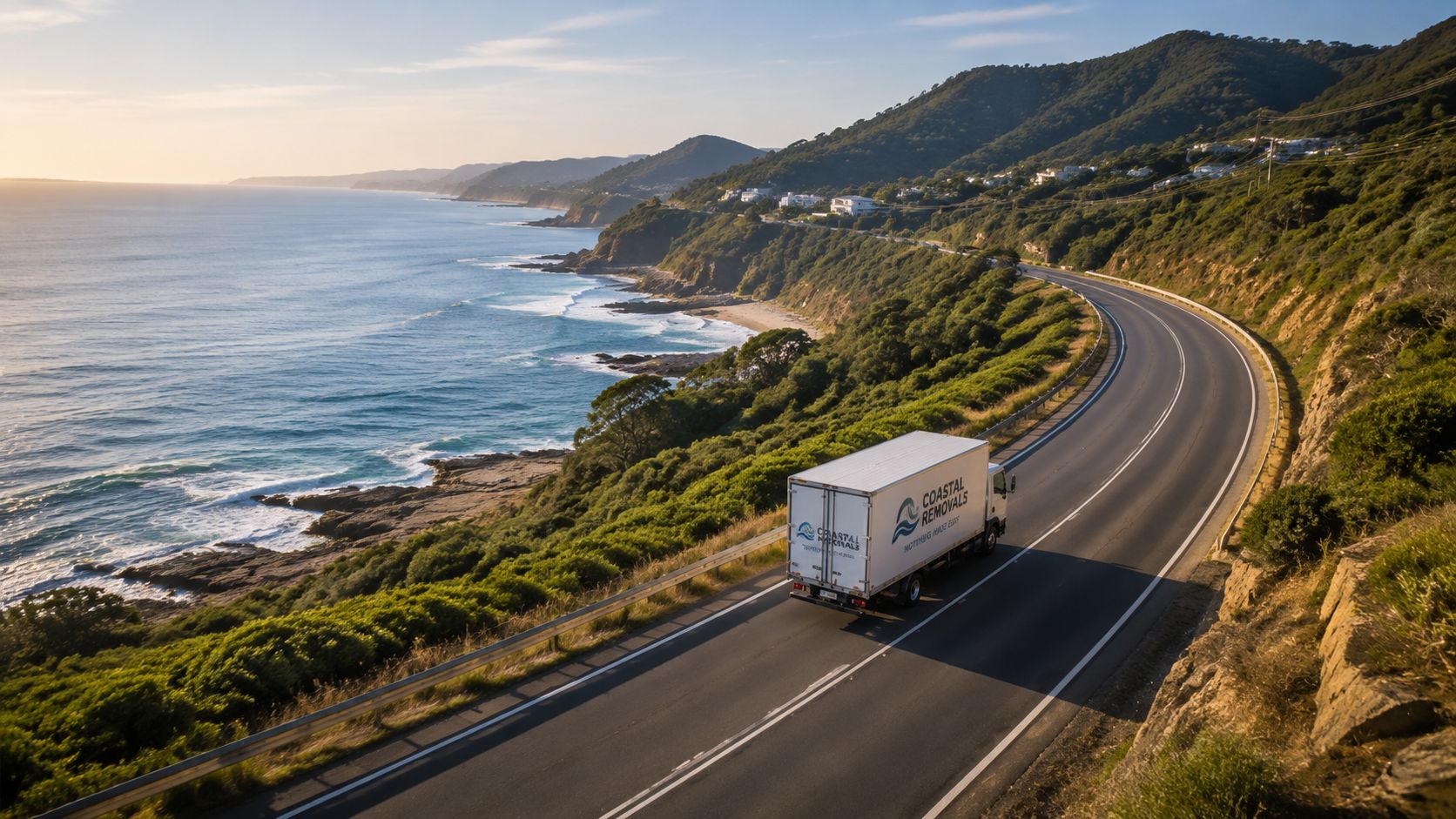
Backloading utilizes unused truck space, which can reduce removal costs by up to 50%. It's especially effective on common routes between Sydney, Newcastle and the Central Coast, where trucks often return with spare capacity after a delivery, as explained in this Find a Mover article on backloading removalists.
That local pattern matters more than people realise. If a truck has completed a larger house relocation into Sydney, or delivered commercial furniture into Newcastle, there may be usable space on the return leg. That's where a backloading opportunity appears for someone moving from a unit in Parramatta to Gosford, from Erina to Hamilton, or from Lake Macquarie down toward Sydney.
The local issues that affect your move
NSW routes aren't all the same. Sydney has busy traffic, restricted loading zones and apartment buildings that often require booked lift times and notice to building management. If you're going into a CBD or inner-suburban block, parking permits and loading bay access need checking early.
On the Central Coast, the challenge can be very different. Coastal homes around Terrigal, Avoca or Copacabana can have narrow driveways, stairs, weather exposure and awkward access for larger vehicles. In Newcastle, older terraces and heritage apartments can mean tighter doorways, on-street parking pressure and move-in restrictions that shape what truck size and crew plan will work best.
A local move can also become an interstate-style planning job if access is difficult. If you're in a strata complex, confirm these points before lock-in:
- Lift bookings: Ask whether the building allocates a moving window and whether padding is required inside the lift.
- Shared areas: Check rules for hallways, entry protection and after-hours access.
- Parking: Find out whether council permits or strata approval are needed for truck access.
- Contact person: Make sure the removalist has the concierge, building manager or site contact details on hand.
A backload can work beautifully on these routes. It just works best when the route, timing and property access all line up.
How to Prepare for a Smooth Backloading Move
Good preparation makes a bigger difference on a backload than people expect. Because your items share truck space, the goal is simple. Make every piece easy to identify, safe to handle, and ready for a journey that may include multiple stops.
Label clearly and inventory everything
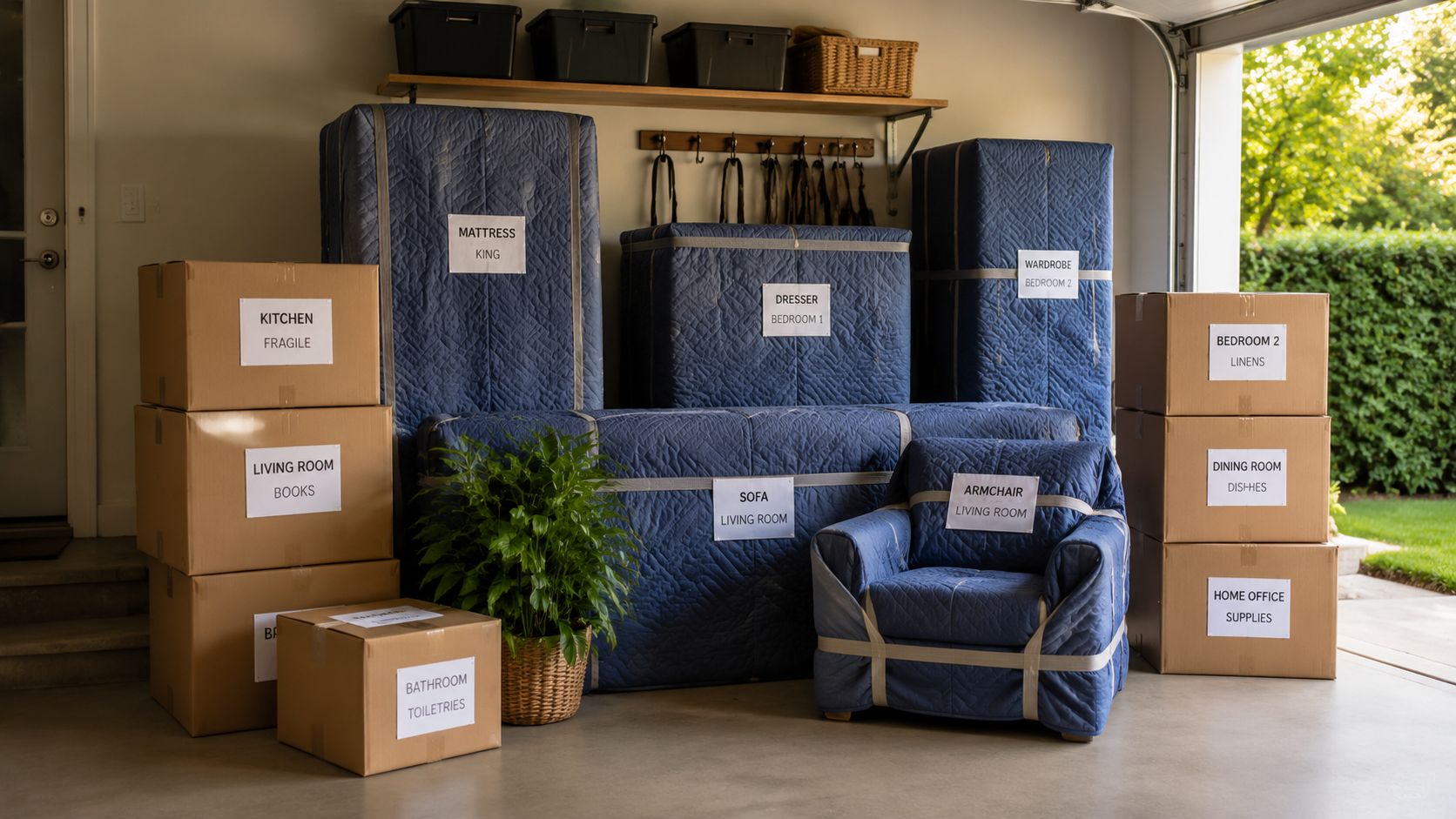
Backloading allows customers to share truck space and pay only for the volume they use, which makes clear labelling and a detailed inventory essential for a smooth process on NSW routes, as noted in this Zoom Removals explanation of backloading.
Don't just write "kitchen" on a carton and hope for the best. Use your name, origin suburb, destination suburb and carton number. Something like "J. Smith, Gosford to Newcastle, Kitchen, Carton 4 of 12" is much easier to track than a vague room label.
Keep your inventory practical, not fancy. A written list or spreadsheet is enough if it includes major furniture pieces, fragile items and carton counts. If you want a broader planning template, a moving checklist for Australia helps keep the admin side under control too.
Pack for travel, not just storage
A backloading truck may make several pickups and deliveries before your goods are unloaded. That means fragile pieces need proper wrapping, padding and stable stacking. Use quality packing materials, tape cartons firmly, and don't leave half-empty cartons that can crush when weight shifts.
If you're doing your own packing, focus on the breakables first. Plates should be wrapped individually. Glassware needs cushioning on all sides. Artwork should be protected with corner guards and rigid outer wrapping where possible. For furniture, remove loose shelves, secure doors and bag any screws or fittings so they stay with the item they belong to.
Packing tip: If an item would worry you in the back seat of your car on a long drive, it needs more protection before it goes on a truck.
Sort access, timing and handover details early
Preparation isn't only about cartons. It's also about the sites at both ends.
- Confirm access conditions: Tell the removalist about stairs, lifts, narrow streets, steep driveways and low-clearance parking.
- Handle approvals early: If you're moving into a strata building, organise lift bookings, body corporate notice and any required floor or wall protection.
- Be ready on the day: Disconnect appliances, empty drawers where needed, and keep walkways clear for safe lifting.
- Arrange someone at delivery: If the truck arrives within the agreed window, someone needs to be available to receive and check the goods.
Professional packing can be worth it if your schedule is tight or you have delicate items. DIY packing can save money, but only if you've got time to do it properly. Either way, the standard shouldn't change. Safe handling, clear identification, property protection and reliable communication still matter. That's what keeps a shared-load move organised.
If you're planning a move between the Central Coast, Sydney, Newcastle or Lake Macquarie and want practical advice on whether backloading suits your timing, budget and access conditions, Gentle Giant Removals & Relocations can help. You can get a free moving quote, request a free in-home assessment, or call for urgent moves when dates are tight. We're local, fully insured, and focused on careful handling, clear communication and reliable service. On Time, Every Time.