

You've probably got the keys deadline circled already. Your lease ends on Friday, the new place in Gosford or Newcastle isn't ready until Monday, and suddenly moving furniture from an apartment isn't just about a truck. It's about where everything goes in between, how it gets there safely, and whether the building will even let you use the lift when you need it.
That's where storage stops being a side issue and becomes part of the move itself. For apartment relocations across the Central Coast, Sydney, Newcastle, and Lake Macquarie, the smoothest jobs usually come from treating storage, access, cleaning, and transport as one coordinated plan. If you're also juggling bond return tasks, it helps to line up support like Altitude Cleaning Crew's services for renters so the apartment is ready to hand back while your furniture is already on its next step. If you want a clearer picture of how staged storage works, our guide to Storaway self storage options is a useful starting point.
Your Guide to Apartment Moving and Storage
A lot of apartment moves don't fail because of the furniture. They fall over because the timing doesn't line up. A tenant in Terrigal might need to be out before the new unit in Newcastle is available. A seller in Woy Woy might want the apartment cleared early so it presents better for inspections. Someone downsizing from a larger unit in Sydney may not even know what will fit into the next place.
Storage gives you breathing room.
Used properly, it lets you separate two problems that often get mashed together. One is getting out of the current apartment on time. The other is deciding when and where every piece of furniture should land next. When those are handled separately, the move becomes more organised, safer, and easier on your body.
Practical rule: In apartment moves, the biggest delays usually come from access and timing, not from distance.
That matters even more in buildings with strata rules, booked lifts, narrow stairwells, shared loading zones, and limited parking. If your removalist can coordinate collection, protection, transport, storage, and later delivery as one workflow, your furniture gets handled less often. Less handling usually means fewer chances for chipped corners, torn fabric, scraped walls, or lost hardware.
Why Storage Is a Smart Move for Apartment Relocations
You hand back the keys at 10 am, but the new apartment will not release until Friday. In that gap, storage stops the move from turning into a chain of awkward favours, rushed lifting, and furniture left wherever it fits.
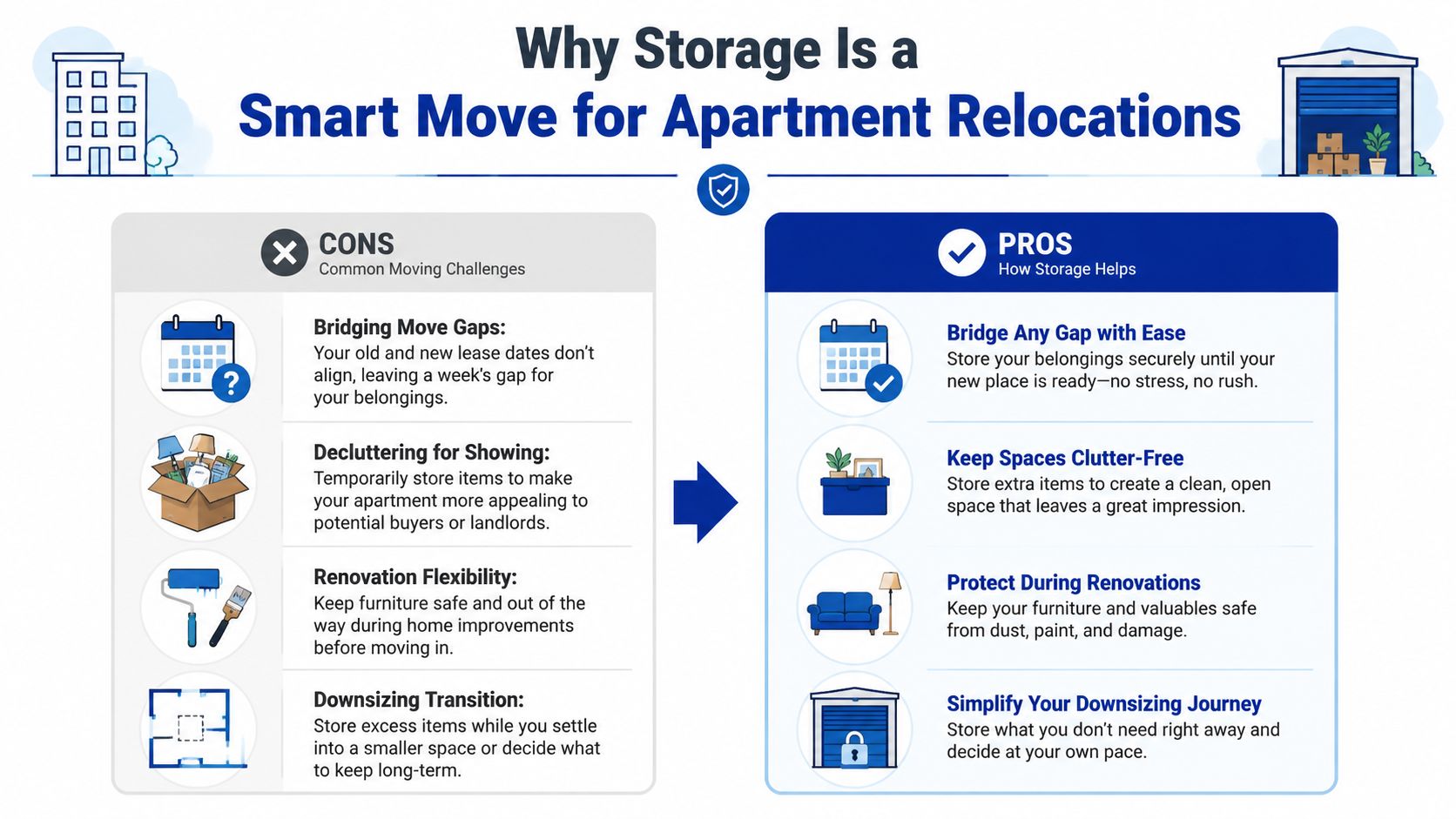
For apartment moves, storage works best as part of the same job, not as a separate errand. The practical advantage is simple. Your furniture can be collected once, protected properly, stored for the required period, then delivered when the next building is ready. That usually saves a second round of loading, a second truck booking, and a lot of unnecessary handling.
When dates shift and access stays strict
Settlement gaps, lease overlaps, delayed cleaning, and last-minute building bookings are common on the Central Coast, in Sydney, and up through Newcastle. Apartment buildings do not care that your dates almost matched. If the lift booking is for Tuesday and your new place is not available until Thursday, the furniture still has to go somewhere safe.
Storage gives you a controlled pause point. Instead of pushing everything into a garage, a hallway, or a borrowed spare room, the move can be completed on time and the delivery can happen when access is confirmed. That matters for heavier pieces too, because every extra unload and reload increases the risk of gouged timber, crushed boxes, and strained backs.
When the apartment needs to be cleared before the move is finished
Selling, final inspections, end-of-lease cleaning, repairs, and styling all get easier when bulky furniture is out of the way. Rooms photograph better. Trades have space to work. Cleaners can reach the edges properly.
I often see this with units that are technically still occupied but need to present well before the owner or tenant is ready to make final decisions. A short holding period solves that neatly. If you are weighing up whether a brief storage window is enough, this guide to short-term furniture storage explains where that option makes sense.
When you are downsizing and do not want to guess
A smaller apartment can change the plan fast. The lounge might fit but block the walkway. The bed frame might go in, but the drawers no longer open properly. Storage gives you time to move in safely first, then decide what earns its place.
That is a better outcome than forcing oversized furniture through tight corners or paying to move the same item twice in one week.
If a piece has real value, good build quality, or sentimental importance, hold it in storage first and decide later with measurements in hand.
Why renters use storage so often
Renters deal with fixed vacate dates, agent inspections, body corporate booking rules, and less control over handover timing. Owners run into settlement and presentation issues. Renters usually feel the pressure first because the deadline is sharper.
That is why storage comes up so often in apartment relocations. It gives the move some breathing room without losing control of the job. When a removalist coordinates the pickup, storage period, and return delivery as one plan, the whole process stays tidier, safer, and easier to manage.
Choosing Your Central Coast Storage Type
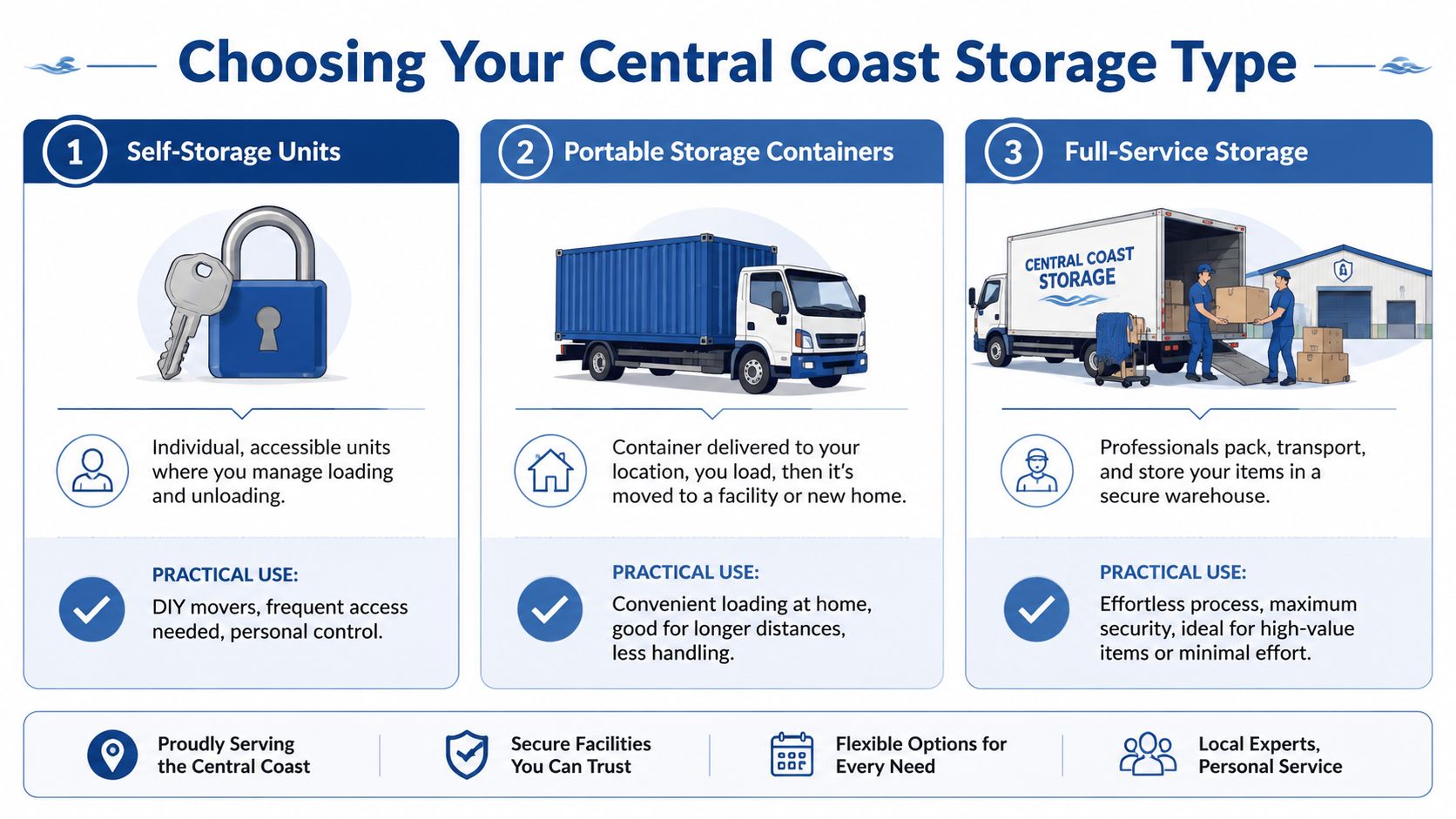
Not all storage works the same way. The right option depends on how much effort you want to put in yourself, how often you'll need access, and how awkward the apartment access is.
Self-storage units
Self-storage suits people who want direct control and expect to visit their items regularly. You load, transport, unload, and organise the unit yourself. That can work well if you're moving a small amount of furniture from a ground-floor apartment and you're comfortable doing the labour.
The trade-off is effort. You still need the right vehicle, trolleys, blankets, straps, and enough people to lift safely. If the apartment has stairs, a small lift, a long walk to parking, or a loading dock booking, self-storage gets harder quickly.
Here's a simple comparison:
| Storage type | Best for | Main trade-off |
|---|---|---|
| Self-storage | Frequent access and hands-on control | You handle all loading and unloading |
| Portable container | At-home loading where access allows | Needs space and can be awkward in dense areas |
| Managed storage | Apartment moves with access or timing complications | Access is usually arranged rather than instant |
Portable storage containers
Portable containers reduce one stage of transport because the container comes to you first. You load it at your pace, then it goes to a storage site or onward destination.
That sounds convenient, but apartment buildings often make this difficult. In parts of Sydney, Newcastle, and some busy Central Coast streets, there may be no legal space to place a container for long enough. Narrow roads, underground parking, steep driveways, and body corporate restrictions can rule it out before you start. It can also create problems in shared complexes where neighbours need access.
Managed storage
Managed storage is usually the better fit for apartment relocations with tight access, timing gaps, or bulky furniture. Your removalist collects the furniture, protects it properly, transports it into storage, and returns it when the next address is ready.
That matters because apartment moves often involve more handling risks than house moves. Lifts have booking windows. Shared walls and hallways need protection. Parking can be a moving target. When one team handles the whole chain, there's less lifting in and out of different vehicles and fewer moments where something can go wrong.
If you're weighing up longer holding periods, our overview of long-term storage helps explain when that option makes sense.
What works best in real apartment conditions
In practice, this is what we see:
- Ground-floor and simple access jobs: self-storage can work if you're organised and physically capable.
- Street-facing homes with room out front: containers may suit, provided council or building conditions allow them.
- Units with lifts, stair carries, loading bay rules, or settlement gaps: managed storage is usually the safer and cleaner option.
The more complex the access, the more important it is to reduce handling. Every extra lift, carry, reload, or temporary stop increases risk.
That's especially true in Newcastle's older apartments, Sydney's busier complexes, and Central Coast coastal buildings where access can be tighter than people expect.
Understanding Storage Costs Sizes and Security
When people ask about storage cost, they're usually really asking three things. How much space do I need, what am I paying extra for, and how do I know my furniture is safe?
Size matters more than most people think
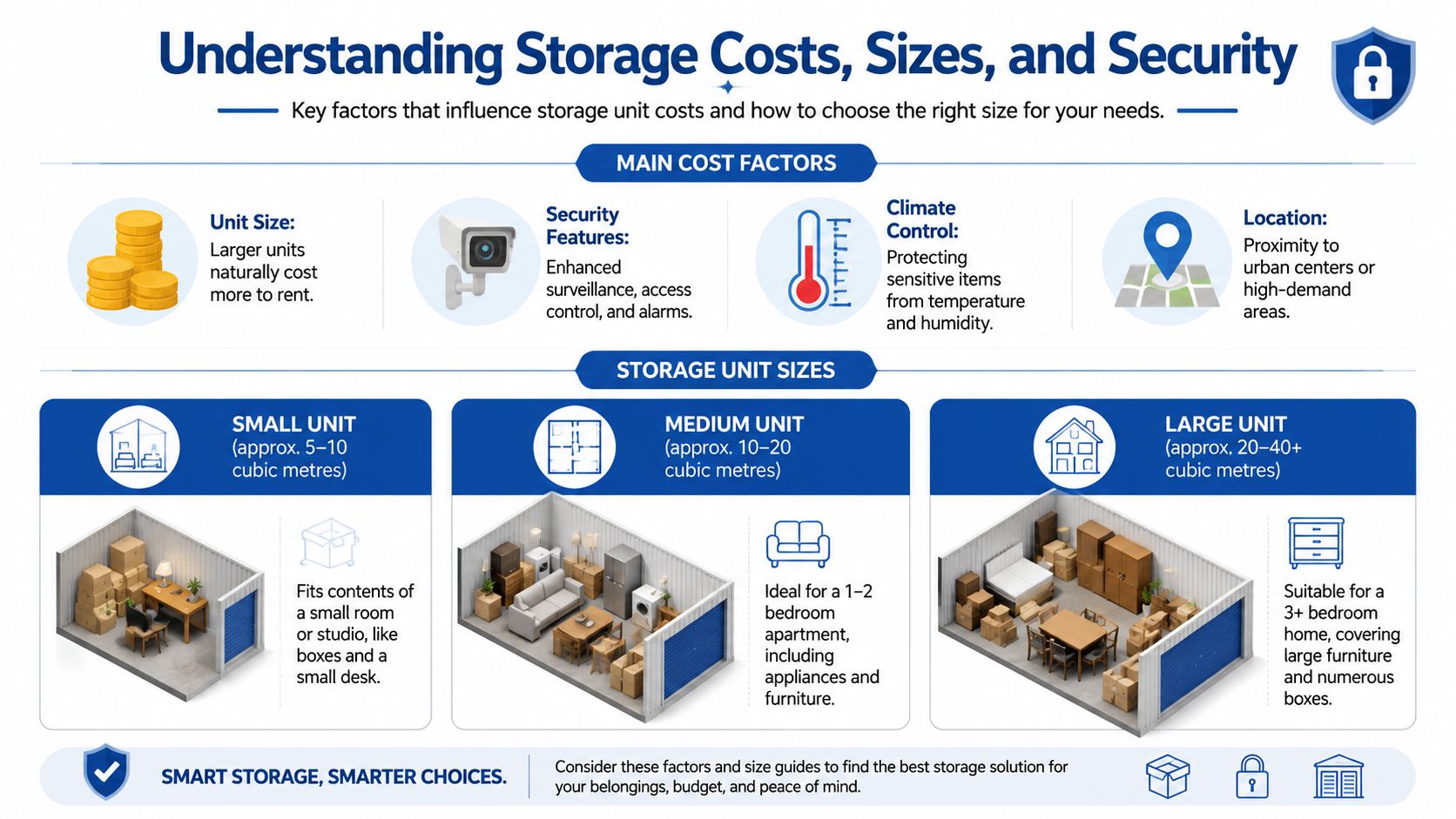
Storage is often measured in cubic metres, which means the amount of space your belongings take up. A small storage space suits the contents of a studio or a spare room. A medium space is often more realistic for a typical apartment move because furniture, whitegoods, and stacked cartons consume volume quickly. Larger spaces suit full household contents.
People often underestimate space because they think in floor area, not total volume. Bed frames, dining chairs, fridges, sofas, and boxed household goods stack differently once they're packed for safe storage.
What affects the overall spend
The underlying move matters as much as the storage itself. According to NerdWallet's moving cost guide, the national average cost to hire local movers in Australia is $1,714, with most local moves costing less than $2,500. For apartment residents, that's a reminder that transport, labour, and access conditions already shape the budget before storage is added.
Storage cost is usually influenced by factors like:
- Unit size: more volume means more space rented
- Duration: longer storage periods naturally cost more than short holds
- Security level: monitored facilities and controlled access add value
- Climate control: worth considering for sensitive furniture and electronics
- Location: higher-demand urban areas can affect availability and convenience
If you're comparing local options on the Peninsula side, this guide to self-storage in Woy Woy can help you think through access and suitability.
What to check before you commit
Security shouldn't be assumed. Ask what protects the goods. Look for perimeter fencing, controlled gate entry, CCTV, alarm systems, and clear procedures for who can access stored items and when.
Insurance also needs plain language. The facility may insure the building or carry its own cover, but that doesn't automatically mean your individual contents are fully protected in every situation. If a removalist handles packing, loading, and transport, ask what their transit insurance covers while the goods are in their care, and where that cover changes once the items are in storage.
Safety check: Insurance and security are different things. A locked site reduces risk. Insurance deals with what happens if something still goes wrong.
On the Central Coast, humidity is another practical issue. Timber furniture, mattresses, fabrics, and electronics all benefit from clean, dry preparation and suitable storage conditions.
Preparing Furniture for a Successful Storage Period
Furniture that goes into storage in poor condition rarely comes out better. Good preparation protects against dust, rubbing, mould, warped finishes, and the kind of small handling damage that adds up over time.
Clean first and label as you go
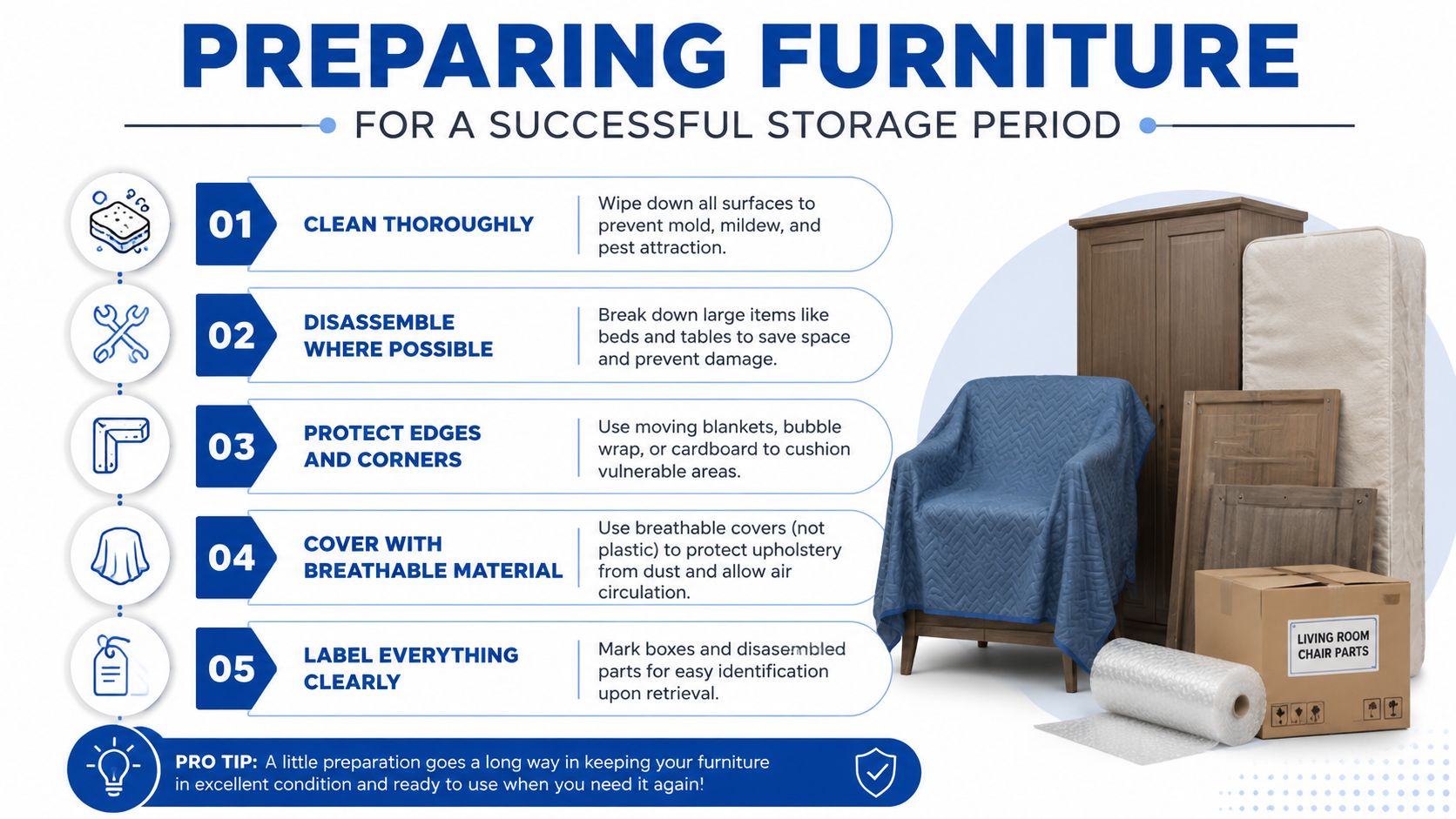
Every surface should be wiped down before storage. Upholstery should be dry and free from crumbs or dust. Timber should be clean. Appliances should be emptied and dried properly. Dirt and trapped moisture are what lead to stale smells, mould, and pest issues later.
Label what you dismantle. If you remove bed slats, table legs, TV brackets, or shelving hardware, bag the fittings and mark them clearly. It sounds basic, but it saves a huge amount of frustration when the furniture comes back out.
A practical prep list looks like this:
- Clean thoroughly: remove dust, food residue, and moisture before wrapping anything.
- Disassemble bulky pieces: beds, dining tables, and modular furniture usually travel and store better in parts.
- Keep hardware together: use sealed labelled bags for bolts, screws, washers, and brackets.
- Make an inventory: note what's in storage so retrieval is simpler later.
- Leave breathing room: don't seal damp fabrics or mattresses too tightly.
Use the right protection in the right order
Protection isn't just about adding more wrap. It's about using the correct material against the correct surface. According to guidance on expert furniture moving techniques, stretch wrap secures drawers but should never be applied directly to delicate wood finishes, rubberised moving blankets provide impact cushioning, and cardboard corner protectors help defend fragile components. The same source notes that the High-Low carry technique is standard for heavy items on stairs.
That aligns with what works in apartment moves. Drawers should be secured so they don't slide open in transit, but polished timber needs a soft protective layer first. Quilted or rubberised blankets absorb impact. Corner protection matters on cabinets, dining tables, mirrors, and whitegoods where one knock can do visible damage.
If you want a deeper breakdown of wrapping methods, our guide on how to protect furniture when moving covers the basics in plain language.
Don't wrap timber furniture in direct plastic and leave it for a long period. The trapped moisture is the problem, not the wrapping itself.
For mattresses, proper covers matter as well. If you're comparing materials, this guide on how to choose suitable mattress covers is useful because it explains why fit and breathability matter during storage.
Apartment access changes how you prepare
Storage prep starts before the truck. In apartments, you also need to think about how the furniture gets out of the building. Tight corners, stair landings, and narrow lift doors can damage walls and furniture if the piece hasn't been measured or angled correctly.
For tight doorways, professional crews often use the Hook Around method described in MoveAdvisor's furniture moving guidance. A chair or similar piece is turned on its side and moved back-first through the opening to hook it around the frame with better control. The same guidance also recommends clearing pathways, using furniture sliders on suitable floors, wrapping items in blankets, securing goods inside the vehicle, and taking extra care on stairs and ramps.
Before moving day, check these building details:
- Lift bookings: many Sydney and Newcastle buildings require a booked service lift window
- Strata notice: some body corporates want advance notice and proof of booking
- Shared area protection: lifts and hallways may need padding or floor covers
- Parking access: loading zones, permit limits, or narrow streets can change the run sheet
Those details don't just protect the building. They stop last-minute delays when the truck is already on site.
How We Integrate Storage with Your Apartment Move
A common apartment moving scenario looks like this. You have to be out on Friday, but the new place is not available until Monday. In that gap, furniture still needs to be protected, tracked, and kept ready for delivery. The safest way to handle that is to build storage into the move plan from the start, rather than treating it as a separate errand.
The main benefit is fewer handling points.
With a DIY setup, the job usually splits into several stages. You pack the apartment, load a vehicle, unload into storage, then come back days or weeks later and repeat the lifting, stacking, and transport. Every extra touch increases the chance of scuffs, loose hardware, crushed corners, or a mattress picking up dirt because it was shifted around one time too many.
An integrated approach keeps those stages connected. A removalist such as Gentle Giant Removals & Relocations can pack, load, document, move the goods into storage, and schedule redelivery under one plan. That works well for apartment moves on the Central Coast, in Sydney, and in Newcastle, where booked lift windows, loading bay restrictions, and settlement or lease gaps can turn a simple move into a stop-start job if storage is arranged separately.
Here's a visual comparison of that process.
The time savings matter, but the bigger win is control. One team keeps the inventory together, keeps the wrapping standard consistent, and keeps the delivery notes attached to the same items from pickup through to redelivery. In practice, that means less confusion about which boxes stay in storage, which pieces come out first, and whether the bed bolts or table legs ended up in the wrong pile.
Why one-touch handling matters
Good storage coordination reduces double handling. If a sofa is wrapped properly at the apartment, loaded carefully, stored in a planned position, and delivered out on the agreed date, there are fewer opportunities for damage than in a pieced-together move involving different vehicles, helpers, or storage providers.
That improves a few parts of the job at once:
- Inventory control: labelled items stay with the same paperwork and delivery notes
- Property protection: fewer transfers mean fewer chances to clip walls, lift interiors, railings, and door frames
- Scheduling: storage and redelivery can be arranged around strata rules and key handover times
- Safety: less repeated lifting lowers the risk of rushed carries and awkward rehandling
From a removalist's point of view, storage works best when it is treated as part of the relocation workflow, not as a separate booking made after the truck is already packed. These practical storage ideas for moving operations explain that side of the process well, especially the value of organised layouts, clear labelling, and planned retrieval.
When storage is integrated into the apartment move, the job stays simpler, cleaner, and easier to control from the first pickup to the final delivery.
Frequently Asked Storage and Moving Questions
Do I need climate-controlled storage on the Central Coast
Not for every item, but it's worth considering for timber furniture, electronics, artwork, fabrics, and anything sensitive to humidity. Coastal conditions can be hard on poorly prepared goods.
Can I access my furniture while it's in managed storage
Usually yes, but access is generally arranged rather than instant walk-in access. Ask about notice periods, retrieval procedures, and whether individual items can be brought out without unpacking the whole storage load.
What if my settlement or lease dates change suddenly
That's exactly where integrated storage helps. If the new apartment in Sydney or Newcastle isn't ready, the goods can stay held until the delivery date is confirmed instead of being unloaded into the wrong place or rushed into temporary corners.
Should I pack the apartment myself or use packing services
DIY packing can work if you start early and use proper packing materials. If time is tight, access is difficult, or you have fragile furniture, professional packing usually reduces risk because the wrapping and loading plan are done together.
What should I confirm with strata before moving day
Ask about lift bookings, loading bay access, protection requirements for common areas, move-in or move-out time restrictions, and parking conditions for the truck.
If you're planning an apartment relocation on the Central Coast, in Sydney, Newcastle, or Lake Macquarie, and you need furniture moved with storage built into the job, Gentle Giant Removals & Relocations can help you map it out clearly. You can request a free moving quote or a free in-home assessment to work through access, packing, storage timing, and insurance cover before moving day. If the move is urgent, give us a call so we can help you sort out the practical details quickly.