
You're probably at that point in the move where the easy jobs are done. The books are packed, the pantry's sorted, and then you look at the mattress leaning in the bedroom and realise this is one item you can't just “make do” with. It's bulky, awkward, catches on door frames, and if it gets wet, torn, or grubby on the way from the Central Coast to Sydney or Newcastle, you'll feel it every night after.
A mattress is one of those things people often underestimate until moving day. We've seen perfectly good mattresses pick up scuffs in stairwells, moisture from coastal air, and rips from cheap plastic and poor taping. The protection job isn't just about wrapping it in something. It's about building a simple system so the mattress stays clean and supported from the bedroom, into the truck, through transit, and into the new home.
If you're planning your own pack, or deciding whether to leave it to your removalist, the humble moving packing tap plays a much bigger role than commonly perceived. Used properly, it helps keep the cover sealed, stops it sliding around, and protects the mattress through the rough parts of the journey.
Protecting Your Mattress for the Big Move
A mattress doesn't usually get damaged while it's sitting still. Trouble starts when it's dragged through a hallway, squeezed past a bedhead, stood up in a lift, or loaded beside furniture that shifts on the road. That's why the full journey matters, not just the few minutes spent wrapping it.
Take a fairly typical local run. You're moving from a house in Terrigal to an apartment in Newcastle. At the pickup end, you might have a narrow side path or a damp morning with coastal air hanging around. At the delivery end, there could be lift bookings, body corporate move windows, shared hallways, and a strict rule about not marking walls or common areas. The mattress needs to stay protected through all of that.
Why a mattress needs more than a quick wrap
A bare mattress fabric cover isn't built for relocation. It can pick up dirt from the truck, rub marks from stair rails, and tears from sharp corners. If the cover shifts during handling, the exposed corners cop the worst of it.
That's why we treat mattress protection as a combination of materials and technique. The cover keeps out dust and moisture. The tape keeps that cover closed and in place. The loading method stops bending, crushing, and unnecessary pressure.
A badly taped cover often fails at the corners first. Once that happens, the mattress starts collecting dirt from every surface it touches.
Local conditions change the risk
Around the Central Coast, humidity matters more than people expect. A mattress packed while slightly damp from cleaning, or wrapped too early and left in a warm room, can hold that moisture. On Sydney jobs, the issue is often access. Tight lifts, apartment corridors, parking restrictions, and long carries from the truck all increase the chance of rubbing and tearing. In older Newcastle buildings, heritage layouts can mean tighter turns and less forgiving entryways.
That's also where a professional removalist adds value beyond lifting. We plan for stairs, lifts, narrow streets, parking permits where needed, and strata conditions that can affect how and when large items move through the building. If your move includes full insurance coverage, that extra layer of protection matters too, because the goal is always to prevent damage before anyone has to talk about a claim.
Choosing the Right Packing Materials
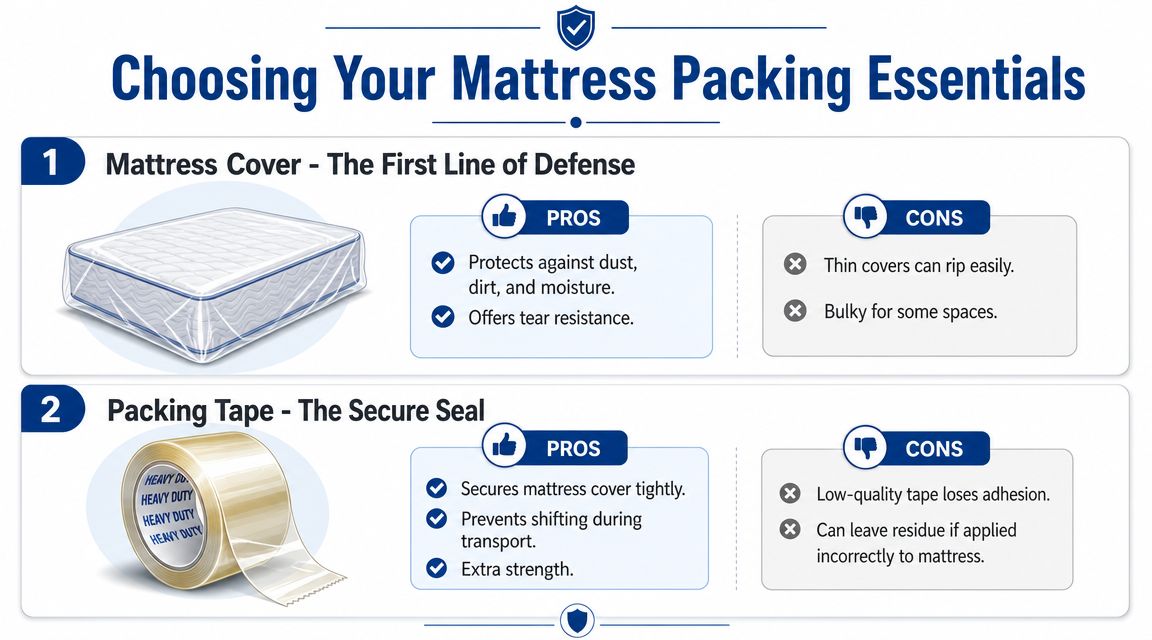
The first decision is the mattress cover. The second is the tape. People often spend all their time choosing the cover and then grab the cheapest roll of tape from the junk drawer. That's usually where the weak point starts.
Start with the cover
For a short, straightforward relocation, a basic plastic mattress cover can do the job if it fits properly and isn't too thin. For a longer trip, a stronger bag is the safer option, especially if the mattress is premium, newly purchased, or heading into temporary storage before delivery.
A loose cover is almost as unhelpful as no cover. It bunches, catches on corners, and shifts while the mattress is carried. A fitted cover sits close to the mattress and gives the tape something stable to hold.
If you're comparing options and want a simple overview of budget-friendly cover styles, it can help to discover cheap mattress covers before you buy. The trick is balancing cost with the reality of your move. A ground-floor house move in Lake Macquarie is one thing. A longer run with apartment access at either end is another.
What good moving packing tap actually does
The tape isn't there to hold the mattress together. It's there to keep the protective cover sealed so it doesn't open or creep during handling. For Australian moves, guidance commonly recommends packing tape in the 2.0–2.5 mil range for standard cartons and over 3 mil for heavier loads, with 2–3 inch widths preferred because they spread stress across seams and reduce failure risk during repeated handling and vibration on longer trips such as Sydney to Newcastle, according to moving tape guidance for transport packing.
That matters because a mattress cover behaves like any other protective outer layer. If the tape is too narrow or too light, the strain concentrates in one small line. Once the seal starts lifting, dust and moisture get in, and the plastic can tear further when the mattress is carried.
What we'd avoid
Cheap tape often looks fine on the roll and disappoints on the job. You'll notice it when it won't stay stuck at the corners, or when it twists during application and leaves weak patches.
If you're sorting supplies yourself, it's worth checking practical options before moving day rather than grabbing whatever's left at the hardware shop. A good place to start is this guide to packing supplies near you on the Central Coast, especially if you're weighing DIY packing against a professional packing service.
Practical rule: Buy tape for the conditions of the move, not for the five minutes it takes to wrap the mattress.
How to Pack Your Mattress Like a Pro
Most mattress packing problems happen before the item even leaves the room. The cover gets snagged, the tape is slapped on loosely, or one person tries to wrestle the whole thing alone. The method matters.
Before the cover goes on
Make sure the mattress is clean and fully dry. If you've spot-cleaned it the day before, give it time to air out. Trapping moisture inside plastic is asking for trouble, especially in the Central Coast's coastal areas.
Set up a clear path before you start. Remove bedside tables, lamps, and anything sharp that can catch the plastic. If you're in a unit in Gosford, Newcastle, or Sydney, check the hallway and lift dimensions early so you don't have to repack halfway through the move.
Safety warning: a mattress is a two-person lift. Bend through the knees, keep the load close, and don't twist while carrying. If access is tight, stop and reset rather than forcing it.
The packing method that holds up
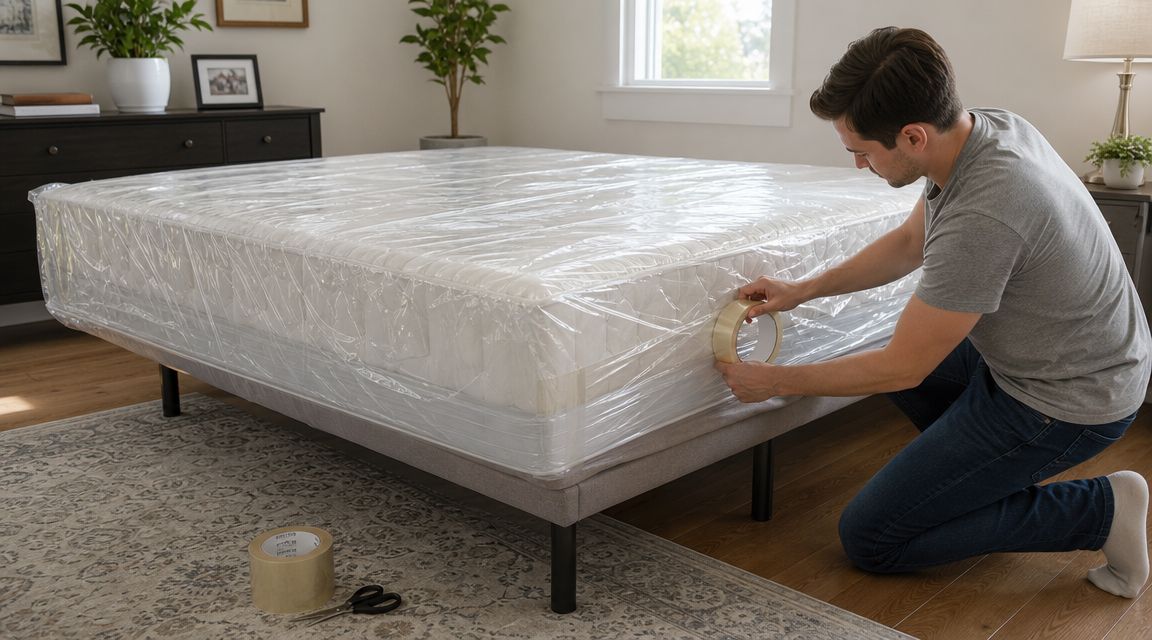
Slide the cover on with one person guiding the top corners and the other feeding the mattress in from the base. Don't yank the plastic hard over one edge. That's how tears start.
Once the mattress is fully enclosed, smooth the excess material so it sits flat rather than bunched. Then tape the opening securely. For heavier-duty carton sealing, industrial guidance points to BOPP carton-sealing tape with hot-melt adhesive on a 76.2 mm (3 in) core, designed to adhere instantly and resist edge tear and split, with storage guidance of 4–27°C, 40–50% relative humidity, and a recommended 18-month use window from manufacture in 3M's industrial tape specification. The same guidance emphasises applying tape under tension across the full seam, then reinforcing the centre line.
For a mattress cover, that means firm, even pressure and full contact along the plastic flap. Keep the tape on the cover itself. Don't tape directly onto mattress fabric, because that can leave residue or pull at the material when removed.
Where DIY jobs usually go wrong
The most common packing failures come from tape that's too narrow or adhesive that doesn't suit corrugated or plastic surfaces. A 1.88 in (48 mm) width is a useful baseline for standard hand use, and economy tape can be as thin as 1.6 mil, which is less durable for relocation work, as outlined in this packaging tape sizing reference. In plain terms, bargain tape often lets go when the mattress is lifted a few times, turned through a doorway, or rested on its edge.
If you want a fuller walkthrough focused specifically on the protective layer, this guide on how to cover a mattress when moving is worth reading before moving day.
A short visual guide can also help if you're more comfortable following the steps on screen.
Securing Your Mattress for Transport
A well-packed mattress can still be damaged if it's loaded badly. This is the bit many people never see. Inside the truck, every item has to work with the others. If the load shifts, the mattress often ends up absorbing pressure from furniture edges, stacked items, or sudden braking.
What proper loading looks like
A mattress should be placed with purpose, not slid into the last available gap. We generally protect it further with quilted furniture pads and position it so it isn't crushed by heavier pieces. Straps help hold it stable during the run, especially on longer drives between the Central Coast, Sydney, Lake Macquarie, and Newcastle where road vibration and repeated handling can test every seal and cover.
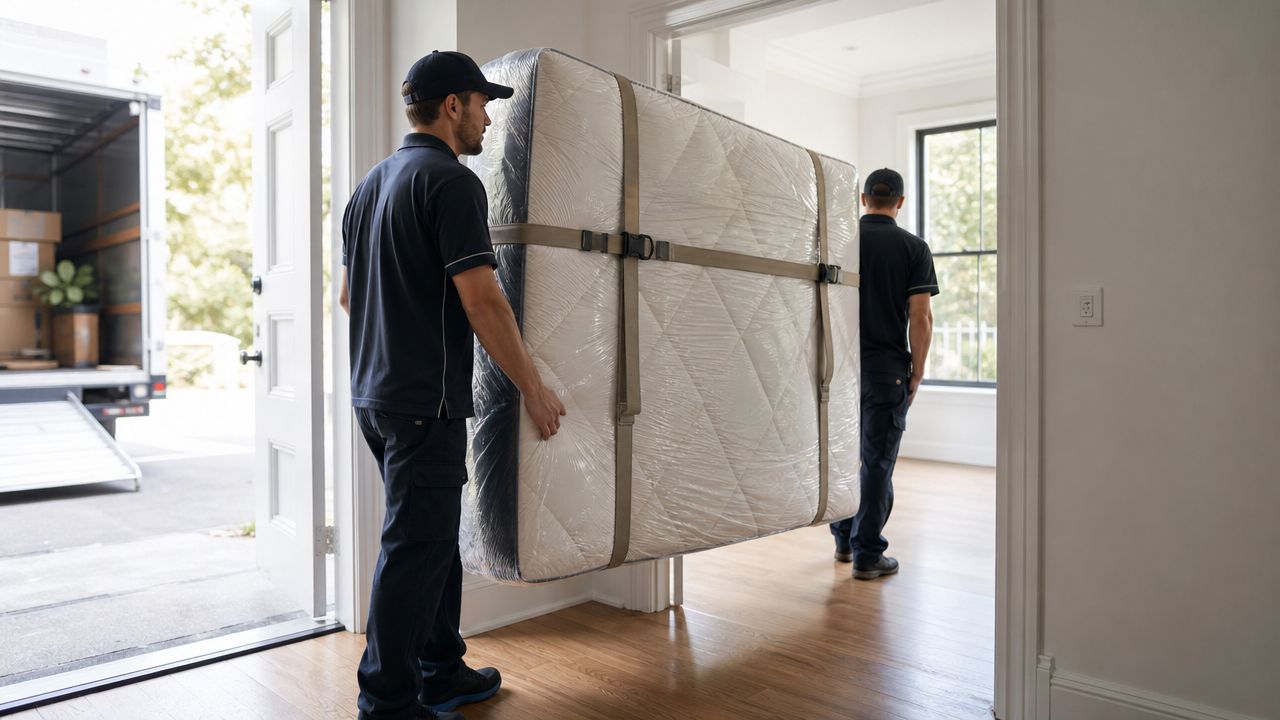
That's one reason truck packing is a skill in its own right. The mattress isn't being protected by tape alone at that stage. It's being protected by the sequence of loading, the support around it, and the way the load is restrained. If you want to understand how that part works, this guide on how to pack a moving truck gives a useful overview.
In a truck, the safest mattress is the one that can't slide, can't bow, and can't take the full force of another item leaning into it.
Access changes how the item is handled
A house in Terrigal with open driveway access is very different from a high-rise delivery in Sydney. In apartments, crews often have to work within booked lift times, move with minimal noise through shared areas, and protect walls and entry points. Some buildings require advance notice, loading-zone coordination, or body corporate approval for move day.
That extra handling is exactly why secure wrapping matters. The more times a mattress is turned, paused, lifted, and repositioned, the more chance there is for the outer cover to shift or tear if it wasn't packed well to begin with. This is also where reliable timing matters. If your removalist arrives on time and the building booking is managed properly, there's less rushed handling and fewer avoidable mistakes.
After the Move Mattress Care and Storage
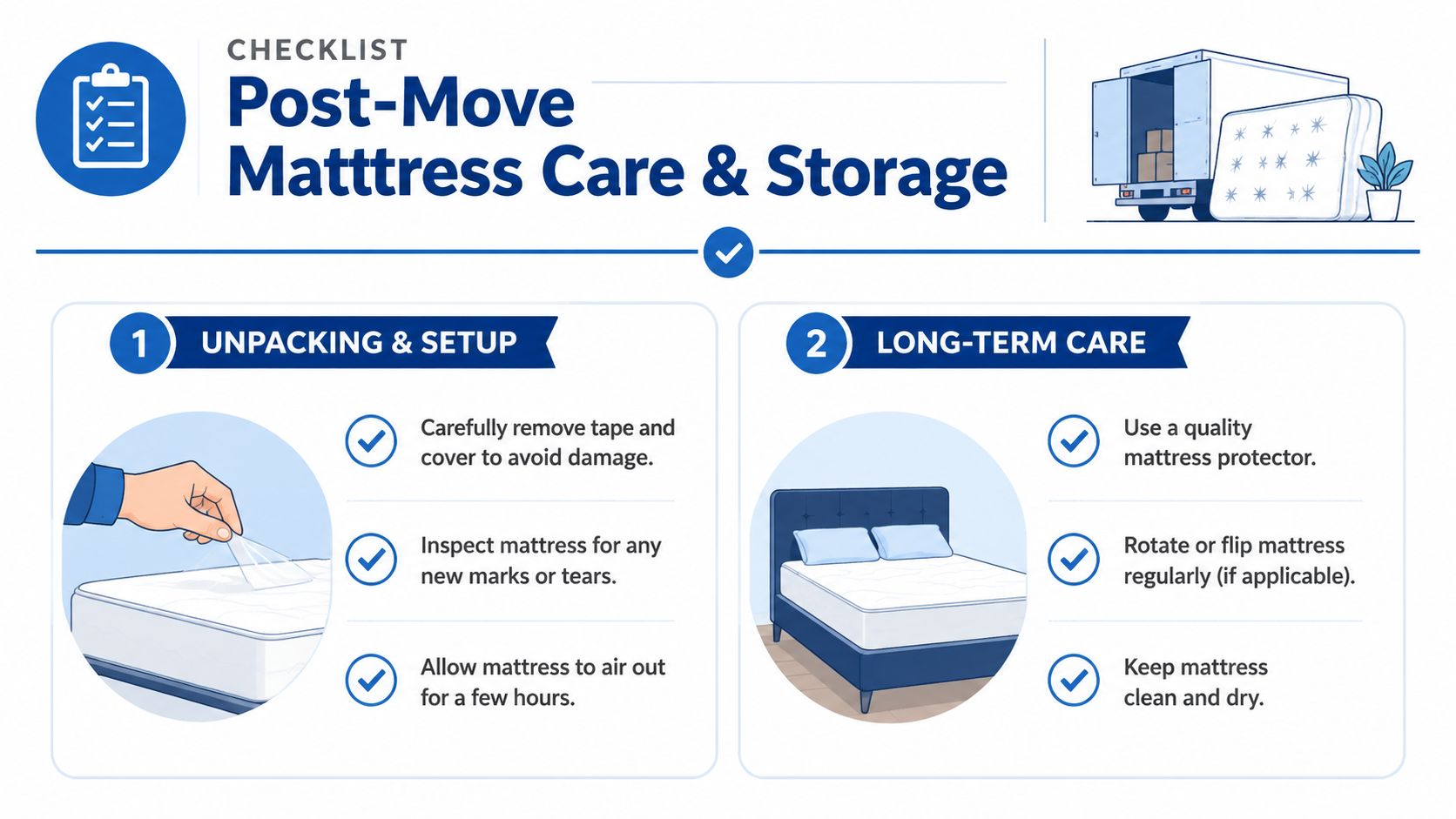
Once the mattress reaches the new home, don't rush the final step. A lot of accidental damage happens when people cut the plastic off too quickly with a blade and nick the mattress fabric underneath.
Unpack it carefully
Peel tape away slowly where possible. If you do need a cutting tool, keep it shallow and angled away from the mattress. Then inspect the corners, piping, and handles before putting the bed together.
Let the mattress breathe for a few hours before making the bed. That's a good habit after any move, especially if the item has travelled through humid weather or spent time wrapped during a longer relocation.
If the mattress is going into storage
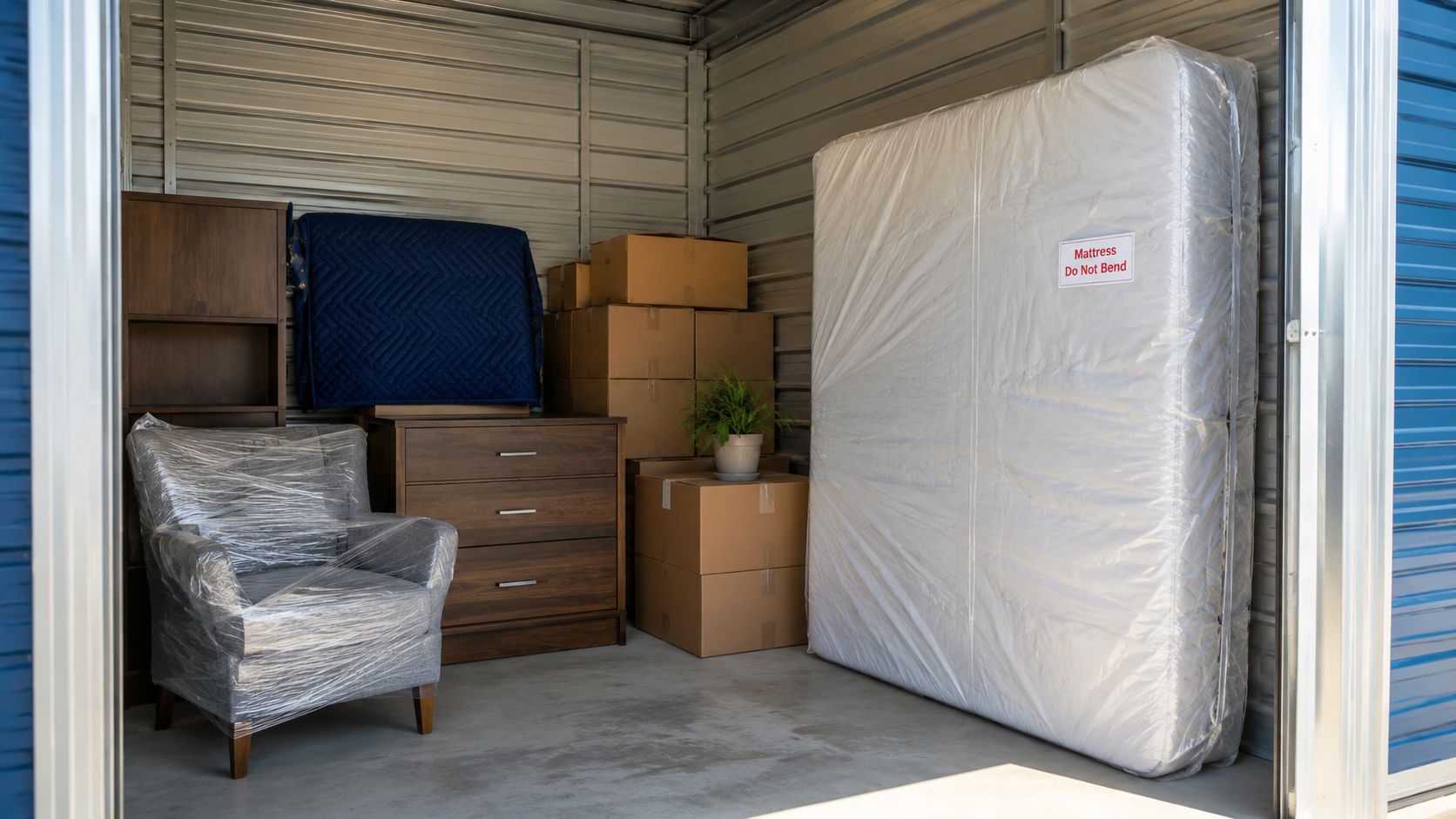
Store it flat and keep it dry. Standing a mattress on its side for too long can affect its structure, particularly with foam or hybrid designs. In coastal parts of the Central Coast, moisture control matters because a humid environment can work against any item left wrapped for too long.
If you're not sure what bedding layer to use once the move is finished, this SouthShore Fine Linens guide gives a handy explanation of the difference between a pad and a topper. That's useful after a relocation, when people often replace protectors or refresh the bed setup.
For households between homes, renovating, or waiting on settlement dates, storage planning needs the same care as the move itself. This article on short-term furniture storage can help you work through what's practical before you commit to storing a mattress.
When to Request Professional Moving Protection
Some mattresses are fine to pack yourself. Others are worth handing over to a crew with the right materials, lifting equipment, and loading method. The decision usually comes down to risk.
When DIY stops making sense
If your mattress is expensive, oversized, heavy, or awkward to manoeuvre, the margin for error gets smaller. The same applies when either property has stairs, long carries, narrow streets, limited parking, or apartment rules that restrict move times. In Sydney and Newcastle especially, lift bookings and shared-area protection can make a simple job much more technical.
People also underestimate how tiring moving day becomes by mid-morning. By then, a job that looked manageable the week before often turns into shortcuts. That's when covers get taped poorly, items get dragged, and corners get knocked.
What professional protection changes
A proper removal crew brings more than muscle. They bring a system for wrapping, carrying, loading, and unloading without improvising on the day. That includes protection for shared spaces, attention to safe lifting, and full insurance coverage for peace of mind.
If you want help with the full job rather than sourcing materials and doing the wrap yourself, packing and removal services are often the cleaner option. Gentle Giant Removals & Relocations can supply moving tape as part of its packing materials and also handles full packing, loading, transport, and storage coordination for moves across the Central Coast, Lake Macquarie, Newcastle, and Sydney.
The right time to ask for help is before the mattress is halfway through a stairwell and the cover has already split.
A good rule is simple. If the mattress matters, the access is tricky, or the timing is tight, professional protection is usually the smarter call.
If you'd like practical help planning your move, Gentle Giant Removals & Relocations can arrange a free moving quote or a free in-home assessment for homes and apartments across the Central Coast, Sydney, Newcastle, and Lake Macquarie. If your move is coming up quickly and you need urgent advice on packing materials, access, lift bookings, or mattress protection, give the team a call and talk it through with someone who does this every day.