

You've locked in a move date. The lease is signed or the settlement clock is ticking, and now every room suddenly looks bigger, fuller, and a bit harder to tackle than it did a week ago. That's usually the moment people start searching for ways to buy moving boxes online, hoping one big order will solve the packing side of the job.
It can, if you buy the right packing materials and get them at the right time. It can also create extra work if the cartons are flimsy, the sizes are wrong, or the delivery turns up late when you're already juggling access, lift bookings, and truck parking in places like Gosford, Newcastle, or Sydney's busier streets.
For local moves around the Central Coast, Lake Macquarie, Newcastle and Sydney, the box order isn't a small admin task. It's part of the move plan. If you're still deciding where to start, this guide on where to get boxes for moving is a useful first step before you place an online order.
Starting the Plan to Buy Moving Boxes Online
A good relocation usually starts with one simple decision. You stop guessing and start sorting. That matters whether you're leaving a one-bedroom apartment in Newcastle or packing up a family home in Terrigal for a move to Lake Macquarie.
Most first-time movers look at the whole house and think they need “lots of boxes”. What they need is the right mix of packing materials, enough lead time, and a plan for the awkward items. Clothing, books, kitchenware, lamps, cables, toys, paperwork, tools, linen, outdoor gear. Each category behaves differently in transit.
We see the smoothest DIY packs from people who treat box ordering like booking the truck. It's an early job, not a last-minute one. Once your packing materials are organised, the rest of the move becomes easier to pace, label, stack, and load safely.
Pack for handling, not just storage. A box that looks fine in the spare room may fail when it's carried down stairs, stacked in a truck, or moved through a narrow hallway.
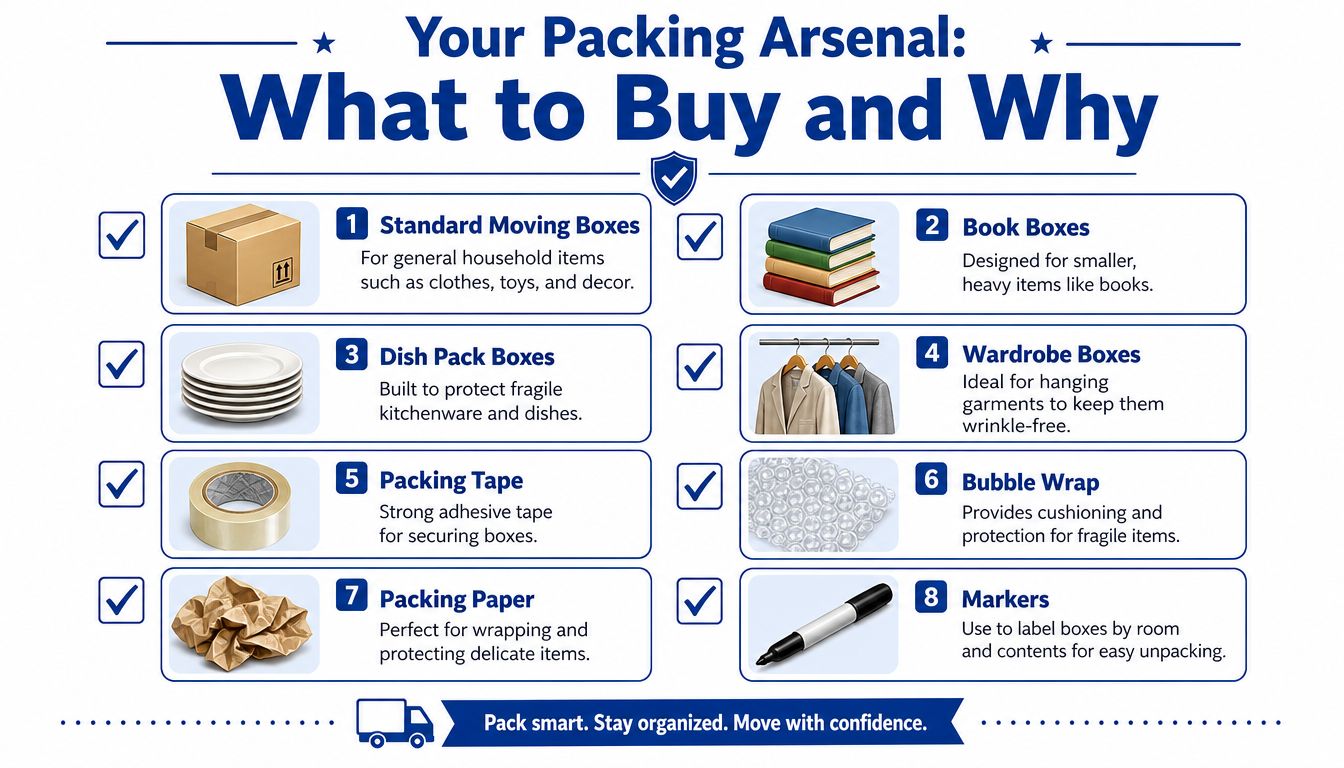
Your Packing Arsenal What to Buy and Why
The first online bundle you see isn't always the best one. A proper packing kit should match what you own, how far you're travelling, and whether access at either end includes stairs, lifts, long carries, or tight driveways in the Central Coast's coastal areas.
The mix matters more than the total
One of the most common mistakes is buying one size in bulk because it looks cheaper. That usually backfires. A common pitfall is ordering uniform box sizes online. A staggering 62% of DIY buyers do this, ignoring the need for a 30:50:20 ratio (small:medium:large). This leads to a 27% higher risk of overpacking small boxes beyond the 16kg safety limit or underutilising large ones according to this packing guide from Upmove.
That ratio works because small cartons carry dense items, medium cartons handle mixed household goods, and large cartons are better for lighter bulk. If you put books into large cartons, they become difficult to lift safely and harder to stack without crushing lower boxes.
A practical shopping list usually includes:
- Small cartons for books, pantry items, tools, and dense décor.
- Medium cartons for toys, folded clothes, kitchenware, and bathroom items.
- Large cartons for linen, pillows, lampshades, and lightweight bulky items.
- Packing tape that seals properly on the first pass.
- Butchers paper or packing paper for wrapping kitchen and glassware.
- Bubble wrap for framed items, electronics, and breakables.
- Thick markers for room labels and handling notes.
Specialty cartons earn their place
Standard cartons do most of the work, but specialty cartons save time and reduce damage on tricky categories. Book cartons stop people overloading large boxes. Dish packs give fragile kitchenware more protection. Wardrobe cartons keep hanging clothes upright and cut down repacking at the other end.
If you're moving a home office as well as a household, sturdy file cartons help keep paperwork upright and easier to sort. For anyone trying to organize business paperwork effectively before a local office or home-office relocation, that kind of structure can save a lot of unpacking frustration.
For Sydney-area moves especially, it also helps to order cartons that stack consistently. When loading in traffic-sensitive streets or in apartment loading zones, efficient truck packing saves time. If you're comparing local supply options, this article on cardboard boxes in Sydney gives a useful local view.
Estimating Box Numbers for Your Local Home
“How many boxes do we need?” is one of the most common moving questions, and the honest answer is that it depends less on bedroom count and more on what fills those rooms. A tidy three-bedroom home in Gosford may need fewer cartons than a two-bedroom apartment in Newcastle with a full study, a packed kitchen, and built-in storage loaded to the ceiling.

Think by room and by density
A practical way to estimate is to walk room by room and ask one question. Is this room dense or bulky? Books, kitchenware, records, tools and pantry goods are dense. Linen, soft toys, coats and spare bedding are bulky.
That's where cubic metres comes in. In plain language, cubic metres means the amount of space your belongings take up inside the truck. It's about volume, not just weight. A light room can take a lot of truck space. A heavy room might only fill a few cartons but need stronger ones.
A rough room-by-room check works well:
| Room type | Usually needs more small cartons | Usually needs more large cartons |
|---|---|---|
| Kitchen | Yes | Rarely |
| Home office | Yes | Rarely |
| Main bedroom | Some | Yes |
| Kids' room | Mixed | Mixed |
| Linen cupboard | Rarely | Yes |
| Garage | Often | Sometimes |
Box strength is not a minor detail
When buying moving boxes online, don't just compare bundle price. Check the cardboard rating. Professional removalists recommend boxes with an Edge Crush Test (ECT) rating of 44 or higher for heavy items. Boxes with an ECT of 32 or lower often collapse under 15–20kg loads, leading to an 18% increase in item damage during transit when sub-standard cardboard is used, as explained in this ECT guide from Kennards Self Storage.
That matters on local runs and it matters even more on longer intrastate or interstate jobs. A weak carton might survive sitting in a lounge room for a week. It's a different story once it's stacked, strapped, and travelling over roundabouts, hills, and winding roads around the Central Coast.
Practical rule: Use your strongest cartons for the heaviest categories, not your cheapest ones.
If you want a broader look at choosing cartons, wrap, and room-by-room supplies, this guide on moving boxes and packing is a helpful reference before you order.
Planning Your Order and Delivery Timeline
People rarely regret ordering packing materials early. They often regret leaving it too late. The online listing says “fast delivery”, but that doesn't help much if the week of your move lands in a busy period, your building has restricted access, or you realise halfway through packing that you underestimated what the kitchen and garage would need.
Work backwards from move day
Start with the relocation date and reverse the timeline. You want your main carton order in hand with enough time to pack gradually, not all in one rushed weekend. That gives you time to label properly, replace anything unsuitable, and top up specialty packing materials if needed.
A simple approach looks like this:
- Lock in your access details early. If you're moving from or into an apartment in Sydney or Newcastle, confirm lift windows, loading rules, and any shared-area protection requirements before you buy supplies.
- Order your core cartons first. Get the standard sizes, tape, paper and markers sorted before you touch the shed, kitchen, or wardrobes.
- Leave room for a top-up order. Anticipate needing a few extra cartons, more tape, or another fragile pack once packing is underway.
Fast delivery helps, but planning still wins
Hire and supply services in metro areas have responded to last-minute demand. The demand for fast delivery is high in major AU metro areas. For customers in Sydney, some hire companies provide 2-hour delivery windows from Monday to Saturday, 8am–6pm, according to Hire A Box.
That kind of service is useful if your timeline is tight, but it shouldn't be your main strategy. Coastal weather, public holidays, school holiday traffic, and end-of-month booking pressure can all affect how smoothly a move runs across the Central Coast and Sydney corridor.
For households trying to coordinate cleaners, handover times, and truck arrival windows, it helps to see the broader schedule in context. This guide on how long it takes to move house is useful when you're matching supply delivery to packing pace.
If the cartons arrive too late, every other moving decision becomes rushed.
Smart Choices Eco-Boxes Deposits and Returns
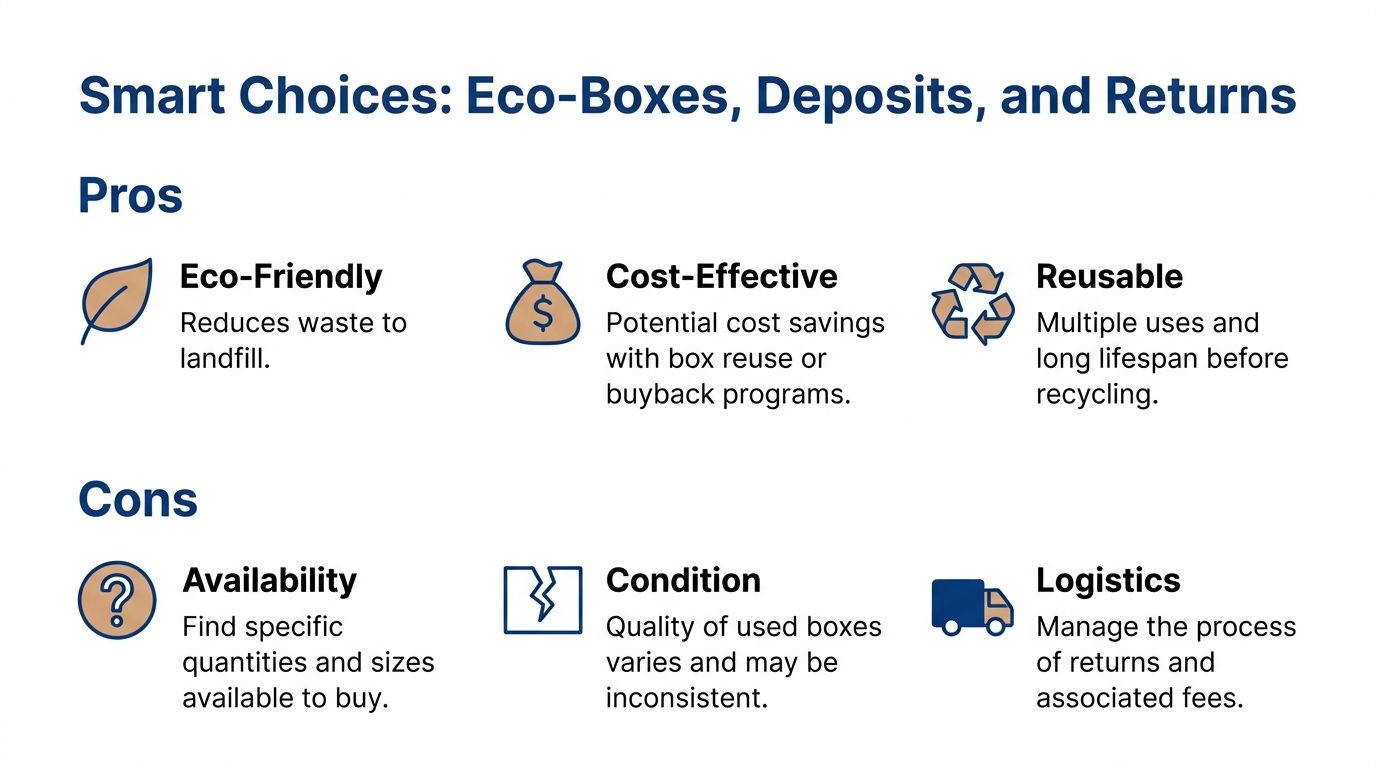
Buying new cartons online is only one option. For some households, it's the cleanest and simplest choice. For others, hire systems, refundable-deposit models, reusable crates, or even free local cartons make more sense.
When buying new works best
New cardboard cartons are usually the easiest option if you want consistent sizing, clean materials, and the ability to keep the boxes for storage after the move. They're also easier if you're staging your pack over time and don't want to think about return logistics.
For long-term storage, new cartons generally make more sense than short-term hire. You can label them, tape them, stack them, and keep them in the garage or spare room after the move without a return deadline.
When hire, deposits, or free cartons suit better
For quick local relocations, hire systems can be efficient. Some providers offer moving boxes for hire starting at $3.25 each, with refundable deposits including $1.60 for medium boxes and $2.50 for large boxes, and those deposits are fully refunded within 5 business days after collection according to Hire A Box's service details. That can suit short-term moves where you'll unpack promptly and return everything.
Free cartons also remain a real option for budget-conscious households. Emerging data from the last 12 months shows 40% of frugal Australian users now source free boxes via local Facebook community groups and Gumtree rather than buying online, as noted by Ecostax. Around the Central Coast and Newcastle, that often works best for lighter items, overflow cartons, or one-off rooms like linen cupboards.
This comparison keeps the decision simple:
| Option | Best for | Watch out for |
|---|---|---|
| New cardboard | Storage, staged packing, consistent stacks | Disposal after the move |
| Hire boxes | Short-term moves, quick unpacking | Return coordination |
| Free boxes | Tight budgets, light-duty packing | Mixed condition and mixed sizes |
If you're thinking about what happens after unpacking, disposal matters too. For households sorting general cardboard from food-contaminated board, this guidance on hospitality pizza box recycling gives a useful example of why not all cardboard should be treated the same way.
Packing Like a Pro Tips for Every Room
Once the cartons arrive, start with the rooms you use least. That usually means the spare bedroom, linen cupboard, garage, decorative shelves, and off-season clothing. It gives you momentum without disrupting daily life too early.
Kitchen, wardrobes, and electronics
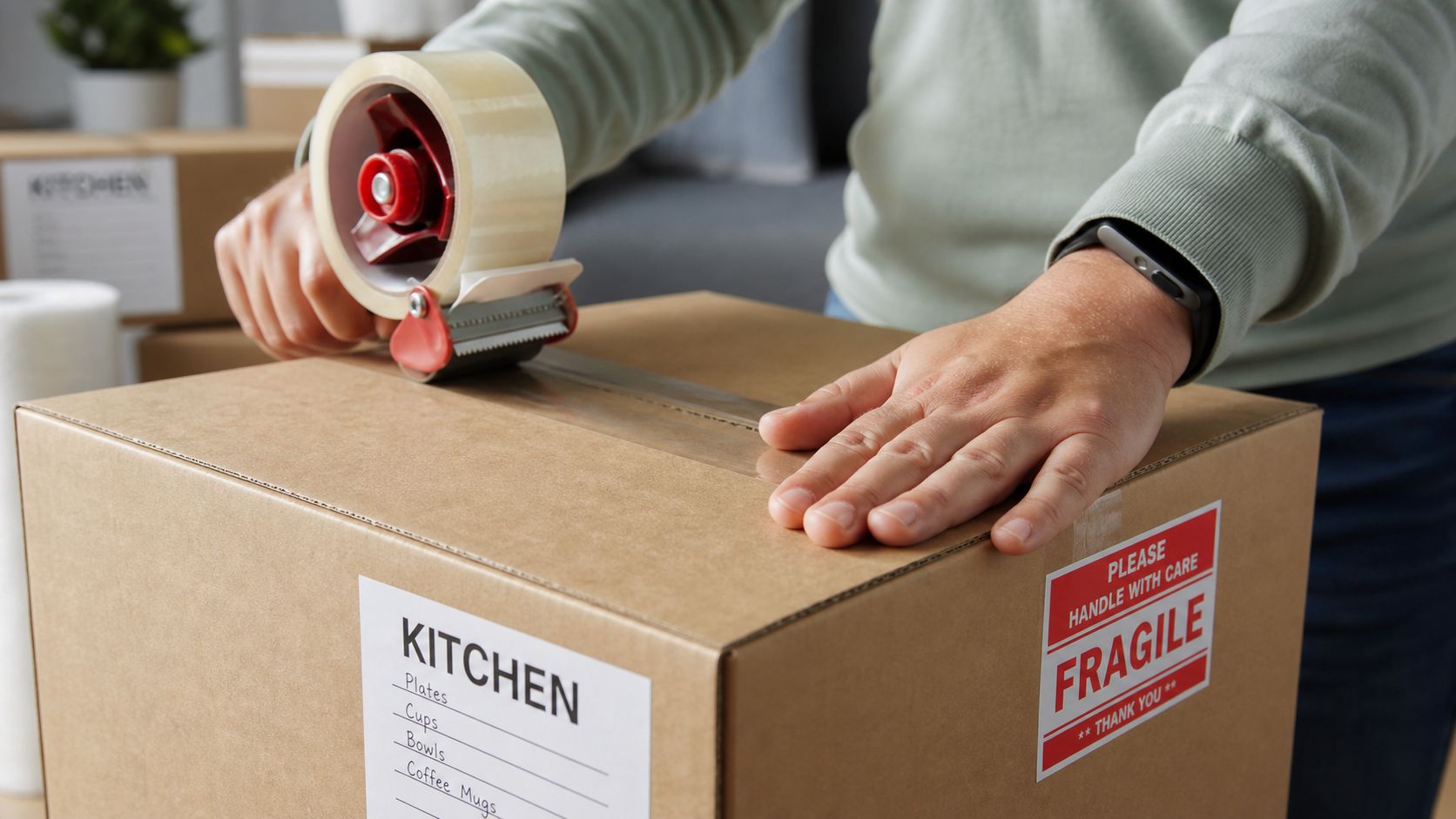
The kitchen is where many DIY packs come undone. Wrap plates individually in packing paper, stand them on edge rather than flat, and fill gaps so they can't shift. Glassware needs cushioning top and bottom, not just around the sides.
For wardrobes, specialty cartons are worth using. Port-a-robes typically cost between $13.50 and $19 when bought online, and while that can look expensive at first glance, The Boxman's guide notes they're critical for wardrobe moves because they save time and protect hanging clothes. If you're moving from a Gosford apartment into a Newcastle townhouse and need to unpack quickly, that convenience is real.
Electronics need a different approach. Remove loose batteries where possible, bag cords separately, label them clearly, and avoid leaving empty space in the carton where items can bounce around.
The label should do the thinking for you
A good label tells you three things at a glance:
- Destination room so unloading is faster
- Handling note such as fragile, this side up, or heavy
- Quick contents summary so you're not opening five cartons to find the kettle
That matters even more when access is awkward. In Newcastle's heritage apartments, on steep coastal driveways around Terrigal, or in Sydney buildings with tight lift bookings, the crew needs cartons that are easy to place correctly the first time.
Here's a quick visual walkthrough that lines up well with that approach:
Don't forget outdoor and odd-shaped items
Garage shelves, garden tools, kids' sports gear and barbecue accessories often get left to the final day. That's a mistake. Bundle long-handled tools together, drain anything with fuel or liquid where appropriate, and keep sharp metal edges wrapped so they don't cut cartons or scratch furniture.
Label the heavy cartons honestly. If a box is loaded with books or tools, write that on the top and at least one side.
If you're short on time, professional packing can be the better option for kitchens, fragile rooms, or the whole house. DIY works well when you can pace it. It works less well when you're juggling work, children, settlement timing, and access restrictions.
Why Ordering Supplies Through Your Removalist Is Easiest
Ordering your packing materials from one place and your relocation service from another can work. It just creates more moving parts. If the carton delivery is late, if the box sizes don't suit the load, or if the building rules change, you're left coordinating fixes across different providers.

One plan is easier to run than three
The big advantage of bundling supplies with your removalist is that the packing materials match the move plan. If you're relocating from a high-rise in Sydney, a townhouse in Lake Macquarie, or a narrow-street terrace in Newcastle, the same team can account for access, carton type, loading method, and timing.
That becomes especially important in apartments. In Australian apartment moves, strata corporations typically require lift bookings for specific windows and mandate that shared areas be protected. Failure to comply can result in denied access on move day, as outlined in this apartment moving guide. When your supplies and relocation planning sit together, it's easier to avoid the classic problem of having the right truck but the wrong preparation.
Local logistics are part of the packing decision
Packing materials aren't separate from street access and building rules. They affect how quickly a crew can load, how safely cartons can be stacked, and how much time is spent in a loading zone. In parts of Sydney and on restricted streets, parking permits for large removalist trucks often need to be arranged ahead of time, and apartment buildings may impose narrow move-in windows.
Protection matters too. Removalists across NSW operate with full insurance coverage that protects belongings, property, crew, and clients during transit, which is especially important where access is tight or surfaces are easily damaged, such as heritage apartments or steep driveways, as set out in these service terms.
If you're weighing up whether to pack yourself or hand it over, this guide to professional packing and moving services is a good place to compare the practical trade-offs.
If you'd like help sorting out cartons, port-a-robes, packing materials, access planning, and the move itself, Gentle Giant Removals & Relocations can help you organise it all in one place. We work across the Central Coast, Sydney, Newcastle and Lake Macquarie, with full insurance coverage, practical local knowledge, and support for everything from DIY supply top-ups to full packing services. For urgent moves, call us directly. If you'd prefer to plan first, get a free moving quote or request a free in-home assessment.